Thursday, March 24, 2022

Remedy the Numbness in Your Feet with These Handy Tips

That feeling of numbness in your feet and toes can be caused by a variety of conditions. Numbness is often accompanied by a tingling feeling. The cause may not be serious - it can be as uncomplicated as paresthesia (your foot 'falling asleep'), however it my be as serious as diabetes, multiple sclerosis, or a symptom of a much more serious condition. Whatever the cause may be, it's essential to address the numbness in your feet. Avoiding to do so may affect your ability to walk.

Typical causes of numbness 
Numbness of the toes generally occurs due to conditions that affect the nerves or blood vessels of the foot. Most common causes of toe numbness include: 
Compressed nerves of the foot from footwear 
Injury to the foot 
Nerve damage (also known as neuropathy) 
Poor blood circulation to the foot, usually due to diabetes and peripheral vascular disease 
Irritation of nerves in the lower back (possibly due to a herniated disk)
 Frostbite 
Stroke 
Multiple sclerosis 
 Vasculitis (inflammation of the blood vessels) 
Once you and your doctor have identified what is causing the numbness in your toes, here's how you may go about resolving the issue:  
 
Method 1: Dealing with occasional numbness 
1. Exercise
Sitting or standing in one place for a long time may cause numbness. To counteract the problem, stimulate circulation in the foot by moving around. A short walk, or moving your foot as you are sitting down, will help too. In addition, bear in mind the following: 
 
To begin with, regular exercise can help prevent numbness. So be sure to incorporate physical activity into your daily schedule. 
 
If high impact exercises, such as jogging, causes numbness in the feet and toes, try lower impact exercises, such as swimming or cycling. 
 
Before you start your workout, be sure to stretch well, wear appropriate shoes and exercise on level surfaces.  
 
2. Change positions
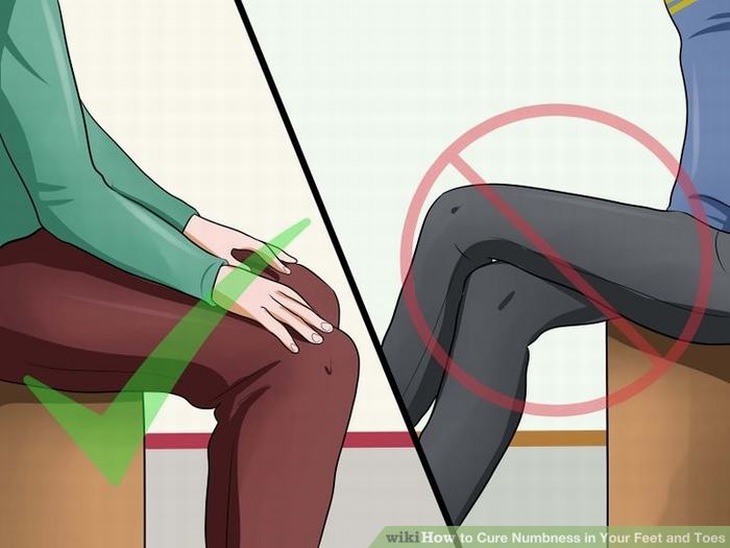
numbness-in-feet
Certain sitting positions may cause numbness in your feet. Avoid sitting on your feet or crossing your legs for a long period of time. Should you sit for long hours, elevate your feet periodically to increase the blood flow. 
 
3. Avoid wearing excessively tight clothing
Pants, socks or other tight garments worn on the lower part of the body might restrict blood flow to the feet, causing numbness.  
 
4. Massage the foot
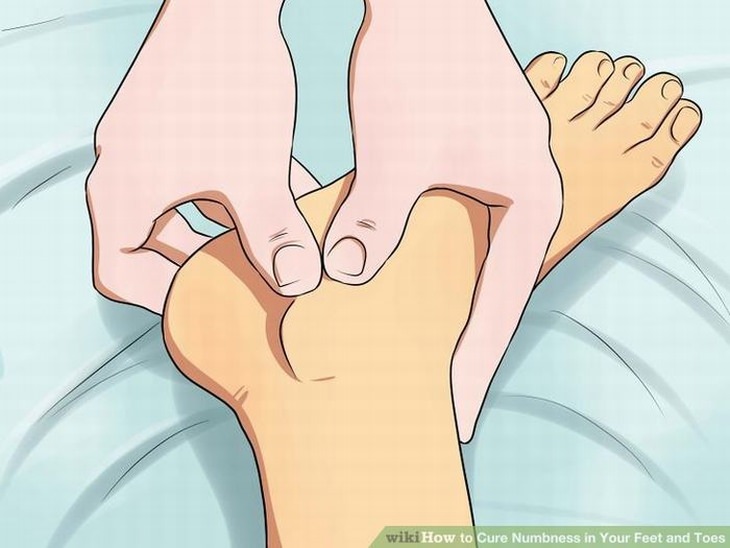
numbness-in-feet
Massaging the area of the foot that feels numb will help increase circulation and reduce the effects of occasional numbness.  
 
 
5. Keep your feet warm
The cold may cause numbness and tingling. Reduce the effects by staying warm with a heating pad or heated blanket.  
 
6. Wear the right shoes
High heels or shoes that pinch the toes may cause numbness in the feet. This may also arise from wearing shoes that are too small for you, especially while exercising. Opt for comfortable shoes that fit you well. 
 
7. Book an appointment with your doctor
While occasional numbness in the feet or toes caused by an uncomfortable seating position or tight clothing is nothing to worry about, a visit to the doctor is essential if it occurs frequently or lasts for more than just a few minutes. 
 
Be sure to seek emergency treatment if your foot numbness is accompanied by symptoms such as weakness, paralysis, loss of bladder or bowel control, or slurring of speech. 
 
Pregnancy may also cause swelling in the feet and toes, which could result in numbness. In this case, be sure to follow your doctor's recommendations for relief of occasional numbness. 
 
Method 2: Dealing with Numbness Related to Diabetes 
 
1. Get a diagnosis numbness-in-feet
Chronic numbness in the feet and toes is often due to diabetes. The feeling of numbness occurs because it damages both the nerves and causes poor circulation in the feet. Numbness is usually one of the first symptoms of diabetes, so be sure to get tested immediately. It can be extremely serious for a diabetic, as they may not be able to feel pain, which may be caused by heat, punctures or blisters in the feet. 
 
In addition, due to the restriction of blood to the feet, diabetics' feet heal at a slower pace. Consequently, infection is a serious concern. 
 
2. Manage your diabetes
The best way to prevent circulation issues and neuropathy is to keep your blood glucose levels in check. Here are some ways to go about it: 
 
Check your blood sugar levels regularly. 
 
While the numbness in your feet may make it difficult to exercise, try to stay active. Aim for 30 minutes of exercise each day. 
 
Eat well. Opt for a healthy, balanced diet that includes fruits, vegetables, whole grains, beans, fish and low-fat dairy. Avoid food that triggers blood sugar spikes - primarily anything sweet. 
 
Take your prescribed medicine and insulin regularly. 
 
Smoking can make the symptoms of your diabetes worse. Ask your doctor how best to go about quitting. 
 
3. Lose weight
Obesity can be a contributing factor to numbness in the feet and toes. Consequently, losing weight will help alleviate the symptoms. In addition, it may also help lower blood pressure (which may also have an effect on the numbness).
 
4. Use products designed for diabetic foot care
Compression hose and socks help stimulate circulation, thereby decreasing numbness. Special lotions that contain capsaicin, may also be applied in order to relieve the numbness. 
 
5. Ask your doctor about alternative treatments
If nothing else seems to work, studies have shown positive results on relaxation techniques and biofeedback treatments, as well as anodyne therapy (a painkilling drug or medicine).  
 
Method 3: Dealing with chronic numbness, caused by other conditions 
 
1. Get treatment for injuries
Numbness can occur as a result of injuries to the feet, toes, ankles, head or spine. In which case, an orthopedist, neurologist or chiropractor may help treat the injury and relieve the numbness.  
 
2. Discuss any medications you are taking with your doctor
Numbness may also be caused by chemotherapy drugs and many other prescription drugs. If you experience numbness after starting a new medication, discuss the effects with your doctor. On this note, it is important to never stop taking your medication without talking to your doctor first.

3. Take vitamin supplements
Numbness may also be caused by a lack of vitamin B12 or other vitamins. In order to check your vitamin deficiencies, get a blood test and start taking the recommended supplements if need be. 
 
4. Take medication for chronic conditions
Numbness in your feet and toes may also be a symptom of a number of underlying conditions, including multiple sclerosis, arthritis, Lyme disease and more. In which case, it is important that you treat and take medication for the underlying condition. 
 
5. Reduce your alcohol consumption
A numbing sensation in the limbs, particularly the feet and toes, may also be caused by heavy alcohol consumption.


This is only for your information, kindly take the advice of your doctor for medicines, exercises and so on.   

https://gscrochetdesigns.blogspot.com. one can see my crochet creations  
https://gseasyrecipes.blogspot.com. feel free to view for easy, simple and healthy recipes    
https://kneereplacement-stickclub.blogspot.com. for info on knee replacement


Labels: , , , , , , , , , , , ,

Tuesday, November 02, 2021

10 Of the Worst Misconceptions About Breast Cancer

We all get some things wrong, and that’s usually fine, as the majority of our misconceptions are inconsequential. But some of our false beliefs have serious risks. It is due to their potential to cause harm that health myths are so important to tackle.
In the past year alone, 2.3 million women received a breast cancer diagnosis. Given that breast cancer is the most prevalent type of cancer in the world, it’s especially important for everyone, and we mean everyone, to know the most correct and up-to-date information about it. In this article, we clear 10 of the most widespread misunderstandings about this dangerous disease. 
 
Myth 1. Antiperspirants, underwire bras, and carrying a phone in your bra or shirt pockets all increase the risk of breast cancer. 
Breast Cancer Myths underwire bra
You may have heard on TV that carrying a phone in your bra or shirt pockets raises your risk of breast cancer. Deodorants and underwire bras have also been accused of tampering with the lymph nodes and causing toxic chemicals to build up in the breasts. All of these claims have no evidence to support them. 
Moreover, there is a study from 2014 that looked at the impact of bra wearing on breast cancer occurrence in 1,500 women that disproved the claim that any type of bra has an impact on one’s breast cancer risk. 
 
Likewise, there is no link between breast cancer and antiperspirants, and the overblown rumor about underarm antiperspirants causing cancer comes from studies that found aluminum in the breast tissue of women who used antiperspirants that contain aluminum or from test-tube studies in mice and hamsters. 
 
However, the presence of aluminum is not related to human breast cancer in any way, as shown by a review study from 2008 as well as a recent paper from 2021. Therefore, there’s no reason for you to stay away from antiperspirants, bras, and your smartphone in your jacket pocket if you’re worried about breast cancer. 
 
Myth 2. People with no family history of breast cancer will never get the disease.
While it is true that some types of breast cancer can be passed from parent to child, 90-95% of patients with this condition have no family history of the disease. Having a parent or distant relative who has had breast cancer, prostate cancer, or ovarian cancer is just one of the many risk factors of the disease - and it’s not even the biggest risk factor scientists know of. 
 
As Dr. Michael Zeidman, an assistant professor of breast surgery at Mount Sinai in New York City, told Medical News Today, “the most significant risk factor for developing breast cancer is being a woman. In the United States, 1 in 8 women will develop breast cancer over their lifetime.” 
 
The sad truth is that breast cancer is unpredictable and could develop in anyone, which is why every woman past age 40 is recommended to have a yearly mammogram. Those with a family history of cancer may need to start yearly screenings even earlier, so if that’s you, consult your doctor. 
 
Myth 3. Mammograms speed up the spread of breast cancer. 
Breast Cancer Myths Mammogram
A mammogram is an or X-ray image of the breast, and it’s the most effective way to detect breast cancer early on. Patients who undergo the procedure are often concerned that the compression or radiation from the mammogram can make breast cancer spread to surrounding tissues. 
 
However, there is no evidence to confirm this claim. The National Cancer Institute assures patients, “Mammograms require very small doses of radiation. The risk of harm from this radiation exposure is extremely low.” Certainly, the potential benefit of early breast cancer detection far outweighs that minimal radiation exposure. 
 
Myth 4. Sugar can spawn or speed up the spread of breast cancer. 
Breast Cancer Myths candy
This myth is a bit more complicated. It comes from the correct assumption that cancer cells consume more sugar (glucose) than healthy cells. However, this doesn’t mean that sugar causes cancer or makes it spread faster. Glucose is simply the only fuel available to human cells. 
 
All cells absorb sugar from the blood and use it to sustain and develop, and cancer cells tend to develop faster, so they use up more glucose. There’s no direct and convincing evidence between sugar consumption and breast cancer, in particular. 
 
But don’t get us wrong - we’re not saying that you should go to town on sweets from now on because there’s no direct link between sugar and cancer. Excessive sugar consumption, especially from processed foods or added sugar, still increases inflammation, causes insulin spikes, and raises one’s risk of heart disease and diabetes. Diabetes, in particular, is linked with a higher risk of aggressive types of breast cancer, so so we still recommend consuming as little of it as you can. 

Myth 5. An injury to the breast causes breast cancer. 

Doctors assure that there is no link between breast injuries and breast cancer. However, a prior injury can make your doctor schedule a biopsy after a mammogram. This happens because signs of injury can look like cancer on an X-ray. As Dr. Zeidman pointed out in his statement, injuries “can cause changes in the breast that may mimic breast cancer on imaging. This process is called ‘fat necrosis,’ and it can look like an irregular mass with jagged edges on a mammogram, much like the appearance of a new breast cancer.” A biopsy is needed to distinguish between fat necrosis and breast cancer.

Myth 6. Every lump in the breasts is breast cancer.
Doctors are urging everyone to conduct a self-exam once a month and check for any lumps or masses. If you notice a persistent lump, schedule a meeting with your physician as soon as you can. In the vast majority of cases, a breast lump turns out to be something else, like a swollen lymph node or a cyst, for example, and not breast cancer. However, it’s still important to get a professional opinion, and some of these non-cancerous causes need treatment too. Long story short - when it comes to suspicious lumps, you're better off safe than sorry.
 
Myth 7. All types of breast cancer manifest themselves through a lump.

Self-exams are important and helpful, but not noticing a lump or anything unusual during a self-exam doesn’t mean you can skip your yearly mammograms. First of all, breast cancer doesn’t always feel like a lump in the breast. Some advanced breast cancers that spread to other parts of the body may not be noticeable during a self-exam. 
 
Second, early-stage breast cancer may not be noticed by simply feeling with your fingers. This is exactly why mammograms and other screenings exist - to catch these more dangerous and early-stage cancers as soon as possible. 
 
Myth 8. Only middle-aged and older women can have breast cancer.
Aging is a known risk factor of breast cancer: the average breast cancer patient is 61 years old. But the risk of developing the disease before age 40 is higher than you think. Around 5% of new breast cancer patients are in their 30s, 20s, and even in their teens. However, most of these early diagnoses are indeed linked to a family history of breast cancer, which is why those who have a genetic proclivity towards developing cancer should consider starting regular screenings at a younger age. 
 
Myth 9. IVF and abortions increase one’s risk of breast cancer.
Estrogen is a sex hormone that controls the female reproductive system, and doctors know that estrogen plays some role in breast cancer development too. Both in-vitro fertilization (IVF) treatments and abortions change the levels of estrogen in the body, which is why this myth that they increase the risk of breast cancer came to exist. 
 
There are over 30 years of research suggesting that IVF doesn’t contribute to breast cancer. Likewise, several large studies came to the same conclusion regarding abortions, including a massive study in Denmark that included 1.5 million women. All this evidence suggests that both procedures do not raise one’s risk of breast cancer. 
 
Myth 10. Men can’t have breast cancer.
The vast majority of breast cancer patients are female. But make no mistake, men can also have this condition, especially those with a family history of breast cancer. In 2017, for example, the Centers for Disease Control and Prevention (CDC) recorded 2,300 new male breast cancer cases, including 500 deaths, in the United States alone. 
 
Since many men are unaware that they can get breast cancer and often get diagnosed much later than women, the mortality rate of male breast cancer is higher than that of women. For this reason, self-examinations are equally important for both men and women. Make sure to point out any pain or lumps in the chest area to your doctor’s attention, no matter your physiological sex.


This is only for your information, kindly take the advice of your doctor for medicines, exercises and so on.   

https://gscrochetdesigns.blogspot.com. one can see my crochet creations  
https://gseasyrecipes.blogspot.com. feel free to view for easy, simple and healthy recipes    
https://kneereplacement-stickclub.blogspot.com. for info on knee replacement


Labels: , , , , , , , , , , , ,