Friday, January 31, 2020

Top 8 Natural Treatments For Sciatic Pain
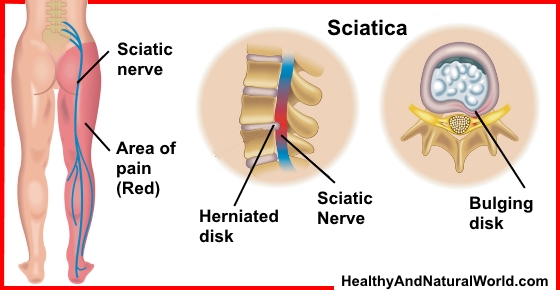
Top 8 Natural Treatments For Sciatic Pain 

The sciatic nerve is one of the largest nerves of our body. It runs all the way down from the lower spine over the buttock to both feet to provide movement, feeling, and strength in both legs.

As many as 40% of all people will suffer from sciatic pain at some point in their life. This is a condition which is often mistaken for lower back pain or leg cramps. But it actually is something that puts pressure or pinches the nerve and fires pain down your back or thigh to your legs.


Sciatic pain can vary from a mild ache or numb feeling to a sharp, burning and very painful sensation that occurs off and on through one side of your body. Most people stay in bed and take ibuprofen or other over the counter painkillers to find relief.

Here are 8 natural ways that could help you to cure the inflammation and fight sciatic pain.

1.    Acupuncture

Acupuncture is an alternative treatment were hair-fine needles are inserted at specific points of your body. It stimulates energy flow and improves nerve function. Some people get relief after just one session, but for most people it takes a few sessions.
Acupuncture is gaining more and more popularity and it can be used to treat many conditions, such as relieving migraines, stimulating lymph flow, treating stress, and even quit smoking.

2.    Chiropractor

Although the effectiveness of chiropractic adjustments shows mixed scientific results, many sciatic patients report a significant reduction in sciatic pain.
Spinal manipulation can restore the mobility, improve function, reduce inflammation, decrease the pain, and promote natural healing.

3.    Ice Packs

Ice packs (or a package of frozen peas wrapped in a towel) work great to find instant relief. Apply for 20 minutes on the affected area every two hours until pain disappears.

4.    Alternate Temperatures

Although ice packs work great to find instant relieve, the sciatic nerve lies deep within our body and ice packs won’t go down to the inner inflammation.

Apply a hot pack, just after icing or take a very hot bath. Alternate temperatures boost blood circulation and lymph flow, which can help you to reduce inner inflammation and assist the healing process.

5.    Mild (Yoga) Stretches

Moving around may be the last thing on your mind when struggling with sciatic pains, but it is important to get physically active or the pain will last longer.
Inactivity actually aggravates the problem. Some people report improvements through gentle back or yoga stretches. These exercises increase blood flow, strengthen the back muscles, and improve mobility.
Alternatively you can walk to stretch your leg and back muscles.

6.    Massage

Deep tissue massage or trigger-point therapy has shown some beneficial effects on muscle spasms, pain, and numbness of legs and toes.
Use herb infused oil or add essential oils to enhance the effect.

7.    Tennis Ball Therapy

Tennis ball therapy utilizes the principles of massage, acupressure and reflexology which help to relieve sore muscles and muscle tension.
In the case of sciatic pain, the tennis ball aims to treat the piriformis muscle which is located close to the sciatic nerve. This muscle can push the sciatic nerve against the tendons beneath it, which results in contributing to the familiar buttock and leg pain.
The tennis ball presses and treats trigger points in the piriformis muscle, reduces the muscle tension and rigidity, improves mobility and improves blood circulation to the area.

8.    Epsom Salt Bath

Epsom salts are known to relax the nervous system and draw toxins out of your body, and can be found in any local drug store.
Fill the bath with hot water and add 2 cups of Epsom salt. Soak in the bath for about 15-20 minutes. The heat of the bath will also increase circulation and reduce inflammation.
And last but not least, give your nerves and body time to heal, relax, and balance.
So get some extra sleep and rest to give your nerves the chance to rebuild and strengthen themselves.
Although most of these complementary and alternative remedies are not backed up by scientific studies, many people report significant improvements and it helps control the pain, spasm, numbness, and cramps.
If the pain and symptoms persist, it is important to visits a doctor to see if there is a dislocated vertebrate or any other condition that pinches or puts pressure on your nerves. Sometimes a surgery is needed to put everything back in place.

This is only for your information, kindly take the advice of your doctor for medicines, exercises and so on.     
https://gscrochetdesigns.blogspot.com. one can see my crochet creations  
https://gseasyrecipes.blogspot.com. feel free to view for easy, simple and healthy recipes    
https://kneereplacement-stickclub.blogspot.com. for info on knee replacement
 

 source-healthynnaturalworld

Labels: , , , , , , , , , , , , ,

Thursday, September 27, 2018

8 Pressure Points For Self Defense

Today all over the world, everyone needs to learn some form of self defense to protect themselves from their attackers- kidnappers / rapists / robbers / or anyone else. The areas vividly shown in the pictures are real strategic points which one should remember to fight against the attacker.

While most of us would like to believe that we're going to experience a serene and peaceful existence, there are plenty of bad people in the world who can end using violence against us to get what they want. While it's horrible to think about, it's better to be safe than sorry, which is why we've gathered a list of pressure points that can be used to help you escape from any potential aggressors.

1. JawSelf Defense
Hitting the jaw with the back of your hand with enough force can cause an attacker to lose consciousness for a while. This is because such an impact will turn the head so sharply that it will end up shaking the brain.
2. Sciatic NerveSelf Defense
The sciatic nerve can be found on the midline of the inner thigh between the knee and the groin. Hitting this pressure point with enough force will cause dizziness, shock, a great deal of pain, and even possible temporary immobility of the foot.
3. BicepsSelf Defense
A blow to the biceps can inflict temporary paralysis of the arm, as well as extreme pain. Often, there is also an involuntary relaxation of the fingers, which may result in the attacker losing their grip.
4. GroinSelf Defense
The groin is an area that's full of sensitive nerves, and slightly above it, you will also find the bladder and genitals. A weak blow to this sensitive area will often result in a very severe reaction from the person on the receiving end. A heavy blow can actually even cause shock and rupture the bladder.
5. Brachial Plexus
Self Defense
Blows to the brachial plexus will cause a great deal of pain as well as a numb sensation in the hand. If the impact is hard enough, you could actually end up breaking the collarbone, causing a rupture of the nerves of the brachial plexus.
6. Tibialis Anterior MuscleSelf Defense
A heavy blow to this region may end up breaking it, leading to pain that may immobilize and nauseate anyone on the receiving end. If the fracture is very grievous, then blood vessels may become torn.
7. HandsSelf Defense
Human hands are brimming with sensitive nerve endings that you can use against your opponent. That's why pressing against the area between a person's fingers will cause them to loosen their grip and lose their composure.
8. EyesSelf Defense
Only ever use this one as a final resort, since a strong press to both eyes or a hard blow against at least one of them can cause a person to permanently go blind. However,  a light press to the eyes will be enough to make an attacker temporarily lose his sight, giving you ample time to get to safety.

THIS IS ONLY FOR INFORMATION, ALWAYS CONSULT YOU PHYSICIAN BEFORE HAVING ANY PARTICULAR FOOD/ MEDICATION/EXERCISE/OTHER REMEDIES.                                                                                                                                                                                                       PS- THOSE INTERESTED IN RECIPES ARE FREE TO  VIEW MY BLOG-                                                                                           https://gseasyrecipes.blogspot.com/   

 
FOR INFO ABOUT KNEE REPLACEMENT, YOU CAN VIEW MY BLOG-                                                                                                                                https:// kneereplacement-stickclub.blogspot.com/                              

FOR CROCHET DESIGNS                                                                                                                                                                                                                                 https://gscrochetdesigns.blogspot.com


Labels: , , , , , , , , , , ,

Wednesday, January 04, 2017

SCIATICA PAIN----

Sciatic nerve is a large nerve that runs from the lower back down the back of each leg. When something injures or puts pressure on the sciatic nerve, it can cause pain in the lower back that spreads to the hip, buttocks, and leg. Up to 90% of people recover from sciatica without surgery.

Symptoms-
 The most common symptom of sciatica is lower back pain that extends through the hip and buttock and down one leg. The pain  may get worse when you sit, cough, or sneeze. The leg may also feel numb, weak, or tingly at times. The symptoms of sciatica tend to appear suddenly and can last for days or weeks. Unlike other back pain, sciatic pain  radiates down the leg and into the foot. It may feel like a bad leg cramp that lasts for days.

Causes-
Mostly pregnant women suffer from sciatic pain, due to the pressure of the developing uterus on the nerve. At times, a herniated disc or degenerative arthritis may also be the cause.

Natural wear and tear of the vertebrae can lead to a narrowing of the spinal canal. This narrowing, called spinal stenosis, may put pressure on the roots of the sciatic nerve. Spinal stenosis is more common in adults over age 60.

In rare cases, sciatica may result from tumors growing inside or along the spinal cord or sciatic nerve. As a tumor grows, it may put pressure on the nerves that branch off from the spinal cord.

The muscle which connects the lower spine to the upper thighbone, runs directly over the sciatic nerve. That muscle is called  piriformis, when this muscle goes into a spasm, it can put pressure on the sciatic nerve, causing sciatica.  Piriformis syndrome is more common in women. 
Men keeping a fat wallet in their back pocket, can have  piriformis syndrome, as it puts chronic pressure on the piriformis muscle. A better place to keep the wallet will be in the front pocket or in the jacket's pocket.

Any injury / infection/ inflammation which irritates or compresses the sciatic nerve can trigger sciatic pain, at times, there may not be any particular reason.

Diagnosis-
the order may ask the patient to squat, walk on heels, lifting the leg without bending the knees etc to judge or may ask for imaging tests like- MRI can show the alignment of vertebral disks, ligaments, and muscles. A CT scan using contrast dye can also provide a useful picture of the spinal cord and nerves. Determining the cause of sciatica can help guide the course of treatment. X-rays can help identify bony abnormalities but can't detect nerve problems.

Complications-
By chance one develops a loss of bladder or bowel control, then this can be medical emergency, so one should contact the doctor at once. But most cases of sciatica will go away after a few days, complications are rare.

Treatment-
Heating pad or ice-pack, application for about 20 minutes can give relief. Try to find which helps- ice pack or heating pad helps or try to alternate with both of them.
Over the counter medications may help. At times, the doctor may give a steroid injection to give you relief from the inflammation.
Exercise- being active, keep moving as much as you can. Stretching slowly the hamstring muscle and lower back will also help.Yoga and tai-chi can help to strengthen the lower back. It is always best to consult your doctor or physical therapist as to what exercise you can do or you ought to avoid.

If the sciatic pain is due to herniated disc which doesn't subside even after few weeks, then after tests, the surgeon may suggest surgery to remove the herniated disc which puts pressure on the sciatic nerve. most patients get relief from this surgery.
After surgery, the patient is taught exercises to strengthen their lower back muscles. This will help patients to get back to their normal routine work.

Prevention
Normally, when one has sciatica, it keeps recurring. But if one follows certain regimen, then they can overcome- like regular exercise, maintaining proper posture, always bend at knees to life heavy objects or to bend down to pick something.

this is only for your information, kindly take the advice of your doctor for medicines, exercises and so on.

https://gscrochetdesigns.blogspot.com. one can see my crochet creations
https://gseasyrecipes.blogspot.com. feel free to view for easy, simple and healthy recipes 
https://kneereplacement-stickclub.blogspot.com. for info on knee replacement  

Labels: , , , , , , ,