Thursday, April 10, 2025

Did You Know Your Ears Hold Secrets About Your Heart?

 Could that small vertical mark on your ear have something to do with heart disease? Here is a simple test that could protect you from serious damage to your health

In 1973, a doctor named Sanders T. Frank conducted a number of studies to determine whether an earlobe crease, known as "Frank's sign", could be an indicator of coronary artery disease. He found that patients who had creases running at an angle from the bottom of their ear opening to the edge of their ear lobe were at higher risk for heart disease. 
 
But before you start worrying, here are some basic statistics and background on the test. Since Dr. Frank's studies were published, more scientists have looked into the correlation between the earlobe crease and heart disease. 
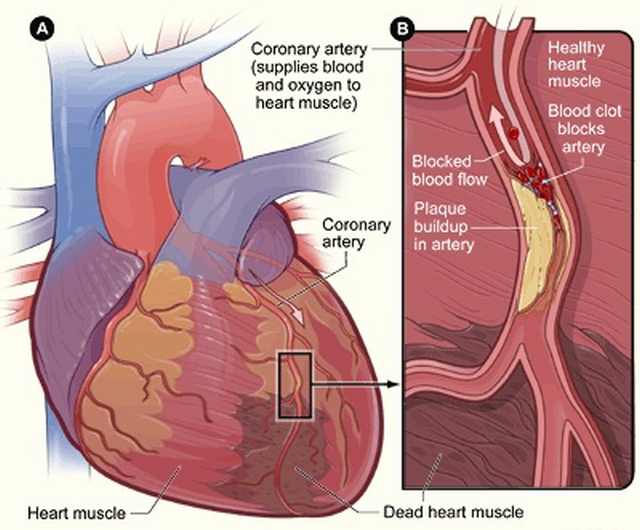
 heart
 
Researchers found that the earlobe crease "may identify a subset of patients prone to early aging and to the early development of coronary artery disease, whose prognosis might be improved by early preventative measures." Others like Dr. Sarah Samaan clarify that, "Heart disease doesn't cause earlobe creases, nor do the creases cause heart disease, but they seem to be a marker for an unhealthy lifestyle."

Biologically, ear creases result when the elastic tissue around the small blood vessels in the ear begins to degenerate. This is the same type of change that occurs in the blood vessels when one has coronary artery disease. Therefore, scientists concluded that the visible change in the earlobe could be an indication of more serious changes occurring in the blood vessels around the heart. 
 
To provide you with some numbers, a more recent study in 2006 found the predictive value of the ear crease to be about 80 percent in individuals 40 years and younger. That said, it appears that ear creases can predict certain aging diseases like heart disease and possibly even diabetes, but there are still some scientists that are unconvinced. 
 
One study conducted in 1980 found that there was no significant relationship between earlobe creases and coronary artery disease in American Indians, suggesting that "Frank's sign" may not have the same level of indication in other ethnic groups. Another study on Japanese Americans also found no correlation between earlobe creases and heart disease. 
 
Yet other scientists propose that because the studies are usually conducted on patients over the age of 50, the results may be biased as individuals naturally have a higher risk for these diseases as they age. It could be that earlobe creases are simply a sign of the natural aging process. 
 
Despite these doubts, most scientists and doctors agree that the appearance of an ear crease at the age of 50 and below could be a good indication that the body is not as healthy as it should be. For this reason, if you have an earlobe crease, or know someone with one, it is important to consult a doctor who can test your blood and determine if this odd indicator holds any truth. And remember, heart disease can be treated and even stopped in its tracks, and once it has disappeared, so too will the earlobe crease!


This is only for your information, kindly take the advice of your doctor for medicines, exercises and so on.   


Labels: ,

Monday, November 11, 2019

Early menopause may raise the risk of cardiovascular issues

Researchers suggest that attaining menopause before the age of 40 is linked to several heart  conditions in women.

In the largest, single study to-date of diverse heart disease risks relative to age at menopause, researchers used the UK Biobank to examine data on more than 144,000 postmenopausal women ( average age of 60), including about 4,900 women who experienced menopause before age 40 after their ovaries were removed surgically.


During an average of 7 years of follow-up, researchers found that women who had experienced premature menopause were  significantly more likely to develop conventional heart disease risk facttors, such as high blood pressure, high levels of " bad" cholesterol and tyep 2 diabetes.


Even after accounting for conventional risk factors, women with premature menopause still had a significantly increased risk of coronary artery disease, heart failure, thickening and narrowing of the arotic valve, atrial fibrillation ( an abnormal heart rhythm) and blood clots forming in the legs or lungs.


The heart disease risks were higher for women who experienced menopause due to surgery compared to natural menopause. Some of this risk difference may be explained by differences in cardiovascular disease risk factors.


Whether or not a woman took hormones for menopausal symptoms did not change the cardiovascular risks.


Menopausal age prior to age 50 had a dose-dependent effect on cardiovascular disease risk, meaning risk continued to increase with younger menopausal ages and increased cardiovascular risks lasted for decades after menopause.


Our study reinforces the importance of menopause history in informing a woman's risk of future heart disease, said the lead author of the study.


Women should make sure their physician knows their menopause history, particularly of they experiences menopause before age 40. History of premature menopause should prompt physicians to refine the patient's estimated future risks for heart disease and to work toward lowering their heart disease risks, added the author.


He said early evaluations could lead to intervention and medication recommendations. 


Whether or not medications are warranted, eating a heart-healthy diet and exercising regularly may be especially important for women with a history of premature menopause, he said.


this is only for your information, kindly take the advice of your doctor for medicines, exercises and so on.     
https://gscrochetdesigns.blogspot.com. one can see my crochet creations  
https://gseasyrecipes.blogspot.com. feel free to view for easy, simple and healthy recipes    
https://kneereplacement-stickclub.blogspot.com. for info on knee replacement


Labels: , , , , , , , , , , ,

Tuesday, August 20, 2019

Suffering from insomnia? You may have an increased risk of heart failure

People suffering from insomnia might have an increased risk of coronary artery disease, heart failure and stroke, says a study.
According to researchers, previous observational studies have found an association between insomnia, which affects up to 30 per cent of the general population and an increased risk of developing heart disease and stroke.

“These observational studies were unable to determine whether insomnia is a cause, or if it is just associated with them,” said the study’s lead author.

In the study, the researchers applied Mendelian randomisation, a technique that uses genetic variants known to be connected with a potential risk factor, such as insomnia, to reduce bias in the results.
The 1.3 million participants with or without heart disease and stroke were drawn from four major public studies and groups, said the research published.

Researchers found genetic variants for insomnia were associated with significantly higher odds of coronary artery disease, heart failure and ischemic stroke – particularly large artery stroke.

“It is important to identify the underlying reason for insomnia and treat it. Sleep is a behaviour that can be changed by new habits and stress management,” he said.


A limitation to the study is that the results represent a genetic variant link to insomnia rather than insomnia itself.

THIS IS ONLY FOR INFORMATION, ALWAYS CONSULT YOU PHYSICIAN BEFORE HAVING ANY PARTICULAR FOOD/ MEDICATION/EXERCISE/OTHER REMEDIES.                                    PS- THOSE INTERESTED IN RECIPES ARE FREE TO  VIEW MY BLOG-                                                                                           https://gseasyrecipes.blogspot.com/                                                                                                                                                FOR INFO ABOUT KNEE REPLACEMENT, YOU CAN VIEW MY BLOG-                                                                       https:// kneereplacement-stickclub.blogspot.com/                                                                                                                     FOR CROCHET DESIGNS                                                                                                   
                                https://gscrochetdesigns.blogspot.com

Labels: , , , , , , ,

Friday, July 26, 2019

Smoking can trigger severe pain in legs

Researchers have found a strong link between smoking and peripheral artery disease – a circulatory condition in which narrowed blood vessels reduce blood flow to the limbs – and this elevated risk can persist up to 30 years after quitting smoking. 

A recently published study also found that the link between smoking and peripheral artery disease was even stronger than that for coronary heart disease and stroke.


 "The study suggests that campaigns about smoking's health risks should emphasize the elevated risk of peripheral artery disease, not just coronary heart disease and stroke," said senior study author.


The study found that compared with never-smokers, those who smoked for more than 40 pack-years had roughly four times more risk for peripheral artery disease, versus 2.1 times and 1.8 times more risk for coronary heart disease and stroke, respectively.


 A pack-year is a parameter of smoking – 10 pack-years can mean one pack per day for 10 years or two packs per day for five years or some other combination.


 Similarly, participants who reported currently smoking more than a pack per day had a relative increased risk – 5.4 times more for peripheral artery disease versus 2.4 for coronary heart disease and 1.9 for stroke – compared to those who had never smoked.


Peripheral artery disease features the atherosclerotic build-up of cholesterol-laden deposits in arteries serving the legs. The reduction of blood flow leads to limb pain, poor wound healing, and other signs and symptoms. 


The effect of smoking on peripheral artery disease risk was not just stronger; it was also longer-lasting.


 Only after 30 years of smoking cessation did the peripheral artery disease risk for former smokers return to the baseline level seen in never-smokers.


By comparison, coronary heart disease risk took about 20 years to return to baseline after smoking cessation. 


The good news is that quitting smoking appeared to bring a meaningful drop in peripheral artery disease risk fairly quickly. 


"We observed a lower risk for peripheral artery disease, coronary heart disease, and stroke within five years of smoking cessation," says a data analyst and author of the study. 


"Smoking almost always starts in adolescence or early adulthood, and it's very important that young people understand how long the elevated health risk persists even after they've quit," the researchers noted.


THIS IS ONLY FOR INFORMATION, ALWAYS CONSULT YOU PHYSICIAN BEFORE HAVING ANY PARTICULAR FOOD/ MEDICATION/EXERCISE/OTHER REMEDIES.                                    PS- THOSE INTERESTED IN RECIPES ARE FREE TO  VIEW MY BLOG-                                                                                           https://gseasyrecipes.blogspot.com/                                                                                                                                                FOR INFO ABOUT KNEE REPLACEMENT, YOU CAN VIEW MY BLOG-                                                  https:// kneereplacement-stickclub.blogspot.com/                                                                      FOR CROCHET DESIGNS                                                                                                    
                                https://gscrochetdesigns.blogspot.com
 

Labels: , , , , , , , , ,

Sunday, January 13, 2019

Checking a Cough is Essential

Most people assume that coughing is associated with a lung or an airway problem. But, an unusual suspect may actually be the heart. It isn't unusual for people who have heart failure to experience significant coughing. In fact, a cough may indicate an important sign that heart failure treatment is inadequate, or, possibly, treatment may be causing problems. 

1. Heart Failure
Heart failure does not mean that the heart just stops, that is cardiac arrest. Rather, it means that the heart's pumping ability has been impaired to the extent that the heart is not always able to keep up with the demands of the body. Heart failure can cause a number of cardiac disorders, including coronary artery disease, hypertension, hypertrophic cardiomyopathy, diastolic dysfunction, and heart valve disease, among several others. Heart failure is a common disorder, with over a million people each year being hospitalized in the world.
A common problem with heart failure is that due to the heart's inefficient pumping ability, blood returning to the heart from the lungs tends to back up, producing pulmonary congestion, which is why people with heart failure are often said to have 'congestive heart failure.'
Consequently, with pulmonary congestion, fluid, and a little blood, can leak into the alveoli (air sacs) of the lungs. This lung fluid is what's largely responsible for the dyspnea (a feeling one cannot breathe properly) commonly experienced by people with heart failure because coughing is the body's way of clearing the airway and bronchial passages. Thus, it makes sense that a cough can also result from pulmonary congestion. 
2. Cardiac Cough
Coughing caused solely by heart failure can take several forms. A wet cough produces frothy sputum that may be tinged pink with blood, tends to be quite common with heart failure. Heavy wheezing and labored breathing may also accompany spells of coughing, along with a bubbling feeling in the chest, or even a whistling sound from the lungs.
Coughing symptoms like this usually are a sign that heart failure has become substantially worse, and such a cough is usually accompanied by a general flare-up of heart failure symptoms. These symptoms are likely to include dyspnea, orthopnea (shortness of breath when lying down), edema (swelling), and paroxysmal nocturnal dyspnea - waking up from sleep in the middle of the night, gasping and coughing. However, people who have this severe form of cardiac cough are generally sick enough to seek medical help without much prompting. 
A cardiac cough can take a much less severe form. Some people with heart failure will develop an annoying, more chronic, drier cough that may produce a small amount of white or pink frothy mucus. People who have this less severe form may assume it to be due to some other cause, and thus may fail to seek medical assistance. In doing so, however, the symptoms of heart failure are likely to become substantially worse. So anyone who has been told they have heart failure should not ignore the onset of a cough even if they consider it to be mild. 

3. Medication-Related Cough
Coughing is also a common effect of a class of medication that is often prescribed to those who have been diagnosed with heart failure: angiotensin-converting enzyme (ACE) inhibitors. ACE inhibitors are helpful for heart failure because they dilate the arteries, thus making it easier for the heart to pump blood. These drugs, however, produce a cough in about 4% of people who do take them.
The cough they experience is generally a dry hacking cough which does not produce sputum. Reports suggest that non-steroidal anti-inflammatory drugs (NSAIDs) may improve a cough caused by ACE inhibitors, but, in the large majority of people who have this problem, the drug must be discontinued, primarily because the ACE inhibitor can be switched to an angiotensin II receptor blocker (ARB), which has many of the same advantages as the ACE inhibitor, but which causes coughing less frequently. A change in medication can help relieve a dry, hacking cough due to ACE inhibitors.

THIS IS ONLY FOR INFORMATION, ALWAYS CONSULT YOU PHYSICIAN BEFORE HAVING ANY PARTICULAR FOOD/ MEDICATION/EXERCISE/OTHER REMEDIES.                                                                                
 PS- THOSE INTERESTED IN RECIPES ARE FREE TO  VIEW MY BLOG-                                                                                           https://gseasyrecipes.blogspot.com/                                                                                                                                                                             FOR INFO ABOUT KNEE REPLACEMENT, YOU CAN VIEW MY BLOG-                                               
     https:// kneereplacement-stickclub.blogspot.com/                                                                                     
  FOR CROCHET DESIGNS                                                                                                                                                             https://gscrochetdesigns.blogspot.com


Labels: , , , , , , ,

Friday, December 21, 2018

Seven good reasons to drink black tea every day

Regularly drinking black tea may not be as bad as you might have imagined. There is good evidence to show that black tea has many health benefits.

Black tea is packed with healthy substances called polyphenols - antioxidants that can help protect your cells from DNA damage. Hence, many people have embraced black tea as part of healthy diet.
Here are some surprising health benefits of drinking black tea on a regular basis:

Cardiovascular health

Black tea contains properties that boost heart health. Studies have linked regular consumption of black to a reduced risk of getting many cardiovascular diseases as well as help repair coronary artery dysfunctions in some heart patients.

Oral health

Studies showed that the polyphenols found in black black tea can help reduce plaque formation as well as restrict the growth of bacteria that cause cavities and tooth decays.

Digestive health

Tannins and other chemicals found in black tea have a positive and relaxing effect on the digestive system, and thus drinking it regularly improves your digestion.

Asthma

Caffeine found in black tea can act as bronchodilator, which is extremely beneficial for asthmatic patients. In addition to caffeine, tea contains some natural theophylline that can help open up the airways in the lungs, relieving the symptoms of asthma, such as wheezing, coughing and breathlessness.

Cancer

Some research suggests that antioxidants like polyphenol and catechins in tea may help prevent some types of cancer. Drinking tea, either black or green varieties, also aids women in preventing breast cancer as well as ovarian cancer.

Diabetes

Regular consumption of black tea has been linked to a decreased risk of type 2 diabetes. A study published in the journal Diabetologia showed that drinking at least 3 cups of tea per day reduced the risk of type 2 diabetes by about 42%. This makes black tea beneficial for people with diabetes.

Happiness

Black tea is not just a hot beverage for you to enjoy, it also helps you manage nerves and stress – essential to living a healthy and happy life. The polyphenols in tea help release dopamine to give off a feeling of happiness in the brain.

THIS IS ONLY FOR INFORMATION, ALWAYS CONSULT YOU PHYSICIAN BEFORE HAVING ANY PARTICULAR FOOD/ MEDICATION/EXERCISE/OTHER REMEDIES.                                                                                
 PS- THOSE INTERESTED IN RECIPES ARE FREE TO  VIEW MY BLOG-                                                                                           https://gseasyrecipes.blogspot.com/                                                                                                                                                                             FOR INFO ABOUT KNEE REPLACEMENT, YOU CAN VIEW MY BLOG-                                               
     https:// kneereplacement-stickclub.blogspot.com/                                                                                     
  FOR CROCHET DESIGNS                                                                                                                                                                                                                                 https://gscrochetdesigns.blogspot.com
  

Labels: , , , , , , , , , , , , ,