Did You Know Your Ears Hold Secrets About Your Heart?
Could that small vertical mark on your ear have something to do with heart disease? Here is a simple test that could protect you from serious damage to your health
In 1973, a doctor named Sanders T. Frank
conducted a number of studies to determine whether an earlobe crease,
known as "Frank's sign", could be an indicator of coronary artery
disease. He found that patients who had creases running at an angle from
the bottom of their ear opening to the edge of their ear lobe were at
higher risk for heart disease.
But before you start worrying, here are some basic statistics and
background on the test. Since Dr. Frank's studies were published, more
scientists have looked into the correlation between the earlobe crease
and heart disease.
Researchers found that the earlobe crease "may identify a subset of
patients prone to early aging and to the early development of coronary
artery disease, whose prognosis might be improved by early preventative
measures." Others like Dr. Sarah Samaan clarify that, "Heart disease
doesn't cause earlobe creases, nor do the creases cause heart disease,
but they seem to be a marker for an unhealthy lifestyle."
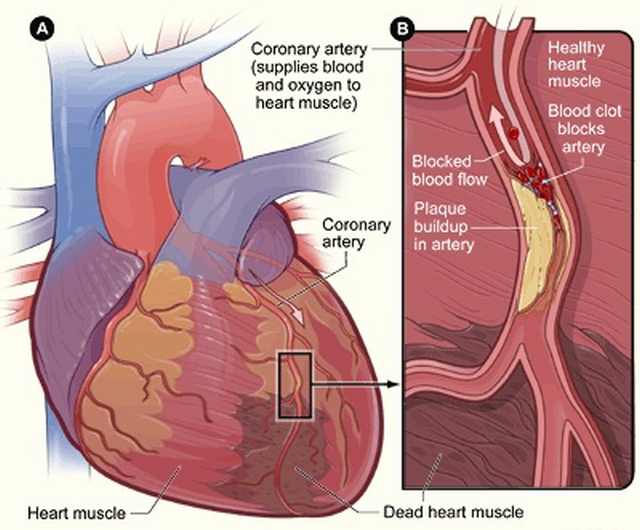
Biologically, ear creases result when the
elastic tissue around the small blood vessels in the ear begins to
degenerate. This is the same type of change that occurs in the blood
vessels when one has coronary artery disease. Therefore, scientists
concluded that the visible change in the earlobe could be an indication
of more serious changes occurring in the blood vessels around the heart.
To provide you with some numbers, a more recent study in 2006 found the
predictive value of the ear crease to be about 80 percent in individuals
40 years and younger. That said, it appears that ear creases can
predict certain aging diseases like heart disease and possibly even
diabetes, but there are still some scientists that are unconvinced.
One study conducted in 1980 found that there was no significant
relationship between earlobe creases and coronary artery disease in
American Indians, suggesting that "Frank's sign" may not have the same
level of indication in other ethnic groups. Another study on Japanese
Americans also found no correlation between earlobe creases and heart
disease.
Yet other scientists propose that because the studies are usually
conducted on patients over the age of 50, the results may be biased as
individuals naturally have a higher risk for these diseases as they age.
It could be that earlobe creases are simply a sign of the natural aging
process.
Despite these doubts, most scientists and doctors agree that the
appearance of an ear crease at the age of 50 and below could be a good
indication that the body is not as healthy as it should be. For this
reason, if you have an earlobe crease, or know someone with one, it is
important to consult a doctor who can test your blood and determine if
this odd indicator holds any truth. And remember, heart disease can be
treated and even stopped in its tracks, and once it has disappeared, so
too will the earlobe crease!
T