Most people think of memory loss as the
first sign of Alzheimer’s, but what if the warning signs started much
earlier—and right under your nose? Turns out, how well you can smell
might say a lot more about your brain than you'd expect. New research
suggests a simple scratch-and-sniff test could help catch Alzheimer’s
long before memory starts slipping.
A group of researchers at Massachusetts General Hospital has been
working on a smell test that might do exactly that—quietly flag early
cognitive changes, even before you’d notice anything’s off.
The study, published in Scientific Reports, presents a revolutionary
at-home smell test known as AROMHA. This innovative approach aims to
address a significant challenge in medicine: the need for affordable and
non-invasive methods to detect Alzheimer’s disease before noticeable
symptoms appear.
What Smell Tells Us About the Brain
Smell isn’t just about catching a whiff of dinner or noticing perfume.
The parts of the brain that process smells are closely linked to areas
responsible for memory and thinking. And those areas are among the first
to be affected in Alzheimer’s disease. Long before memory problems
start, tiny changes begin taking root in those circuits—sometimes up to
20 years before noticeable symptoms.
This makes smell an interesting tool in spotting brain changes early.
Scientists have known for years that smell loss is common in several
neurological conditions. What’s changing now is how we might use that
knowledge in a practical way.
Meet the AROMHA Test: Scratch, Sniff, and Think
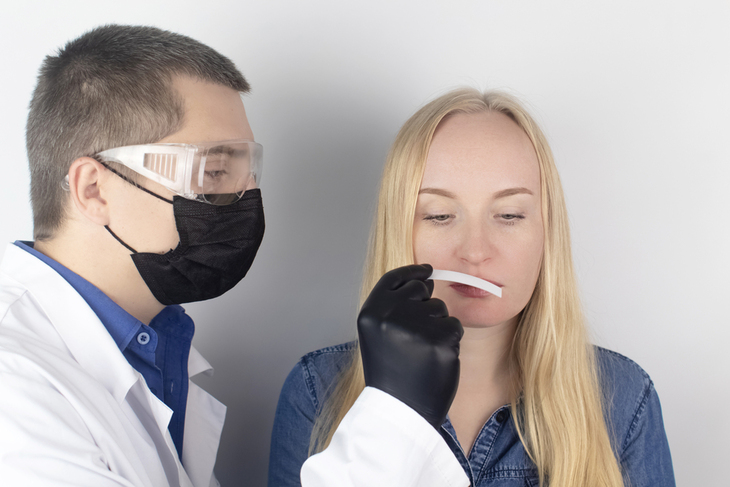
The test developed for this research is
called AROMHA, and it’s surprisingly straightforward. People are mailed a
set of scent cards. Each has a label infused with a smell. All they
have to do is peel, sniff, and follow prompts online.
But it's not just about recognizing the scent. The test also checks how
well someone can tell different smells apart, how strong the smells
seem, and whether they can remember them a little later. There's even a
built-in self-check—after answering, participants rate how confident
they are in their choice. That kind of self-awareness has been tied to
how quickly brain changes happen, adding another layer to the data.
What the Study Uncovered
The researchers looked at over 180 people, including those with healthy
brain function, some who were concerned about memory but tested
normally, others with mild cognitive impairment (MCI), and a few with
diagnosed smell loss.
What stood out was how sharply people with MCI struggled with smell
identification and recognition. The drop-off wasn’t just due to age.
While it's normal for smell to fade a little over time, the decline in
this group was steeper—suggesting more than just aging at work.
There was also a group with complete smell loss, and their scores
hovered at guessing levels, proving the test was doing what it was
supposed to do—measuring real smell ability.
Easy to take, No matter where you are

One thing that made the test interesting
was its flexibility. People took it in different settings: at home
alone, during a remote session with a researcher, or in person. No
matter how they did it, the results stayed consistent. Language didn’t
make a difference either—it worked well in both English and Spanish.
And despite what people often assume about
tech and older adults, most people over 55 were able to do the test
without trouble. That matters, because it opens the door for a test like
this to be part of routine care—simple, accessible, and low-cost.
Why This Could Change the Way We Screen for Alzheimer’s
Today, many people don’t get checked until
memory problems are already affecting daily life. But by then, the
damage is well underway. Catching things earlier could open the door for
newer treatments, or even let people join clinical trials while their
brains are still in better shape.
A smell test might eventually become a normal part of health check-ups
for people over a certain age, much like cholesterol or blood pressure
screenings. It's also possible that different smell issues might help
tell different brain conditions apart—Alzheimer’s often causes trouble
identifying smells, while Parkinson’s tends to reduce smell overall.
And because the test can be done at home, it could help people in areas
with limited access to specialists. That makes early detection more
realistic for a much larger group of people.
The Bigger Picture
There’s still more work to do before this kind of test becomes routine.
But it’s an exciting step. It shows that our sense of smell could be
doing more than guiding us toward food or warning us about danger—it
could quietly flag brain changes long before memory issues appear.
T