Monday, November 08, 2021

Compression Socks For Varicose Veins and More

You may have run into them on your last Amazon search for winter wool socks: compression socks. What are they though? Compression socks can be prescribed by a doctor or bought over the counter as "smart" socks that distribute pressure through your feet, ankles, and calves. They are recommended for anyone over the age of 65, and they aim to relieve muscle fatigue by helping your veins pump blood more efficiently. They can also potentially prevent various vein conditions such as varicose veins. Let's learn all about them.

What Are Compression Socks?
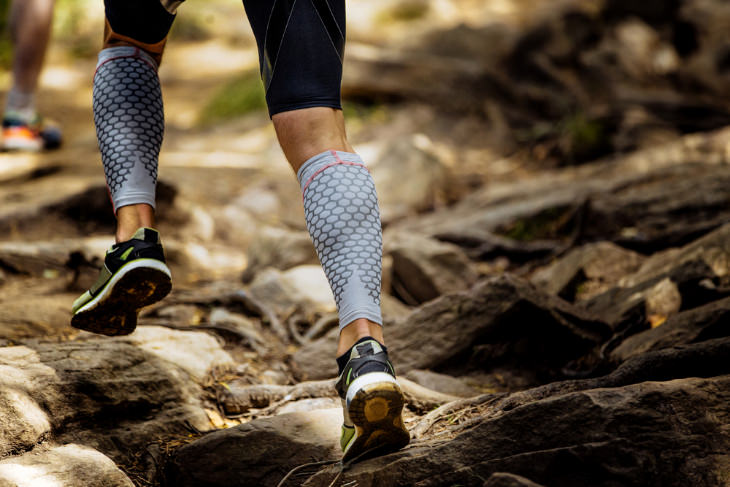
Compression socks
Compression socks can be open-foot as in the picture above, or closed-foot like any other sock. They apply light pressure on the legs in order to promote blood flow from leg veins back to your heart. 
 
Your heart pumps out warm, oxygen-rich blood. After finishing its route through your legs, the blood that circulates back into the heart for oxygenation has to flow up against gravity on its way to its destination. This happens by contracting calf muscles and a series of one-way vein valves. 
 
There are several reasons for damaged valves, the main one is old age. Damaged valves lead to blood backtracks and pools around the damaged valves. Compression socks help support your veins. Dr. Caroline Novak will explain how the socks may help with varicose veins:

What are the Health Benefits?
Compression socks
Compressions socks' purpose is to boost blood circulation in your legs. They offer support to the muscles and veins and by doing so they may:​​ Prevent blood from pooling in your leg veins. 
 
Reduce swelling. 
Prevent ulcers. 
Prevent blood clots. 
Relieve varicose veins pain. 
Reduce pressure inside veins (venous hypertension). 
Improve lymphatic drainage.

There are three types of compression socks: 
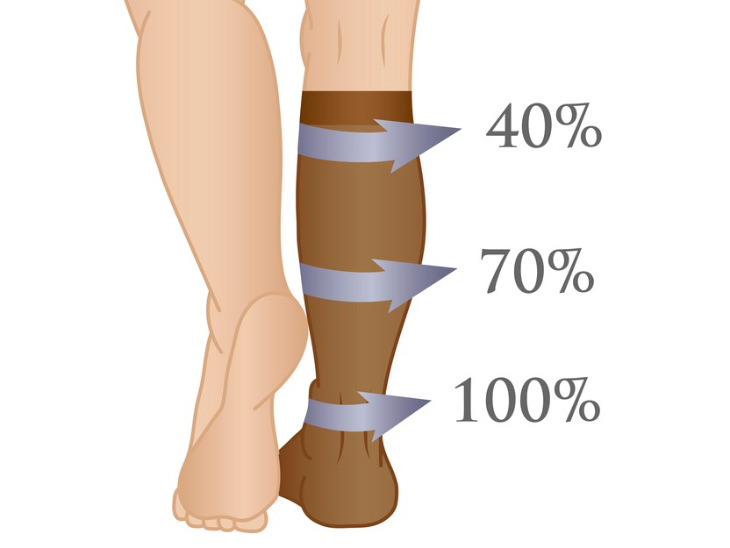
Graduated compression stockings. 
These are given by prescription. They apply the strongest pressure around your ankles, gradually loosening towards your knees. These help with swelling that is caused by fluid buildup. 
 
Anti-embolism stockings.  
These are given by prescription. They reduce the possibility of deep vein blood clots (otherwise known as deep vein thrombosis) and are designed for people who aren't mobile. People who are bed-bound or are in a wheelchair will benefit the most. 
 
Non-medical support hosiery. 
These can be purchased over the counter in any pharmacy or medical store. They apply uniform pressure throughout the leg, which is generally weaker than a prescribed compression sock. They relieve tired and aching legs, are recommended for pregnant women, people who fly a lot, and people who stand up all day. Athletes also use them for a more efficient workout. 
 
What are the Risks?
If your compression socks do not fit perfectly, they can prevent blood from circulating to the leg. People with extremely dry, sensitive, or irritated skin should avoid the use of compression socks. Here are some tips to manage and avoid risks: 
 
Have your prescription socks professionally fitted. When losing or gaining weight, have them refitted. 
 
Check your skin daily for signs of irritation or redness. 
 
Hand-wash and hang to dry to prolong the life of the socks.
 
Dispose of the socks after 30 daily wears. 
 
Use a new clean pair every day. 
 
 Enjoy these additional tips and information from vascular surgeons:

This is only for your information, kindly take the advice of your doctor for medicines, exercises and so on.   

https://gscrochetdesigns.blogspot.com. one can see my crochet creations  
https://gseasyrecipes.blogspot.com. feel free to view for easy, simple and healthy recipes    
https://kneereplacement-stickclub.blogspot.com. for info on knee replacement

Labels: , , , , ,

Saturday, December 14, 2019

Swollen Ankle and Leg

The ankles and legs are common sites of swelling because of gravity’s effect on the fluids in the human body. However, fluid retention from gravity isn’t the only cause of a swollen ankle or leg. Injuries and subsequent inflammation can also cause fluid retention and swelling.

A swollen ankle or leg can cause the lower part of the leg to appear larger than normal. The swelling can make it difficult to walk. It may be painful, with the skin over your leg feeling tight and stretched out. While the condition isn’t always a reason for concern, knowing its cause can help rule out a more serious problem.

If you stand a large part of the day, you may develop a swollen ankle or leg. Older age can also make swelling more likely. A long flight or car ride may cause a swollen angle, leg, or foot too.
Certain medical conditions can also result in a swollen ankle or leg. These include:
  • being overweight
  • venous insufficiency, in which problems with valves of the veins prevents blood from flowing back to the heart
  • pregnancy
  • rheumatoid arthritis
  • blood clots in the leg
  • heart failure
  • kidney failure
  • leg infection
  • liver failure
  • lymphedema, or swelling caused by a blockage in the lymphatic system
  • previous surgery, such as pelvic, hip, knee, ankle, or foot surgery
Taking certain medications can lead to this symptom. These include:
  • antidepressants, including phenelzine (Nardil), nortriptyline (Pamelor), and amitriptyline 
  • calcium channel blockers used to treat high blood pressure, including nifedipine (Adalat CC, Afeditab CR, Procardia), amlodipine (Norvasc), and verapamil (Verelan)
  • hormone medications, such as birth control pills, estrogen, or testosterone
  • steroids
Swelling in the ankle and leg could be the result of inflammation due to acute or chronic injury. Conditions that can cause this type of inflammation include:
  • ankle sprain
  • osteoarthritis
  • gout
  • broken leg
  • Achilles tendon rupture
  • ACL tear

Edema

Edema is a type of swelling that may occur when extra fluid flows into these areas of your body:
  • legs
  • arms
  • hands
  • ankles
  • feet
Mild edema can be caused by pregnancy, premenstrual symptoms, consuming too much salt, or being in one position for a long time. This type of leg or ankle swelling can be a side effect of certain medications, such as:
  • thiazolidinediones (used to treat diabetes)
  • high BP medications
  • steroids
  • anti-inflammatory medications
  • estrogen
Edema can be a symptom of a more serious medical issue, such as:
  • kidney disease or damage
  • congestive heart failure
  • veins that are weak or damaged
  • a lymphatic system that isn’t working properly
Mild edema will usually go away without any medical treatment. However, if you have a more serious case of edema, it can be treated with medications.

Swollen ankles and legs are common when you’re pregnant because of factors such as:
  • natural fluid retention
  • pressure on veins due to the extra weight of your uterus
  • changing hormones
The swelling tends to go away after you deliver your baby. Until then, try these tips to prevent or lessen the swelling.

Swelling prevention in pregnancy

  • Avoid standing for long periods of time.
  • Sit with your feet raised.
  • Keep as cool as possible.
  • Spend time in the pool.
  • Keep a regular exercise routine as approved by your doctor.
  • Sleep on your left side.
Don’t reduce your water intake if you have swelling. You need plenty of fluids during pregnancy, usually at least 10 cups per day.
If the swelling is painful, you should see your doctor to make sure that your blood pressure is normal. Your doctor will also want to check if you have a blood clot and rule out other possible conditions, such as preeclampsia.

Seek emergency medical care if you also have heart-related symptoms. These can include:
  • chest pain
  • trouble breathing
  • dizziness
  • mental confusion
You should also seek emergency treatment if you notice an abnormality or crookedness to the ankle that wasn’t there before. If an injury prevents you from putting weight on your leg, this is also cause for concern.
If you’re pregnant, seek immediate medical attention if you have symptoms associated with preeclampsia or dangerously high blood pressure. These include:
  • severe headaches
  • nausea
  • vomiting
  • dizziness
  • very little urine output
Seek medical attention if at-home treatments don’t help reduce swelling or if your discomfort increases.

Home care

To treat a swollen ankle or leg at home, remember the acronym RICE:
  • Rest. Stay off your ankle or leg until you can get to the doctor or until the swelling goes away.
  • Ice. Put ice on the swollen area as soon as you can for 15 to 20 minutes. Then repeat every three to four hours.
  • Compression. Wrap your ankle or leg snugly, but be sure not to cut off circulation. Support stockings may be an option.
  • Elevation. Raise your ankle or leg above your heart (or as far above your heart as possible). Two pillows will usually give you the correct elevation. This encourages fluid to move away from your leg.

Medical treatment

If you seek medical attention, your physician will likely determine what’s causing your symptoms. Testing may include:
  • blood tests
  • an x-ray
  • an ECG
  • urinalysis
If the swelling is caused by a medical condition such as congestive heart failure, the doctor may prescribe diuretics. These medications affect the kidneys and stimulate them to release fluids.
If an ongoing medical condition such as rheumatoid arthritis is the root of the problem, your treatment may turn into management and prevention of that condition.

Swelling due to injury may require bone resetting, a cast, or surgery to repair the injured area.
For swelling that’s painful, a doctor may prescribe a pain reliever or over-the-counter anti-inflammatory medication, such as ibuprofen (Advil) or naproxen sodium (Aleve).

Mild swelling from pregnancy or a mild injury usually goes away on its own after delivery of the baby or with sufficient rest.

After treatment, you should contact your doctor if:
  • your swelling gets worse
  • you have breathing difficulty or chest pain
  • you feel dizzy or faint
  • your swelling doesn’t decrease as quickly as the doctor said it would

Complications from a swollen leg or ankle can include:
  • increased swelling
  • redness or warmth
  • sudden pain that wasn’t there previously
  • chest pain lasting for more than one to three minutes
  • feeling faint or dizzy
  • confusion
If any of these conditions arise, you should contact a medical professional immediately. They will be able to assess, rule out, or treat serious medical conditions.

Medical condition management

If you have a medical condition that can lead to swelling, take your medications and manage your symptoms carefully. People with congestive heart failure or kidney disease may need to limit the amount of fluid they take in each day.

Exercise precautions

While you can’t always prevent injuries during physical activity, warming up first can help. This includes a walk or light jog before engaging in vigorous physical activity.
Choose supportive footwear. Proper shoes can help correct any gait issues and prevent injuries. You should choose shoes that match your activity or your specific needs. If you jog or run, get fitted by a professional for the correct shoe.

Compression socks

Compression socks apply pressure to your lower leg. In some cases, this can help prevent and alleviate ankle and foot swelling caused by certain conditions, such as:
  • deep vein thrombosis
  • lymphedema
  • varicose veins
  • venous insufficiency
You should check with your doctor before using compression socks for your swelling. These special socks should be properly fitted for you and your needs. Also, be sure to wear them during the day and remove them before you go to bed.

Diet

A low-sodium diet discourages fluid retention. It involves refraining from eating fast food. Many frozen meals and canned soups often contain excess sodium, so read your food labels carefully.

Leg elevation

If you stand a lot during the day, try propping your feet up or soaking them in water when you get home to help prevent swelling.

this is only for your information, kindly take the advice of your doctor for medicines, exercises and so on.     
https://gscrochetdesigns.blogspot.com. one can see my crochet creations  
https://gseasyrecipes.blogspot.com. feel free to view for easy, simple and healthy recipes    
https://kneereplacement-stickclub.blogspot.com. for info on knee replacement


Labels: , , , , , , , , , ,

Thursday, July 11, 2019

Swollen Legs, Ankles and Feet: Causes and Proven Remedies

Swollen ankles, legs, and feet cause discomfort and even pain for many people. If you are one of these people who suffer from puffiness around your ankles, you probably wonder what you can do to reduce the ankle swelling and ease discomfort.

Swelling in the ankles, legs, and feet is caused by an accumulation of fluid around the base of your legs. This swelling (called edema) can be caused by something as simple as being on your feet or sitting down for too long. You may also feel that the area around the base of your legs swells and becomes puffy in hot weather.

However, sometimes fluid can build up and cause swelling around the ankles, legs, and feet due to an underlying serious health condition like problems with your kidneys, heart or blood circulation. Some medications can also cause a buildup of fluid in your body resulting in swollen ankles and feet. Also, if one leg looks swollen, while the other one appears normal, see a doctor, as this unevenness could be a sign of deep vein thrombosis.

It is important to tell the difference between swollen ankles caused by “everyday” activities, and edema that requires treatment by a doctor. Generally, harmless ankle and leg swelling occurs on both legs and doesn’t have other ominous symptoms like shortness of breath, chest pain, or bluish skin (cyanosis).

In this article, we will look at some of the best home remedies for swollen ankles. Because treatment depends on the underlying cause of leg edema, we will also look at the reasons for fluid retention that causes leg swelling. This will help you know if you should see a doctor for swollen ankles or swollen feet and legs.
At the end of the article you will find a recipe for parsley tea to reduce swollen ankles and feet.

What Causes Ankles, Legs, and Feet to Swell

Swollen ankles and swollen feet occur because of fluid retention around the base of your leg. According to doctors, certain conditions can cause fluid to leak from capillaries which then builds up in the surrounding tissues.

Here are some common reasons for ankle, leg, and feet swelling.

Standing or sitting for too long

One of the most common reasons for swelling around the ankles is standing or sitting for too long. According to doctors from the Cleveland Clinic, edema around the feet and ankles happens because gravity pulls fluid down to your feet. This can result in puffiness around your ankles that have the appearance of shiny skin. You may also notice that the skin retains a dimple when pressed.

Too much salt in your diet

Having high salt in your diet can cause edema because it makes it harder for your body to get rid of excess fluid. This fluid usually builds up around your ankles and feet causing swelling and puffiness.

According to a Dr., the kidneys are responsible for removing salt from your body. If your kidneys aren’t working properly, then more salt will be retained in the body and this will cause edema.

Pregnancy

Suffering from swollen ankles, feet, and legs is something that happens to most women who are pregnant. According to the American Pregnancy Association, swelling around the ankles, feet, and hands is normal during pregnancy. Other factors like hot weather, standing for long periods of time, or not being physically active can all increase swelling around your feet when you’re pregnant.
While some swelling around the base of your legs is normal during pregnancy, doctors from the Mayo Clinic warn that sudden swelling around your ankles and hands can be a sign of preeclampsia.

Hot weather

You may find that your ankles, feet, and bottom part of your legs swell more during hot weather. Doctors say that the body is less efficient at removing fluid from tissues when the weather is hot.

Varicose veins

Swollen ankles, feet, and legs are often a complication of varicose veins. The classic symptom of varicose veins is knotted bluish veins on your legs or spider veins.

The journal  says that varicose veins often cause ankle edema which may get worse as the day goes on. If you experience severe swelling in the ankles, you should see a doctor for a proper evaluation.

Deep vein thrombosis

Deep vein thrombosis (DVT) is a serious circulatory problem that may cause ankle swelling in just one leg. A common cause of DVT is long-haul air travel. Dr. Sheldon Sheps from the Mayo Clinic says that short-term foot swelling is usually not a serious problem. However, if the swelling in and around your ankles persists long after your flight and it is painful, you should visit your doctor promptly.

Serious medical conditions that cause edema

There are more serious medical conditions that cause foot edema and ankle swelling. A Dr. says that some of the reasons for swollen ankles that requires medical supervision are:

Heart disease. When the heart can’t pump enough blood around your body, fluid can build up in your legs, lungs, and abdomen.

Liver disease. Liver disease causes problems with the liver function that can lead to swelling in the abdomen and legs.

Kidney disease. When your kidneys function slows down, more fluid is retained in the body. This can even lead to whole body edema.

Home Remedies for Swollen Ankles, Legs, and Feet

There are many effective home remedies to reduce swelling in your ankles, legs, and feet. These natural methods can help to relieve occasional bouts of leg swelling and give you welcome relief from the discomfort that ankle edema causes.

Please remember, that if you have any chronic leg swelling or you have swelling in only one leg that is accompanied with pain, you should see your doctor for proper medical advice.

1. Exercise

Regular physical exercise is a great way to stimulate your blood circulation and stop fluid retention in your legs and ankles. For example, swimming is a great way to take pressure off your feet and, at the same time, boost your circulation.

The researchers reported that exercising was an efficient way to reduce lower limb edema. This can help reduce ankle swelling if you have a sedentary lifestyle or if your swollen feet and ankles are due to aging.

2. Raise your legs

Another effective way to reduce fluid retention in your legs and ankles is to raise your legs above the level of your heart.

For example, the researchers reported that raised-leg exercises helped many elderly people reduce the size of their swollen ankles. They exercised for 20 minutes, 3 times a day and results were seen within a 4-week period.

One easy way to keep your legs raised for an extended period of time to reduce leg edema is to sleep on your back with a pillow under your ankles. This will help to drain excess fluid that has built up around your ankles and feet.

3. Walk around

If you have swollen ankles and feet from standing or sitting for too long, you should get up every so often and walk around. This helps to stimulate your circulation and prevent too much fluid accumulating in your ankles.

The  researchers reported that walking helps to reduce the volume of fluid that builds up in the base of the leg. The researchers found that walking for 50 minutes in the afternoon can help reduce edema and leg pain during the day. The results were enhanced by wearing compression socks.

Doctors  also recommend that to prevent fluid retention and ankle swelling you shouldn’t sit or stand in one place for too long without moving.

4. Compression socks

Compression stockings can help to reduce foot swelling if you have to sit or stand for long periods of time. In fact, compression socks help also to prevent swollen ankles and feet and can make going about your daily activities much easier. Compression stockings help to get rid of the symptoms of fluid retention in the legs by forcing the blood and excess fluid back up the body.

In fact, the research published a study showing the effectiveness of compression stockings if you have to sit for long periods of time. It was found that the compression stockings helped to reduce ankle and leg size in the evening and were recommended for people who have to sit or stand for their job.

Compression stocking can be useful to prevent leg and ankle swelling if you are pregnant or have to fly a long distance.

5. Foot massage

To help reduce ankle and foot swelling while you are pregnant, you can try a relaxing foot massage. Massage therapy is a great way to naturally stimulate circulation and help reduce the signs and symptoms of edema.

The reported that foot massage helps to remove a buildup of fluid in the lower-leg area. In the study, women who were pregnant received foot massages for 20 minutes a day for 5 days. This was found to decrease swelling in the legs and ankles naturally.

You can do your own foot massage or have someone do it for you. This will not only help get rid of ankle swelling but also help relax you and act as a natural stress reliever.

6. Reduce salt intake

If you find that your ankles and legs are swollen, you should reduce your salt intake to prevent accumulation of fluid. Your body needs a little salt for it to function properly, but too much salt can have a detrimental effect on your heart, kidney, and cardiovascular system.

Doctors  recommend reducing salt intake if you are getting treated for edema. In fact, the researcher says that reducing the amount of salt (sodium) in your diet helps to prevent a buildup of fluid in your legs, heart, and lungs.

7. Stop smoking

To keep healthy, it’s important that you stop smoking now. Smoking can cause many health problems that lead to serious diseases like various cancers, heart disease, and lung disease. Quitting smoking will also improve your circulation and prevent hand, leg, and ankle edema.

The researchers published a study that found that smoking increases the risk of peripheral artery disease (PAD) – a condition that affects blood flow in your body. According to doctors, PAD usually affects blood flow to your legs.

8. Soak in Epsom salts

Soaking in Epsom salts is a great way to relax and relieve aching muscles in your legs and feet. There is some anecdotal evidence that having a foot bath in Epsom salts could also relieve swelling in your ankles.
The researchers published comments from a retired nurse that used Epsom salt soaks to reduce leg swelling. The nurse reported that it is well-known that Epsom salts are an effective remedy for swollen feet. She used an Epsom salt bath to increase blood circulation and reduce discomfort in swollen legs caused by heart disease.

Other Ways to reduce Swollen Ankles, Legs, and Feet

9. Drink plenty of water

We are all guilty of often not drinking enough fluids. By drinking water throughout the day, we hydrate our tissues and detox the body. Sodium and caffeine, which contribute to feet inflammation, get diluted if we water ourselves sufficiently. Eight to ten glasses a day should be the norm. So make sure you carry that water bottle with you. For added antioxidant value, squeeze some lemon or lime in or prepare your own flavoured water.

10. Consume enough magnesium

Often feet inflammation, which can result in painful swelling, is connected to magnesium deficiency.

How To Make Parsley Tea for Swollen Ankles, Legs and Feet

Parsley looks great as a garnish, so many have forgotten that this beautiful plant can also be used in many other ways. Eating an abundance of parsley has always been equated to health and this herb is believed to protect from various diseases.

Not long ago, parsley tea was frequently used to treat different maladies. It is now being revived as a powerful herbal remedy. One of the conditions parsley can help with is leg edema or swollen legs.

Parsley Tea and Leg Swelling

Parsley is a known natural diuretic. It helps the body get rid of excess water and salts by improving kidney function and taking more water from the blood.

A study published in 2002, provided substantial evidence for the use of parsley as a powerful diuretic. The study was done on rats (humans and rats have the same basic physiology). Rats that were offered parsley seed extract to drink produced significantly more urine over a period of 24 hours compared to when they were drinking only water.

Scientists believe that this herb acts in a diuretic way by inhibiting the sodium and potassium ion pumps, influencing the process of osmosis and increasing the flow of urine.

Parsley is rich in potassium. A lot of the chemically produced diuretic drugs lower potassium levels in the body, which is their negative side effect. If you use the simple parsley, you avoid this adverse effect as body’s potassium supply is not depleted.

Parsley is also a powerful antioxidant. Parsley is rich in vitamins A and C and is a good source of folic acid, which is one of the top 14 foods and nutrients that protect against cancer development.

Parsley Tea Recipe for Edema (Swollen Legs)

An authority in the field of herbals, suggests drinking at least two quarts of strong parsley tea per day. The dose can be increased to a cup of tea every hour.
When making your tea, use the fresh light-green leaves, along with roots and seeds (if you can get them).
  1. Chop the leaves and roots
  2. Place approximately ¼ cup of parsley into an infusion basket.
  3. Pour over a cup of boiled water or submerge into a tea pot.
  4. Let it steep for 5 to 7 minutes.
  5. Remove the basket or strain the tea.
You can use honey and lemon to enhance the tea’s flavor.

Also, don’t forget to combine tea consumption with other techniques for swelling reduction, such as leg elevation. 

Important note: Before using parsley tea as a diuretic, you might want to consult your doctor, especially if there is an underlying health condition that needs to be considered or if you are pregnant. Parsley tea may stimulate uterine contractions and increase the risk of miscarriage if you have it in large amounts.

Swollen Ankles, Legs and Feet – When to See a Doctor

Usually, if your legs or ankles swell after standing a lot or sitting for extended periods of time, there is nothing to worry about. However, if swelling at the bottom part of either of your legs is accompanied by other symptoms, you should see a doctor.

Doctors  recommend visiting a medical professional for leg or ankle swelling if it is accompanied by one or more of the following symptoms:
  • Just one leg or ankle swells suddenly
  • You have chest pain and difficulty breathing
  • You have shortness of breath when laying down or engaging in physical activity
  • You feel dizzy or lightheaded
  • The swelling occurs suddenly for no apparent reason
Even if you think that leg swelling doesn’t have a serious underlying cause, it is still best to have a doctor check out any kind of swelling that causes you concern.


THIS IS ONLY FOR INFORMATION, ALWAYS CONSULT YOU PHYSICIAN BEFORE HAVING ANY PARTICULAR FOOD/ MEDICATION/EXERCISE/OTHER REMEDIES.                                    PS- THOSE INTERESTED IN RECIPES ARE FREE TO  VIEW MY BLOG-                                                                                           https://gseasyrecipes.blogspot.com/                                                                                                                                                FOR INFO ABOUT KNEE REPLACEMENT, YOU CAN VIEW MY BLOG-                                                  https:// kneereplacement-stickclub.blogspot.com/                                                                      FOR CROCHET DESIGNS                                                                                                                                                                                     https://gscrochetdesigns.blogspot.com

Labels: , , , , , , , , , , , , , , , ,