Monday, April 23, 2018

A wearable device that is designed to detect abnormalities in breast thermal patterns and tissue elasticity, which can be strong indicators of early stage breast cancer. It consists of two biosensing patches that the user can place on her own brassier. 

The patches collect data that is sent to the user’s phone or tablet through blue-tooth technology, and our Artificial Intelligence algorithms produce a risk assessment within minutes. 

 Thermal Abnormalities
As cancer cells multiply, blood vessels grow around them in a process known as angiogenesis, in order to provide nutrients that allow the tumor to grow. These blood vessel formations are distinguishable from those naturally occurring in the body, and hence breast cancer risk can be assessed by detecting the thermal patterns associated with them.

Tissue Elasticity
Benign and malignant tissues have different elastic properties and hence breast cancer risk can be assessed by quantifying tissue elasticity. Our tactile sensors produce smooth vibrations that excite the breast tissue surrounding the mammary glands, generating elasticity data that our artificial intelligence algorithms study to determine the presence of abnormal masses.

Mode Of Use
The wearable device can be used in the commodity of the user’s home. The user just has to place the device, follow simple instructions on her phone or tablet, and in less than an hour she will have results from her monthly examination. During this time, the user is free to continue with her daily routine as long as she doesn’t engage in intense physical activity and is not heavily exposed to sunlight.

The Oracle Behind The Bra
The device uses state of the art Artificial Intelligence algorithms in order to provide the most reliable results possible with the information collected through its sensors. Our algorithms are in constant refinement, and they learn from each new user they have access to. 

We have fed our algorithms with breast data from about 150 women, and we have obtained a 89% sensitivity (percentage of cancer cases detected as such).

We are confident that our results will only continue to improve as our trials provide more cases for our algorithms to learn from and as our engineers and scientists continue to refine our mathematical models.

THIS IS ONLY FOR INFORMATION, ALWAYS CONSULT YOU PHYSICIAN BEFORE HAVING ANY PARTICULAR FOOD/ MEDICATION/EXERCISE/OTHER REMEDIES.                                                                                                                                                                                                        PS- THOSE INTERESTED IN RECIPES ARE FREE TO  VIEW MY BLOG-                                                                                           https://gseasyrecipes.blogspot.com/  

FOR INFO ABOUT KNEE REPLACEMENT, YOU CAN VIEW MY BLOG-                                                                                                                              https:// kneereplacement-stickclub.blogspot.com/                              
FOR CROCHET DESIGNS                                                                                                                                                                                                                                 https://my crochet creations.blogspot.com


Labels: , , , , , , , ,

Tuesday, April 01, 2014

According to a new promising research, chronic wounds in people with type 2 diabetes may heal more quickly if exposed to low-intensity vibrations.
The research is under clinical trials on mice at Stony Brook University in New York. The results of the study suggest that wounds exposed to vibration five times a week for 30 minutes healed more quickly than wounds in mice of a control group.
Vibration helped tissue to form new blood vessels - a process called angiogenesis - and also led to increased expression of pro-healing growth factors and signalling molecules called chemokines.
It is a non-invasive procedure and does not require any drugs, said the study published in the journal PLOS One.

ps- this is only for information, always consult you physician before having any particular food/ medication/exercise/other remedies.
ps- those interested in recipes are free to view my blog-
http://gseasyrecipes.blogspot.com/
for info about knee replacement, you can view my blog-
http://Knee replacement-stick club.blogspot.com/

for crochet designs


http://My Crochet Creations.blogspot.com

Labels: , , , , , ,

Sunday, August 25, 2013

OVARIAN CANCER GUIDE

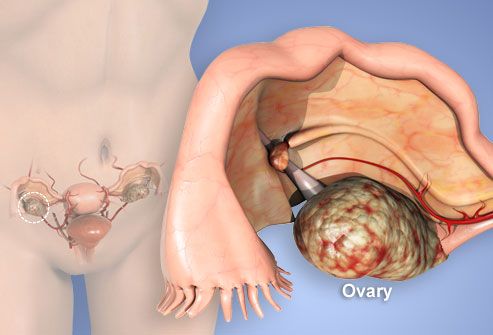
Illustration Of Ovarian Cancer

What Is Ovarian Cancer?
This cancer begins in the ovaries, the twin organs that produce a woman's eggs and the main source of  the female hormones estrogen and progesterone. Treatments for ovarian cancer have become more effective in recent years, with the best results seen when the disease is found early.
Ovarian Cancer Symptoms
Symptoms include:
Bloating or pressure in the belly
Pain in the abdomen or pelvis
Feeling full too quickly during meals
Urinating more frequently
These symptoms can be caused by many conditions that are not cancer. If they occur daily for more than a few weeks, report them to your health care professional.

Risk Factor: 1)Family History
A woman's odds of developing ovarian cancer are higher if a close relative has had cancer of the ovaries, breast, or colon. Researchers believe that inherited genetic changes account for 10% of ovarian cancers. This includes the BRCA1 and BRCA2 gene mutations, which are linked to breast cancer.  Women with a strong family history should talk with a doctor to see whether closer medical follow-up could be helpful.

Risk Factor: 2) Age
The  strongest risk factor for ovarian cancer is age. It's most likely to develop after a woman goes through menopause. Using postmenopausal hormone therapy may increase the risk. The link seems strongest in women who take estrogen without progesterone for at least 5 to 10 years. Doctors are not certain whether taking a combination of estrogen and progesterone boosts the risk as well.

Risk Factor: 3) Obesity
Obese women have a higher risk of getting ovarian cancer than other women. And the death rates for ovarian cancer are higher for obese women too, compared with non-obese women. The heaviest women appear to have the greatest risk.

Ovarian Cancer Screening Tests
There are two ways to screen for ovarian cancer before it causes symptoms or shows up during a routine gynaecological exam. One is a blood test for elevated levels of a protein called CA-125. The other is an ultrasound of the ovaries. Unfortunately, neither technique has been shown to save lives when used in women of average risk. For this reason, screening is only recommended for women with strong risk factors.

Diagnosing Ovarian Cancer
Imaging tests, such as ultrasound or CT scans , can help reveal an ovarian mass. But these scans can't determine whether the abnormality is cancer. If cancer is suspected, the next step is usually surgery to remove suspicious tissues. A sample is then sent to the lab for further examination. This is called a biopsy. Sometimes a sample taken with a needle can also be used for diagnosis.

Stages of Ovarian Cancer
The initial surgery for ovarian cancer also helps determine how far the cancer has spread, described by the following stages:
Stage I: Confined to one or both ovaries
Stage II: Spread to the uterus or other nearby organs
Stage III: Spread to the lymph nodes or abdominal lining
Stage IV: Spread to distant organs, such as the lungs or liver

Types of Ovarian Cancer
The vast majority of ovarian cancers are epithelial ovarian carcinomas. These are malignant tumors that form from cells on the surface of the ovary. Some epithelial tumors are not clearly cancerous. These are known as tumors of low malignant potential (LMP). LMP tumors grow more slowly and are less dangerous than other forms of ovarian cancer.

Ovarian Cancer Survival Rates
Ovarian cancer can be a frightening diagnosis, with five-year relative survival rates that range from 89% to 18% for epithelial ovarian cancer, depending on the stage when the cancer was found. But keep in mind that these odds are based on women diagnosed from 1988 to 2001. The treatments and outlook may be better for people diagnosed today. For LMP tumors, the five-year relative survival rates range from 99% to 77%.

Ovarian Cancer Surgery
Surgery is used to diagnose ovarian cancer and determine its stage, but it is also the first phase of treatment. The goal is to remove as much of the cancer as possible. This may include a single ovary and nearby tissue in stage I. In more advanced stages, it may be necessary to remove both ovaries, along with the uterus and surrounding tissues.

Chemotherapy
In all stages of ovarian cancer, chemotherapy is usually given after surgery. This phase of treatment uses drugs to target and kill any remaining cancer in the body. The drugs may be given by mouth, through an IV, or directly into the belly (intraperitoneal chemotherapy.) Women with LMP tumors usually don't need chemo unless the tumors grow back after surgery.

Other Therapies
Researchers are working on therapies that target the way ovarian cancer grows. A process called angiogenesis involves the formation of new blood vessels to feed tumors. A drug called Avastin blocks this process, causing tumors to shrink or stop growing . Avastin is approved for other cancers, but ovarian cancer researchers are still testing this therapy, which can have serious side effects.

After Treatment: Early Menopause
When women have both ovaries removed, they can no longer produce their own estrogen. This triggers menopause, no matter how young the patient. The drop in hormone levels can also raise the risk for certain medical conditions, including osteoporosis. It's vital that women have regular follow-up care after being treated for ovarian cancer.

 Moving On With Life
Women may find that it takes a long time for their energy to return after treatments end. Fatigue is a very common problem after treatment for cancer. Beginning a gentle exercise program is one of the most effective ways to restore energy and improve emotional well-being. Check with your healthcare team to determine which activities are right for you.

Risk Reducer:1) Pregnancy
Women who have biological children are less likely to get ovarian cancer than women who have never given birth. The risk appears to decrease with every pregnancy, and breastfeeding may offer added protection.

Risk Reducer: 2)  'The Pill'
Ovarian cancer is also less common in women who have taken birth control pills. Women who have used the pill for at least five years have about half the risk of women who never took the pill. Like pregnancy, birth control pills prevent ovulation. Some researchers think ovulating less often may protect against ovarian cancer.

Risk Reducer: 3) Tubal Ligation
Getting your tubes tied, formally known as tubal ligation, may offer some protection against ovarian cancer. The same goes for having a hysterectomy -- removing the uterus while leaving the ovaries intact.
Illustration Of Tubal Litigation


Risk Reducer:4) Removing the Ovaries
For women with genetic mutations that put them at high risk for ovarian cancer, removing the ovaries is an option. This can also be considered in women over 40 getting a hysterectomy.

Risk Reducer: 5) Low-Fat Diet
While there is no definitive diet to prevent ovarian cancer, there is evidence that what you eat can make a difference. In one recent study, women who stuck to a low-fat diet for at least four years were less likely to develop ovarian cancer. Some researchers report the cancer is also less common in women who eat a lot of vegetables, but more studies are needed.


ps- this is only for information, always consult you physician before having any particular food/ medication/exercise/other remedies.

ps- those interested in recipes are free to view my blog-

http://gseasyrecipes.blogspot.com/

for info about knee replacement, you can view my blog-

http://Knee replacement-stick club.blogspot.com/

for crochet designs

http://My Crochet Creations.blogspot.com/

Labels: , , , , , , , , , , , , , , ,

Monday, June 24, 2013

Modified citrus pectin could be key to cancer cure

Modified citrus pectin (MCP) could work against cancer, a new review by researchers has suggested.

The study also examines MCP's synergistic relationship with chemotherapy, as well as its ability to modulate immunity, safely remove heavy metals and block the pro-inflammatory protein galectin-3.

The researcher said that the review, in particular, identifies MCP's different mechanisms of action against metastatic cancer, heavy metal toxicity and chronic, life threatening illnesses related to excess galectin-3.

While plant pectins have long been known to support digestive and immune health through their actions in the GI tract, the main obstacle preventing them from exerting systemic benefits throughout the body has been their bio-availability.

The long complex soluble fibers in regular pectin are simply too large to be absorbed into the circulation. This problem was solved with the development of MCP, which is prepared from regular citrus pectin using a modification process to reduce the size and cross branching of the pectin molecules.

The modification allows MCP to easily absorb into the circulation and exert numerous therapeutic effects throughout the body, now demonstrated in multiple peer reviewed studies.

For example, the review discusses MCP's ability to control metastatic melanoma, as well as prostate, breast and colon cancers. These outcomes have been confirmed in multiple published studies, which have also shown MCP's ability to suppress angiogenesis (new blood vessel growth to tumors). Blocking angiogenesis is a key factor in preventing cancer metastasis.

MCP has also been shown to induce apoptosis in cancer cells. Apoptosis, known as programmed cell death, is suppressed in tumours, allowing them to grow uncontrollably.

Numerous studies show MCP supports apoptosis in cancer, including a 2010 study from Columbia University which found that MCP induced apoptosis in both androgen dependent and androgen independent prostate cancer cells. This is particularly significant because androgen independent prostate cancer is a highly aggressive, difficult-to-treat cancer.

Other important findings demonstrate MCP's abilities to make chemotherapy more effective. Co-administering MCP with cisplatin, etoposide or doxorubicin makes cancer cells more sensitive to these frontline treatments. MCP is also useful during radiation therapy, helping to protect organs from the damaging inflammatory effects of radiation.


ps- this is only for information, always consult you physician before having any particular food/ medication/exercise/other remedies.


ps- those interested in recipes are free to view my blog-

http://gseasyrecipes.blogspot.com/


for info about knee replacement, you can view my blog-


http://Knee replacement-stick club.blogspot.com/


for crochet designs


http://My Crochet Creations.blogspot.com/


I've not given details about designs, but those interested are free to mail me for the same.


Labels: , , , , , , , , , , , , , , , ,