Friday, November 22, 2024

7 Foods For Happiness and Better Mental Health, According to an MD

We all have days where everything seems to go wrong. Nothing feels good, and nothing seems to improve your mood. Food, however, can be a powerful tool for turning things around. Although instinct might lead you to think of indulgent comfort foods or decadent desserts, the reality is that the foods we often turn to when we're feeling down aren't the ones with the potential to make us feel better. Whether you're interested in foods to eat for happiness in the long term, or quick bites that won't make you feel worse, we asked an expert to share some of the best foods to help battle depression.

While there's no one superfood that can serve as a cure-all for mental health, what you eat matters — especially as it pertains to energy and mood. If you're feeling down, science says you may actually want to skip the ice cream and pizza. Instead, focus on eating your way to happiness with intention. Here's what you need to know to get started, according to a doctor.

Experts Featured in This Article:

Saurabh Sethi, MD, MPH, is a practicing double board-certified internal medicine and gastroenterology doctor.

Foods For Happiness

Looking for foods to uplift your mood and improve your mental health? Here's some of the best foods to eat for happiness, featuring expert recommendations. As a note, while these foods may help, they should not be used as a replacement for professional mental health care. Make sure to talk to a healthcare professional for any serious concerns or personalized medical advice.

  1. Avocados: The mitochondria may be the powerhouse of the cell, but avocados are the powerhouse of the entire human body. They're filled with nutrients like vitamin E, fiber, folic acid, and potassium, not to mention plenty of healthy fats, which your brain needs in order to run smoothly. Avocados also contain vitamin B6, which helps the body produce serotonin and norepinephrine — both of which affect your mood, per Mount Sinai.
  2. Leafy Greens: Dr. Sethi says dark, leafy greens like kale and spinach are great at fighting against inflammation, which is important when it comes to mood and mental health. "According to a study published in JAMA Psychiatry, severe depression has been linked with brain inflammation," Dr. Sethi says. Another study published in the journal Neurology also found that a diet rich in leafy greens led to sharper memory and slower cognitive decline. Start incorporating greens into more meals by adding it into your smoothies, soups, or omelettes.
  3. Berries: Blueberries. Raspberries. Strawberries. Blackberries. You name it — they're all an incredible source of antioxidants. Dr. Sethi points to a study from the Journal of Nutritional and Environmental Medicine that describes the impact antioxidants may have on mental health. "After two years, those who were treated with antioxidants had a significantly lower depression score," he says. Berries are also sweet and refreshing, making them the perfect thing to snack on for a quick mood boost.
  4. Walnuts: These nuts are extremely rich in omega-3 fatty acids, and, according to Dr. Sethi, this type of fat supports brain function and reduces depression symptoms. If you're looking for a happier state of mind, try snacking on a handful.
  5. Dark Chocolate: Eat more chocolate? If you insist . . . dark chocolate contains antioxidants called flavonoids and polyphenols, both of which may increase feelings of happiness. In fact, one study from the Journal of Nutritional Biochemistry found that those who ate 85 percent dark chocolate daily reported better moods than those who didn't. Just look for a higher percentage of cocoa and indulge in moderation, because too much sugar can have a negative impact on mental health.
  6. Sweet Potatoes: Sweet potatoes are high in vitamin C, which is great for serotonin and dopamine production. Plus, they're magnesium-rich foods, which may also help lower anxiety, according to the Cleveland Clinic.
  7. Coconut: There's a few reasons to eat more coconut. Number one, it tastes amazing. Number two, it's so versatile. And number three (which should probably be number one), coconut is packed with antioxidants, making it a mood-boosting food. One study published in Experimental and Therapeutic Medicine also showed that virgin coconut oil may have anti-stress and antioxidant effects.                                                                     

    This is only for your information, kindly take the advice of your doctor for medicines, exercises and so on.   

    https://gscrochetdesigns.blogspot.com. one can see my crochet creations  
    https://gseasyrecipes.blogspot.com. feel free to view for easy, simple and healthy recipes    
    https://kneereplacement-stickclub.blogspot.com. for info on knee replacement
    https://cancersupportindia.blogspot.com  for infor on cancer and health related topics
    https://GSiyers home remedies.blogspot.com   is the latest addition to my blogs. I'm going to add posts there, do give me your valuable feed back on my blogs. Thanks a lot, take care, be healthy and be happy.

Labels: , , , , , , , , , , , , ,

Monday, March 01, 2021

Why Getting Enough Vitamin B6 Is Crucial & How to Get Enough of It

Vitamin B6, or pyridoxine, is one of the essential vitamins all people need to stay alive and healthy. Moreover, meeting one’s daily needs of this vitamin was suggested to prevent and treat chronic diseases. The human body cannot produce this vitamin on its own, so we must rely on foods like peanuts, spinach, and chicken to meet our daily dose of pyridoxine.

It’s crucial to eat foods rich in this vitamin on a daily basis because vitamin B6 is water-soluble, which means that it’s flushed out of the body through urine and sweat every day. In this post, we explain how vitamin B6 benefits your health, who is at risk of developing a deficiency, and how to make sure that you’re getting enough pyridoxine. 
 
How vitamin B6 benefits the body 
1. Essential for the brain and prevents dementia
Vitamin B6 is essential for the synthesis of several neurotransmitters, including serotonin, dopamine, melatonin, and noradrenaline. Without these chemicals, our brain cannot regulate such important functions as sleep, mood, and our stress response. 
 
But this isn't all. Early research suggests that Vitamin B6 could also help prevent or slow down the development of Alzheimer’s disease. It turns out that B6 can reduce the levels of homocysteine in the blood, which is a blood marker that raises one’s risk of several health conditions, including neurological issues like Alzheimer’s. 
 
In adult patients with mild cognitive issues, for example, taking a B6, B12, and B9 in high doses managed to reduce the decline in a number of brain regions susceptible to Alzheimer’s. Therefore, maintaining adequate levels of vitamin B6 and other B vitamins could prevent cognitive decline.
 
2. Prevents anemia and keeps your immune system in check
Vitamin B6 plays a key role in the production of blood cells. The vitamin is involved in the synthesis of hemoglobin, the oxygen-carrying protein present in the red blood cells. When the levels of red blood cells or hemoglobin are low, a person develops anemia. 
 
Therefore, vitamin B6 can be effective at preventing and treating anemia in patients with low levels of this vitamin. In one case study, treatment with vitamin B6 helped a 72-year-old woman with anemia that was linked to low pyridoxine levels recover from the condition. In addition to red blood cells, vitamin B6 is involved in the functioning of key immune cells called lymphocytes that help fight off infections. 
 
According to a study from the European Journal of Clinical Nutrition, vitamin B6 can improve the immune response in critically ill patients after just 14 days of supplementation. 
 
3. Reduces the risk of heart disease
Remember the pesky homocysteine that shows up in the blood and wreaks havoc in the brain? Unfortunately, the brain is not the only organ it can damage. Homocysteine also increases one’s risk of heart attacks, strokes, cardiovascular issues, and atherosclerosis, so it’s important to make sure that one’s homocysteine levels remain low. A combination of vitamin B6, B12, and folic acid can achieve that goal. 
 
Overall, research shows that people deficient in vitamin B6 are almost twice as likely to suffer from heart disease as those with adequate levels of the vitamin. This suggests that consuming enough Vitamin B6 can help prevent heart disease and protects you from cardiovascular issues. 
 
4. Helps reduce arthritis symptoms
Vitamin B6 hand pain
Rheumatoid arthritis increases the levels of inflammation in the body astronomically. According to medical research, these high inflammation levels can reduce the concentration of vitamin B6 in the body. This is why researchers have suggested that increasing one’s intake of B6, be it through diet or supplementation, could reduce the symptoms of the condition. 
 
One medical article involving 43 adults with rheumatoid arthritis provides some early evidence for this. In the study, patients either took 5 mg of folic acid alone or combined the folic acid with 100 mg of vitamin B6. After 3 months of daily supplementation, the levels of inflammation in the group that took both folic acid and B6 were significantly lower.

5. Protects you from depression and improves your mood
Vitamin B6 happy couple gifting flowers
As we’ve already mentioned, vitamin B6 is crucial for the production of neurotransmitters such as dopamine and serotonin. If you recognize these two, you’ll likely already know that they are both often referred to as “the happiness hormones” because of their role in reward regulation and mood control. Therefore, you must keep your vitamin B6 levels in check to maintain your emotional health. 
 
In addition to regulating your mood, however, these neurotransmitters are also essential for preventing depression and other mental health conditions. Likewise, several studies provide evidence that insufficient intake and low blood levels of B6 can produce depressive symptoms, especially in seniors. A study that involved 250 seniors suggests, for example, that a B6 deficiency doubles the risk of developing depression. Therefore, the vitamin may have a protective effect against depression. 
 
6. Prevents vision loss
Interestingly, vitamin B6 can also help prevent vision loss, especially in older adults. The vitamin in combination with B12 and folic acid was shown to reduce the risk of age-related macular degeneration (AMD) in a big study spanning over 7 years. Taking this combination of vitamins reduced participant’s risk of AMD by 35–40%. 
 
Also, maintaining healthy levels of B6 can help protect you from retinal disorders, according to another study. So, if you wish to protect your eyesight, definitely consider paying close attention to your B6 intake.

7. Lowers the risk of cancer
Although researchers aren’t sure how vitamin B6 can decrease the risk of cancer, studies show that an adequate intake of vitamin B6 can lower one’s risk of colorectal cancer by as much as 50%. The risk of developing breast cancer in those with normal levels of the vitamin is also much lower, especially in postmenopausal women. 
 
In general, research confirms that B6 is beneficial for women - it’s capable of reducing PMS symptoms and morning sickness in pregnant women, too. Medical researchers suggest that these positive effects may be related to B6’s anti-inflammatory properties. 
 
How much vitamin B6 is enough? 
 
Maintaining adequate vitamin B6 levels is important at any age, but the amount of the vitamin you should consume will vary depending on your gender and age. Here are the recommended daily doses for adults according to the National Institute of Health: 
 
Adults 50 or younger: 1.3 mg 
 
Males over 50: 1.7 mg 
 
Females over 50: 1.5 mg 
 
Pregnant women: 1.9 mg 
 
Breastfeeding women: 2 mg. 
 
It needs to be pointed out that the majority of people get enough vitamin B6 from their diet, but some people are more likely to develop a B6 deficiency than others. Seniors, pregnant women, people with certain underlying conditions, those who are overweight, as well as heavy drinkers and smokers are more likely to develop a vitamin B6 deficiency.
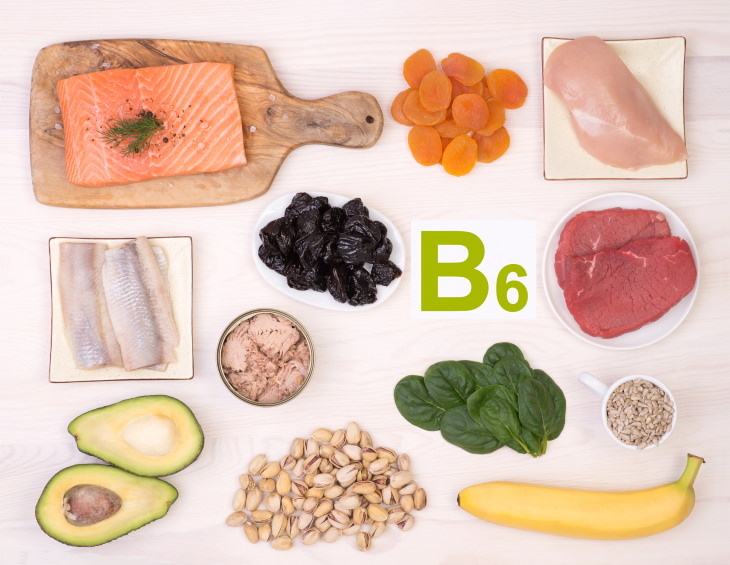
Vitamin B6 foods rich in B6
Those who are deficient in vitamin B6 will often experience the following symptoms: Mood changes Tingling in the hands and feet You catch colds and respiratory infections more easily Skin rashes Sore and cracked corners of the lips A glossy tongue Seizures. Your doctor will be able to diagnose a possible vitamin B6 deficiency through a blood test and advise you on whether or not you need to take a B supplement. But overall, a healthy diet is the best source of vitamin B6. 
 
Here’s a list of foods rich in vitamin B6. 
 
Canned chickpeas - 1.1 mg in 1 cup 
 
Peanuts - 0.7 mg in 1 cup 
 
Salmon - 0.6 mg in 1 serving (85 mg; 3 oz) 
 
Potatoes - 0.4 mg in 1 cup 
 
Banana - 0.4 mg in 1 medium-sized fruit 
 
Chicken - 0.2 mg in 1 serving (100 g; 3.5 oz) 
 
Low-fat cottage cheese - 0.2 mg in 1 cup 
 
Soybeans - 0.2 mg in 1 cup 
 
Oatmeal - 0.1 mg in 1 cup 
 
Spinach - 0.1 mg in 1 cup 
 
Watermelon - 0.1 mg in 1 cup 
 
Orange - 0.1 mg in 1 medium-sized fruit. 
 
As you can see, a wide variety of both plant-based and animal-derived foods contain plenty of vitamin B6. Some foods, such as breakfast cereals, are also fortified with B6. We hope this information will help you maintain a healthy diet.


This is only for your information, kindly take the advice of your doctor for medicines, exercises and so on.     

https://gscrochetdesigns.blogspot.com. one can see my crochet creations  
https://gseasyrecipes.blogspot.com. feel free to view for easy, simple and healthy recipes    
https://kneereplacement-stickclub.blogspot.com. for info on knee replacement

Labels: , , , , , , , , , ,

Tuesday, July 14, 2020

My Constant Insomnia Turned Out to Be a Symptom of a Rare Disorder Called Hypophosphatasia

After doctors couldn't figure out why she was suffering such terrible insomnia, Heather Barrow, 41, did her own research—and she learned she was born with a rare genetic disorder that also affected her mom and teenage daughter.


This article is part of Health's series, Misdiagnosed, featuring stories from real women who have had their medical symptoms dismissed or wrongly diagnosed.

From the time she was a child, Heather Barrow, 41, experienced a lot of unusual health symptoms she didn’t think twice about.

“My teeth are transparent, for lack of a better word,” she tells Health. “I had lots of cavities as a kid. After high school, I had really bad gum loss near my bottom front teeth and the teeth had to be taken out.” Barrow even had to have a gum graft in her late 20s.

But she didn’t just experience dental issues. “I also have really tiny bones—my wrists are a little over an inch wide,” she says. “My knees bend backward, and I can turn my feet backward. That was my claim to fame growing up, but I never wondered why I have hyper-extended joints.”

Barrow says she assumed these symptoms were normal-ish, until she started experiencing crippling insomnia. It started after this mom of two from Florida had a noncancerous tumor in her thyroid removed in 2012. She checked in with an endocrinologist regularly about her thyroid levels after that. But her endocrinologist retired in 2017, and Barrow decided to see her general practitioner to help regulate her thyroid.

Barrow says her doctor “was misreading my test results” and increased her dosage of Synthroid, a thyroid hormone replacement medication she was taking. Barrow had been on Synthroid since she had the tumor in her thyroid removed, and she says it was normal for her dosage to be tweaked.
But that’s when things started to go wrong. “I started losing weight quickly, my blood pressure was high, and I was having bad anxiety and panic attacks,” Barrow says. She went back to her doctor, who prescribed her Xanax for anxiety. But suddenly, she couldn’t sleep, either.

“One night I was sleeping fine, and the next night I could not sleep,” Barrow says. “I didn’t sleep the next three or four nights in a row. I thought I was going to die. I had never not slept for one night.” Barrow eventually went to the hospital, where she was admitted because her resting heart rate was so high. Her blood was drawn and tested, and doctors discovered that she had severe hyperthyroidism (an overactive thyroid) caused by a doctor-prescribed overdose of Synthroid. Barrow’s weight loss, panic attacks, and high blood pressure were all caused by this, the hospital doctors explained.


So the dosage of her medication was halved, and she was encouraged to find a new doctor. Barrow says she was warned that it could take up to six weeks for her symptoms to get better, and it did. “Every symptom got better with the correct dose of my medication, except the insomnia,” she says. 

“For the next two years, it was a constant struggle.”

Barrow started seeing a sleep psychologist. “I tried every single thing on the market for sleep. I was doing whatever I could to try to figure to what was going on,” she says. “But, no matter what I did, I would have a stretch of OK sleep and then it would come back with a vengeance.”

At the same time, Barrow began seeing an endocrinologist who she says didn’t take her symptoms seriously. “When you tell a male doctor that you have insomnia, he’s like, ‘Take a melatonin,’” she says.

Barrow began to wonder if her sleep issues were hormone-induced, and she started to pore over her blood test results. “I had up four to six blood tests a year because of my thyroid monitoring,” she says. That’s when she noticed something that she had brought up to her doctors before: Her tests revealed that she had low levels of alkaline phosphatase (ALP).

ALP is an enzyme found all over the body, but it’s mostly in the liver, bones, kidneys, and digestive system, according to doctors. High levels of ALP can be symptoms of liver disease or bone disorders. While most of the focus around ALP is on high levels, doctor states that low levels of the enzyme can be a sign of a zinc deficiency, malnutrition, or hypophosphatasia, a rare genetic disease that affects the bones and teeth.

Barrow’s ALP levels weren’t just lower than average—they were shockingly low. “Doctors would always say, ‘I’ve never seen that before,’” she says. “But every single blood test result going back to 2017 had ALP results in the single digits, when normal is 130. Not only was it marked, but it was bolded and retested because the lab had never seen that before.”

Still, her endocrinologist insisted that nothing was wrong. So, Barrow did her own research. “I found out it was really rare to have low ALP, and the only thing that really causes it is a rare bone disorder,” she says. “Probably in a matter of five minutes, I had Googled it, started to read what came up, and I was like, Oh my goodness. I knew when I read the symptoms of hypophosphatasia that I didn’t have the most severe form. Yet when I read on about tooth loss and repeated bone breaks, not only did I potentially think I had this, I thought my daughter had it, too.”

Barrow raised her concerns to her husband, who initially tried to calm her fears. But, after she showed him her research, he also knew something was wrong. “We need to look into this,” Barrow remembers her husband saying.

Barrow connected with someone at a charity called Soft Bones, who directed her to a doctor at the Mayo Clinic specializing in hypophosphatasia. After first being told the specialist was too swamped to see her, Barrow sent over her test results. She got a quick call back, and was told the doctor wanted to see her within a week.

The doctor confirmed that Barrow had hypophosphatasia, and suspected that her daughter and mother did, too. “He was the first person who listened to what I said,” she recalls.

Barrow says she left the office “hysterically crying. At that point, so many people had told me that nothing was wrong. You don’t want to have anything and you don’t want your child to have anything, but it was a relief because we finally knew what was going on.” Both Barrow’s 66-year-old mother and her 13-year-old daughter, Claire, were eventually diagnosed with the disorder.

Barrow discovered that her condition was behind all of her unusual symptoms, including her insomnia. “Your body needs ALP to process vitamin B6,” she explains. “All of the mood-related symptoms like anxiety and insomnia were caused by a vitamin B6 deficiency.”

No easily accessible treatment exists for hypophosphatasia. A daily injection can be taken, but it hasn’t been studied extensively and is costly. “Doctors advised us against starting it right now because it was intended for people with really significant bone less,” Barrow says. “Also, we weren’t willing to be guinea pigs.”

So Barrow and her daughter now take precautions, like avoiding high impact exercises, which can be difficult on their bones, and staying on top of their dental health. Barrow still regularly sees her sleep psychologist, and she’s also found things that work for her, like going to bed at the same time every night, taking a series of vitamins, and getting regular exercise. “I do a lot to keep my sleep in check,” she says. Otherwise, there’s not much she and Heather can do for their condition.

Barrow says that her daughter was “very upset” for weeks after her own diagnosis, so she encouraged her to figure out a positive outlet. Claire did. She came up with the idea for an app to help connect people with rare diseases, and even did a Shark Tank-style pitch to her parents. Eventually the app, called Rare Guru, was born.

“I had nobody to talk to my age [who was going through something similar]. That was really hard,” Claire tells Health. “Kids aren’t really open about their flaws and diagnoses because they don’t want to be different. I wanted to create a safe environment for teens."

Now, Rare Guru encourages people to “become the patient zero” for their own disease, disorder, or syndrome. Patients can connect with other people with similar symptoms or diagnoses through the app, and caregivers can also get support.

“It’s really surreal because, of course, it was just an idea, and I’m so happy that my parents supported it,” Claire says. “It’s crazy to think this could potentially help thousands of people.”

Barrow is still frustrated that it took so long for her to get properly diagnosed, and she’s hoping her family’s app can help others in similar situations. “I could have been easy to diagnose if someone looked at all of my symptoms at once, but no one took the time to do it or even to look into it when I brought it up repeatedly,” she says. “You can ignore something as a mom, and you’re often the last person to get treatment. But my insomnia was so bad, I couldn’t ignore it anymore. I just wanted to sleep.”

To other people who are struggling to find answers for their symptoms, Barrow says this: “You know your body better than anyone. If your body is telling you something is wrong, believe it and find a doctor who will listen and help you find answers.” She also recommends using her app to search your symptoms and try to find others who share them. “You may be led to a rare diagnosis that none of your doctors have ever heard of,” she says.

This is only for your information, kindly take the advice of your doctor for medicines, exercises and so on.     

https://gscrochetdesigns.blogspot.com. one can see my crochet creations  
https://gseasyrecipes.blogspot.com. feel free to view for easy, simple and healthy recipes    
https://kneereplacement-stickclub.blogspot.com. for info on knee replacement

Labels: , , , , , , , , , , ,

Sunday, August 25, 2019

6 Causes of an Edema and Natural Ways to Solve It


It is no secret that lack of exercise and poor nutrition can cause many physical problems and affect people's lifestyle. One such issue is an edema. An edema, which is actually an accumulation of fluids in various tissues in the body, is caused not only from unhealthy lifestyle but also by natural hormonal processes occurring during menopause and during pregnancy, and even when people are confined to their beds for a long time. Although this condition isn’t life-threatening, it can indicate defects in the body such as heart or kidney disease, so it is important not to ignore it. Depending on its cause, an edema can be alleviated by the following 6 simple and effective methods.
Edema

1. Excessive consumption of sodium

Today's industrial foods are full of salts to emphasize their taste, and since many consume them on a regular basis, they may develop an edema. Also adding salt to various foods made at home or when eating out causes excess fluid to accumulate in the cells that are supposed to dilute the excess sodium, so it is important to moderate salt intake to avoid an edema and other physical problems. Surprisingly, there are special salts that can solve this problem by causing the body to drain excess fluids. Drinking a glass of water with Himalayan or Celtic sea salt dissolved in it will help to relieve the edema easily and efficiently.

2. Vitamin B6 deficiency

Vitamin B6 is responsible for maintaining fluid balance in the body, and when it is deficient, the body begins to accumulate water and swell as a result. In a study of middle-aged women, researchers found that women with an edema at that age experienced significant relief after consuming vitamin B6. Some foods that are rich in this essential vitamin can improve the condition of the edema such as chicken, tuna, turkey, sunflower seeds, dried fruits, pistachio nuts, unpeeled potatoes, lean beef, and bananas.
Edema

3. Lack of potassium

Potassium is responsible for the proper functioning of the organs, tissues, and cells in the body, as well as for the fluid balance. When you consume too much salt and an insufficient amount of water, it causes potassium depletion from the cells, which results in the accumulation of fluids in the various organs. Apart from this problem, lack of potassium can cause other symptoms such as weight gain and cramps and muscle spasms. It is important not to consume too much salt, and to consume a sufficient amount of potassium, which is found in most fruits, especially in different types of melons. The amount of potassium needed for the body can also be supplemented by eating vegetables containing this essential mineral.

4. Dehydration

It may seem a little strange that dehydration of fluids leads to their accumulation, but behind this fact is a reasonably logical biological reason; when the body feels that it isn’t getting enough fluids, it does everything in its power to keep whatever fluids it has in it, which causes an edema. The solution, of course, is to drink enough water every day, especially during hot summer days. It is also recommended to reduce the consumption of soft drinks and caffeine, which causes dehydration of the body and thus the storing fluids.

5. Magnesium deficiency

When an edema is formed, one of the biggest suspects is a deficiency in magnesium which has a hand in almost every process in the body. When this mineral is deficient, the body becomes unbalanced and one of the expressions is excessive storage of fluids. In this case, too, the solution is relatively simple and includes eating magnesium-rich foods, including dark chocolate, dark green vegetables, avocados, nuts, peas, spinach, yogurt and dried fruits.

6. Binge eating of processed foods

Industrial and processed foods contain large amounts of salts and sugars designed to enrich their taste, but they also cause water retention in the body. Apart from these ingredients, industrial food also contains artificial additives that can damage the kidneys and liver which aren’t able to filter them properly. For these reasons, it is important to avoid excessive consumption of industrial foods and to try to consume the following medicinal herbs, which can be found in health food stores, and act as diuretics that help to drain the body from excess fluids:
  • Dandelion
  • Horsetail
  • Hibiscus
  • Nettle
  • Fennel 
  • Parsley

THIS IS ONLY FOR INFORMATION, ALWAYS CONSULT YOU PHYSICIAN BEFORE HAVING ANY PARTICULAR FOOD/ MEDICATION/EXERCISE/OTHER REMEDIES.                                    PS- THOSE INTERESTED IN RECIPES ARE FREE TO  VIEW MY BLOG-                                                                                           https://gseasyrecipes.blogspot.com/                                                                                                                                                FOR INFO ABOUT KNEE REPLACEMENT, YOU CAN VIEW MY BLOG-                                                                       https:// kneereplacement-stickclub.blogspot.com/                                                                                                                     FOR CROCHET DESIGNS                                                                                                   
                                https://gscrochetdesigns.blogspot.com

Labels: , , , , , , , , , , , , , , , , ,