Friday, February 21, 2025

Why You Should Include Oak nuts in Your Diet

Acorns – or oak nuts – are found in many parts of the world. Yet, they aren’t exactly seen as edible. Maybe for squirrels, yeah. But humans don’t really consume acorns, right? Well, you might be surprised to know that these wild nuts were once a dietary staple. Many ancient civilizations, such as the Assyrians and Greeks, and more recently the Chinese and Native Americans used to consume acorns as a delicacy. Unfortunately, over the last 500 years or so, acorns have lost their popularity, primarily due to their bitter taste and reputation of being "toxic."  
 
However, acorns are highly nutritious and offer several wonderful benefits that you might not be aware of. So, if you really wanted to and know how to prepare them, you could technically consume them. Intrigued? Find out more about the health benefits of acorns in this article.

1. They are a good source of nutrients

Benefits of Acorns, nutrients
Acorns are packed with plenty of essential nutrients. These wild nuts are especially high in potassium, iron, vitamins A and E, as well as protein, carbohydrates, fats, calcium, and phosphorus.

Acorns are also a good source of B-vitamins, particularly of B6 and B9, but they also have some vitamins B1, B2, B3, and B5. All of these vitamins play a vital role in metabolism and energy. Additionally, these nuts are low in calories and contain healthy unsaturated fats. 
 
A 1-ounce (28-gram) serving of acorns provides you with: 
110 calories 
6 grams of protein 
24 grams of fat 
0 grams of cholesterol 
41 grams of carbohydrates 
41 milligrams of calcium 
1 milligram of iron 
62 milligrams of magnesium 
79 milligrams of phosphorus 
539 milligrams of potassium.

2. Can improve gut health 
Acorns are rich in fiber, which promotes a healthy gut microbiome. Furthermore, oak nuts have also been used as an herbal remedy to treat digestive issues, such as stomach pain, bloating, nausea, and diarrhea. Research indicates that acorns may help people with indigestion. A study of 23 adult participants with chronic indigestion showed that those people who took 100 mg of acorn extract had comparatively less overall stomach pain than those who took a cornstarch capsule. R
 
3. Stronger and healthier bones  
As we mentioned above, acorns are a great source of potassium, calcium, and phosphorus. All of these are important for bone health and can prevent osteoporosis, a condition where bones become weak and brittle. Studies have shown that dietary potassium may counterbalance acid load and reduce calcium loss from the bone tissue. This can lead to a beneficial effect on bone mineral density. 
 
4. Good for the heart
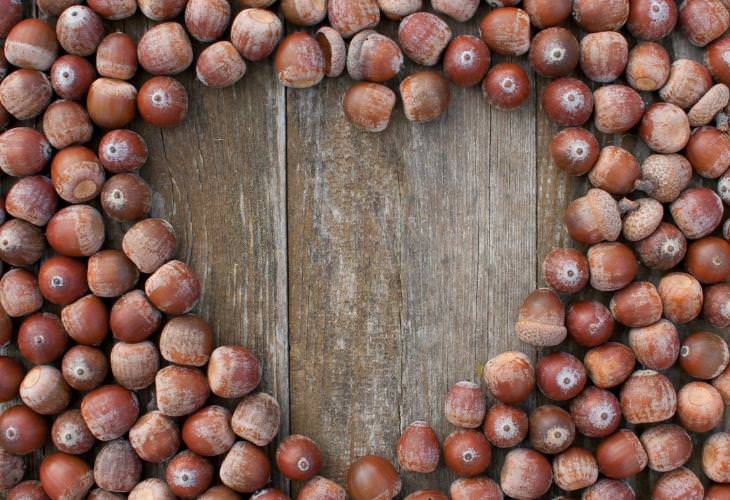
Benefits of Acorns, heart
Consuming acorns may be good for your heart, as these nuts could potentially reduce the fat content in the body. Oak nuts are an excellent source of monounsaturated fatty acids, which, according to the American Heart Association, can help reduce LDL or “bad” cholesterol levels in your blood, and therefore cut down your risk of heart disease and stroke.

Plus, researchers have found that acorn oil has more plant sterols than almonds, soybeans, and olive oil. Plant sterols, known commonly as phytosterols, are an important group of natural compounds that help lower the levels of bad cholesterol. 
 
5. Helpful to people with diabetes 
Oak nuts are beneficial for diabetes sufferers, as they can help regulate blood sugar levels. The carbohydrates and fiber in acorns may help prevent glucose spikes. Additionally, the high antioxidant content of acorns and the presence of healthy natural compounds in them help in lowering high blood glucose levels. Thus, adding acorns to your diet may potentially be great for diabetes management. 
 
6. Has antiviral properties 
Acorns can be useful in fighting antiviral diseases like herpes. Research has shown that the vitamins, nutrients, and minerals in these nuts, along with the considerable amounts of plant compounds, can inhibit the symptoms of the herpes virus in vitro, but it's unknown if those results are also applicable to topical use of acorn oil or the consumption of acorns. The infection that this contagious virus causes can lead to cold sores, but also painful sores and severe itching in the groin and thighs. The infection is more common in women. 
 
7. Good for the skin

Another little-known benefit of acorns is that they have astringent properties that help protect the skin. For this, the tannin-rich water extracted from the acorn seeds has to be applied topically to the skin. Just boil the nuts for 15 minutes or soak them overnight in cold water. Then, gently apply the liquid to the skin to ease rashes, burns, and speed up the healing process of wounds and cuts. Research suggests that these nuts can also be effectively used as a natural anti-inflammatory agent. 
 
8. Rich in antioxidants 
Scientists have found that acorns contain more than 60 different beneficial plant compounds, such as catechins, resveratrol, quercetin, gallic acid, and more. These plant compounds act as powerful antioxidants in our system and can help prevent the body from some types of cell damage. Consuming foods that are rich in these antioxidants has also been associated with a lower risk of diabetes, heart disease, and even cancer.

How to eat acorns
 Benefits of Acorns,
The easiest way to incorporate acorns in your daily life is through acorn oil, which can be used topically or incorporated into salads and other foods. 
 
Warning! Acorns cannot be eaten raw because they contain high amounts of tannins – a group of bitter and astringent compounds that can cause side effects such as stomach irritation, nausea, and vomiting when consumed in large amounts. 
 
However, you can get rid of the tannins by boiling the oak nuts in a pot for 15-20 minutes. When the acorns are boiling, the water will turn brown. Discard the brown water and boil the nuts again. Keep repeating the process until water no longer turns brown. 
 
Once the tannins have been leached out, the acorns are perfectly safe to eat. Here are a few easy you can enjoy them: 
 
* Roast them in the oven at 375°F (190°C) for 15–20 minutes and enjoy a nutritious evening snack. Coat them with honey for added taste. 
 
* You can also grind up dry oak nuts into flour and use them in bread or pastries. 
 
* Add acorns to your favorite stews just like you add potatoes or beans. Their nutty and slightly sweet taste will give amazing depth to the dish. 
 
Acorns, as you might know, come from oak trees, which can be found across North America. The best time to collect acorns is in the early fall. That’s the time when they are just starting to turn from green to brown. While they're not commonly sold in grocery stores, you can easily order them online these days. These delicious and wholesome nuts will certainly make for an exciting addition to your diet.


This is only for your information, kindly take the advice of your doctor for medicines, exercises and so on.   


Labels: , , , , , , , , , , , , , , , , , ,

Monday, November 12, 2018

Body Signs You Shouldn't Ignore

Some symptoms seem harmless. But what if you're also ignoring a more serious one that indicates having a certain illness? Without a doubt, it's worth knowing these changes to be able to see if something is wrong so you can visit your doctor in time. Here are 10 body signals that you should pay closer attention to:
 
1. Dry or cracked lips
When you have flaky dry skin, this is a clear sign of an allergy. So pay close attention to the cosmetics that you use. Be aware too, of oral hygiene products, food that you eat and medicines. Cracks that appear in the corners of the mouth may indicate a lack of certain vitamins including B, A and E. If you have dry eyes, a dry mouth and problems with your digestive system, you had better visit a doctor because it can be a combination of symptoms which are specific for an autoimmune disease called Sjögren syndrome.
2. Eyebrow loss
Thick brows are a current trend. But, they can also be a big health indicator. A periodical loss of eyebrow hair is quite normal, but if you notice an excessive loss of hair as well as the appearance of bald spots or possibly, a complete disappearance of the eyebrows, be sure to contact a doctor immediately. It can be connected to an excessive or an insufficient level of thyroid activity. 
3. Nail dystrophy
A change in color or structure should be checked immediately. Thin and pale nails can be a sign of anemia and a lack of iron in the body while yellowing can be a signal of liver and gastric tract disorders or a fungal infection. White spots and stripes may be due to a lack of zinc, copper, and iodine. And the nails can become very brittle when faced with a lack of vitamins, calcium, iron, and beta-carotene in the body. 

4. Pale lips with a bright contour
If you notice a red border of the lower lip becomes swollen, and you see there are small bubbles, it is likely that you are very sensitive to ultraviolet rays. What you can do in this situation is decrease your exposure to the sun, and use sunscreen cosmetics. If you notice the same symptoms on the middle part of the lip, it could indicate vegetative neurosis. So taking sedatives will become an important part of treatment along with anti-inflammatory ointments. A severe swelling and redness of the entire lip may indicate an allergic reaction. In which case, be sure to pay attention to what cosmetics and toothpaste you are using. 
5. Red face
If we exclude natural physiological changes such as a change in temperature, a massage, or alcohol consumption, there are three main reasons for getting red in the face. In women over 40, this is due to a decrease in hormone levels which indicate the beginning of menopause. A red face may also indicate the presence of infections that cause demodicosis. Partial redness that is accompanied by sudden attacks of dizziness can signify pressure fluctuations that can be normalized with the help of special medicines.  
6. Dry heels
Dry heels could occur due to a lack of the vitamins A and E. It can also be caused by a presence of fungal infections that affects the overall condition of the epidermis. The last case usually goes together with numerous cracks and the yellowing of nail plates. If dryness and roughness persist even after proper care and an adequate intake of vitamins, it may be a sign of endocrine disruption. 
7. Dry hands and dry skin on the body
During colder seasons, dry skin is normal. But using a moisturizing cream, consuming plenty of water and taking vitamins are quite helpful. If these solutions don't work, visit a dermatologist as dry skin is one of the common signs of diabetes and hypothyroidism. If your skin is both rough and peeling, and also tight and full of cracks, it may turn out to be dermatitis caused by a natural reaction to chemical exposure.  
8. Foot deformity
The displacement of a foot bent inward and a change in the shape of the foot characterized by the omission of the longitudinal or transverse arches may indicate a flatfoot. Studies show that transverse flatfoot combined with other deformations tends to occur more often than longitudinal flatfoot. In addition, women are generally more vulnerable to it, due to wearing high heels which cause an uneven load distribution. Heels tend to put the biggest load on the area of the transverse arch. When this arch isn't able to stand such a load, the foot can get unpleasant, painful, pulling sensations which indicate the beginning of a deformation.
9. White stains on teeth
This is also known as dental fluorosis, a chronic disease that develops either before teething or after, when consuming large amounts of water or products with a high content of fluorine compounds. There are also 5 types of fluorosis classification, which are, questionable, very mild, mild, moderate and severe. The first three variations tend to manifest visually through the appearance of stains, while the last two, lead to decaying teeth tissues and teeth crumbling. 
10. Hair loss
A person tends to shed on average, about 100 hairs per day. This is caused because hair follicles go through certain growth stages that can last from two to eight years. Once the growth stage is over, the hair strands fall out and new ones begin to grow after a two-month rest. This means at one point in time, about 80 to 90% of a person's hair is growing, while the rest is shedding or is in a resting phase. If, however, you've noticed more significant hair loss, be sure to consult your doctor as a number of diseases could be the cause, including skin infections, thyroid disorders and immune disorders.

THIS IS ONLY FOR INFORMATION, ALWAYS CONSULT YOU PHYSICIAN BEFORE HAVING ANY PARTICULAR FOOD/ MEDICATION/EXERCISE/OTHER REMEDIES.                                                                                                                                                                                                             PS- THOSE INTERESTED IN RECIPES ARE FREE TO  VIEW MY BLOG-                                                                                           https://gseasyrecipes.blogspot.com/   

FOR INFO ABOUT KNEE REPLACEMENT, YOU CAN VIEW MY BLOG-                                                                                                    https:// kneereplacement-stickclub.blogspot.com/                              

FOR CROCHET DESIGNS                                                                                                                                                                                                                                 https://gscrochetdesigns.blogspot.com


Labels: , , , , , , , , , , , , , , ,