Tuesday, August 10, 2021

Look Youthful by Avoiding These Common Hair Mistakes

How great does it feel to get the perfect haircut?!? Getting the right hairstyle that suits you can make a big difference – it can enhance your features while making you look bright and youthful. However, choosing the right hairstyle is easier said than done and depends a lot on your face shape and bone structure. For example, waist-length gray hair might look great on you while a short hairdo may not suit your personality at all.

The unfortunate truth is that the incorrect hairstyle can end up adding years to your face. Even a few silly hair mistakes – from ignoring thinning hair to using too much hairspray – can spoil your appearance. The good news is that you can easily avoid some common hair mistakes that might make you age faster. 
 
1. Ignoring thin hair
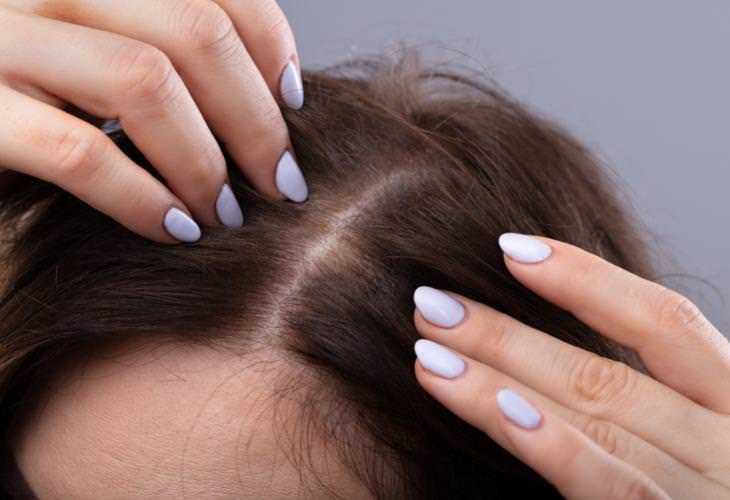
Biggest Hairstyle Mistakes,  thin hair
As we age, our hair thins naturally and breaks easily. As a consequence, it can often be tough to find the right style that matches the quantity of hair we currently have. For example, if your hair has thinned quite a bit and you continue sporting long hair, it can look stringy. And if it’s too short, then it might end up looking straggly. So don’t ignore your thinning hair. A bob cut or a classic pixie cut is usually recommended for women past their 50s who are experiencing thinning hair. However, discuss this with your stylist. They will be able to tell you what layers, angles, and lengths would work best with thinning hair.  
 
2. Choosing the wrong length

The length of your hairstyle can make a huge difference in the way you look. Women usually tend to cut their hair short when they get to a certain age. However, older age doesn’t always have to equate to shorter strands. While a shorter cut may suit someone with thinning hair, it may not necessarily be the case with everyone. Longer hair can actually be softer around the face and neckline for seniors. Also, it will be easier to achieve a more natural hair color with a longer hairdo to blend when going gray. 
 
Many stylists say that by cutting long layers around the face you can add more volume to your hair while also highlighting your features. Your stylist should be able to tell you what length should go well with your face and hair type.  
 
3. Not changing your hairstyle at all
One of the biggest hairdo mistakes we make as we grow older is keeping the same hairstyle for decades. Just because you love that hairstyle which suited you 25 years back, doesn’t mean it will compliment your looks when you are in your 50s. It’s hence essential to let go of old versions of ourselves and adopting a fresh hairstyle that suits our current age. Don’t go for anything too trendy or too old-fashioned. Hairdressing has evolved dramatically and you must find the style that suits the current times.  
 
4. Going too dark to cover the grays
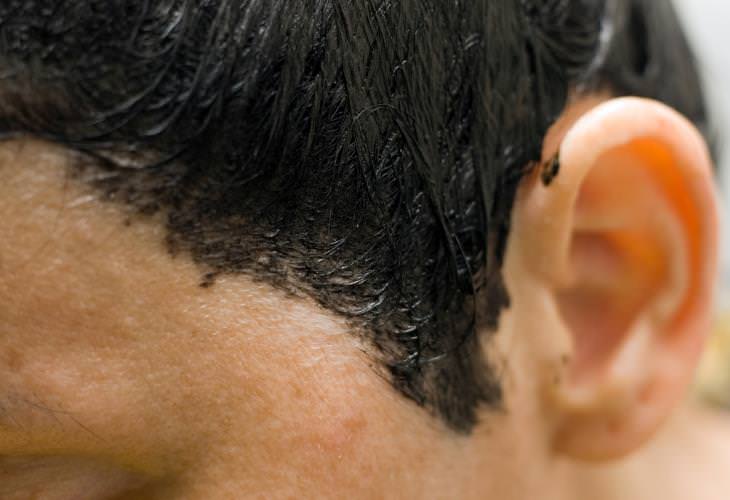
Biggest Hairstyle Mistakes, dark color
As gray hair starts to take over, the first impulse for many of us have is to cover it up with dark color. However, hair stylists say that dark colors show overgrown hair roots. Moreover, if you have fair skin, then the darkness around your face can enhance the imperfections of your face, making you look older. 
 
Ideally, we should have some softness around the face as we age. And leading colorists say that lighter, multi-tonal shades help to balance and blend the grays as they start to regrow.  
 
5. Not choosing the right parting
A great trick to look younger is choosing the right parting. Hairstylists are of the view that even little tweaks to your parting can make a huge difference. For instance, a straight down the middle parting doesn’t work for everyone. But then, a severe side part can also look rather odd on you, depending on your age. The wrong hair part can age you significantly. So look for where your hair naturally falls before choosing a parting. An irregular hair part can help make you younger, say industry stylists.

6. Too much volume
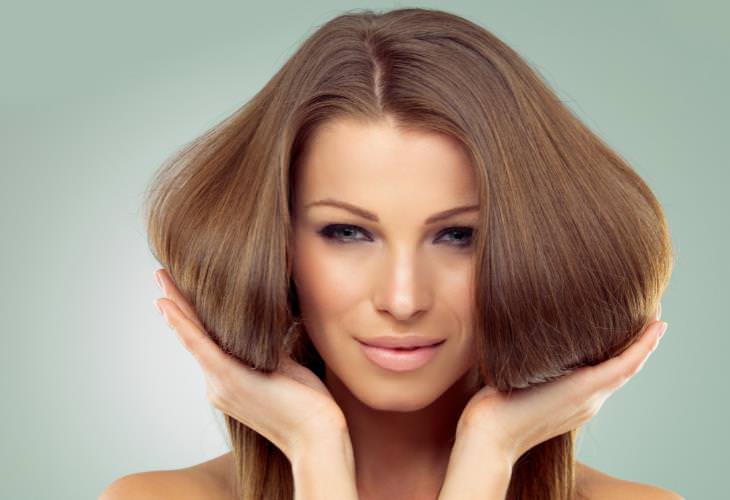
Biggest Hairstyle Mistakes, volume
A little volume on your hair usually looks beautiful. At the same time, too much of it can have the opposite effect. Because that can result in an old-fashioned beehive kind of a hairstyle, taking the sheen out of an otherwise youthful face. 
 
Also, trying to get volume in the wrong places can make anyone look older. Backcombing (also known as teasing or ratting), which is achieved by repeatedly combing the hair towards the scalp, is a good case in point and should be avoided after a certain age. Talk to your stylist and get a good volumizing shampoo that will suit your hair and age.

7. Being apprehensive of bangs
According to renowned hairstylists, bangs can look great on mature women and are the easiest way to erase a few years off your face. Apart from being fun and creative, they also frame your eyes. More importantly, bangs help hide wrinkles as well as severely receding hairlines. So don’t be apprehensive about getting bangs only because you are in your 50s or 60s; just pick the best one that fits the shape of your face. 
 
Ideally, side bangs are perfect for round face shapes and A-shaped bangs go well with square or oblong face shapes. Usually, ones that hit at the lower half of the brow, just above the eye, should complement most face shapes but still speak to your stylist once before choosing one.
 
8. Using too much hairspray
Adding unnecessary hairspray to the hair can also drastically age anyone’s face. That’s because too much hairspray can end up giving you stiff, unmovable hair, which was fine in the ‘80s but looks outdated and irrelevant today. Stylists say that a stiff hairstyle will always make you look years older and you should hence try to avoid overusing hairspray. In fact, avoid using items on your hair that produce a firm hold and look for products that still let the hair move – like mousse, defining paste, or shea butter. 
 
9. Not using the right shampoo
This might sound obvious, but it’s important to remember. Because your shampoo affects your lifestyle and using one with the wrong formula can make you look older. Gray and aging hair lack pigment and can be coarser. Therefore, they need a little more care to keep them shiny and healthy. So use shampoo and conditioner that color protects and moisturizes hair instead of one that is suitable for "normal hair types". Experts recommend looking for a purple pigmented shampoo made specifically to brighten yellow blondes or grays. There are also shampoos labeled specifically for gray or silver hair in the market these days which you can try.  
 
10. Not maintaining a proper diet
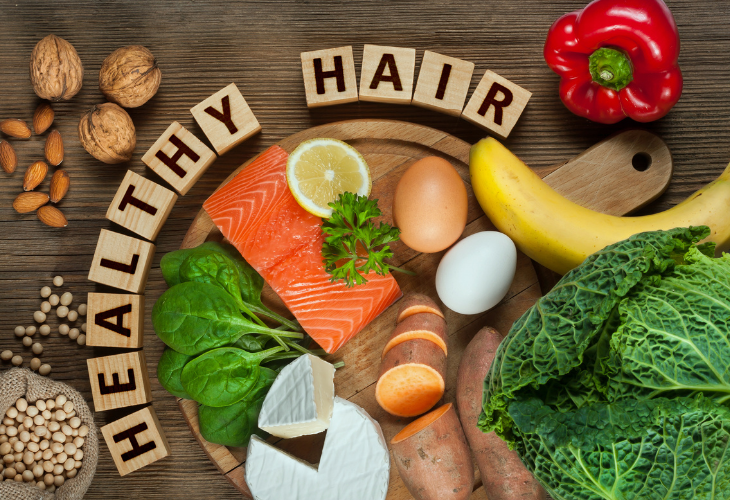
hair care, food
Did you know that if your diet is restricted or unhealthy, it can badly affect your hair? Not getting the sufficient vitamins, minerals, and other nutrients that your body needs from your diet is harmful to your hair and can make it dry and brittle which can instantly pile on the years to your face. For example, having too little protein and iron in your diet can damage healthy hair and hinder the body's ability to produce new hair follicles. Even something as simple as drinking lots of water every day can keep your hair lustrous. 
 
Check and see if you have any deficiency in iron, vitamin D, or other minerals, and make sure that you maintain a healthy and balanced diet for healthy hair.


This is only for your information, kindly take the advice of your doctor for medicines, exercises and so on.   

https://gscrochetdesigns.blogspot.com. one can see my crochet creations  
https://gseasyrecipes.blogspot.com. feel free to view for easy, simple and healthy recipes    
https://kneereplacement-stickclub.blogspot.com. for info on knee replacement


Labels: , , , , , , , ,

Friday, February 28, 2020

Brain Scans Reveal a New Schizophrenia Type That Almost Looks Like a 'Healthy' Brain

Not all people with schizophrenia show the same abnormal brain structure, a new study has found.

Scanning the brains of over 300 schizophrenia patients, researchers now think they've identified two neuroanatomical subtypes of this mysterious neurological disorder; one of them has never been detected before, according to the team.


Today, the neurobiology of schizophrenia is poorly understood, but historically, it's been linked to a reduction in grey matter volume, the type of brain tissue that contains the main body of neurons.

This is a typical pattern of the disease that keeps popping up in research, but while the majority of patients in this new study also showed these deficits, a large chunk had surprisingly healthy grey matter levels.

"Numerous other studies have shown that people with schizophrenia have significantly smaller volumes of brain tissue than healthy controls," explains radiologist Christos Davatzikos from the University of Pennsylvania.

"However, for at least a third of patients we looked at, this was not the case at all - their brains were almost completely normal."

The only thing that stood out was an increase in basal ganglia volume, the part of the brain primarily responsible for motor control. Although schizophrenia is a disorder of the mind that interferes with the consistent processing of reality, it can also lead to physical problems like slow movements and tics.

But these brain patterns are not exactly in line with the current consensus on schizophrenia. In fact, the idea of 'neuroanatomical heterogeneity' - where some people may show brain deficits while others don't - has only recently been considered.


"These results challenge the conventional notion that brain volume loss is a general feature of schizophrenia," the authors conclude.

Using machine learning, the team analysed the brain scans of 307 schizophrenia patients and 364 healthy controls, categorising them into neuroanatomical subtypes.

In total, nearly 40 percent of the participants with schizophrenia did not show the typical pattern of reduced grey matter. In some cases, they actually showed more brain volume in the middle of the brain, in a part called the striatum.

No clear explanation could be found for the results - not medication, age, or any other demographic factors.

"This is where we are puzzled right now," Davatzikos says.

"We don't know. What we do know is that studies that are putting all schizophrenia patients in one group, when seeking associations with response to treatment or clinical measures, might not be using the best approach."

Patients that fell into either brain subtype had experienced similar levels of symptoms and were medicated at roughly the same dose. Previous research has linked reduced cortical volumes to antipsychotic drugs, but the researchers did not detect such differences between the two subtypes.

The team notes that brain differences between the subtypes could still be influenced by the consequences of taking medication, for example, higher treatment resistance in subtype 1 compared to subtype 2, whose cortical volumes did not appear to be reduced. But other aspects - such as no difference in symptom severity - don't seem to support this explanation.


Other recent studies have also hinted at a more diverse presentation of schizophrenia in the brain; given how variable symptoms of schizophrenia can be, and how few people respond to treatment, this idea that one size does not fit all is not without merit.

But connecting these symptoms to patterns in the brain has proved extremely difficult, especially since animal models aren't useful in a disorder that is largely diagnosed through self-reporting.
"The main message is that the biological underpinnings of schizophrenia - and actually many other neuropsychiatric disorders - are quite heterogeneous," Davatzikos told ScienceAlert.

The latest classification of schizophrenia in the DSM-V categorises the condition as a spectrum based on symptoms alone, having moved away from behavioural subtypes such as paranoid and catatonic.

But Davatzikos thinks that observations of neural diversity in such disorders could ultimately take diagnostic categories much further.

"In the future, we're not going to be saying, 'This patient has schizophrenia,' We're going to be saying, 'This patient has this subtype' or 'this abnormal pattern,' rather than having a wide umbrella under which everyone is categorised."

We'll have to wait for even more research in the neuroanatomy of various disorders to see whether such a categorisation goal is attainable.

The study was published in Brain.


This is only for your information, kindly take the advice of your doctor for medicines, exercises and so on.     

https://gscrochetdesigns.blogspot.com. one can see my crochet creations  
https://gseasyrecipes.blogspot.com. feel free to view for easy, simple and healthy recipes    
https://kneereplacement-stickclub.blogspot.com. for info on knee replacement
 

Labels: , , , , , , , , , , ,

Wednesday, December 11, 2019

Birth control pills may shrink the region that controls sex drive in women

In addition to preventing pregnancy, these birth control pills are also prescribed by medical professionals to treat irregular menstruation, cystic acne, PCOS (Polycystic ovary syndrome) and painful periods. 

The side-effects of contraceptive pills
However, since contraceptive pills work by introducing hormones in the body, it may cause disruption in the balance of hormones present in the body. This could result in irregular menstrual cycle and delayed periods. Some women may also experience nausea and vomiting when they start taking the pill. It may also cause tenderness in the breast, weight gain and mood swings.


Drastic impact on the brain

Sadly, this is not all. A recent study, presented at the 105th annual meeting of Radiological Society of North America 2019 found a shocking difference in the brain scans of women who took the pill and those who didn’t. To conduct the study, scientists examined the brains of 50 women, 21 of which were on the pill.

The doctors found that women who were taking the contraceptive pills had a dramatic difference in the hypothalamus volume when compared to those who did not take the pill. For the uninitiated, the hypothalamus is a key region of the brain which is responsible for taking care of sex drive, sleep cycle, mood swings and appetite.

Lead author of the study and professor of radiology at the Gruss Magnetic Resonance Research Center, Dr Lipton said, "This initial study shows a strong association and should motivate further investigation into the effects of oral contraceptives on brain structure and their potential impact on brain function."

The bottom line
The scientists maintained that the results were still preliminary and required more research, in-depth studies need to be conducted to further understand the impact of oral contraceptives on the brain. 


this is only for your information, kindly take the advice of your doctor for medicines, exercises and so on.     
https://gscrochetdesigns.blogspot.com. one can see my crochet creations  
https://gseasyrecipes.blogspot.com. feel free to view for easy, simple and healthy recipes    
https://kneereplacement-stickclub.blogspot.com. for info on knee replacement


Labels: , , , , , , , , , , ,