Friday, April 28, 2023

DON'T Take Ibuprofen If You Have These Medical Issues.

Ibuprofen is a nonsteroidal anti-inflammatory drug that’s designed to reduce inflammation and pain-causing hormones in the body. It’s loved by athletes and depended on by women who suffer from menstrual cramps, but the reality is that ibuprofen isn’t as benign as you might think. Here are 7 instances where ibuprofen can actually be dangerous: 
 
1. If you have heart disease
Ibuprofen is an NSAID, which is a kind of drug that has been linked to an increased risk of heart attacks or strokes. In fact, a 2017 study conducted in the United Kingdom found that those who used ibuprofen daily for a week or longer were at a 20-50% elevated risk of a heart attack. Those at risk of heart disease should also be cautious when using ibuprofen, and those who take blood pressure medication should be even more so.

2. If you take anti-clotting medication 
Anticoagulant and antiplatelet medication is designed to stop blood from clotting together. They’re usually prescribed to people at high risk of suffering a stroke, or to those who have suffered a pulmonary embolism. The problem is that using ibuprofen in combination with these drugs can lead to a significantly increased risk of bleeding complications. If you happen to take such medication, speak to your doctor about the possibility of using celecoxib, which is less likely to induce bleeding.

3. If you have gastrointestinal issues
NSAID drugs irritate both stomach and intestinal linings, reducing blood flow to these areas, thus impairing their ability to fix themselves. If you have existing digestive issues, such as inflammatory bowel disease, then you might want to consider avoiding ibuprofen – it has no significant effect on such an ailment, or those similar to it. 
 
4. If you’re pregnant  
Studies have shown that NSAIDs raise the risk of miscarriage in early pregnancy, as well as increasing the risk of heart defects in the third trimester. Furthermore, a study on fetal tissue suggested an association between women taking ibuprofen during their first trimester, and reduced fertility, to the point where it could even compromise a daughter’s future fertility. Taking ibuprofen during labor and delivery is also a bad idea because it could lead to prolonged bleeding.  
 
5. If you have a urinary tract infection
Although there are some who believe that NSAIDs such as ibuprofen and similar drugs can actually be used to treat urinary tract infections, there are others who argue that they do nothing of the sort. This is because there’s conflicting evidence in the literature related to the study of ibuprofen and other NSAIDs. In fact, one study showed that women who took ibuprofen to help heal a UTI took three days longer on average to heal than those who didn’t. 
 
6. If you have arthritis  
Ibuprofen and other NSAIDs have long been prescribed for arthritic pain, but that doesn’t negate the fact that such drugs have a negative effect on the gastrointestinal and cardiovascular systems. Arthritis patients with a history of stomach or heart issues should think twice before taking ibuprofen because studies have shown that it significantly increases the risk of hypertension.
 
7. If you have asthma
Asthma sufferers should avoid ibuprofen and other NSAIDs, and this is because they work by inhibiting an enzyme that in turn reduces the production of prostaglandins, which helps with healing. Interfering with prostaglandins when you suffer from asthma could exacerbate your symptoms. In fact, ibuprofen use could lead to a life-threatening bronchospasm event. 
 

This is only for your information, kindly take the advice of your doctor for medicines, exercises and so on.   

https://gscrochetdesigns.blogspot.com. one can see my crochet creations  
https://gseasyrecipes.blogspot.com. feel free to view for easy, simple and healthy recipes    
https://kneereplacement-stickclub.blogspot.com. for info on knee replacement
https://cancersupportindia.blogspot.com  for infor on cancer and health related topics
https://GSiyers home remedies.blogspot.com   is the latest addition to my blogs. I'm going to add posts there, do give me your valuable feed back on my blogs. Thanks a lot, take care, be healthy and be happy. 


Labels: , , , , , ,

Wednesday, February 23, 2022

Does hospitalised during pandemic mean COVID always ? NO

 I know most people get scared to be hospitalised. Being a veteran with 12 surgeries, twice angiography, hospital in some sense has been my 2nd home. But since, last 2 years, I too dread to visit hospital even to visit for y regular checkups. As it is one of the place where people pick up all sorts of infections, especially with poor immunity like husband- heart, diabetes, CKD and I= cancer, COPD. Well, hubby needed to undergo colonoscopy to rule out colon cancer. We got infections, which at once most thought to be COVID. Luckily having had 3 vaccines, experts have been saying even if you get Omicron, it will be mild, in most cases no hospitalisation. We too thought we may have got the virus, though no symptoms, except acute breathlessness for hubby- due to pneumonia and heart condition.

We both are truly grateful to GOD as his cardiologist said that if we had delayed even by an hour his visit to the hospital, it could have been very serious for him. We went for a regular checkup with ECG, Echo and blood tests and his worsening breathlessness. Seeing his condition, the cardiologist said too rush him to hospital for admission. Got him admitted to casualty, where the cardio had written for some injection to be administered. But the casualty Dr. said, his BP is so low, that we can't give him any shot now. After putting him on oxygen and slightly stabilising him, he was rushed to CT of chest, which showed pulmonary pneumonia. I was telling him of his chest congestion for many days and avoid anything cold, but he never listened. As he had a rare disease - sarcoidosis, which had affected his lungs years ago, I was always worried about his lungs.

He was rushed from scan to ICU, where of course due to pandemic, one can't enter, also doctors don't know if the patient is positive or not. I was told that hubby had a mild heart attack the previous night, truly grateful to GOD that it was mild and he wasn't aware of it either, as he isn't as positive as I'm. He was kept for 4 days for observation in a separate room, as he has phobia due to closed place, he'ld not sleep alone, was very restless. Grateful that he came home better, no breathlessness, of course weak and tired as his hemoglobin is only 9. 

Now, it was my turn to pay back the debt to another hospital ! I was running fever, first mild- my normal body temperature is around 96.4, but fever would go up to 99.8- 100.4. After taking paracetamol, 2 days, fever did come down, but then the fever started going higher till 102.4 no sign of abating, was shivering whole night due to fever. So, last Saturday morning,our daughter- a Dr., told me that I better get admitted to a hospital as I need strong antibiotics through IV and to know the cause of fever. Luckily, one of her batch-mate has a small hospital, though far from our home, we still preferred to go there, as we're sure of getting good personal attention. All routine tests- blood, urine, chest x-ray was done. It showed high pus cells in urine, COVID negative- which was a big plus point. Being a cancer survivor, as I already had pyelonephritis, both my kidneys are small and scarred, which is known to me and a small cyst in my liver.

The Dr, though he is an orthopedic, and a good physician too, at once started me on IV with antibiotics to get my fever and infection under control. Once the fever stopped, he wanted me to keep me for a night on oral antibiotics, as I didn't get fever, he discharged me this afternoon ! It is always good to be back home from the hospital, as nothing like sleeping on your bed in known environment. I've to go for review after a week. But, I'm totally exhausted, though promised to make some rava upma for dinner, told hubby, that feeling slight feverish and totally fatigued, I can give you only read toast. He said anything is fine and not to exert myself. To be frank, with age catching up with me, my stamina seems to be going low, as now, without any surgery, feeling totally exhausted as if I underwent a major surgery. Maybe, as both of us were PCR +ve , but with minimum values, which didn't need any medication special, except for our other infections. But, both are feeling totally knocked down since a fortnight. Body is screaming for rest, sleep. So, good night all, take care, wherever you're. Please listen to the body always, as it always gives first signal of something wrong, don't leave out those at times minute differences.


Labels: , , , ,

Sunday, June 13, 2021

What a Great Combination: Honey & Cinnamon

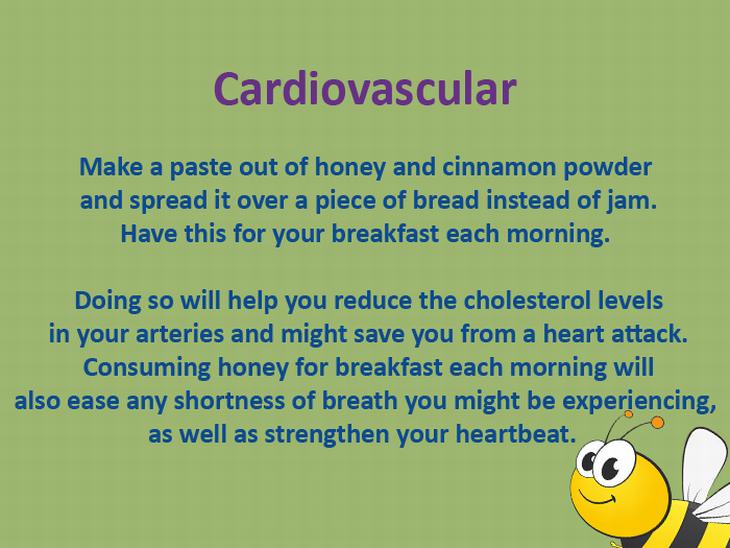
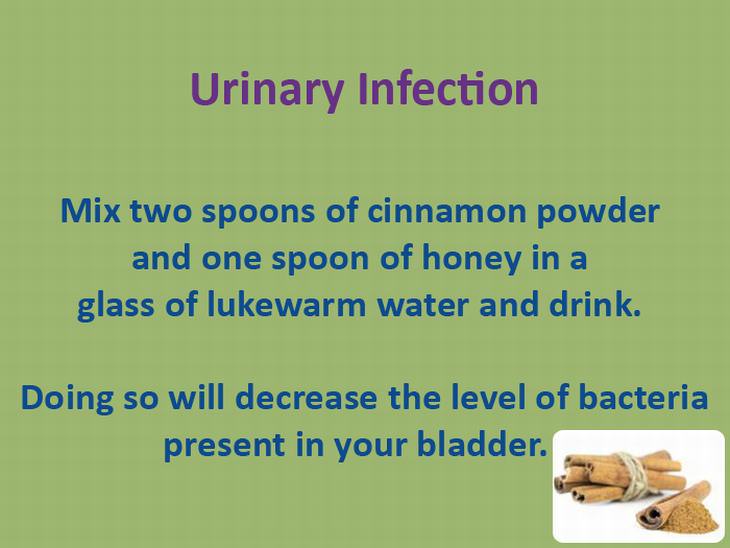
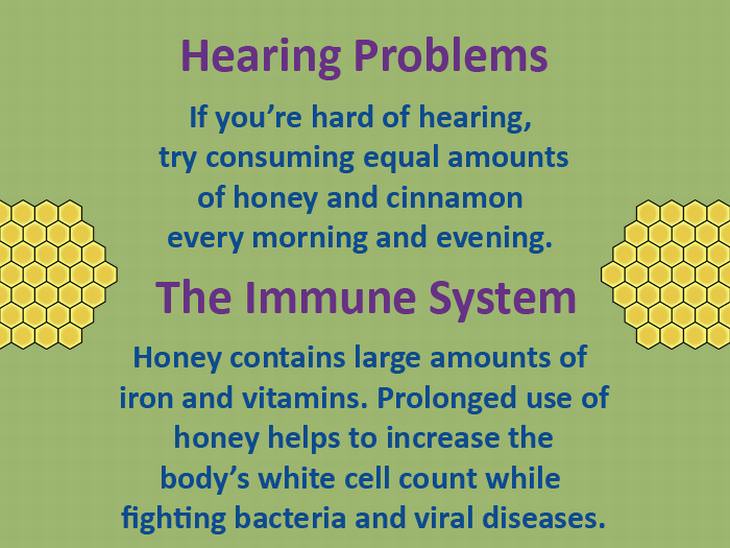
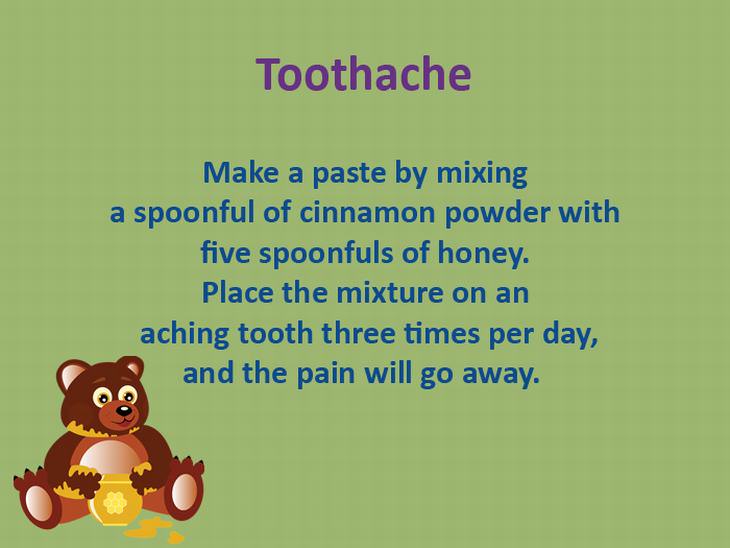
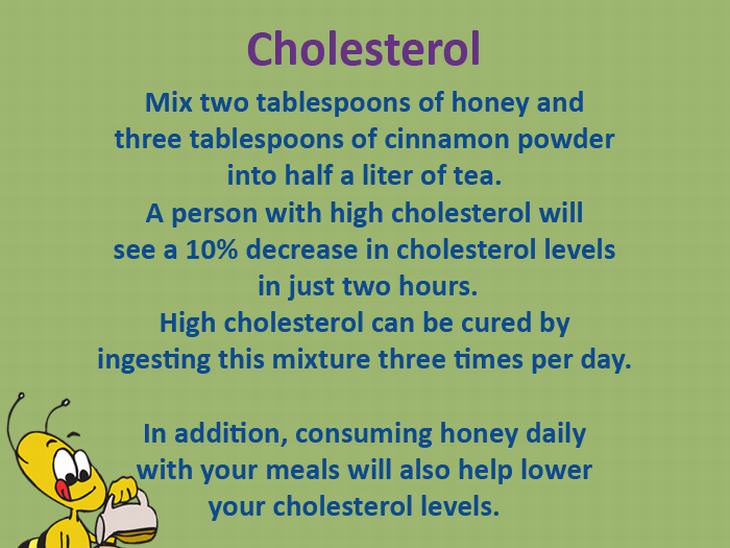
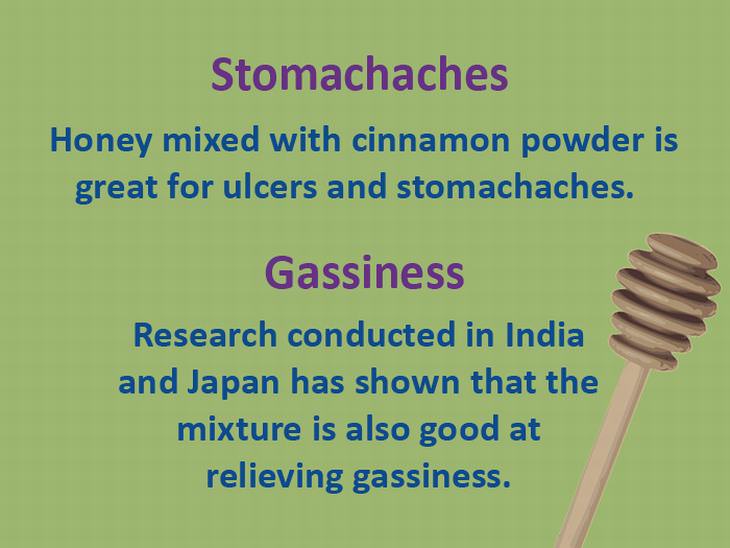
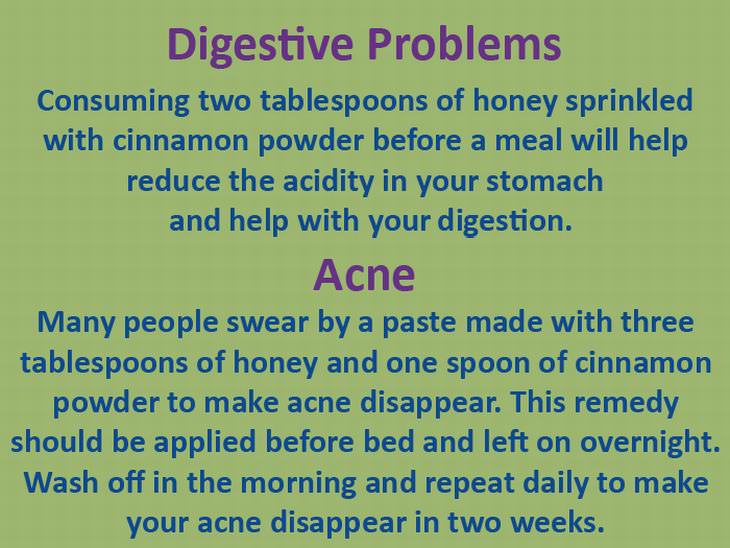
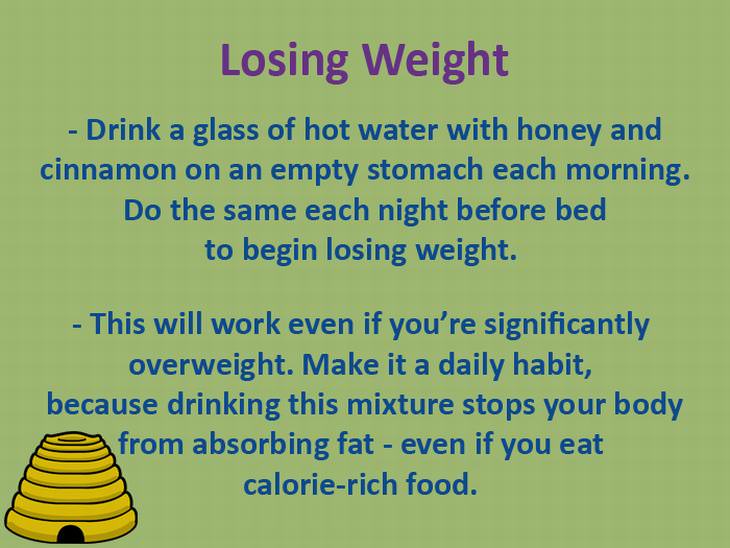
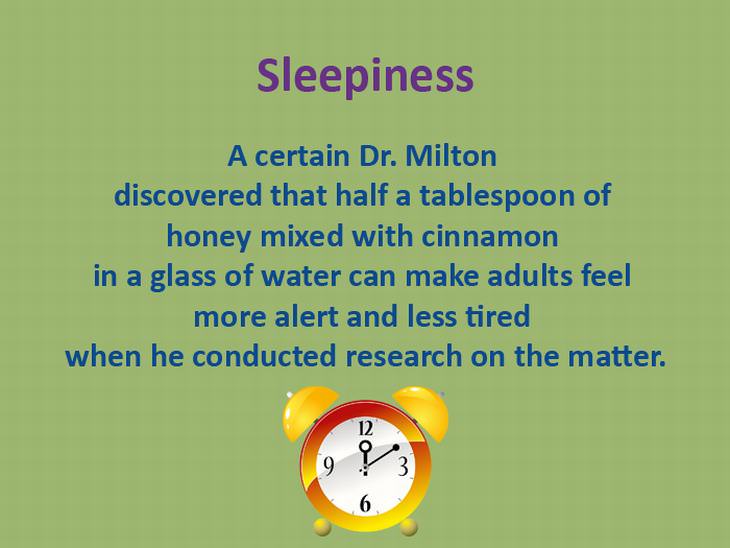
A mixture of honey and cinnamon has been considered by many cultures around the world to be a medical cure since time immemorial. Today's scientists acknowledge honey as being highly effective at treating a whole range of illnesses. Using honey for medical purposes has no known side effects, which makes it a great alternative to try. Modern science even claims that honey doesn't pose a threat to diabetics in spite of its sweetness. A few years ago, Canadian journal Weekly World News published a list of illnesses that can be cured using honey and cinnamon, citing evidence garnered in various medical trials:
honey and cinnamon

honey and cinnamon

honey and cinnamon

honey and cinnamon

 honey and cinnamon

 honey and cinnamon

 honey and cinnamon

honey and cinnamon

 honey and cinnamon

 honey and cinnamon


This is only for your information, kindly take the advice of your doctor for medicines, exercises and so on.   

https://gscrochetdesigns.blogspot.com. one can see my crochet creations  
https://gseasyrecipes.blogspot.com. feel free to view for easy, simple and healthy recipes    
https://kneereplacement-stickclub.blogspot.com. for info on knee replacement


Labels: , , , , , , , , , , , , ,

Saturday, July 11, 2020

What a Great Combination: Honey & Cinnamon

A mixture of honey and cinnamon has been considered by many cultures around the world to be a medical cure since time immemorial. Today's scientists acknowledge honey as being highly effective at treating a whole range of illnesses. Using honey for medical purposes has no known side effects, which makes it a great alternative to try. Modern science even claims that honey doesn't pose a threat to diabetics in spite of its sweetness. A few years ago, Canadian journal Weekly World News published a list of illnesses that can be cured using honey and cinnamon, citing evidence garnered in various medical trials: 
 
honey and cinnamon
honey and cinnamon

honey and cinnamon

honey and cinnamon
honey and cinnamon

honey and cinnamon

honey and cinnamon

honey and cinnamon 
 
honey and cinnamon
 
 
honey and cinnamon             
This is only for your information, kindly take the advice of your doctor for medicines, exercises and so on.     

https://gscrochetdesigns.blogspot.com. one can see my crochet creations  
https://gseasyrecipes.blogspot.com. feel free to view for easy, simple and healthy recipes    
https://kneereplacement-stickclub.blogspot.com. for info on knee replacement

Labels: , , , , , , , , , , ,

Wednesday, November 27, 2019

Children up to 4 years worst target of antibiotics prescribed by private doctors

  • A study shows that from May 2013 to April 2014 antibiotic prescription rates were highest for children aged 0–4 years.
  • Around 519 million antibiotic prescriptions were dispensed in 2014, which translate into 412 prescriptions per 1,000 persons per year
Children between 0 to 4 years have been found to be the most targeted segment among patients for antibiotics prescribed by private doctors, a study has shown.
 
The study done by Public Health Foundation of India (PHFI), a public private initiative in public health has revealed that from May 2013 to April 2014 antibiotic prescription rates were highest for children aged 0–4 years. Also, approximately one-fifth antibiotic prescriptions were dispensed for upper respiratory infections, which rarely require an antibiotic therapy, the study said.

The researchers used a 12-month period (May 2013 to April 2014) medical audit dataset from IQVIA (formerly IMS Health) an American Contract Research Organization and Pharmaceutical Service Consulting. The researchers also calculated and reported antibiotic prescription rate per 1,000 persons per year, by age groups, antibiotic class and disease conditions.

Presenting new evidence on outpatient antibiotic prescription rates and pattern in the private sector in India, the study said that around 519 million antibiotic prescriptions were dispensed in 2014, which translate into 412 prescriptions per 1,000 persons per year. The antibiotic prescription rates were found to be highest for children aged 0–4 years (636 prescriptions per 1,000 persons) and lowest in the age group 10–19 years (280 prescriptions per 1,000 persons).

“Our estimates suggest high proportion of antibiotic prescription for upper respiratory tract infections (acute upper respiratory infections (20.4%), cough (4.7%), acute nasopharyngitis (4.6%), and acute pharyngitis (3.9%)). Generally, these infections are viral in origin and are self-limiting in nature," said Sakthivel Selvaraj, director, Health Economics, Financing and Policy, PHFI.

The findings also stated that the prescriptions for unspecified acute lower respiratory infection were 12.8%; disorders of urinary system were 6.0%; 4.7% for cough; and 4.6% for acute nasopharyngitis.
“In the light of evidence based medicine and standard treatment guidelines, it may be argued that a significant proportion of these antibiotic prescriptions might be inappropriate in nature. Previous research on prescription practices also highlighted the problem of inappropriate use of broad-spectrum antibiotics in India," Selvaraj said.

The findings highlighted that across all age groups, beta-lactam, cephalosporins had the highest prescription rates (38.3% of all antibiotic prescriptions) followed by beta-lactam, penicillins (22.8%) and quinolones (16.3%). “Cephalosporins were the most commonly prescribed antibiotic across all diagnoses with the exception of disorders of urinary system where quinolones were more commonly prescribed," said Selvaraj.

The researchers have argued that overall antibiotic prescription rates in India are still much lower than Europe. However, prescription rates for broad-spectrum beta-lactam antibiotics are much higher as compared to European nations, especially in children.

“Our findings highlight that primary care physicians in the private sector can play a key role in reducing antibiotic misuse and overuse. This baseline information can also be used as a benchmark for measuring the impact of current and future interventions directed towards reducing inappropriate antibiotic use," said Selvaraj.

this is only for your information, kindly take the advice of your doctor for medicines, exercises and so on.     
https://gscrochetdesigns.blogspot.com. one can see my crochet creations  
https://gseasyrecipes.blogspot.com. feel free to view for easy, simple and healthy recipes    
https://kneereplacement-stickclub.blogspot.com. for info on knee replacement


Labels: , , , , , ,

Monday, June 24, 2019

Vegetables also transmit superbugs to human gut

Not just animal meat but plant-based foods are also serving as vehicles for transmitting antibiotic-resistant bacteria to the gut microbiome of humans, warn researchers.

The US Centers for Disease Control and Prevention estimated that of the two million antibiotic-resistant infections per year in the country, 20 per cent are linked to agriculture.

This estimate is based on patients who directly acquire antibiotic-resistant superbugs from eating meat.

“Our findings highlight the importance of tackling food-borne antibiotic-resistance from a complete food chain perspective that includes plant-foods in addition to meat,” said a researcher.

To reach this conclusion, the researchers developed a novel, lettuce-mouse model system that does not cause immediate illness to mimic consumption of superbugs with plant-foods.

They grew lettuce, exposed it to antibiotic-resistant E. coli, fed it to the mice and analyzed their faecal samples over time.

“We found differences in the ability of bacteria to silently colonize the gut after ingestion, depending on a variety of host and bacterial factors,” she said.

“We mimicked antibiotic and antacid treatments, as both could affect the ability of superbugs to survive passage from the stomach to the intestines.”

Little has been done till date to determine how eating plants contributes to the spread of antibiotic-resistant superbugs.

Spread of antibiotic-resistant superbugs from plants to humans is different from outbreaks of diarrheal illnesses caused immediately after eating contaminated vegetables.

Superbugs can asymptomatically hide in or “colonize” the intestines for months or even years, when they then escape the intestine and cause an infection, such as a urinary infection.

“We continue to seek the plant characteristics and host factors that result in key microbial community shifts in the gut that put us at risk for colonization and those that prevent it,” said the researchers. 

THIS IS ONLY FOR INFORMATION, ALWAYS CONSULT YOU PHYSICIAN BEFORE HAVING ANY PARTICULAR FOOD/ MEDICATION/EXERCISE/OTHER REMEDIES.                                    PS- THOSE INTERESTED IN RECIPES ARE FREE TO  VIEW MY BLOG-                                                                                           https://gseasyrecipes.blogspot.com/                                                                                                                                                FOR INFO ABOUT KNEE REPLACEMENT, YOU CAN VIEW MY BLOG-                                                  https:// kneereplacement-stickclub.blogspot.com/                                                                      FOR CROCHET DESIGNS                                                                                                                                                                                     https://gscrochetdesigns.blogspot.com

Labels: , , , , , , ,