Sunday, May 02, 2021

It’s Essential that We Debunk These Antibiotic Myths!

In 1945 Howard Florey and Alexander Fleming were awarded a Nobel Prize in Medicine for their role in creating the first mass-produced antibiotic. Antibiotics were indeed a great breakthrough in the world of medicine - when used properly and safely, these powerful agents can be life-saving.

However, there are a few common misconceptions about antibiotics, bacteria, and antibiotic resistance that can often lead to harmful misuse. In this article, we’ll discuss the most persistent myths regarding antibiotics that healthcare providers want you to stop believing. 
 
1. Myth: The body can become resistant to antibiotics
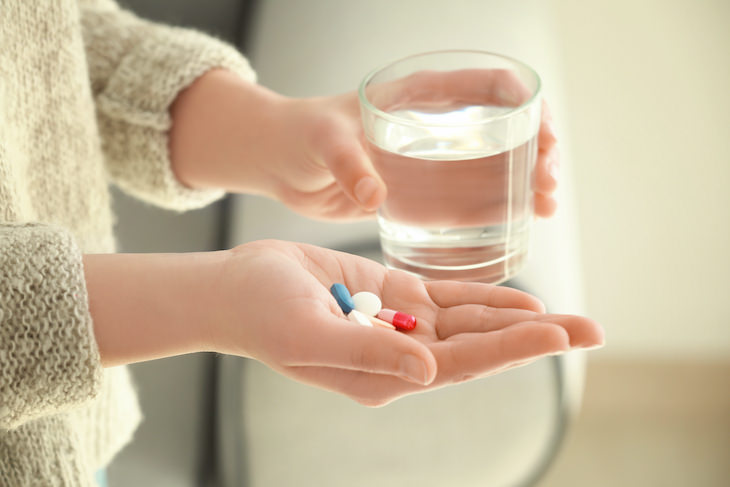
Common Myths Surrounding Antibiotics, woman taking pills
This is one of the most common misconceptions surrounding antibiotics. Antibiotics stop bacterial infections by killing the bacteria or preventing them from reproducing. It isn’t your body but rather the bacteria that can become resistant to antibiotics. Bacteria can even pass this resistance on to each other via genetic 'darts'. 
 
When antibiotics aren't taken correctly, the risk of new strains of resistant bacteria forming increases. “If the bacteria aren’t fully destroyed, you may get sick again. And the bacteria that remain can mutate and develop resistance to the antibiotic.” explained Dr. Benjamin N. Gilmore of Cedars-Sinai Medical Center in Los Angeles. That’s why you’re always told to complete the prescribed treatment plan even if you start feeling better.

However, the notion that it's impossible to develop antibiotic resistance as a result of correct use isn’t true either. Appropriate use applies the same selective pressure as does inappropriate use, so resistant bacteria can potentially form even if the antibiotics are taken correctly. The difference is that we can and should stop inappropriate use because it offers no benefit. In contrast, the benefits of the appropriate use of antibiotics significantly outweigh the risks.
 
2. Myth: If you've never taken antibiotics you cannot get a resistant infection
While having taken antibiotics in the past does increase your risk of getting an antibiotic-resistant infection, it is possible for someone who has never taken antibiotics to get one too. 
 
Around 10% of the population carries resistant bacteria in their bodies, according to Antibiotics Research UK. These resistant strains can arise in a number of ways, including spontaneously, and through transmission from person to person.
 
3. Myth: It's okay to use someone else’s leftover antibiotics
Antibiotics should only be taken when they’ve been specifically prescribed for you. You might have a friend or family member that had the same symptoms as you and were treated with antibiotics. Or you might suffer from an issue you are already familiar with and have been prescribed antibiotics in the past for it. Either way, taking someone else’s or your own leftover antibiotics without consulting a doctor is never a good idea. 
 
According to several healthcare providers, it’s a lot harder to help patients who have already taken antibiotics without being diagnosed, because It can be difficult to tell which symptoms are from the actual illness and which are side effects from the medication.

4. Antibiotics can be used to treat colds and flu
The common cold and the flu are caused by viruses, not bacteria, therefore antibiotics are not a suitable treatment for these illnesses. Bacteria and viruses are two different microorganisms. The main difference between the two is that bacteria can live in almost any conceivable environment, including the human body, while viruses are a non-living collection of molecules that need a host, like the human cells, to survive. In other words, while bacteria are normal living creatures, viruses are parasites that cannot exist on their own. As such, they are usually much smaller than bacteria. 
 
Taking antibiotics against viral infections like the cold and the flu is ineffective at best, and in some cases could even make you feel worse. There are some ailments - such as pneumonia, meningitis, and diarrhea - that can be caused by either bacteria or viruses. You should always see a doctor if you have a high fever (over 101°F\38.5°C) and your symptoms linger for a period longer than 7 days. These can be signs that your symptoms might not be viral and that you have a bacterial infection.
 
5. If you don't take your antibiotics correctly it does not affect anyone but you
As we established, misuse of antibiotics increases the risk of resistant strains forming. The problem is that by allowing this, you don’t just harm your own health but you put others at risk too, as these new strains can now infect other people. 
 
Antibiotic resistance has become a worldwide health threat, according to the CDC. In fact, this crisis seems to be worsening recently due to the Covid-19 pandemic. Despite the fact that Covid-19 is a viral infection, research shows the use of antibiotics has steadily increased along with cases. Of those taking the antibiotics, 79–96% reported not having been infected with Covid-19 but were apparently taking antibiotics inappropriately, believing it would prevent infection. 
 
According to the WHO, 15% of Covid patients develop a bacterial co-infection and might need antibiotic treatment to survive. Appropriate use of antibiotics is crucial to society so that they work when people at high risk, such as those patients, really need them. Dr. Nino Berdzuli, director of the WHO put it best when he said "Everyone has a role to play as an antibiotic guardian".

This is only for your information, kindly take the advice of your doctor for medicines, exercises and so on.     

https://gscrochetdesigns.blogspot.com. one can see my crochet creations  
https://gseasyrecipes.blogspot.com. feel free to view for easy, simple and healthy recipes    
https://kneereplacement-stickclub.blogspot.com. for info on knee replacement


Labels: , , , , ,

Thursday, May 21, 2020

SARS antibody found to neutralise COVID-19 virus

An antibody first identified in a blood sample from a patient who recovered from Severe Acute Respiratory Syndrome (SARS) in 2003 has demonstrated the ability to prevent SARS-CoV-2 live virus infection of cells in the laboratory, says a study, raising new hope in the fight against COVID-19.

The antibody, called S309, is now on a fast-track development and testing path at San Francisco-headquartered Vir Biotechnology in the next step toward possible clinical trials.

The initial results, published in the journal Nature, could ultimately pave the way for using the S309 antibody, alone or in a mixture, as a preventive measure for people at high-risk of exposure to the COVID-19 coronavirus or as post-exposure therapy to limit or treat severe illness, according to the scientists.

"We still need to show that this antibody is protective in living systems, which has not yet been done," said study co-author David Veesler, Assistant Professor of Biochemistry at the University of Washington School of Medicine.

"Right now there are no approved tools or licensed therapeutics proven to fight against the coronavirus that causes COVID-19," he added.

Vir Biotechnology in a separate statement said it is advancing two clinical development candidates based on the S309 antibody as potential therapeutics for COVID-19 -- VIR-7831 and VIR-7832 -- in collaboration with GlaxoSmithKline plc.

The research showed that the S309 antibody is particularly potent at targeting and disabling the spike protein that promotes the coronavirus entry into cells.


It was able to neutralise SARS CoV-2 by engaging with a section of the spike protein near the attachment site to the host cell.

Through their cryo-electronmicroscopy studies and binding assays, the researchers learned that the S309 antibody recognises a binding site on the coronavirus that is conserved across many sarbocoviruses, not just the SARS and COVID-19 viruses.

That is probably why this antibody, instead of being single-minded, is able to act against related coronaviruses.

Combining the S309 antibody with other, though weaker, antibodies identified in the recovered SARS patient enhanced the neutralisation of the COVID-19 coronavirus, said the study.

This multiple antibody cocktail approach might help limit the coronavirus' ability to form mutants capable of escaping a single-ingredient antibody treatment, according to the researchers.

"Remarkably, we believe S309 likely covers the entire family of related coronaviruses, which suggests that, even as SARS-CoV-2 continues to evolve, it may be quite challenging for it to become resistant to the neutralizing activity of S309," Herbert "Skip" Virgin, Chief Scientific Officer, Vir, said in a statement.

"In addition, S309 exhibits potent effector function in vitro, potentially allowing the antibody to engage and recruit the rest of the immune system to kill off already infected cells."


This is only for your information, kindly take the advice of your doctor for medicines, exercises and so on.     

https://gscrochetdesigns.blogspot.com. one can see my crochet creations  
https://gseasyrecipes.blogspot.com. feel free to view for easy, simple and healthy recipes    
https://kneereplacement-stickclub.blogspot.com. for info on knee replacement

Labels: , , , , , , ,

Monday, February 17, 2020

Dengue virus becomes resistant to certain vaccines

While searching for a new approach in vaccine development for dengue, researchers discovered that the dengue virus changes its shape through mutations in envelope protein to evade vaccines and therapeutics.

DENV2 (a dengue virus) exists as smooth spherical surface particles while growing at the mosquito’s physiological temperature (29 degrees Celsius). It then changes to bumpy surfaced particles at human physiological temperature (37 degrees Celsius).

This ability to morph helps the virus to evade the immune system of the human host. Hence, understanding the mechanism behind this is important for therapeutics and vaccine development, reported the study published in the journal, PLOS Pathogens.

“Together with Professor Pei-Yong Shi from UTMB, we found that in laboratory-developed DENV2 strains, mutations in the virus’ E protein causes its transformation into bumpy particles. These structural changes can cause vaccines and therapeutics to be ineffective against the virus,” said Ms Xin-Ni Lim, the study’s lead author who is from Duke-NUS’ Emerging Infectious Diseases (EID) Programme.

The team also tested four DENV2 strains obtained from patients. They observed that in contrast to the laboratory-adapted viruses, the majority of these clinical strains maintained smooth surface structure at 37 degrees Celsius.

However, at 40 degrees Celsius, the temperature of a fever, all virus strains took on a bumpy surface.

“Our study gives a new direction to vaccine development and treatment for dengue disease. For prevention of disease through vaccines that are administered to the patient before dengue infection, we should use those that are effective against the smooth surface virus,” said Dr Sheemei Lok, Professor, Duke-NUS’ EID and corresponding author of this study.

“When it comes to patients displaying fever symptoms, treatment strategies effective against the bumpy surface particles should be implemented,” added Dr Lok.

“This study is a first step towards gaining more insight into how DENV2 reacts and adapts to the host’s immunological defences. We were also able to use computational modelling approaches to predict why particles from different DENV2 strains are more or less adept at morphing from the smooth to bumpy structures. By better understanding the interactions between the virus and the host, we will be able to develop better therapies and vaccines to treat or prevent infections, and contribute to public health outcomes,” said Dr Peter Bond, Principal Investigator from A*STAR’s BII.

The study’s findings also show that the lab adapted DENV2 may not be a good model for research, as its structure is different from the clinical strains isolated from patients. The team is planning to study the other DENV serotypes to find out if there are any other possible structural changes.

This is only for your information, kindly take the advice of your doctor for medicines, exercises and so on.     
https://gscrochetdesigns.blogspot.com. one can see my crochet creations  
https://gseasyrecipes.blogspot.com. feel free to view for easy, simple and healthy recipes    
https://kneereplacement-stickclub.blogspot.com. for info on knee replacement
 

Labels: , , , , ,

Saturday, January 25, 2020

Link Between Antibiotics, Bacterial Biofilms and Chronic Infections Found

The bacteria called non-typeable Haemophilus influenzae are a common cause of infection in the upper respiratory tract. By attaching to surfaces in the body the bacteria form a biofilm. Researchers have reported that when the bacteria encounter non-lethal amounts of specific antibiotics they are stimulated to form a biofilm, a structure that causes chronic infection and which can be highly resistant to antibiotics.

“This research addresses the long standing issues surrounding chronic ear infections and why some children experience repeated ear infections even after antibiotic treatment,” said Paul Webster, PhD, lead author, senior staff scientist at USC and senior faculty at the Oak Crest Institute of Science. “Once the biofilm forms, it becomes stronger with each treatment of antibiotics.”

During the study, non-typeable Haemophilus influenzae (NTHi) bacteria a common pathogen of humans was exposed to non-lethal doses of ampicillin, a class of antibiotics commonly used to treat respiratory, sinus and ear infections, or other beta-lactam antibiotics. The dose of the antibiotic was not enough to kill the bacteria which allowed the bacteria to react to the antibiotic by producing glycogen, a complex sugar often used by bacteria as a food source, to produce stronger biofilms when grown in the laboratory.

Biofilms are highly structured communities of microorganisms that attach to one another and to surfaces. The microorganisms group together and form a slimy, polysaccharide cover. This layer is highly protective for the organisms within it, and when new bacteria are produced they stay within the slimy layer. With the introduction of antibiotic-produced glycogen, the biofilms have an almost endless food source that can be used once antibiotic exposure has ended.

There are currently no approved treatments for biofilm-related infections. Therefore, bacteria forced into forming stronger biofilms will become more difficult to treat and will cause more severe chronic infections. Adults will suffer protracted lung infections as the bacteria hunker down into their protective slime, and children will have repeated ear infections. What may appear to be antibiotic resistance when an infection does not clear up may actually be biofilms at work.

Webster believes modern medicine needs to find ways of detecting and treating biofilm infections before the bacteria are able to form these protective structures. The difficulties of treating biofilm infections, which can be up to 1,000 times more resistant to antibiotics, have prompted some physicians to propose a gradual move away from traditional antibiotic treatments and toward non-antibiotic therapies.

“If antibiotics are to continue to be relevant for treating bacterial infections it is important that their effects on biofilms be explored,” says Dr. Webster. “One step in this direction would be to develop routine screening methods to test the effects of antibiotics on in vitro formed biofilms.”

This is only for your information, kindly take the advice of your doctor for medicines, exercises and so on.     
https://gscrochetdesigns.blogspot.com. one can see my crochet creations  
https://gseasyrecipes.blogspot.com. feel free to view for easy, simple and healthy recipes    
https://kneereplacement-stickclub.blogspot.com. for info on knee replacement
 

Labels: , , , , , , , , ,

Sunday, December 01, 2019

Researchers identify deadly microbes and make medical devices infection-free


Researchers have found a way to identify the presence of deadly microbes present on medical devices, such as catheters, and ways to keep them infection-free. This study was conducted as an interdisciplinary collaboration between microbiologists, immunologists, and engineers led by Dr Simon Corrie from Monash University's Department of Chemical Engineering and Professor Ana Traven from the Monash Biomedicine Discovery Institute (BDI).

It was recently published in the American Chemical Society journal -- ACS Applied Interfaces and Material. Candida albicans, a commonly found microbe, can turn deadly when it colonises on devices such as catheters implanted in the human body. While commonly found in healthy people, this microbe can become a serious problem for those who are seriously ill or immune-suppressed.

The microbe forms a biofilm when it colonises using, for example, a catheter as a source of infection. It then spreads into the bloodstream to infect internal organs. "The mortality rate in some patient populations can be as high as 30 to 40 per cent even if you treat people. When it colonises, it's highly resistant to anti-fungal treatments," a Professor  said.

"The idea is that if you can diagnose this infection early, then you can have a much bigger chance of treating it successfully with current anti-fungal drugs and stopping a full-blown systemic infection, but our current diagnostic methods are lacking. A biosensor to detect early stages of colonisation would be highly beneficial," added the Professor.

The researchers investigated the effects of organosilica nanoparticles of different sizes, concentrations and surface coatings to see whether and how they interacted with both C. Albicans and with immune cells in the blood. They found that the nanoparticles bound to fungal cells, but were non-toxic to them. "They don't kill the microbe, but we can make an anti-fungal particle by binding them to a known anti-fungal drug," Professor Traven said.

The researchers also demonstrated that the particles associated with neutrophils -- human white blood cells -- in a similar way as they did with C. Albicans, remaining noncytotoxic towards them. "We've identified that these nanoparticles, and by inference a number of different types of nanoparticles, can be made to be interactive with cells of interest," Dr. Corrie said.

"We can actually change the surface properties by attaching different things; thereby we can really change the interactions they have with these cells -- that's quite significant," added Dr Corrie. Dr Corrie said while nanoparticles were being investigated in the treatment of cancer, the use of nanoparticle-based technologies in infectious diseases lags behind the cancer nanomedicine field, despite the great potential for new treatments and diagnostics.


this is only for your information, kindly take the advice of your doctor for medicines, exercises and so on.     
https://gscrochetdesigns.blogspot.com. one can see my crochet creations  
https://gseasyrecipes.blogspot.com. feel free to view for easy, simple and healthy recipes    
https://kneereplacement-stickclub.blogspot.com. for info on knee replacement


Labels: , , , , , , , , ,