Monday, December 04, 2023

When Shoulder Pain Requires Immediate Attention

 When it comes to shoulder pain, there could be a number of reasons. It may range from a pulled muscle to a rotator -cuff tear, to a heart attack, and even lung cancer. Here is what you need to be on the lookout for: 

shoulder pain

Fractured collarbone  
Fractures of the collarbone are relatively common and painful. You may also find it difficult to move your arm after a break, and your shoulder will hurt and sag forward and downward. But how does this type of fracture arise? Usually, the cause is a fall on, or a direct impact to the shoulder. Miho Tanaka, MD, director of the Women’s Sports Medicine Program and associate professor of orthopedic surgery at the Johns Hopkins Hospital says if your collarbone is broken you'll likely know it. “It is very commonly localized, and most people can feel the ‘break’ in their collarbone because it is just under their skin.” Treatment usually entails an arm sling, stabilizing the area and physical therapy. If the bones have greatly shifted out of place, you might need surgery utilizing plates, screws or pins.


Pulmonary embolism 
 If you think that you have pulled a muscle in your shoulder but the pain is so severe that you have difficulty sleeping or lying down, get to the ER immediately. According to specialists, this type of shoulder pain could be a sign of a blood clot in your lungs. For treatment, you will be given anticoagulants or thrombolytic drugs to dissolve the clot and possible surgery. Without proper treatment, a pulmonary embolism can cause damage to your lungs and other organs, and may even be fatal. 
 
 
Subarachnoid hemorrhage 
Wherever it may occur, a hemorrhaging is terrible - however, it is particularly bad when it happens in the space between the brain and its protective tissues. One possible symptom is shoulder pain, as well as neck pain, vision problems, numbness, confusion, sensitivity to light, nausea, and seizures. This telltale sign of subarachnoid hemorrhage (SAH) is a sudden and debilitating headache, which may be caused by a brain aneurysm, trauma, or blood thinners. You'll need to seek immediate medical intervention to prevent brain damage and save your life.
shoulder pain

Cancer  
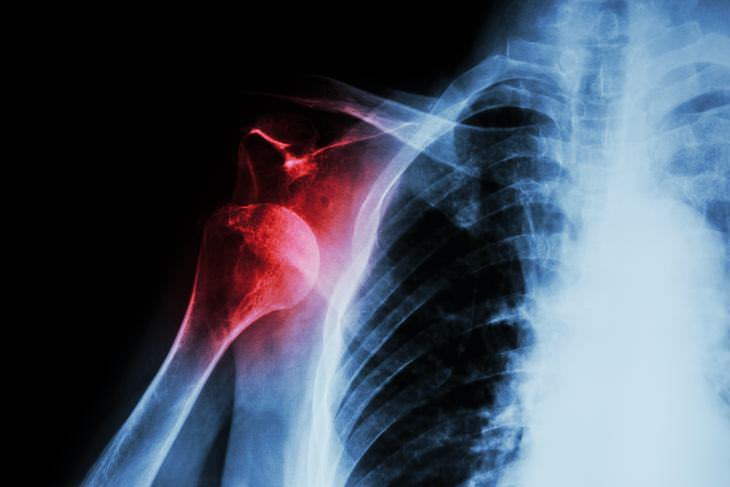
Shoulder pain may also be a symptom of cancer, most often, lung cancer. In a 2015 study, 14% of people with mesothelioma, (a type of cancer that develops from the thin layer of tissue that covers many of the internal organs (known as the mesothelium) usually the lungs and chest wall)reported shoulder pain, and this was most often the first symptom. Other types of lung cancer may also cause shoulder pain, including Pancoast tumors, which are located in the upper lungs, and metastatic lung cancer. What's tricky about lung cancer, related shoulder pain is that it is often called 'referred pain' because it starts elsewhere in the body and is often mistaken for arthritis. Other telltale signs that cancer is the cause is that it can be a chronic cough that sometimes produces blood, labored breathing, fatigue, unexplained weight loss, and recurrent respiratory infections. 
 
 
Heart problems 
Chest pressure or chest pain is the most common sign of heart issues, however, shoulder pain can be one too. According to the National Heart, Lung and Blood Institute, people with angina can experience shoulder pain. In addition, their arms, neck, jaw or back may also ache. Shoulder pain is also one of the many signs of a heart attack. Women especially need to pay attention to this unusual symptom, especially when it is accompanied by sudden and inexplicable fatigue, lightheadedness, shortness of breath and indigestion. For women, symptoms tend to be very different than in men. Women often don't experience traditional chest pain. So if you're feeling off, see a doctor right away.
shoulder pain

Bursitis  
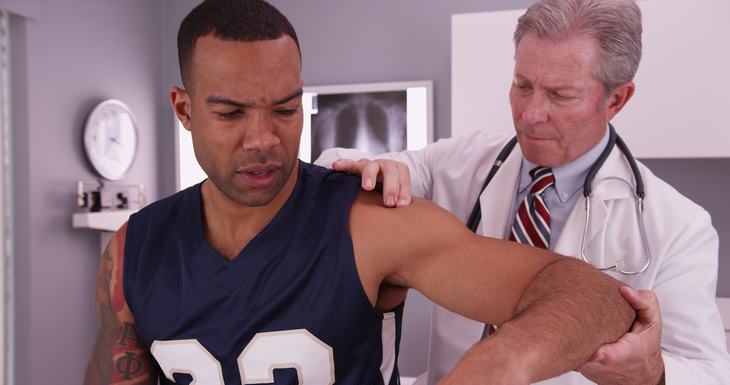
It is possible that you have never heard of a bursa before - a fluid-filled sac that cushions and protects your joints. If it becomes inflamed, however, it can be extremely painful. A common cause of shoulder pain, bursitis, typically occurs in people over 50 who have diabetes, or a weakened immune system. Athletes are also at risk, particularly those who do a lot of repetitive overhead stretching, such as basketball players and swimmers. James Fedich, a New Jersey-based chiropractor says: “I tell patients it’s like a ziplock bag with some water in it, so it protects you,” Fedich explains. “If you triple the amount of water in the bag, it gets swollen and hurts.” That pain, he adds, is “typically constant, present even during rest, and usually gets worse with activity.” Treatment includes NSAIDs (nonsteroidal anti-inflammatories), ice, range of motion, and strength exercises as well as ultrasound therapy.


Thoracic outlet syndrome 
When blood vessels or nerves between your collarbone and uppermost rib (the thoracic outlet) are compressed, it may result in Thoracic outlet syndrome, characterized by shoulder and neck pain, as well as finger numbness. This could occur as a result of a car accident, repetitive activity (from things like typing, or pitching a baseball, as well as carrying heavy bags, obesity, or pregnancy. It is also possible that you are born with a predisposition to it if you have an extra rib or tight connective tissue between your spine and ribs. Physical therapy is the first line of defense, but in advanced cases, if nothing seems to work, surgery may be suggested. 
 
 
Gallbladder problems 
Pain in the right shoulder may indicate that you have a gallstone causing a blockage. Other likely areas for sudden and intensifying pain include the upper-right abdomen, the center of your abdomen, below the breastbone, and between the shoulder blades. “A gallbladder issue is typically diagnosed by a primary-care physician,” says Dr. Tanaka, “and it would be apparent to them because the shoulder joint itself won’t hurt with movement.” Other factors that can put you at risk for this condition include high-fat, high-cholesterol, and low-fiber diets, as well as having diabetes, or a family history of gallstones, which can put you at increased risk for this condition. For treatment, medications to dissolve gallstones are usually prescribed, but this could take months or years to work fully. Surgery to remove your gallbladder is also possible. 
 
 
Pinched nerve 
If you suffer from pain, numbness and pins and needles in your shoulder, arm, and hand, it's possible that you've got a pinched nerve. This happens when a bone, bulging disc, or swollen tissue compresses the nerves, extending from the upper spine to the neck and shoulder. Fedich says, “The nerves come out of the spine in little channels. If the muscles around the spine pull too tight, as when we sleep awkwardly, the channel can get closed off, causing a pinch of the nerve. It’s like someone stepping on a garden hose; water can’t flow freely. In the spine, that will lead to pain wherever the nerve goes.” Sometimes, the problem will go away on its own. If not, typical options include chiropractic adjustments, physical therapy, icing the area, ibuprofen, and corticosteroid injections.


This is only for your information, kindly take the advice of your doctor for medicines, exercises and so on.   

https://gscrochetdesigns.blogspot.com. one can see my crochet creations  
https://gseasyrecipes.blogspot.com. feel free to view for easy, simple and healthy recipes    
https://kneereplacement-stickclub.blogspot.com. for info on knee replacement
https://cancersupportindia.blogspot.com  for infor on cancer and health related topics
https://GSiyers home remedies.blogspot.com   is the latest addition to my blogs. I'm going to add posts there, do give me your valuable feed back on my blogs. Thanks a lot, take care, be healthy and be happy.

Labels: , , , , , , , , ,

Sunday, June 11, 2023

Why Does Your Chest Hurt When You Breathe?

Painful breathing is an alarming symptom. The pain can range from mildly unpleasant to sharp and severe, and it can occur as you breathe regularly or only when you inhale deeply. Conditions that make you experience pain with breathing vary greatly - both milder short-term health issues and life-threatening conditions that involve vital organs like the lungs and heart could be the cause. 
 
Medical tests are usually required to rule out these serious medical emergencies and diagnose the root cause of the symptom, That is why you should always see a healthcare professional when you experience painful respiration. We look into the possible causes of this symptom below.
 
Respiratory infections
For many people, the first concern they think of when someone experiences painful breathing is pneumonia. As you will find out later, that’s not necessarily the case, but respiratory infections are certainly a possible cause of painful respiration. Even though the lungs don't have pain receptors, surrounding tissues can become inflamed, tender, and painful, so lung conditions can actually cause pain while breathing. 
 
Painful breathing caused by respiratory infections is more pronounced when you take a deep breath or lie down, and it’s rarely the only symptom. Shortness of breath, coughing, wheezing, fever, chills, fatigue, night sweats, or other cold and flu symptoms usually co-occur with painful respiration and help point your physician in the right direction. The following respiratory infections can cause pain with breathing: 
 
Pneumonia - an infection of the lungs caused by either a virus, bacterium, or fungus. 
 
Bronchitis - an infection of the bronchi, which are the tubes in your lungs that carry air throughout the lungs. 
 
Pleurisy - an infection of the pleura, a membrane that lines the lungs and separates it from the rest of the thoracic cavity. 
 
Tuberculosis - a serious lung infection caused by the Mycobacterium tuberculosis bacterium (uncommon in the US but common around the world). 
 
Shingles - a dangerous infection that, in rare cases, can cause viral pneumonia. The condition is caused by the same virus that’s responsible for chickenpox - the Varicella zoster virus.

COVID-19

Here’s an important side note. Pain with breathing can be a sign of severe COVID-19 - according to the Centers for Disease Control and Prevention (CDC). If you were diagnosed with Covid or experience any of the following symptoms, seek immediate medical help: 
 
Loss of taste and smell 
 
Sore throat 
 
Fever 
 
Chills 
 
Fatigue 
 
Muscle pain. 
 
Painful breathing is also sometimes reported in patients with long Covid or post COVID-19 syndrome for as long as 3 months after the initial COVID-19 diagnosis.

If you experience difficulty breathing and pain with respiration, don’t assume that an infection is to blame. Certain lung injuries and disorders can produce identical symptoms. Some of the most common respiratory conditions that fall within this group are: 
 
Pneumothorax - a medical emergency when air enters the pleural cavity and causes either partial or complete lung collapse. Severe chest pain and shortness of breath are the most common symptoms. Pneumothorax is usually a complication of chronic lung issues, severe lung infections, or injuries. 
 
Pulmonary embolism - another emergency that occurs when a blood clot travels from other parts of the body and gets stuck in the lungs. This is the most common life-threatening cause of pain with breathing, accounting for 5-21% of painful respiration cases. Pulmonary embolism can develop as a result of deep vein thrombosis, heart disease, or as a side effect of surgery. 
 
Pulmonary infarction - the death of some lung tissue caused by the restriction of blood supply. 
 
Chronic lung issues, such as chronic obstructive pulmonary disease (COPD) and asthma. Lung injuries caused by chemicals or smoke. Certain cancers, such as lung cancers or mesothelioma (cancer in the pleura).

Conditions that affect the musculoskeletal system

In some cases, pain in the chest may not be linked to your vital organs at all. The chest area contains a lot of bones, cartilage, muscles, and other connective tissue that could be responsible for pain while breathing. This pain can get worse when you breathe more deeply or with certain movements. The pain may also get better when you reposition the body or move after a long period of sitting or standing. 
 
Here are a few of such conditions: 
 
Problems with the thoracic spine, such as nerve compression, thoracic osteoarthritis, degenerative disc disease, etc. With a pinched nerve, the back pain can sometimes even radiate to the hand and mimic the symptoms of a heart attack. 
 
Rib fracture - sudden pain that gets worse when you breathe more deeply or cough. This is a medical emergency, as the broken rib can potentially puncture vital organs or blood vessels. 
 
Costochondritis - a relatively rare inflammatory condition affecting the cartilage that connects the ribs and the breastbone. It causes sharp pain and tenderness in the breastbone that can mimic a heart attack. The causes of costochondritis are not always identifiable, but the condition can develop as a result of chest injury, respiratory infections, and severe coughing. Costochondritis sometimes goes away on its own.

Heart-related conditions

Several types of heart disease can trigger chest pain while breathing, shortness of breath, or other types of breathing discomfort. The pain can also spread to the arm, shoulder, neck, and jaw. Statistical data reveals that more than a quarter of all patients with heart-related health issues seek medical help because of breathing discomfort. 
 
Some other symptoms that point towards a heart-related condition are an irregular heartbeat, lightheadedness, heart palpitations, excessive sweating, dizziness, burning sensations, and nausea. 
 
What conditions can produce these symptoms? There are a great many of them, but we feature some of the most serious and common ones below: 
 
Heart attack - serious medical emergency characterized by the restriction of blood flow to the heart. 
 
Heart failure - another potentially life-threatening condition that occurs when the heart isn’t capable of effectively pumping blood. 
 
Pericarditis - a condition that arises when the pericardium, a fluid-filled membrane that protects the heart, becomes inflamed. Sharp chest pain that improves with sitting upright or leaning forward is a common sign of pericarditis. 
 
 Myocarditis - an inflammation of the heart muscle (myocardium). Myocarditis can affect the heart's ability to pump blood. Infections, adverse drug reactions, or other inflammatory conditions can trigger the condition. Shortness of breath, sharp chest pain, and an irregular or fast heartbeat are the primary symptoms. 
 
Gastroesophageal reflux disease (GERD) 
Gastroesophageal reflux disease (GERD), commonly known as acid reflux, is a health condition that occurs because the muscle that prevents stomach acids from going up into the esophagus is malfunctioning. When the acids leak out into the esophagus, they damage and irritate the lining of the esophagus, which usually causes a burning sensation in the chest known as heartburn. 
 
GERD is very common - it affects 1 in 5 Americans. Although heartburn is the most common symptom of this condition, some patients also report a chronic cough and pain with breathing. However, the majority of symptoms associated with GERD still involve the digestive system - difficulty swallowing, nausea, and bad breath. 
 
Even though GERD isn’t considered a life-threatening condition, it could lead to complications and should be addressed by your doctor.
 
Panic attacks
Painful Respiration Causes panicking boy in the woods
Panic attacks are extreme and unbearable. Sudden waves of anxiety and fear, often accompanied by shallow breathing, are the hallmark of panic attacks. For those who have never experienced a panic attack, the symptoms can resemble a heart attack or a respiratory issue, but symptoms usually go away after 20-30 minutes. 
 
Panic attacks occur as a response to stress, excessive exercise, or even after drinking too much coffee. These events send your body into stress mode, and you will start breathing very quickly. The resulting hyperventilation usually causes even more troubling symptoms, including painful breathing, heart palpitations, sweating, shortness of breath, and losing the sense of reality. 
 
Some people experience panic attacks regularly, whereas others only get them once or twice, if ever. Breathing techniques and spending time in a calm and safe space can help a person experiencing a panic attack recover more quickly.
 
When is painful respiration a sign of a medical emergency?

Painful respiration can point to a number of very serious conditions, so it shouldn’t be taken lightly. Any unexplained chest pain, even if it seems minor, is best reported to a medical professional. Your healthcare provider can help you rule out serious conditions or make sure that the condition you have isn’t progressing. 
 
Contact emergency services IMMEDIATELY if you have chest pain with any of the following symptoms: 
 
Fever 
 
Shortness of breath 
 
Gasping for air 
 
Rapid breathing 
 
Choking 
 
Dizziness 
 
Confusion or loss of consciousness 
 
Sweating profusely 
 
Pale skin or blue lips, toes, or fingers 
 
Coughing up blood.


This is only for your information, kindly take the advice of your doctor for medicines, exercises and so on.   

https://gscrochetdesigns.blogspot.com. one can see my crochet creations  
https://gseasyrecipes.blogspot.com. feel free to view for easy, simple and healthy recipes    
https://kneereplacement-stickclub.blogspot.com. for info on knee replacement
https://cancersupportindia.blogspot.com  for infor on cancer and health related topics
https://GSiyers home remedies.blogspot.com   is the latest addition to my blogs. I'm going to add posts there, do give me your valuable feed back on my blogs. Thanks a lot, take care, be healthy and be happy.

Labels: , , , , , , , , , ,

Thursday, September 15, 2022

Obese women taking birth control pill likely to have blood clots

Obese women who take oestrogen and progestin-containing oral contraceptives have a 24-fold greater risk of venous thromboembolism (VTE) compared to non-obese women who do not use the medicines.

The findings of the study were published in ESC Heart Failure, a journal of the European Society of Cardiology (ESC).

Study author Professor Giuseppe Rosano of the IRCCS San Raffaele Pisana, Rome, Italy said: “It is well established that both obesity and oestrogen-containing contraceptives are risk factors for VTE. Despite this, obese women continue to receive these drugs. The scientific evidence indicates that obesity and combined oral contraceptives have a synergistic effect on VTE risk and this should be considered in prescribing decisions. Progestin-only products, including pills, intrauterine devices, or implants are a safer alternative to the combined pill in women carrying excess weight.”

This review article highlights the latest evidence on the independent effects of obesity and contraceptives, and their synergistic effects, on VTE risk and provides clinical recommendations. VTE refers to a blood clot in a vein and includes two life-threatening conditions: deep venous thrombosis and pulmonary embolism.

The World Health Organization estimates that the global prevalence of obesity nearly tripled between 1975 and 2016 – with 15% of adult women being obese. The risk of VTE increases progressively with body mass index (BMI), and in obese women it is more than double that of non-obese women. Obesity has the most substantial impact on VTE women under 40 years of age, who have a five-fold increased risk compared with non-obese women. Professor Rosano noted: “The particularly high risk in obese women under 40 is important, since it is at this age that many seek contraception.”

Combined oral contraceptives are associated with an elevated likelihood of VTE, with users having a three- to seven-fold elevated likelihood of VTE compared with non-users. In contrast, progestin-only products are not associated with an increased risk of VTE.

The combination of overweight/obesity and use of combined oral contraceptives potentiates the likelihood of blood clots in women of reproductive age. For example, a large population-based study found that overweight and obesity were associated with 1.7-fold and 2.4-fold increased risks of VTE, respectively. However, in combined pill users, the risk of VTE was 12-fold higher in overweight women and 24-fold higher in obese women – when compared with normal weight non-users.

Professor Rosano said: “Obese women taking contraceptives are vulnerable to VTE and should take steps to limit their other predisposing factors for cardiovascular disease, for example by quitting smoking and increasing their physical activity levels.”


This is only for your information, kindly take the advice of your doctor for medicines, exercises and so on.   

https://gscrochetdesigns.blogspot.com. one can see my crochet creations  
https://gseasyrecipes.blogspot.com. feel free to view for easy, simple and healthy recipes    
https://kneereplacement-stickclub.blogspot.com. for info on knee replacement


Labels: , , , , , ,