Saturday, August 21, 2021

Four ways older adults can get back to exercising – without the worry of an injury
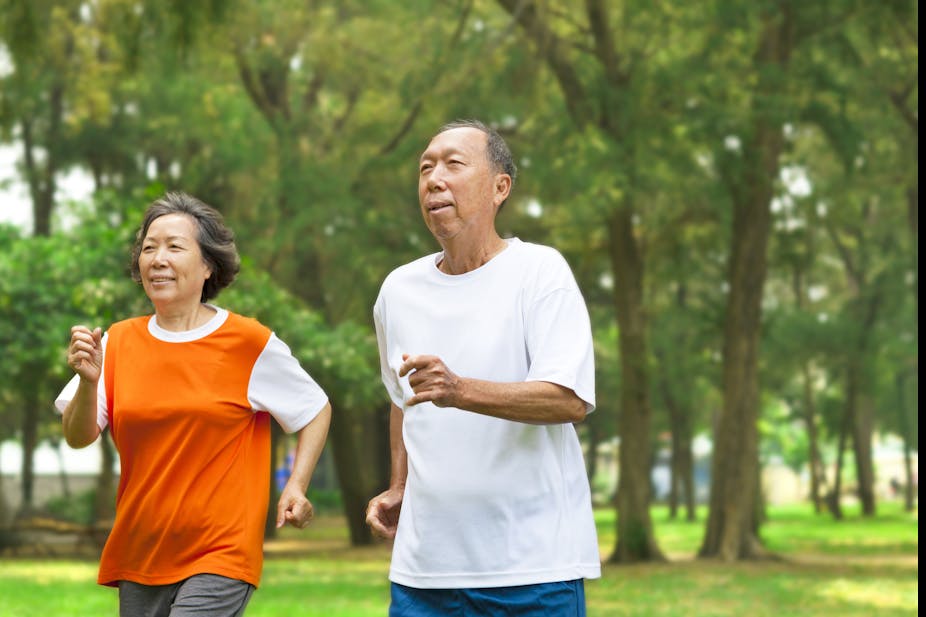
Older couple on a jog together. 

We naturally lose muscle mass as we get older. This process starts around the age of 36, and by the time we are 80 we’ve lost about 50% of our muscle mass. Long periods of inactivity can also cause us to lose a greater amount of muscle mass than we might normally. This has been the case during the COVID-19 pandemic, as many of us were less able to exercise as much as we use to do.

While most young people will be able to bounce back and regain their muscle mass easily, it may not be as easy for older people. This is because it can be more difficult to gain muscle mass as we age due to the changes in muscle structure, and doing too much too quickly can result in serious injuries. This is why older people need to get the balance right when easing back into exercise again.

Maintaining muscle mass

Maintaining muscle is important for many reasons. As we age, frailty can make it more difficult for us to be independent and do the things we need to do each day – from going shopping to meeting our friends. Being active maintains a healthy musculoskeletal system whilst also protecting us from some diseases, such as type 2 diabetes. Research also shows that strong active muscles can help prevent falls and lower injury risk.

But while it may be tempting to hit the gym and start lifting weights now that many COVID-19 restrictions have eased in the UK, if it’s been a while since you last exercised regularly, it’s important to ease back into things. Weak and de-conditioned muscles take time to build strength and doing too much vigorous, repetitive exercise can overload muscles and joints that have not been trained, leading to injury. 

Here are a few ways to get moving again without injuring yourself:

1. Progress slowly.

It’s best to gradually return to activity so you don’t overdo things or injure yourself. A staged approach, where you slowly introduce different exercises, will allow your muscles to recover between each session. Beginning with basic exercises around the house is a good starting point.

Then increasing the number and type of exercises you do can also help you from getting fatigued and losing form – which are prime conditions for an injury to occur. For example, starting with a short walk that then gets longer and progresses to a hill or rougher terrain allows for slow and persistent challenges for your body to become accustomed to while still helping you stay interested in exercising.

2. Reduce the time you spend sitting.

Long periods of sitting, if you have had to isolate or if you are working from home, significantly reduces muscle activity – and therefore muscle mass. So if you haven’t kept exercising during the pandemic, you can’t expect to pick up where you left off.

Take frequent breaks between meetings and introduce a walk at lunch. Stretching and moving around after long periods of sitting prevents fatigue and shortening of muscles – which can improve posture and balance, too.
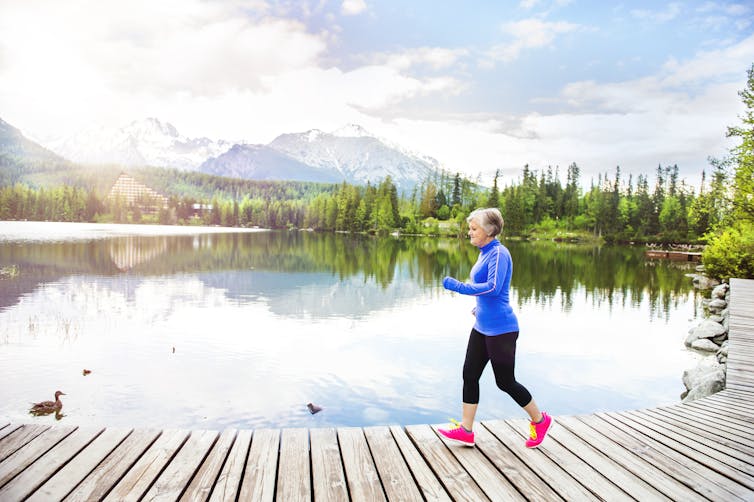
Older woman out for a jog on a pier by a lake.

3. Shake up the exercises you do.

Intense repetition of the same movement or activity can cause wear and tear, often referred to as repetitive strain. This is why it’s important to do different exercises, instead of the same thing every day. Alongside cardio workouts, which have benefits for our heart, lung, and circulatory system, try strength training.

Challenging our muscles as we get older with weight lifting and resistance training not only improves neuromuscular function – the communication between the brain and muscles – but improves balance and mobility too. Taking part in exercises that work your cardiovascular system as well as strengthen muscles improves overall wellbeing.

4. Work on the small things.

It’s important to work on our big prime muscles – such as our glutes or quads – with walking, running and gym exercises. But it’s just as important to work on our small postural muscles too.

For example, the small intrinsic muscles in our feet play an important role in improving strength and balance. Gripping a soft ball between your toes is an easy way to improve these small foot muscles.

Having stability within the joints of your body from postural muscles also allows for these big muscle groups to do their job when walking, running or at the gym. Paying attention to these core postural muscles with activation and control exercises will help prevent injury.

If you’re looking to get back to a regular exercise routine after many months off, it’s important to make sure you take things slow and change up your routine often. Developing a healthy balance of cardiovascular, strength and resistance training as well as core stability work will improve your musculoskeletal health as well as helping your overall health whilst preventing injury.

This is only for your information, kindly take the advice of your doctor for medicines, exercises and so on.   

https://gscrochetdesigns.blogspot.com. one can see my crochet creations  
https://gseasyrecipes.blogspot.com. feel free to view for easy, simple and healthy recipes    
https://kneereplacement-stickclub.blogspot.com. for info on knee replacement


Labels: , , , , , , , , , , ,

Sunday, August 01, 2021

These at-home exercises can help older people boost their immune system and overall health in the age of COVID-19

Older adults, especially those over 65, have five times the risk of hospitalization and 90 times the risk of death from COVID-19 compared with younger adults.

According to the U.S. Centers for Disease Control and Prevention, 78% of the more than 114,000 COVID-19 related deaths between May and August 2020 were people age 65 and older. Many of those individuals had compromised immune systems due, in part, to a variety of other health conditions including obesity, cardiovascular disease, diabetes, respiratory disease and hypertension. The CDC suggests these additional health problems could lead to increased severity of COVID-19.

The good news, however, is that regular exercise and cardiorespiratory fitness can significantly reduce the risk COVID-19 poses to older adults by improving overall health and boosting the immune system.

Now is not the time to stop moving

Staying active can be challenging, as many older adults are remaining at home most, if not all, of the time to avoid the novel coronavirus. As a result, the very changes in lifestyle that keep people safe from exposure can also result in their adopting sedentary habits – which leave people vulnerable to serious health consequences should they get COVID-19. 

Exercise, especially aerobic exercise, which gets the heart pumping hard and improves cardiorespiratory fitness, has multiple health benefits, including reduced risk for stroke, heart attack, depression and age-related cognitive decline and Alzheimer’s disease.

The U.S. Department of Health and Human Services recommends that older adults get at least 150 minutes a week of moderate- to vigorous-intensity exercise. That means three 50-minute sessions each week, or a little over 20 minutes per day.

Firing up the immune system

Not only can exercise enhance overall health, it can also specifically improve immune system response, which is critical to surviving COVID-19.

As humans age, the immune system becomes progressively less effective at responding to new viruses because of an age-related weakening of the immune system, also known as “immunosenescence.”

The good news is that exercise improves the efficiency of the immune system in people of all ages. Every session of exercise mobilizes billions of immune cells throughout the body. The more immune cells circulate, the better they are at spotting and attacking potential pathogens.

Although there is no data yet on how exercise and cardiorespiratory fitness can reduce risk of hospitalization or death from COVID-19, previous studies show that regular exercise improves the immune response to other viral infections. Regular exercise has also been shown to lower the risk of death from viral and respiratory illnesses. Furthermore, increased physical activity is known to improve and prolong the immune response from the flu shot.

Working out at home

How can older adults safely exercise and keep aerobically fit while stuck mostly at home without access to a gym? At the Aging & Brain Health Alliance at Rutgers University-Newark, we have been offering virtual exercise classes, by video conference or phone, for seniors using materials they can easily find around the home.

Here are a few suggested exercises from our fitness classes you can do on your own safely at home.

One of the best exercises to get you started on your fitness journey is to walk the floors of your home. Whether in a house or an apartment, take time every hour to get up and just walk. Set aside five to 10 minutes with the goal of increasing your daily step count and improving your overall cardiorespiratory health. Challenge a family member to join you and make it fun.

A woman, with her back against a wall, adopts a seated position.
Use your walls to boost your immune system. 

You should also take advantage of your walls. Wall sits are an easy way to engage your muscles and work your body. Simply stand with your back against a wall; step your feet two feet away from the wall and open your legs hip-distance apart. While keeping your shoulders against the wall, slowly and carefully lower your body until you are sitting in an imaginary chair.

Remember to keep breathing, inhaling through your nose and exhaling from your mouth, and you will begin to feel the burn in your leg muscles. Try coming up and down five times if you feel safe and comfortable doing so. (For extra security, keep a chair or something else near by to hold on to if you lose your balance.)

A woman sits in a folding chair, lifting one knee up.
How to work out your core while seated. 

Finally, use a chair. Sit at the edge of a solid chair focusing on maintaining good posture. Plant your feet hip-distance apart; take a big inhale and, on the exhale, slowly lift one knee toward your chest. This is a seated crunch and it will engage your deep core muscles. Complete five of these knee lifts on each side, making sure to do each knee lift on the exhalation.

Exercise habits developed during this period of COVID-19 – and maintained after the threat has passed – will support your immune health for years to come.

This is only for your information, kindly take the advice of your doctor for medicines, exercises and so on.   

https://gscrochetdesigns.blogspot.com. one can see my crochet creations  
https://gseasyrecipes.blogspot.com. feel free to view for easy, simple and healthy recipes    
https://kneereplacement-stickclub.blogspot.com. for info on knee replacement


Labels: , , , , , , , , , ,