5 Key Exercises to Improve Balance and Prevent Falls
Exercise is the key to a fulfilling and
independent life as a senior. Strengthening the lower body, in
particular, is of utmost importance. This is because the loss of control
and mobility in the lower body and the reduction of muscle mass in the
legs and hips dramatically increase the risk of falls, which, in turn,
can lead to serious injuries.
In fact, falls are the leading cause of injuries among the elderly and
the main reason for trauma-related emergency room visits in the senior
population. Fortunately, exercise can dramatically lower one’s risk of
falls no matter when you start - at the age of 7 or 70.
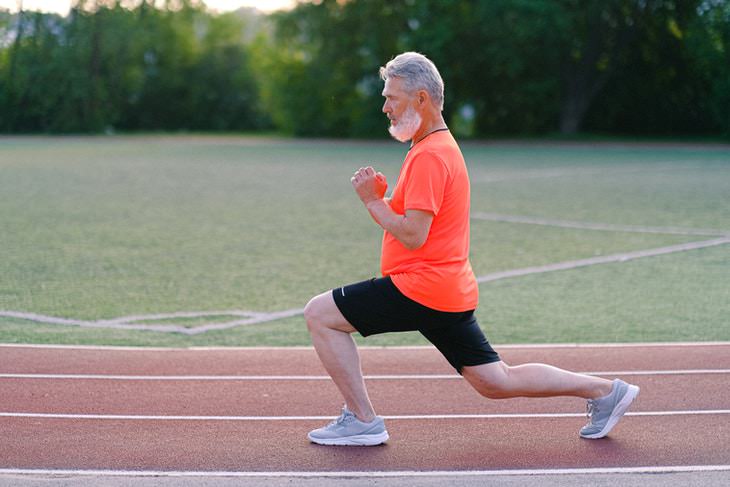
Research has shown that doing balance
exercises only twice a week for two years can dramatically reduce the
risk of falls, but you’ll start experiencing the benefits much sooner
than that. The routine we’re about to show includes 5 easy exercises
that work to strengthen the lower body and improve your mobility and
sense of balance. Best of all, it only takes 5-7 minutes of your time,
and it is specifically built with seniors in mind
1. Sit-to-Stand
You’d be surprised to learn just how many
people fail to sit down and stand up correctly, potentially hurting
their lower back. Learning to sit down and stand up correctly and
exercising the skill regularly has immense health benefits. On one hand,
it reduces your risk of back injury and back pain.
On the other hand, the sit-to-stand exercise is essentially an easier
and safer version of squats or the chair pose in yoga, which means that
it is guaranteed to strengthen the leg, core, and back muscles over
time. Lastly, this functional exercise also increases one’s mobility in
the hips and knees.
Follow these steps to do the exercise correctly and view the video above
for a visual guide: https://youtu.be/vNq9vtEXksc - the link for the video
1. Sit in a chair with your feet back, NOT in front of the knees.
2. Your knees should be about hip-width apart or slightly wider to give
you a stable base.
3. With a straight spine and pushing with your legs upwards, stand up
and then sit down. Try to keep the center of balance on your legs at all
times in order to exercise the leg and core muscles and avoid hurting
your lower back.
Repeat the exercise 8-10 times or less if you feel tired. You can also
use a chair with armrests to make the exercise easier.
2. Heel Lifts
https://youtu.be/MW2WG5l-fYE - the link for the visual video
https://youtu.be/MW2WG5l-fYE - the link for the visual video
This exercise will help you strengthen and
maintain the stability of the ankles, which is sure to improve your
balance over time. In addition, this exercise strengthens the calf
muscles and the arches of the feet. Follow these steps to do the
exercise correctly and view the video above for a visual guide:
1. Place a chair in front of you to hold onto and make it easier for you
to balance.
2. Raise your heels and stand up on your tiptoes. Hold for up to 15
seconds, and then place your heels back on the ground.
3. Now lift your toes, and hold once again for up to 15 seconds.
Alternate between the two positions, repeating each cycle 3 times.
3. Ankle Circles
Having completed some exercises that
focused on your feet and ankles, it’s time to give your ankles a rest
and some much-needed relief. Ankle circles are an excellent in-between
exercise, as the circular movements help lubricate the joints and
relieve any muscle tension. Therefore, you can repeat this exercise
whenever you feel that your feet got tired in the middle of the
exercise, or even after sitting for a long time. To complete this
exercise, view the instructional video above, and follow these steps:
1. In a sitting position, roll one of your ankles clockwise 8-10 times.
2. Now reverse and start moving the same ankle counter-clockwise for
8-10 repetitions.
3. Repeat the same exercise on the other ankle.
4. Heel-to-Toe Standing
https://youtu.be/Sf8GUREqPVA link to view the video
The heel-to-toe stand looks very simple,
but this exercise is actually on the more challenging side in terms of
balance, so make sure to do it next to a chair or any other sturdy
surface. Apart from improving the balance, this exercise strengthens
your hips, knees, ankles, feet, and core, and it also helps boost your
focus.
In order to complete this exercise, view the instructional video above,
and follow these steps:
1. Find a sturdy surface like a kitchen counter or a chair to hold onto
for balance. Stand placing your feet heel-to-toe so that the toe of the
back foot is in line with and directly in front of the heel of the front
foot.
2. Hold the position for up to 15 seconds, and then alternate the feet.
Repeat up to 4 times on each side.
If this position is challenging, you can adjust the stance somewhat
wider or longer, and play with the center of balance, shifting it either
to the front leg, the back leg, or somewhere in-between.
5. Raising One Foot at a Time
https://youtu.be/42QrrU3APpM link to the video
This is the last exercise in this regimen.
The advantage of it is that you can adjust its complexity, do it with or
without a chair, and even while lying in bed if you’d like. Leg raises
improve the sense of balance and the mobility of the lower body by
strengthening a variety of muscles in the body, including the lower
abdominal muscles, the glutes, the calf muscles, and the hamstrings.
Over time, the exercise also helps lose weight from the lower belly and
the legs. To complete this exercise, view the instructional video above,
and follow these steps:
1. Stand near a chair or any other sturdy
surface you can hold onto with both or one hand.
2. Slowly lift one foot off the ground, making sure that the lifted foot
isn’t touching the other leg and the hip doesn’t drop. Hold for up to
10 seconds.
3. Repeat the same exercise on the other side.
Don’t worry if one of the legs is weaker than the other, that’s normal
and it happens with most people. If you want to practice the same
exercise lying down, start off by lying down with the legs bent, lifting
each leg only slightly for 10 seconds, no need to straighten the lifted
leg.
Repeating these exercises regularly will help improve your balance,
which will surely make you more independent while also reducing your
risk of a fall.
To lower that risk of a fall even further,
it is also recommended to make the necessary adjustments in your home,
such as removing tripping hazards like rugs, electrical cords, low
furniture, or loose footwear that falls off your feet. It’s also
advisable to install railings in high-risk areas such as the shower and
the staircase and keep all rooms well lit when you’re moving around the
house.
Lastly, it’s crucial to wear the right glasses and even hearing aids if
you’re prone to falls, as both vision loss and hearing loss can make you
more prone to falls. With all these tips in place, you’ll stay strong
and stable for years to come, we wish you great health!