Saturday, August 21, 2021

Four ways older adults can get back to exercising – without the worry of an injury
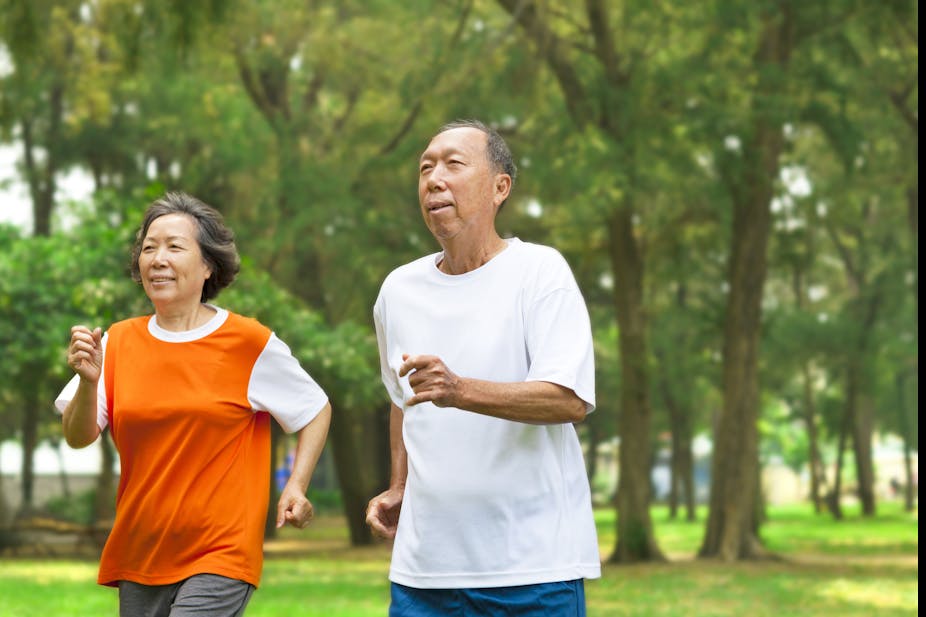
Older couple on a jog together. 

We naturally lose muscle mass as we get older. This process starts around the age of 36, and by the time we are 80 we’ve lost about 50% of our muscle mass. Long periods of inactivity can also cause us to lose a greater amount of muscle mass than we might normally. This has been the case during the COVID-19 pandemic, as many of us were less able to exercise as much as we use to do.

While most young people will be able to bounce back and regain their muscle mass easily, it may not be as easy for older people. This is because it can be more difficult to gain muscle mass as we age due to the changes in muscle structure, and doing too much too quickly can result in serious injuries. This is why older people need to get the balance right when easing back into exercise again.

Maintaining muscle mass

Maintaining muscle is important for many reasons. As we age, frailty can make it more difficult for us to be independent and do the things we need to do each day – from going shopping to meeting our friends. Being active maintains a healthy musculoskeletal system whilst also protecting us from some diseases, such as type 2 diabetes. Research also shows that strong active muscles can help prevent falls and lower injury risk.

But while it may be tempting to hit the gym and start lifting weights now that many COVID-19 restrictions have eased in the UK, if it’s been a while since you last exercised regularly, it’s important to ease back into things. Weak and de-conditioned muscles take time to build strength and doing too much vigorous, repetitive exercise can overload muscles and joints that have not been trained, leading to injury. 

Here are a few ways to get moving again without injuring yourself:

1. Progress slowly.

It’s best to gradually return to activity so you don’t overdo things or injure yourself. A staged approach, where you slowly introduce different exercises, will allow your muscles to recover between each session. Beginning with basic exercises around the house is a good starting point.

Then increasing the number and type of exercises you do can also help you from getting fatigued and losing form – which are prime conditions for an injury to occur. For example, starting with a short walk that then gets longer and progresses to a hill or rougher terrain allows for slow and persistent challenges for your body to become accustomed to while still helping you stay interested in exercising.

2. Reduce the time you spend sitting.

Long periods of sitting, if you have had to isolate or if you are working from home, significantly reduces muscle activity – and therefore muscle mass. So if you haven’t kept exercising during the pandemic, you can’t expect to pick up where you left off.

Take frequent breaks between meetings and introduce a walk at lunch. Stretching and moving around after long periods of sitting prevents fatigue and shortening of muscles – which can improve posture and balance, too.
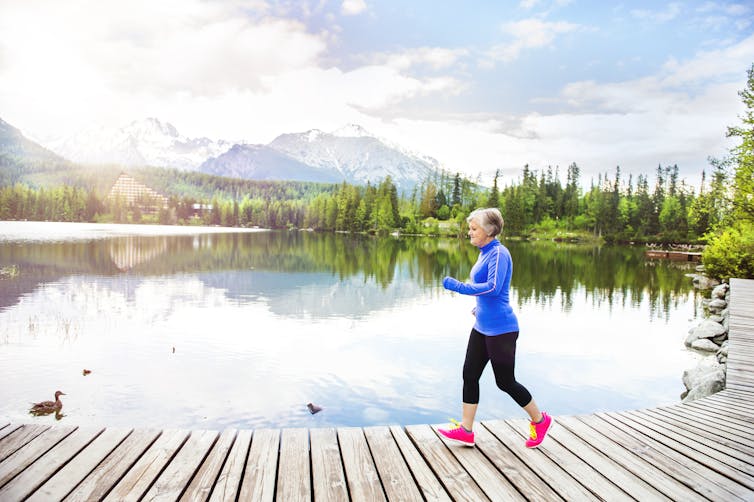
Older woman out for a jog on a pier by a lake.

3. Shake up the exercises you do.

Intense repetition of the same movement or activity can cause wear and tear, often referred to as repetitive strain. This is why it’s important to do different exercises, instead of the same thing every day. Alongside cardio workouts, which have benefits for our heart, lung, and circulatory system, try strength training.

Challenging our muscles as we get older with weight lifting and resistance training not only improves neuromuscular function – the communication between the brain and muscles – but improves balance and mobility too. Taking part in exercises that work your cardiovascular system as well as strengthen muscles improves overall wellbeing.

4. Work on the small things.

It’s important to work on our big prime muscles – such as our glutes or quads – with walking, running and gym exercises. But it’s just as important to work on our small postural muscles too.

For example, the small intrinsic muscles in our feet play an important role in improving strength and balance. Gripping a soft ball between your toes is an easy way to improve these small foot muscles.

Having stability within the joints of your body from postural muscles also allows for these big muscle groups to do their job when walking, running or at the gym. Paying attention to these core postural muscles with activation and control exercises will help prevent injury.

If you’re looking to get back to a regular exercise routine after many months off, it’s important to make sure you take things slow and change up your routine often. Developing a healthy balance of cardiovascular, strength and resistance training as well as core stability work will improve your musculoskeletal health as well as helping your overall health whilst preventing injury.

This is only for your information, kindly take the advice of your doctor for medicines, exercises and so on.   

https://gscrochetdesigns.blogspot.com. one can see my crochet creations  
https://gseasyrecipes.blogspot.com. feel free to view for easy, simple and healthy recipes    
https://kneereplacement-stickclub.blogspot.com. for info on knee replacement


Labels: , , , , , , , , , , ,

Friday, May 21, 2021

Treating Stiff and Sore Muscles

Have you ever woken up in the morning and stretched only to feel neck or shoulder pain? Every movement afterward sends pain shooting down your back, but why exactly does this happen? Read on to find out:

Why do muscles get stiff?
muscle-strain
Muscles require magnesium for them to relax, and calcium for them to contract. When the two are imbalanced, it can lead to muscle spasms and contractions. 
 
• Dehydration is also a contributing factor to stiff muscles. This is because muscles are active tissues and require lots of water. The water contains electrolytes that help transfer orders from your nervous system to your muscles and back. Without enough water, muscles lose their ability to communicate with the brain. 
 
• Inactivity is another culprit. Leaving your muscles in one state for a prolonged period (sleep or sitting in a chair for an extended period, for instance) can cause them to stiffen. Another cause of muscle stiffness is stress. When we’re stressed, our bodies tighten up in preparation for a “fight or flight” situation. Prolonged stress can lead to tightness in the muscles, resulting in strain. 
 
• The biggest contributor to muscle pain of all is exercise. Muscles lose mass after a prolonged period of inactivity, so when you start training again, it leads to micro-tears that cause pain and stiffness.

How to treat stiff muscles 
 
1. Exercise
muscle-strain
Exercising for 30 minutes each day (or every other day) can prevent most cases of muscle stiffness. Exercise keeps your muscles relaxed, and can even improve your mental state. Just don’t overdo it, because that’s when your muscles get stiff. 
 
2. Baking soda bath 
Add 2-4 heaped tablespoons of baking soda to a hot bath and climb in for rapid muscular pain relief. You can even try replacing the baking soda with ¾ cup of Epsom salt if you wish to. 
 
3. Take supplements 
Balance your magnesium and calcium levels by taking supplements, and consider making dietary changes. 
 
4. Massage therapy
Getting a good massage can work wonders for stiff muscles. A licensed masseuse will be able to relieve stiff muscles in a single session, sending you home pain-free and much more relaxed (consult your massage therapist regarding the best treatment for you). 
 
5. Heat application  
Simply applying heat to muscles causes the tissue to expand and increase blood flow to the heated area. You can do this by taking a hot shower or massaging the stiff area with a heating pad. 
 
6. Relax & Meditate  
Calm yourself down. By reducing the level of stress in your life, your body will relax as well, reducing the likelihood of tight and stiff muscles. 
 
7. Take an NSAID
Nonsteroidal anti-inflammatory drugs such as ibuprofen, aspirin, or naproxen are your best choices. Do not exceed the recommended daily dosage or take them for more than a couple of days at a time. 
 
8. Make sure you’re hydrated 
Drink water or isotonic drinks to keep your hydration and electrolytes at an adequate level. Men require 13 cups (3 liters) of water per day, while women need nine (2.2 liters). 
 
9. Stretch  
Stretching your muscles when you wake up can prevent muscles from stiffening. It increases blood flow throughout your body, and prepares the muscles for the daily movements ahead.


This is only for your information, kindly take the advice of your doctor for medicines, exercises and so on.   

https://gscrochetdesigns.blogspot.com. one can see my crochet creations  
https://gseasyrecipes.blogspot.com. feel free to view for easy, simple and healthy recipes    
https://kneereplacement-stickclub.blogspot.com. for info on knee replacement


Labels: , , , , , , , , , , , , ,

Wednesday, April 14, 2021

New study finds link between lifestyle and more severe covid infection, deaths

A sedentary lifestyle is associated with more severe COVID-19 infection and an increased risk of dying from the viral disease, according to a large-scale study.

Researchers, including those from the University of California San Diego, found that COVID-19  patients in the US who were consistently inactive during the two years preceding the pandemic were more likely to be admitted to hospital.

Inactive patients were also more likely to require intensive care, and die compared to those who had consistently met physical activity guidelines, they said.

The study, published in the British Journal of Sports Medicine, showed that physical inactivity was surpassed only by advanced age and a history of organ transplant as a risk factor for severe disease.

"It is notable that being consistently inactive was a stronger risk factor for severe COVID-19 outcomes than any of the underlying medical conditions and risk factors identified by (The Centers for Disease Control) except for age and a history of organ transplant," the researchers said.

"In fact, physical inactivity was the strongest risk factor across all outcomes, compared with the commonly cited modifiable risk factors, including smoking, obesity, diabetes, hypertension (high blood pressure), cardiovascular disease and cancer," they said.

Several risk factors for severe COVID-19 infection have been identified, including advanced age, male sex, and certain underlying medical conditions, such as diabetes, obesity, and cardiovascular disease, the researchers said.

However, physical inactivity is not one of them, even though it is a well-known contributory risk factor for several long term conditions, including those associated with severe COVID-19, they said.

To explore its potential impact on the severity of the infection, including hospital admission rates, need for intensive care, and death, the team compared these outcomes in 48,440 adults with confirmed COVID-19 infection between January and October 2020.

The patients' average age was 47, with nearly two thirds of them being women (62 per cent). Their average weight (BMI) was 31, which is classified as obese.

Around half had no underlying conditions, including diabetes, COPD, cardiovascular disease, kidney disease, and cancer, nearly 1 in 5 (18 per cent) had only one, and almost a third (32 per cent) had two or more conditions.

The researchers took account of potentially influential factors, such as race, age, and underlying medical conditions.

They found that patients with COVID-19 who were consistently physically inactive were more than twice as likely to be admitted to hospital as those who clocked up over 150 minutes of physical activity every week.

Such patients were also 73 per cent more likely to require intensive care, and 2.5 times more likely to die of the infection, according to the study.

Patients who were consistently inactive were also 20 per cent more likely to be admitted to hospital, 10 per cent more likely to require intensive care, and 32 per cent more likely to die of their infection than those doing some physical activity regularly.

The researchers, including those from Kaiser Permanente Medical Center in the US, noted that this is an observational study, and as such, can't establish cause.

The study also relied on patients' own assessments of their physical activity, they said.

"We recommend that public health authorities inform all populations that short of vaccination and following public health safety guidelines such as social distancing and mask use, engaging in regular (physical activity) may be the single most important action individuals can take to prevent severe COVID-19 and its complications, including death," the researchers added.

This is only for your information, kindly take the advice of your doctor for medicines, exercises and so on.     

https://gscrochetdesigns.blogspot.com. one can see my crochet creations  
https://gseasyrecipes.blogspot.com. feel free to view for easy, simple and healthy recipes    
https://kneereplacement-stickclub.blogspot.com. for info on knee replacement


Labels: , , , , , , , , , ,