Monday, July 08, 2024

90% of the Population are Deficient in This Nutrient - Choline

Being vegan or vegetarian is more popular than ever and having a low cholesterol diet on a whim is practically synonymous to leading a healthy lifestyle. Unfortunately, both of these diet trends may harm our health if we're not careful, as they are indirectly making us deficient in one key nutrient, choline, with an estimated 90% of Americans being deficient in this essential nutrient. 
 
Never heard of choline? We’re not surprised, as, unlike vitamin C or omega-3 fatty acids, choline is not getting nearly as much publicity, but it doesn’t make it any less important to our health and well-being. In fact, a deficiency in this essential nutrient is associated with a sluggish brain, a poorer progression of Alzheimer’s, impaired brain and spinal cord development in children, and fatty liver disease. In this article, we discuss what choline is, what it does for our bodies, and which foods contain this vital nutrient.


What is CHOLINE?
Choline is a nutrient comparable to vitamins in its importance for the body, and it plays a key role in regulating cholesterol levels, maintaining brain and mental health, as well as being a building block for cell membranes. Apart from that, choline is crucial for brain development of children, which is why pregnant and breastfeeding women, as well as young children, are often required to monitor choline levels.

Like many other vitamins and nutrients, our bodies naturally produce choline in our livers, but never in sufficient amounts, which is why doctors recommend the following regulated daily intake of choline for adults:

550 mg for men
425 mg for women
450 mg for women during pregnancy
55- mg for women during breastfeeding
 
Why is choline deficiency dangerous?
 
As we mentioned at the beginning of the article, according to the National Health and Nutrition Examination Survey, 90% of kids, pregnant women, and other adults aren’t meeting their daily recommended intake of choline. But what does it mean for their health?

A choline deficiency contributes to the following health conditions
 
Neurological disorders. 
A low intake of choline in adults has been associated with decreased memory, brain fog, and cognition. Some researchers have even suggested that choline helps maintain the structural integrity of neurons and so it may be beneficial in supporting cognitive sharpness in older adults, particularly among dementia and Alzheimer’s sufferers. 
 
Finally, a choline deficit at an early age may result in neurodevelopmental deficiencies, so sufficient choline intake is particularly important for pregnant and breastfeeding women, as well as infants and young kids. 
 
Nonalcoholic fatty liver disease (NAFLD)
An adequate intake of choline is essential for preventing liver damage and NAFLD, the most common liver disease affecting the majority of overweight individuals and patients with obesity. NAFLD is particularly dangerous, as it increases one’s risk of liver cancer, liver failure, and cirrhosis quite significantly. Choline helps prevent a fatty liver and is thus essential for liver health. 
 
 Finally, there is also some recent scientific evidence suggesting choline can be beneficial for the heart, as it can decrease the levels of the bad kind of cholesterol in the blood, but there isn’t sufficient proof to back that claim just yet.


Which foods contain choline?
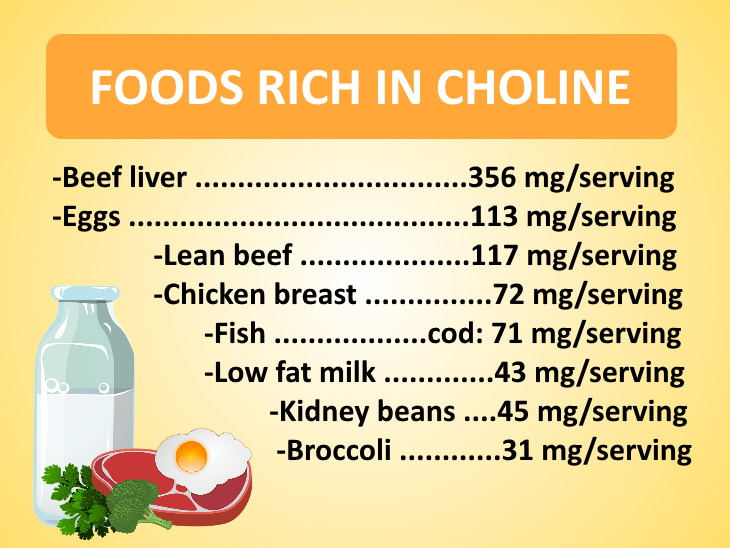
choline deficiency list of foods rich in choline

With the exception of some cruciferous vegetables and beans, choline-rich foods are limited to those that are animal-derived, which is why persons who have a vegetarian or vegan diet, as well as a low-cholesterol diet are more prone to be deficient in choline.
 
The table above features several food types particularly rich in choline, with liver, eggs, and red meat being some of the most choline-dense food choices out there. If you’re following a low-cholesterol diet as per the recommendations of your doctor, we advise you to discuss the option of a choline supplement with your health provider. 
 
Supplementation is also an option to consider for vegans and vegetarians, as choline is difficult to get from veggies only. For example, these is roughly as much choline in 1 boiled egg (113 mg) as in 2 cups of broccoli (123 mg), which is less than a quarter of the recommended intake per day for men. 
 
In the end, what this story of mass choline deficiency can really teach us all is that we shouldn't submit to dieting trends in a thoughtless manner and have a balanced nutrient intake no matter what, even if means supplementing.


This is only for your information, kindly take the advice of your doctor for medicines, exercises and so on.   

https://gscrochetdesigns.blogspot.com. one can see my crochet creations  
https://gseasyrecipes.blogspot.com. feel free to view for easy, simple and healthy recipes    
https://kneereplacement-stickclub.blogspot.com. for info on knee replacement
https://cancersupportindia.blogspot.com  for infor on cancer and health related topics
https://GSiyers home remedies.blogspot.com   is the latest addition to my blogs. I'm going to add posts there, do give me your valuable feed back on my blogs. Thanks a lot, take care, be healthy and be happy.


Labels: , , , , , , , , ,

Monday, March 02, 2020

Diabetes Diet: These Are The Best Drinks Other Than Water For People With Diabetes

Diabetes is a long term condition that requires constant management of blood sugar levels. Your diet plays an important role when it comes to maintaining healthy blood sugar levels. Before planning your diet, diabetics should check the effect of the food consumed on your blood sugar levels. Most drinks are loaded with added sugar which can create fluctuations on your blood sugar levels. Even packed juices are loaded with sugar with very few nutrients. If you are consuming fresh fruit juice, you need fruits in large quantities to prepare a small amount of juice. This can also contribute to the consumption of too much sugar. Similarly, maximum drinks are loaded with sugar. There are very few options safe for diabetics. Here are a few drinks diabetics can add to their diet.

Healthy drinks for diabetics

1. Vegetable juice
Vegetables are loaded with essential nutrients. One should consume enough vegetables throughout the day. There are a variety of vegetables to choose from. You can combine your favourite vegetables to prepare fresh and nutrient-dense juice. Green leafy vegetables are the best ones to choose from.

2. Coffee
Good new diabetics! You can drink coffee. According to studies drinking coffee can reduce the risk of developing diabetes. If you want to add coffee to your diabetes diet, do not add cream to it. Also, choose the amount of sugar wisely.

3. Herbal tea
Teas are loaded with health benefits. Consuming tea loaded with or milk is not a healthy choice for diabetics. Instead, you can choose herbal teas which are also loaded with several health benefits. There are several herbal teas to choose from. Some of these can also help you control blood sugar levels. Take recommendations from your doctor to choose the right tea.


4. Low-fat milk
Dairy products also play an important role in your diet. These products are loaded with several health benefits. Diabetics can add milk to their diet but choose unsweetened and low-fat milk. You can once check with your doctor about the portion size according to your blood sugar levels. 


This is only for your information, kindly take the advice of your doctor for medicines, exercises and so on.     

https://gscrochetdesigns.blogspot.com. one can see my crochet creations  
https://gseasyrecipes.blogspot.com. feel free to view for easy, simple and healthy recipes    
https://kneereplacement-stickclub.blogspot.com. for info on knee replacement
 

Labels: , , , , ,

Friday, November 23, 2018

6 Healthy Drinks For Managing High Blood Pressure


According to the 2017 report by Cardiologists, with one in every three Indians suffering from hypertension and heart ailments, cardiovascular diseases are acquiring epidemic proportions in India. While medications help reduce blood pressure, one has to stick to a healthy diet to manage it well. One of the most common advices given to a hypertension patient is to slash foods like salt, fat and calories and increase the intake of vegetables, fruits and lean protein in their diet. Some health experts also suggest reducing high blood pressure by cutting off caffeinated drinks and alcohol, as excess of both is extremely hazardous for health. While there are foods that help manage hypertension, there are certain drinks that may reduce high blood pressure and other cardiovascular conditions.

Here are a few important drinks suggested by a Nutritionist

1. Apple cider vinegar

The most popular vinegar in the natural health community is the Apple Cider Vinegar. There are a plethora of benefits that this nature's elixir encompasses in it. Loaded with potassium, ACV pushes out excess sodium and toxins from body. The presence of rennin enzyme causes the blood pressure to reduce. You could mix apple cider vinegar with some honey in a glass of water and drink it in the morning.

2. Lemon water

According to health experts around the world, starting the day with a glass of lemon water can do wonders to your overall health and fitness. Lemon water tends to cleanse your cells. Moreover, it is known to make the blood vessels soft and flexible, further lowering blood pressure. Lemon water contains vitamin C, which acts as an antioxidant, removing free-radicals from the body. A glassful of lemon water every morning can help regulate blood pressure levels.

3. Methi water

Methi or fenugreek water is high in fibre, which helps in controlling your blood pressure. Drinking fenugreek water every morning on an empty stomach may help keep your blood pressure in check.

4. Chia seeds infused water

Chia seeds are said to be high in omega-3 fatty acids, which have been shown to work as a blood thinner and may reduce blood pressure. Soak chia seeds in water for half an hour and drink the water. Repeat the process daily for a month for effective results.

5. Low or non-fat milk

Both low- or non-fat milk supply potassium and calcium to the body. Both these nutrients are associated with maintaining healthy blood pressure. One should avoid full-fat dairy as it contains significant amount of palmitic acid that can block signals that relax blood vessels, thereby keeping blood pressure elevated.
Here's a recipe of a concoction by Nutritionist  in order to reduce high blood pressure.

Ingredients:

  • Mint leaves (a bowl)
  • Coriander leaves (a bowl)
  • Amla (4-5 deseeded)
  • Water (one cup)
Method:

Blend all of the ingredients and drink it up.

Make sure you consult your doctor before adding these drinks to your daily diet as taking medications and drinking these beverages simultaneously may significantly drop your blood pressure levels.

THIS IS ONLY FOR INFORMATION, ALWAYS CONSULT YOU PHYSICIAN BEFORE HAVING ANY PARTICULAR FOOD/ MEDICATION/EXERCISE/OTHER REMEDIES.                                                                                                                                                                                                                                                                                        PS- THOSE INTERESTED IN RECIPES ARE FREE TO  VIEW MY BLOG-                                                                                           https://gseasyrecipes.blogspot.com/                                                                                                                                                                             FOR INFO ABOUT KNEE REPLACEMENT, YOU CAN VIEW MY BLOG-                                                                                                                             https:// kneereplacement-stickclub.blogspot.com/                                                                                       FOR CROCHET DESIGNS                                                                                                                                                                                                                                 https://gscrochetdesigns.blogspot.com


Labels: , , , , , , , , , , , , ,

Monday, May 27, 2013

Arugula Salad

When it comes to leafy greens, arugula is a super food: rich in vitamins and bone-building calcium. Toss in some shredded parmesan cheese and slivered almonds to get 215 mg of calcium in a small, tasty salad. That’s twice what you'd get in a slice of cheese quiche.
  • Arugula (1 cup): 125 mg calcium
  • Almonds (12 nuts): 35 mg calcium
  • Parmesan (1 Tbsp): 55 mg calcium
fresh arugula


Flatbread Pizza

As an appetizer or a meal, a flatbread pizza with the right toppings can be packed with calcium. And that's before adding cheese! Start with crumbled, canned salmon and plenty of arugula for a pie that's got more calcium than a large glass of milk.
  • Arugula (1 cup): 125 mg calcium
  • Salmon (3 oz.): 325 mg calcium
  • Flatbread crust: 113 mg calcium


Figs Stuffed With Manchego Cheese

Stuff sweet, chewy fresh figs with interesting cheeses to make an appetizer full of flavour. Spanish Manchego is a tangy choice made from sheep's milk and loaded with calcium. Two Manchego-stuffed figs provide 362 mg of calcium -- with just 150 calories.
  • Manchego (1 oz.): 300 mg calcium
  • Figs (2): 62 mg calcium


Stuffed Grape Leaves

Stuffed grape leaves are a Greek speciality. They're usually made with rice, aromatic herbs and spices, ground beef, and leaves from a grape vine. The olive-green leaves have some calcium, and dipping them in non-fat Greek yogurt boosts the total. Six stuffed leaves with 1/4 cup of yoghurt sauce add up to 147 mg of calcium – about 15% of what you need in a day.


dandelion greens on plate

Dandelion Greens

Dandelions can invade a prized lawn, but cooks love the greens for their peppery flavour. The leaves are also loaded with nutrients, and have more calcium than you'd get from spinach. Wilted or sautéed, dandelions make a flavourful side dish. Oil, garlic, and other seasoning help balance the peppery bite.
  • Dandelion greens (1 cup): 147 mg calcium


fresh broccolini

Broccolini

This green vegetable tastes a little sweeter than its big brother broccoli. Broccolini has small florets and long, tender stalks that don't need to be peeled. Roast or sauté the spears for robust flavour. Or steam them briefly, making sure not to lose the vivid green colour. Quick cooking helps retain the vitamins.
  • Broccolini (1 cup): 55 mg calcium


baby bok choy in bowl

Baby Bok Choy

With green leaves and white stalks, baby bok choy looks like regular bok choy in miniature. But this variety of Chinese cabbage is milder and more tender. Try cooking and serving heads of baby bok choy whole, rather than chopping the vegetable. It works great in a stir fry or as a side dish.
  • Baby bok choy (1 cup): 75-80 mg calcium


Salmon Croquettes With Dill Sauce

Salmon croquettes are a savoury way to get more calcium. And canned salmon offers 10-20 times more calcium than fillets. Whip up a creamy dill sauce with non-fat Greek yoghurt for 315 mg of calcium in two cakes. The major sources:
  • Canned salmon (6 oz.): 181 mg calcium
  • Greek yogurt (2 Tbsp): 59 mg calcium


Stuffed Sesame Chicken

 Stuff a chicken breast with a mix of creamy ricotta cheese and spinach. Coat it with sesame seeds, season, and bake as usual. One serving has 251 mg of calcium -- about a quarter of what you need every day.


plate of manicotti

Stuffed Manicotti

Stuffing manicotti pasta shells is a simple way to add flavour and calcium to a pasta dish. Use skim ricotta cheese to trim some calories in this easy classic. Cover the shells with spicy or garlicky tomato sauce and bake for a quick dinner. Two stuffed shells have more calcium than a glass of milk.
  • Part-skim ricotta (½ cup): 335 mg calcium
  • Tomato sauce (½ cup ): 16 mg calcium


Almond Cake

Almond cake uses finely ground almonds instead of wheat flour. Their subtle flavor balances the sugar and citrus zest, and the nuts provide a little calcium, too. Add a low-fat, lemon cream cheese frosting to get about 110 mg of calcium in one serving.


Chocolate Mousse

This ultra-creamy dessert is one sweet way to help meet your calcium needs.
The chocolate, milk, and eggs in the recipe all contribute small amounts to add up to 100 mg of calcium per half cup. If you crave chocolate mousse -- but not the full load of calories, fat, and cholesterol -- try the reduced-fat versions found in many markets.

Labels: , , , , , , , , , , , , , , , , ,

Wednesday, August 01, 2012

Simple Way to Lose Weight


    We all know that losing weight requires some changes in our eating habits. But many of us avoid making those changes for one obvious reason: It seems too darned hard.

    Well, here's a simple, novel approach endorsed by top nutritionists: Make just one change. For the next month, focus on a single improvement, whether it's doubling your fruit intake, adding some protein or switching to nonfat milk.
      For instance, if you drink 3 cups of milk a day for a month, the switch from reduced-fat to nonfat will save you 3,000 calories -- nearly enough to lose 1 pound!

      What's more, changing one habit at a time gives you a sense of success: You'll see results and be able to stick to your plan. Soon, the habit will be second nature. Then you'll be inspired to add another change, and another. This works far better than a drastic dietary overhaul, which leads to feelings of failure and deprivation. People end up regaining all the 
      weight they've lost, often even more.
    When you make dietary changes step by step, you lose weight at a sensible pace and develop habits you can keep. "Dieting for weight loss shouldn't be an event," says  a Dr. "It's not something you gear up for, do for an intense period of time and then you're done. You need to make lifestyle changes that will be yours for the rest of your life."
    Here are two simple dietary changes with big payoffs, both for weight control and good health. Start with the one that seems most feasible to you.
1. EAT MORE OFTEN -- AND ADD SOME PROTEIN
The strategy:
 Switch from two or three large meals to five or six smaller ones of 300 to 400 calories.

The weight-control benefit: By eating more often, you're less likely to get ravenous and scarf down everything in sight. "When you eat a midmorning and midafternoon snack, you're not starving at lunch time or after work, so you won't come home and eat 1,200 calories," says a Dr. For each meal or snack, eat both protein and carbs, such as cereal with milk, an apple with peanut butter or a turkey sandwich. Protein takes longer to digest than carbs, so you'll stay satisfied longer. A small Yale study showed that when women had a high-protein lunch, they ate 31 percent fewer calories at dinner than when they had a high-carb lunch. (Tip: Try adding 2-3 ounces of fish or chicken breast to your lunch.)


The health bonus: By eating more often you will keep up your energy, concentration and alertness levels -- and you'll ward off the late-afternoon energy drain that's common among women. Plus, you are likely to eat more nutritiously because you won't be bingeing and loading up on empty calories.

2. SWITCH TO WHOLE GRAINS
The strategy: As often as possible, choose whole-grain products over their refined counterparts. For instance, try barley or bulgur instead of white rice. Eat whole-wheat bread instead of white or enriched wheat, oatmeal instead of grits, Grape-Nuts instead of Special K, or worse, Cap'n Crunch. Here's why you need to read nutrition labels:

* Bran for Life bread contains 5 grams of fiber per slice -- 80 calories -- while Pepperidge Farm thin-sliced white bread also has 80 calories but zero grams of fiber.

* 1 ounce of Grape-Nuts contains 2.5 grams of fiber and 104 calories while 1 ounce of Special K has 0.88 grams of fiber and 105 calories (1 ounce of Cap'n Crunch has 0.9 grams of fiber and 113 calories -- and lots of sugar).

The weight-control benefit: "Whole-grain foods are chewier and more satisfying," says Polk. "Their fiber makes them more filling. You'll eat less and not be hungry as soon." ( Tip: Eat 1 whole-grain serving at every meal.)

The health bonus: High-fiber foods like whole grains help protect against heart disease, diabetes and, possibly, cancers of the breast, pancreas and colon. They also contain trace minerals that are stripped from refined food products.

Labels: , , , ,