Friday, August 28, 2026

Vaping Causes Range of Health Issues in Children, Review Finds
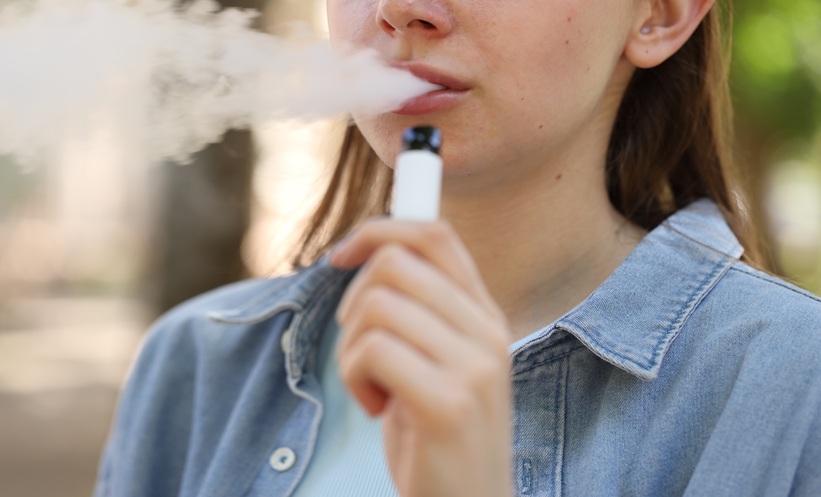
 Young girl vaping 

Key Summary:

  • A large review has found systematic evidence that vaping is linked to respiratory problems in young people.
  • Young people who vape are significantly more likely to go on to smoke cigarettes.
  • Experts are calling for tougher measures to protect children from vaping and nicotine addiction.

A SYSTEMATIC review has found consistent evidence that vaping leads to a range of serious health issues in children and young people. 

The UK’s Royal College of Paediatrics and Child Health (RCPCH) carried out one of the most comprehensive reviews to date, surveying tens of thousands of research studies across eight health and social domains, finding significant evidence for the short and long-term effects of vaping on those aged 12 to 19 years.

Vaping is On the Up

Vaping has grown exponentially in popularity over the last decade. In 2025, the World Health Organization estimated 100 million people vape globally, with 15 million of these being children between the ages of 13 and 15.2 

With hundreds of colours and flavours available, which appeal to the younger generation, what was once considered niche product has become a familiar part of many young people’s everyday lives. There continues to be an alarming increase in use of e-cigarettes among children and young people, with rates exceeding adult use in many countries.

The RCPCH review examined more than 14,000 published articles, assessed 325 full-text studies and synthesised evidence from 81 studies, providing a comprehensive overview of the evidence on the health implications of vaping for young people. 

Serious Implications for Children’s Health

Consistent evidence was found via the review for the link between vaping and poorer respiratory health, with young people who vape more likely to report cough, wheeze, bronchitis symptoms and asthma exacerbations.

Beyond just respiratory health, evidence was also found for the wider health impacts of vaping, including on oral and dental health, as well as emerging evidence for effects on sleep, eye health and allergies. 

The use of vapes was also associated with poorer mental health outcomes, including anxiety, depression and suicidal ideation. Evidence for adverse outcomes on infants and babies exposed to nicotine during pregnancy were also noted.  

Significantly, long-term studies showed that young people who use vapes are considerably more likely to go on to smoke cigarettes later in life.  

Tougher Measures Needed

Over the last five years, the UK government has introduced sweeping measures as part of the Tobacco and Vapes Act in an effort to curb the level of vaping, particularly in children and young people. These have included a complete ban on disposable vapes, as well as future plans to bring in restrictions on packages, colours, flavours and displays in retail settings.  

However, Professor Will Carroll, co-author of the systematic review, said that more needs to be done to solve this issue: 

“Vaping should not be seen as a harmless part of growing up. The evidence shows clear links with respiratory symptoms, nicotine dependence and subsequent cigarette smoking, while concerns about wider impacts on young people’s health continue to grow.” 

He continued: “The recently announced measures are welcome and must be implemented quickly. But if vaping is to remain a viable smoking cessation tool without attracting new users, Government must go further.  

“As paediatricians, we call on the Government to limit the types of flavours available, as opposed to just their descriptions.”4 

Clear and Concerning Picture

Dr Mike McKean, RCPCH vice-president for policy, agreed, saying: “Vaping is still a relatively new product, and there is much we do not yet know about its long-term impact on children and young people but a clear and concerning picture is emerging. Continued research and monitoring essential if we are to properly understand the risks and respond to emerging evidence. 

“The Tobacco and Vapes Act is an important step towards protecting children from nicotine addiction, but it must not be seen as a one-and-done solution.  

“We need to keep pace with a rapidly evolving market and continue to take action to protect children from nicotine products that are deliberately made and marketed to appeal to them,” he added.4 

Overall, the large review provides a stark picture of how vaping, a modern and continually emerging issue, effects the children and young people of today whilst encouraging stronger action to protect the them from its impact. 


This is only for your information, kindly take the advice of your doctor for food, medicines, exercises and so on.   

Labels: , , , , , , , ,

Monday, September 09, 2013

Heart: Heal thyself

Scientists have made a breakthrough towards treatment for heart attack, by instructing the injured heart in mice to heal by triggering cardiovascular regeneration that is driven by native heart stem cells.

The study,  shows that there was an effect on driving the formation of a small number of new cardiac muscle cells.

A Prof., said that this is the beginning of using the heart as a factory to produce growth factors for specific families of cardiovascular stem cells, and suggests that it may be possible to generate new heart parts without delivering any new cells to the heart itself.

The study is based upon another recent discovery in a lab, which was published in Cell Research.

The study, performed in mice, shows that only a single administration of a short pulse of expression of VEGFA is required, if it can be delivered to the exact region where the heart progenitors reside.

The therapeutic effect is long term, as shown by markedly improved survival following myocardial infarction with a single administration of the synthetic mRNA when given within 48 hours after the heart attack.

The long-term effect appears to be based on changing the fate of the native heart stem cells from contributing to cardiac fibrotic scar tissue and towards cardiovascular tissue.


ps- this is only for information, always consult you physician before having any particular food/ medication/exercise/other remedies.

ps- those interested in recipes are free to view my blog-

http://gseasyrecipes.blogspot.com/


for info about knee replacement, you can view my blog-


http://Knee replacement-stick club.blogspot.com/


for crochet designs


http://My Crochet Creations.blogspot.com

Labels: , , , , , , , , , , , , , , ,

Tuesday, March 08, 2011

BRAIN TUMOUR -what it is, kinds, causes, symptoms, diagnosis, treatment, side effects,

What is brain tumour?
A brain tumour, like a tumour anywhere else in the body, is a result of an abnormal proliferation of cells in the brain. A primary brain tumour is one where the tumour originates from the brain cells. Secondary brain tumours are cancers originating elsewhere in the body and spreading to the brain through the blood stream. It may be mentioned that some chronic infections like tuberculosis and fungal infections often produce a tumour like moss in the brain which may mimic a cancerous lesion. A brain tumour may directly destroy brain cells or it may cause brain dysfunction by various other means.

The skull is a hard bony structure and thus provides only limited space to the structures within. Since the brain does not have any space to expand, a space-occupying tumour may be especially dangerous. Brain tumours can cause indirect damage by compressing brain tissue, inflammation of the brain (cerebral oedema) and increasing the pressure within the brain (intracranial pressure) by interfering with the circulation of brain fluid (cerebrospinal fluid or CSF).

Though most tumours are classified as 'malignant' or 'benign', brain tumours are usually classified as "high grade" or rapidly growing and "low grade" or slow growing. This is because even non-cancerous brain tumours may be life threatening since they do not have space to grow and thus endanger other parts of the brain.

What are the various kinds of tumours?
Brain tumours are basically of two kinds – those that originate from the layers covering the brain (meninges) and those that originate from the brain cells. The former are called meningiomas. They are almost always non-cancerous and are easy to remove surgically. The tumours arising from the supportive tissues of the brain are called gliomas. They are more common in adults and are more dangerous, since they are usually malignant and can often not be completely removed.
The most commonly occurring tumours in adults are gliomas, while in children, tumours usually arise near the brain stem (medulloblastoma).
What are the causes?
The exact cause of tumours is not known. However, there is a higher risk of tumours in:
  • Children and elderly
  • People with certain rare congenital abnormalities like Li-Fraumeni syndrome, tuberous sclerosis etc.
  • People with disorders of the immune system or auto-immune disorders like AIDS
  • People who are exposed to X-rays of the head
  • People who work in certain industries like oil refining, drug and rubber manufacturing.

 the symptoms of tumours
Symptoms of brain tumours are usually non-specific in the beginning. They also depend on the size and location of the tumour in the brain. The symptoms of a brain tumour may be varied since they may affect different functioning capacities of the brain. For example, a tumour that causes swelling of the brain may exhibit different symptoms than that which compresses the tissues of the brain.

Some of the common symptoms indicating a tumour in the brain are:
  • Frequent headaches that vary in intensity and time of the day. These headaches are usually intense in the mornings and ease out during the day.
  • Nausea or vomiting
  • Epileptic seizures or convulsions
  • Visual disturbances due to compression of the optic nerve or oedema of the optic disc (papilloedema)
  • Changes in memory functions
  • Changes in speech
  • Drowsiness and bouts of incoherence
  • Partial or local paralysis. Neurological deficits like weakness or paralysis of some parts of the body, loss of sensation, unsteadiness of gait (ataxia), etc.
How is it diagnosed
The doctor first conducts a thorough physical examination of the patient and takes his medical and family history. The physical examination includes a detailed neurological examination. The latter consists of examinations for alertness, muscle strength, coordination, reflexes and response to pain. Any swelling of the eyes and visual disturbances is also ascertained.

The doctor may ask for tests like CT or MRI scan to study the tissues of the brain. These procedures help to identify any changes in the brain tissues, and outline any abnormal growth. Other tests that may be requested by the doctor are EEG, angiogram and a skull X-ray.

When should the doctor be consulted urgently?
Persistent or increasing frequency of headache specially if it is associated with vomiting, blurring or double vision, weakness of any part of the body, epileptic fits, difficulty in speaking, instability of gait. Change of behaviour, memory impairment with or without the above symptoms should also prompt expert consultation.
the treatment
Depending on the type of tumour, its location, and the extent of its spread, the treatment may be surgery, chemotherapy and/or radiation therapy. These procedures may be used exclusively or in combination. Before treatment begins, patients are usually given steroid treatment to reduce brain swelling. They may also be given medication to keep the seizures (epileptic fits) under control.

  1. Surgery - The most common form of treatment of brain tumours is removal of the cancerous mass. The neurosurgeon makes a hole in the skull and reaches the site of the tumour through that. The procedure is called craniotomy. As far as possible, the entire tumour is removed. This is usually possible to achieve in case of benign tumours like meningiomas, neuro fibromas, etc. Gliomas on the other hand, cannot be excised completely as they do not have clearly defined limits. However, the doctor is careful not to damage any vital tissues of the brain, and thus in cases where the whole tumour cannot be removed, partial removal is done. This helps to relieve the pressure within the skull and leaves a smaller portion of the tumour to be treated through radiation and/or chemotherapy.
  2. Chemotherapy – it is the destruction of cancerous cells with the help of powerful drugs. Drugs are usually given orally or as injections into the vein.

  1. Radiation therapy – in this high power rays are used to kill cancerous cells and prevent them from proliferating. Radiotherapy is given for a short period of time followed by a break. The period of therapy depends on the age of the patient, the site of the tumour and its size. The radiation is given with pin point accuracy, so that the surrounding healthy brain tissue is protected.
 the side effects of treatment
Brain tumour treatment may leave many side effects which may become less with time. Since craniotomy is a major procedure, there may be side effects like coordination difficulties, problems in comprehension and memory and personality changes. This is caused due to some damage to normal tissues surrounding the tumour.

Post surgery complications include cerebral oedema and seizures. Other side effects depend upon the location and extent of the tumour. In case there is no neurological deficit before operation, post-operatively also there should be no defect. In a large majority of cases even pre-operative deficit improves. However if tumour removed is delayed or the deficit is already severe this may not recover fully.

Side effects of radiation and chemotherapy include nausea, vomiting, weight loss, loss of hair and allergic reactions of the skin. Children who have had radiation therapy for brain tumours may have learning difficulties and visual problems. There may also be growth deficiencies in some children due to hormonal imbalance.

Some anticancer drugs may cause infertility. Women on anticancer drugs may experience menopausal symptoms like hot flashes and vaginal dryness. Some drugs may also cause kidney damage. A common condition is the formation of blood clots, usually in the leg, after the drug treatment.

 the long term effects
Early treatment of the tumour is necessary for better chances of recovery. The prognosis is grim for patients in whom the tumour is not completely removed. Although the inevitable is delayed with medication, survival chances are very low. The average life expectancy is about 6 months in case of a malignant tumour. In cases of benign tumours, and those which are completely removed, the prognosis is good and the patient can gain full recovery. The side effects of treatment lessen with time and the patient can resume his normal routine. Physiotherapy and rehabilitative therapy may be given to minimise the residual effects. There are various support groups that are working in the area of rehabilitation of cancer patients and they may provide the much needed support.


Labels: , , , , , , ,