Saturday, September 14, 2024

This Root Tea Will Start Your Journey to a Healthier Life

This popular herbal tea is made by steeping the dried root of the burdock plant. It has been used for thousands of years as a traditional medicine in Europe, North America, and Asia. It’s also cultivated in many areas due to the medicinal and nutritional properties of its leaves, roots, stems, and flowers. Most of the benefits of burdock root tea comes from the significant levels of luteolin, quercetin, and other antioxidants, as well as folate, potassium, vitamin B6, manganese, magnesium, calcium, iron, and phosphorous. 
 
How to Make Burdock Root Tea

This Root Tea Will Start Your Journey to a Healthier Life
Making this tea is simple, provided you have access to fresh burdock, which is not always the easiest thing to find in the West. In Asia, burdock root is easy to find, but in the West, you might need to find an Asian import store. You could also purchase burdock root tea that has already been shredded and roasted, and therefore ready to brew.

If you buy some fresh Burdock root, begin by cutting it into 1-2-inch chunks. Then, using a potato peeler, shred the root chunks into thin strips. Place these outside so that they can dry in the sun for a few hours. Once they are dry, place them in the frying pan and heat them up (don’t use oil). They should roast quite easily if you heat them for 5-10 minutes and you want the color to be a rich golden brown. Once they have cooled down, they can be brewed into burdock root tea. 
 
Ingredients 
 
 • 8-10 burdock root strips 
 
• 2 cups of filtered water 
 
• 1 teaspoon organic honey 
 
Directions 
1. Place the burdock root strips in a teapot. 
 
2. Bring the water to the boil in a stainless-steel pot. 
 
3. Remove from the heat for 2-3 minutes and pour it into the teapot. 
 
4. Allow the mixture to steep for 5-10 minutes. 
 
5. Enjoy. 
 
Below are 8 great health benefits of burdock root tea: 
 
1. Diuretic Effects  
Burdock root was commonly used for its diuretic and diaphoretic effects, meaning that it caused sweating and urination in those who drank it. This helps to purify the blood and detoxify the body, as sweating and urination are ways for the body to expel excess salts, toxins, and water, thereby relieving stress on the liver, kidneys, and lymphatic system.  
 
2. Heart Health
The high levels of potassium in burdock root tea makes it excellent for heart health, as it reduces strain on the cardiovascular system by lowering blood pressure. Potassium not only regulates the fluid in the body, but it also acts as a vasodilator, helping to prevent atherosclerosis, strokes, and heart attacks.

3. Cancer Prevention 
The phenolic acids quercetin and luteolin make burdock root tea a potent anti-cancer brew, as these antioxidants can seek out and destroy free radicals that are causing oxidative stress in the body. These free radicals are often responsible for cancer. 
 
4. Immune System 
The vitamin C found in this root tea helps to stimulate the immune system and the production of white blood cells, while also increasing collagen production and speeding up the healing process following an illness. 
 
5. Liver Function 
Many studies have shown that burdock root tea can help speed the regrowth process of liver cells following diseases such as hepatitis and cirrhosis. The liver is an important organ that can be easily damaged, making this a great brew for those individuals with blood-borne diseases of alcohol-induced damage. 
 
6. Hair Health
The phytosterols present in burdock root tea, as well as the essential oils in the root, can prevent hair loss and improve the health of the scalp and follicles, eliminating dandruff and other common issues.
 
7. Inflammation 
In ancient times, burdock root tea was often recommended for those suffering from fever, headaches, aches, pains, and joint disorders. This is due to the anti-inflammatory nature of this brew, and people still turn to this tea for similar ailments. For those suffering from gout, research has shown that the compounds in burdock root tea can decrease levels of uric acid in the blood, improving this condition.

8. Respiratory Issues
This root tea has expectorant and decongestant properties, so if you have a cough, cold or flu-like symptoms, a cup of this delicious tea each day can help get rid of phlegm and mucus, while the antibacterial nature of the tea can attack the underlying infection to speed healing. 
 
Burdock Root Tea Side Effects 
 
Pregnancy 
Studies have shown that burdock root tea can stimulate uterine contractions, which is extremely dangerous for pregnant women, especially those in the first two trimesters of their pregnancy. Similarly, for nursing women, some of the potent compounds of this tea can be passed on to the infant and should be avoided. 
 
Blood Pressure
The blood pressure-lowering qualities of this root tea are beneficial unless you happen to be suffering from hypotension, or are taking medicine for hypertension, in which case, you might experience lightheadedness, cognitive confusion, or dizziness. 
 
Allergic Reactions 
Some people may be allergic to burdock root and may experience rapid contact dermatitis while preparing this brew. If any inflammation or rashes develop, stop using this tea right away.


This is only for your information, kindly take the advice of your doctor for medicines, exercises and so on.   

https://gscrochetdesigns.blogspot.com. one can see my crochet creations  
https://gseasyrecipes.blogspot.com. feel free to view for easy, simple and healthy recipes    
https://kneereplacement-stickclub.blogspot.com. for info on knee replacement
https://cancersupportindia.blogspot.com  for infor on cancer and health related topics
https://GSiyers home remedies.blogspot.com   is the latest addition to my blogs. I'm going to add posts there, do give me your valuable feed back on my blogs. Thanks a lot, take care, be healthy and be happy.

Labels: , , , , , , , ,

Tuesday, March 09, 2021

Hibiscus Tea - 6 Noteworthy Health Benefits

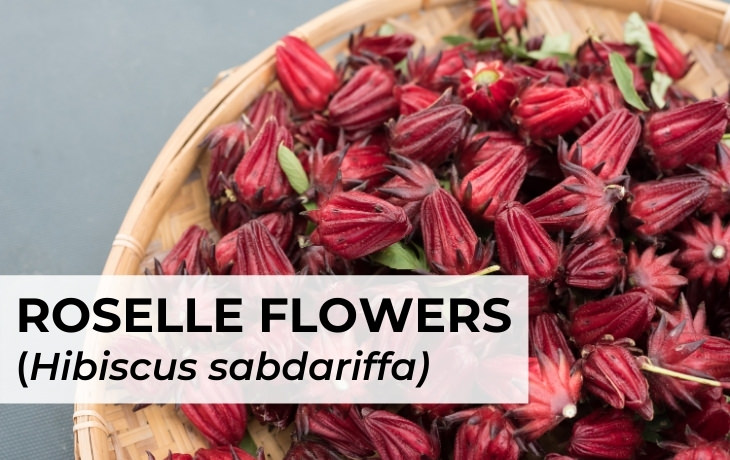
Hibiscus plants are renowned for their beautiful flowers that come in numerous striking colors. But there’s one specific variety of hibiscus, the Roselle flower (Hibiscus sabdariffa), that’s not just pretty but also quite delicious and healthy. Roselle plants originated in North Africa and Southeast Asia, but they are grown in all warm climates today, so hibiscus tea is easily accessible.
Hibiscus Tea Roselle flower
Parts of the deep magenta Roselle blooms are dried and brewed into a slightly tart, cranberry-like herbal tea that has a bright red color. The tea can be enjoyed hot and cold. Drinking hibiscus tea comes with several benefits ranging from cardiovascular health to weight loss. In this article, we discuss 6 scientifically-proven benefits of hibiscus tea and explain how you can enjoy this refreshing tea at home.

1. Lowers blood pressure  
Hypertension is one of the most widespread and dangerous chronic conditions in the world. Having high blood pressure increases your risk of heart disease, stroke, and many other life-threatening conditions. Drinking hibiscus tea seems to be a natural way to lower one’s systolic and diastolic blood pressure according to research. 
 
One article, for example, states that high blood pressure sufferers experienced a marked reduction in systolic blood pressure (the top number) in an experiment that involved 65 participants and lasted for 6 weeks. A review study suggested that hibiscus tea lowers both systolic and diastolic blood pressure by 7.58 and 3.53 mmHg, respectively. 
 
While hibiscus can be safely used to help lower one’s blood pressure in many cases, it can interact with some medications, so make sure that you consult your doctor about any potential risks before you start drinking hibiscus tea. For example, those who take hydrochlorothiazide, a diuretic medication used to reduce blood pressure, should avoid hibiscus tea because it may interact with this medication. 
 
2. Can reduce the levels of lipids in the blood
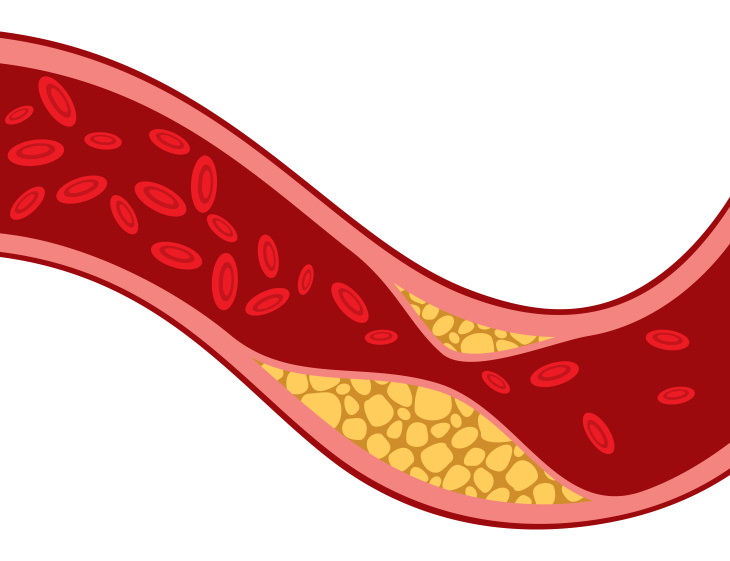
Hibiscus Tea atherosclerosis
Like blood pressure, blood lipids are a significant predictor of cardiovascular health. When the levels of blood fats rise, so does one’s risk of atherosclerosis, thrombosis, heart attack, stroke, kidney disease, and many other dangerous conditions. Therefore, keeping your blood lipid levels in check is quite important. Now, the two main types of lipids you should be aware of are cholesterol and triglycerides. 
 
As you likely already know, cholesterol is a type of lipid that exists in two main forms in the human body: HDL (or good) cholesterol and LDL (bad) cholesterol. While LDL cholesterol clings to the walls of blood vessels and clogs them, HDL cholesterol has the opposite effect - it dissolves the lipid plaques created by LDL cholesterol. When one’s LDL cholesterol levels climb up, this increases the risk of atherosclerosis. 
 
Studies show that drinking hibiscus tea regularly can reduce one’s “bad” cholesterol levels while also increasing the levels of “good” cholesterol, likely due to the high antioxidant content of the tea. One study in patients suffering from metabolic syndrome concluded that taking 100 mg of hibiscus extract every day reduced total cholesterol while also raising HDL cholesterol levels. 
 
As for triglycerides - these are another type of fat found in the blood. They are essentially a way the body stores unused calories after a meal, and ultimately, they are transported to fat cells in the body. When someone eats more calories than their body can use up, their triglyceride levels rise. If this happens too much and too often, it increases the risk of several dangerous diseases ranging from heart disease to diabetes. 
 
One study conducted among 60 diabetics showed that drinking hibiscus tea daily for 1 month decreased total cholesterol while also reducing LDL cholesterol and triglyceride levels but increasing HDL cholesterol levels. Unfortunately, there are no studies as of now that would confirm the same beneficial effects in healthy adults.

3. May prevent certain types of cancer
Hibiscus tea is extremely high in antioxidants, and particularly a group of compounds called polyphenols. These plant compounds may possess cancer-fighting properties. According to in-vitro studies, hibiscus extract halts the growth and reduces the spread of mouth cancer cells and multiple myeloma cells. 
 
It was also shown to halt the spread of prostate cancer and to stop the spread of stomach cancer by 52% according to other test-tube studies. Although there is currently no evidence in live subjects to support these claims, these early results are highly encouraging.


4. Promotes Weight Loss 
Hibiscus Tea Weight Loss
Drinking hibiscus tea may also help you lose weight or protect you from gaining a lot of weight. According to one study conducted on 36 overweight individuals, taking hibiscus extract for 3 months managed to reduce the BMI, hip-to-waist ratio, overall body weight, and the amount of body fat. A similar result was seen in obese mice - taking hibiscus extract for 2 months reduced their body weight. 
 
5. Has Antibacterial Properties
Apart from stopping the growth of cancer and nourishing our body with antioxidants, hibiscus extract may also eradicate unfriendly bacteria. In-vitro studies suggest that hibiscus extract is just as effective as some medications at killing 8 strains of bacteria. A different study also found that hibiscus extract is effective at inhibiting E. coli, a bacteria that causes foodborne illness and produces symptoms like dehydration, intestinal cramping, and diarrhea.

6. Can Improve Liver Function
The liver is one of the most important organs we have: it helps us digest food and absorb nutrients, and it also cleanses the body of toxins. Needless to say, we all must take good care of our liver and keep it working like clockwork, and hibiscus tea could give you that much-needed boost. 
 
Fatty liver disease, or hepatic steatosis, is one of the greatest contributors to liver failure. The condition develops when fats start accumulating in the liver and impair its functioning. The liver can recover from this condition and restore itself over time, and hibiscus extract may help achieve that goal. 
 
One study conducted among overweight participants mentioned that taking hibiscus extract for 12 weeks reduced fatty liver disease. Animal studies in hamsters and rats likewise demonstrate that hibiscus extract protects the liver from damage and helps it work more efficiently. 
 
How to Prepare Hibiscus Tea at Home
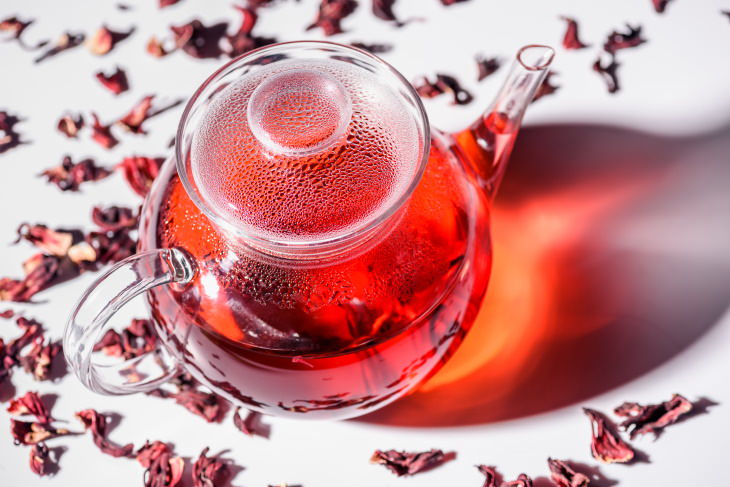
Hibiscus Tea Hibiscus Teapot
Dried hibiscus is widely available in supermarkets across the globe, and it’s quite inexpensive. If you live in a warm climate, you may be able to find fresh hibiscus as well. Here, we will show you how to make tea from dried hibiscus, since it’s more common and easily available. 
 
To prepare hibiscus tea, bring water and dried hibiscus flowers to a boil - use about 1½ teaspoon hibiscus for 1 cup of water. When the water starts boiling, remove the tea from the stove and cover it with a lid. You can flavor the tea with other herbs such as lime, cinnamon, ginger, basil, and lemongrass.

Since hibiscus tea tastes a bit tart, it’s also a good idea to add a dash of honey to balance the taste. Let the resulting tea steep for 15-20 minutes. You can drink the tea either warm or chill it and serve it with ice. 
 
Hibiscus iced tea with herbs and citrus juice is a traditional Mexican drink called Agua de Jamaica.
 
This is only for your information, kindly take the advice of your doctor for medicines, exercises and so on.     

https://gscrochetdesigns.blogspot.com. one can see my crochet creations  
https://gseasyrecipes.blogspot.com. feel free to view for easy, simple and healthy recipes    
https://kneereplacement-stickclub.blogspot.com. for info on knee replacement

Labels: , , , , , , , ,

Friday, January 17, 2020

What Is BPA and Why Is It Bad for You?

BPA is an industrial chemical that may find its way into your food and beverages.

Some experts claim that it is toxic and that people should make an effort to avoid it.

But you may wonder if it’s really that harmful.

This article provides a detailed review of BPA and its health effects.
 What Is BPA?
BPA (bisphenol A) is a chemical that is added to many commercial products, including food containers and hygiene products.

It was first discovered in the 1890s, but chemists in the 1950s realized that it could be mixed with other compounds to produce strong and resilient plastics.

These days, BPA-containing plastics are commonly used in food containers, baby bottles, and other items.

BPA is also used to make epoxy resins, which are spread on the inner lining of canned food containers to keep the metal from corroding and breaking.

    SUMMARY
BPA is a synthetic compound found in many plastics, as well as in the lining of canned food containers.

Which Products Contain It?

Common products that may contain BPA include:

    Items packaged in plastic containers
    Canned foods
    Toiletries
    Feminine hygiene products
    Thermal printer receipts
    CDs and DVDs
    Household electronics
    Eyeglass lenses
    Sports equipment
    Dental filling sealants

It's worth noting that many BPA-free products have merely replaced BPA with bisphenol-S (BPS) or bisphenol-F (BPF).

However, even small concentrations of BPS and BPF may disrupt the function of your cells in a way similar to BPA. Thus, BPA-free bottles may not be an adequate solution .

Plastic items labeled with the recycling numbers 3 and 7 or the letters "PC" likely contain BPA, BPS, or BPF.

    SUMMARY
    BPA and its alternatives — BPS and BPF — may be found in many commonly used products, which are often labeled with recycling codes 3 or 7 or the letters "PC."

How Does It Enter Your Body?

The main source of BPA exposure is through your diet .

When BPA containers are made, not all of the BPA gets sealed into the product. This allows part of it to break free and mix with the container's contents once food or fluids are added .


For instance, a recent study found that BPA levels in urine decreased by 66% following three days during which participants avoided packaged foods.

Another study had people eat one serving of either fresh or canned soup daily for five days. Urine levels of BPA were 1,221% higher in those who consumed the canned soup .

Additionally, WHO reported that BPA levels in breastfed babies were up to eight times lower than those in babies fed liquid formula from BPA-containing bottles .

    SUMMARY
Your diet — particularly packaged and canned foods — is by far the biggest source of BPA. Babies fed formula from BPA-containing bottles also have high levels in their bodies.

Is It Bad For You?

Many experts claim that BPA is harmful — but others disagree.

This section explains what BPA does in the body and why its health effects remain controversial.
BPA's Biological Mechanisms

BPA is said to mimic the structure and function of the hormone estrogen .

Due to its estrogen-like shape, BPA can bind to estrogen receptors and influence bodily processes, such as growth, cell repair, fetal development, energy levels, and reproduction.

In addition, BPA may also interact with other hormone receptors, such as those for your thyroid, thus altering their function .

Your body is sensitive to changes in hormone levels, which is the reason why BPA's ability to mimic estrogen is believed to affect your health.


The BPA Controversy

Given the information above, many people wonder whether BPA should be banned.

Its use has already been restricted in the EU, Canada, China, and Malaysia — particularly in products for babies and young children.

Some US states have followed suit, but no federal regulations have been instituted.

In 2014, the FDA released its latest report, which confirmed the original 1980s daily exposure limit of 23 mcg per pound of body weight (50 mcg per kg) and concluded that BPA is probably safe at the levels currently allowed.

However, research in rodents shows negative effects of BPA at much lower levels — as little as 4.5 mcg per pound (10 mcg per kg) daily.

What’s more, research in monkeys shows that levels equivalent to those currently measured in humans have negative effects on reproduction .

One review revealed that all the industry-funded studies found no effects of BPA exposure, while 92% of the studies not funded by industry found significant negative effects .

  SUMMARY
BPA has a similar structure as the hormone estrogen. It may bind to estrogen receptors, affecting many bodily functions.

May Cause Infertility in Men and Women
BPA may affect several aspects of your fertility.

One study observed that women with frequent miscarriages had about three times as much BPA in their blood as women with successful pregnancies .

What's more, studies of women undergoing fertility treatments showed that those with higher levels of BPA have proportionally lower egg production and are up to two times less likely to become pregnant .

Among couples undergoing in vitro fertilization (IVF), men with the highest BPA levels were 30–46% more likely to produce lower-quality embryos .

A separate study found that men with higher BPA levels were 3–4 times more likely to have a low sperm concentration and low sperm count .

Additionally, men working in BPA manufacturing companies in China reported 4.5 times more erectile difficulty and less overall sexual satisfaction than other men .

Although such effects are notable, several recent reviews agree that more studies are needed to strengthen the body of evidence .


SUMMARY
Several studies show that BPA can negatively affect many aspects of both male and female fertility.

Negative Effects on Babies

Most studies — but not all — have observed that children born to mothers exposed to BPA at work weigh up to 0.5 pounds (0.2 kg) less at birth, on average, than children of unexposed mothers.

Children born to parents exposed to BPA also tended to have a shorter distance from the anus to the genitalia, which further points to BPA's hormonal effects during development.

In addition, children born to mothers with higher BPA levels were more hyperactive, anxious, and depressed. They also showed 1.5 times more emotional reactivity and 1.1 times more aggressiveness .

Finally, BPA exposure during early life is also thought to influence prostate and breast tissue development in ways that increase cancer risk.

However, while there are ample animal studies to support this, human studies are less conclusive  


 SUMMARY
 BPA exposure during early life may influence birth weight, hormonal development, behavior, and cancer risk in later life.

Linked to Heart Disease and Type 2 Diabetes

Human studies report a 27–135% greater risk of high blood pressure in people with high BPA levels.

Moreover, a survey in 1,455 Americans linked higher BPA levels to an 18–63% greater risk of heart disease and a 21–60% greater risk of diabetes.

In another study, higher BPA levels were linked to a 68–130% higher risk of type 2 diabetes .

What’s more, people with the highest BPA levels were 37% more likely to have insulin resistance, a key driver of metabolic syndrome and type 2 diabetes.

However, some studies found no links between BPA and these diseases .


SUMMARY
Higher BPA levels are associated with an increased risk of type 2 diabetes, high blood pressure, and heart disease.


 May Raise Your Risk of Obesity

Obese women may have BPA levels 47% higher than those of their normal-weight counterparts .

Several studies also report that people with the highest BPA levels are 50–85% more likely to be obese and 59% more likely to have a large waist circumference — though not all studies agree .

Interestingly, similar patterns have been observed in children and adolescents .

Although prenatal exposure to BPA is linked to increased weight gain in animals, this has not been strongly confirmed in humans .

 SUMMARY
BPA exposure is linked to an increased risk of obesity and waist circumference. However, more research is needed.

May Cause Other Health Problems

BPA exposure may also be linked to the following health issues:

Polycystic ovary syndrome (PCOS): BPA levels may be 46% higher in women with PCOS, compared to women without PCOS.
 

Premature delivery: Women with higher BPA levels during pregnancy were 91% more likely to deliver before 37 weeks .

Asthma: Higher prenatal exposure to BPA is linked to a 130% higher risk of wheezing in infants under six months old. Early childhood exposure to BPA is also linked to wheezing later in childhood .
 

 Liver function: Higher BPA levels are linked to a 29% higher risk of abnormal liver enzyme levels
 

Immune function: BPA levels may contribute to worse immune function .
 
Thyroid function: Higher BPA levels are linked to abnormal levels of thyroid hormones, indicating impaired thyroid function .
 

Brain function: African green monkeys exposed to BPA levels judged safe by the Environmental Protection Agency (EPA) showed loss of connections between brain cells .

    SUMMARY
BPA exposure has also been linked to several other health problems, such as issues with brain, liver, thyroid, and immune function. More research is needed to confirm these findings.

How to Minimize Your Exposure
Given all of the potential negative effects, you may wish to avoid BPA.

Although eradicating it completely may be impossible, there are some effective ways to reduce your exposure:

Avoid packaged foods: Eat mostly fresh, whole foods. Stay away from canned foods or foods packaged in plastic containers labeled with recycling numbers 3 or 7 or the letters "PC."
 

Drink from glass bottles: Buy liquids that come in glass bottles instead of plastic bottles or cans, and use glass baby bottles instead of plastic ones.
 

Stay away from BPA products: As much as possible, limit your contact with receipts, as these contain high levels of BPA.
 

Be selective with toys: Make sure that plastic toys you buy for your children are made from BPA-free material — especially for toys your little ones are likely to chew or suck on.
 

Don't microwave plastic: Microwave and store food in glass rather than plastic.
 

Buy powdered infant formula: Some experts recommend powders over liquids from BPA containers, as liquid is likely to absorb more BPA from the container.

    SUMMARY
There are several simple ways to reduce your exposure to BPA from your diet and environment.

The Bottom Line

In light of the evidence, it’s best to take steps to limit your BPA exposure and other potential food toxins.

In particular, pregnant women may benefit from avoiding BPA — especially during the early stages of pregnancy.

As for others, occasionally drinking from a "PC" plastic bottle or eating from a can is probably not a reason to panic.

That said, swapping plastic containers for BPA-free ones requires very little effort for a potentially big health impact.

If you aim to eat fresh, whole foods, you’ll automatically limit your BPA exposure.


This is only for your information, kindly take the advice of your doctor for medicines, exercises and so on.     
https://gscrochetdesigns.blogspot.com. one can see my crochet creations  
https://gseasyrecipes.blogspot.com. feel free to view for easy, simple and healthy recipes    
https://kneereplacement-stickclub.blogspot.com. for info on knee replacement
 

Labels: , , , , , , , , , , , , ,

Tuesday, November 12, 2019

Impaired liver function during pregnancy increases obesity risk in children

Impaired liver function in pregnant women may increase the risk of obesity in children by altering their gut bacteria, says a recent study.

The finding of the study has been presented at The Society for Endocrinology Annual Conference.

In a rodent of a model of the most common liver disease in pregnancy, the composition of gut bacteria in offspring was altered and liver function impaired, particularly when they were fed a Western-style, high-fat diet.

These findings suggest that children at risk should maintain a healthy diet and that interventions to alter gut bacteria may help reduce childhood obesity rates in the future.

The most common liver disease in pregnancy, intrahepatic cholestasis (ICP), reduces the release of digestive fluid bile from the liver causing bile acids to build up in the blood, impairing liver function, causing severe itching for the mother and increasing risks of stillbirth and preterm birth for the baby.

Previous studies suggest that children of women with ICP are more likely to develop childhood obesity. Growing evidence suggests the importance of the gut microbiome for good metabolic health and that altered composition can lead to impaired metabolism and weight gain.

No previous studies have investigated the effects of ICP during pregnancy on the gut microbiome of either mothers or their children. Understanding how ICP may lead to obesity in children could help prevent the risk of developing this serious and life-limiting condition.

Dr Caroline Ovadia from King's College London and colleagues investigated how gut microbiota are affected in the offspring of a mouse model of ICP.

The results reported that the offspring had a different gut microbiome composition and liver function, particularly when fed a high-fat diet, which could contribute to impaired metabolism and increase the risk of obesity.

"These findings further suggest that health during pregnancy can have long-term health effects on children, and in this case how gut microbiome alterations may increase the risk of obesity in children on a Western-style, high-fat diet," commented Dr Ovadia.

The results suggest that mice born to mothers with ICP, or other liver diseases, may benefit from maintaining a healthy diet and should avoid fatty foods. These findings also suggest that targeting microbiome composition with treatment strategies in pregnant women, such as using pre-biotics or pro-biotics, could help prevent the risk of child obesity.

"Understanding changes in the composition of the gut microbiome and their effects may provide new ways of diagnosing patients at particular risk of obesity before it occurs. We could then develop personalised medicine and target appropriate treatments to alter gut bacteria accordingly," Dr Ovadia added.


this is only for your information, kindly take the advice of your doctor for medicines, exercises and so on.     
https://gscrochetdesigns.blogspot.com. one can see my crochet creations  
https://gseasyrecipes.blogspot.com. feel free to view for easy, simple and healthy recipes    
https://kneereplacement-stickclub.blogspot.com. for info on knee replacement


Labels: , , , , , , , , , , , , , , , , ,