Friday, June 13, 2025

Are You Experiencing Pain? Get More Sleep!

The correlation between sleep deprivation and a heightened sensitivity to pain is not an apparent one, but it may exist. In a 2018 paper, researchers at the University of California, Berkeley established that our brains may turn off their “pain-protection” gear on days we don’t sleep enough. 
 
Now let’s delve a little deeper into the findings of this paper and try to understand what makes us so irritable and grumpy when we sleep too little. 
 
The Experiment 
To examine the connection between pain and no sleep, the researchers conducted an experiment using functional magnetic-resonance imaging (FMRI), during which a number of participants’ brain activity was recorded as they were exposed to a growing heat on one of their legs. 
 
Once the patient noted the heat becoming unbearable this point was established as the pain threshold and the experimenters stopped recording brain activity.
Findings 
 
1. How Did Participants React to Pain? 
The findings surprised even the researchers themselves. Despite the small sample size (25 participants), the experimenters managed to establish that the threshold for thermal pain among the well-rested individuals was 111°F (44°C), whereas the sleep-deprived group could handle 4 degrees less.
 
2. What Brain Regions Could Account for 
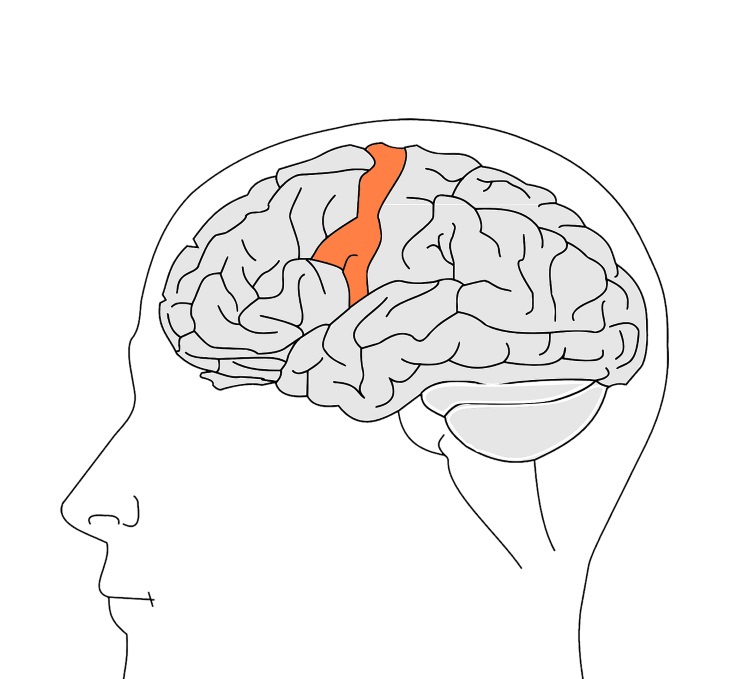
 pain and sleep primary somatosensory cortex
The Different Pain Sensitivity? The region of the brain responsible for the perception of pain, the primary somatosensory cortex (highlighted in orange in the picture), was significantly more responsive in the sleep-deprived individuals.

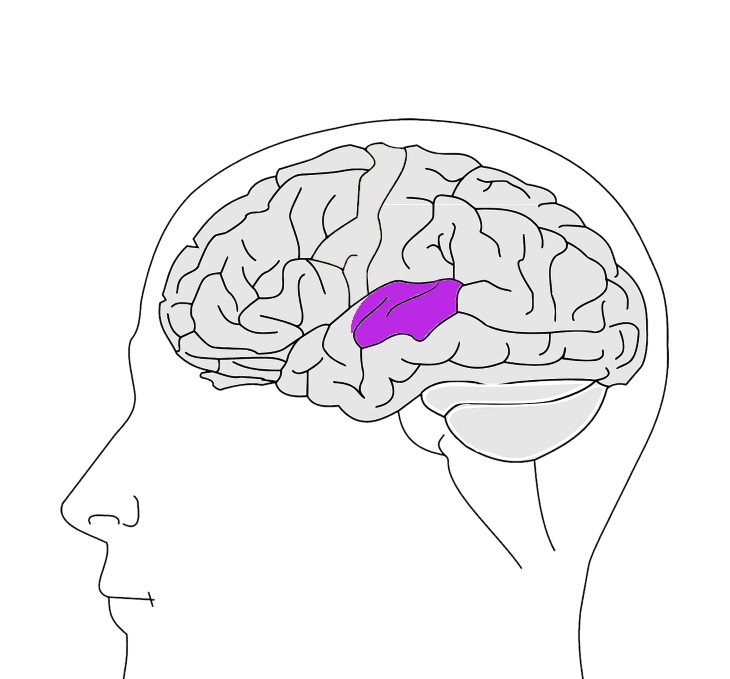
The most interesting and surprising finding, however, was related to other parts of the brain, the striatum and the insula (schematically highlighted below in purple). 
 striatum and insula
These regions are responsible for producing a hormone linked to pain tolerance, among other things, dopamine. The brains of the people who didn’t get enough sleep produced significantly less dopamine, which made them worse at tolerating painful stimuli than the control group.
 
Finally, the researchers conclude that the effect of sleep deprivation can last for several days, with the individuals who got less sleep continuing to be more sensitive to pain days after getting little sleep.


3. What Conclusions Can We Make From This Study? 
These findings opened our eyes to the problem of sleep deprivation-induced pain sensitivity. This is particularly important hospital patients, who can be experiencing more pain because of the noisy hospital rooms in which they have to stay. 
 
The data can also be relevant to people suffering from painful chronic conditions, as a quality sleep could decrease their pain sensitivity. 
 
Finally, it is yet to be discovered if the same pain and no sleep link can be extended to the psychological experiences we have when we don’t get enough sleep: irritability and nervousness. 
 
What remains really clear, however, is that scientists found yet another reason for us to get a good night’s sleep every night. 
 

This is only for your information, kindly take the advice of your doctor for medicines, exercises and so on.   


Labels: , ,

Wednesday, December 27, 2017

Pain-free skin patch to automate diabetes management

Untreated, diabetes can result in both vascular and nerve damage throughout the body, with debilitating impacts on the eyes, feet, kidneys, and heart. Global incidence of all types of diabetes is about 285 million people, of which 90 per cent have Type-2 diabetes. 

 There is good news for diabetics as researchers have developed a pain-free skin patch containing dissolvable compounds that responds to blood chemistry to manage glucose automatically.

For millions of people with type 2 diabetes, ongoing vigilance over the amount of sugar, or glucose, in their blood is the key to health. A finger prick before mealtimes and maybe an insulin injection is an uncomfortable but necessary routine.

The new study, showed that the biochemical formula of mineralised compounds in the patch responds to sugar levels for days at a time.

In a proof-of-concept study performed with mice, the researchers showed that the biochemically formulated patch of dissolvable micro-needles can make the management of Type-2 diabetes much easier.
 
“This experimental approach could be a way to take advantage of the fact that persons with Type-2 diabetes can still produce some insulin,” said a researcher.

“A weekly micro-needle patch application would also be less complicated and painful than routines that require frequent blood testing,” a researcher said.

The base of the experimental patch is material called alginate, a gum-like natural substance extracted from brown algae.

It is mixed with therapeutic agents and poured into a microneedle form to make the patch.

“Alginate is a pliable material — it is soft, but not too soft,” said a lead researcher.

“It has to be able to poke the dermis, and while not a commonly used material for needles, it seems to work pretty well in this case,” the researcher said.

The team infused the alginate with a formula of biochemical particles that stimulates the body’s own insulin production when needed and curtails that stimulation when normal blood sugar concentration is reached.

The responsive delivery system of the patch can meet the body’s need for days instead of being used up all at once, the study said.

Insulin is a hormone made in the pancreas and secreted into the bloodstream to regulate glucose in response to food intake.

It is needed to move glucose from the bloodstream into cells where the sugar can be converted to energy or stored.

In Type-1 diabetes, usually diagnosed in children and young adults, the body does not make insulin at all.

Type-2 diabetes, which can be diagnosed at any age but more commonly as an adult, progressively lessens the body’s ability to make or use insulin.

Untreated, diabetes can result in both vascular and nerve damage throughout the body, with debilitating impacts on the eyes, feet, kidneys, and heart.

Global incidence of all types of diabetes is about 285 million people, of which 90 per cent have Type-2 diabetes.

Many require insulin therapy that is usually given by injection just under the skin in amounts that are calculated according to the deficit in naturally generated insulin in the blood. Insulin therapy is not managed well in half of all cases.

The alternate therapy approach developed by these researchers may eventually make management of Type-2 diabetes a lot more convenient.

THIS IS ONLY FOR INFORMATION, ALWAYS CONSULT YOU PHYSICIAN BEFORE HAVING ANY PARTICULAR FOOD/ MEDICATION/EXERCISE/OTHER REMEDIES.    
PS- THOSE INTERESTED IN RECIPES ARE FREE TO VIEW MY BLOG-                      

HTTP:GSEASYRECIPES.BLOGSPOT.COM/
FOR INFO ABOUT KNEE REPLACEMENT, YOU CAN VIEW MY BLOG-                                                                       

HTTP://KNEE REPLACEMENT-STICK CLUB.BLOGSPOT.COM/
FOR CROCHET DESIGNS

HTTP://MY CROCHET CREATIONS.BLOGSPOT.COM

Labels: , , , , , , , , ,

Friday, June 09, 2017

Yoga can make cancer patients sleep better

Yoga is being seen as a low-risk and low-cost treatment for sufferers of cancer-fatigue
Yoga can dramatically boost the well-being of cancer patients, research reveals. Many people are diagnosed with the disease every year. It can be an extremely difficult disease to live with on a daily basis.


But now experts say new evidence shows that patients will sleep better and suffer less pain and fatigue if they practise yoga. New studies presented at the world’s largest cancer conference found just four weeks of practising yoga, including gentle hatha yoga, can improve well-being and reduce tiredness.


The first study on 321 cancer patients examined the impact of yoga on cancer-related fatigue and sleep. Patients in the study, 77 per cent of whom had breast cancer, were split into two groups, with one receiving usual care and the other following a four-week yoga programme.


The yoga course was a gentle hatha programme with poses, breathing exercises and mindfulness. Women were invited to take part for 75 minutes twice a week for four weeks. Some 86 per cent attended at least five of the eight classes.


The results showed that yoga significantly improved both fatigue and sleep quality, with around a fifth of the effect on fatigue due to better sleep.


But 37 per cent of improvement in fatigue was actually put down to less daytime napping. A researcher who worked on the study, said: “One of the most striking results was that the yoga group felt less fatigued but actually spent less time asleep.


“Cancer-related fatigue is not like other fatigue that you can sleep off or rest away. Our data suggests that by adding yoga practice into their daily lives it helped them to remain more active and sleep less.”


She said doctors should prescribe yoga as a “low-risk, low-cost treatment” to all cancer patients with cancer-related fatigue. “We would like them to prescribe gentle hatha yoga.” She said sleep disruption affects 30 per cent to 90 per cent of cancer patients, while cancer fatigue affects 60 per cent to 100 per cent.


The second study on 850 women with early-stage breast cancer saw half the group encouraged to do yoga while the other half were given usual care.


After 18 to 22 months, women in the yoga group were experiencing fewer side-effects of treatment (44 per cent versus 56 per cent), experienced lower fatigue and said they were suffering less detriment to their general activity (41 per cent versus 59 per cent). They also had lower levels of pain.


Researcher said: “Yoga showed numerically better scores in all aspects of quality of life, which reached statistical significance in domains related to fatigue, emotional score and pain score.


“In overall quality of life, 52 per cent women on yoga showed an improvement from baseline compared to 42 per cent in the control arm.” She said 72 per cent of women reported worsening of pain in the usual care group, while the figure was only 28 per cent in the yoga group.


A researcher said: “This intriguing research suggests that yoga could help alleviate some of the very difficult side-effects following breast cancer treatment, such as pain, fatigue and sleep deprivation.”


  A nurse, said: “Fatigue is a problem for many cancer survivors and it can be difficult to know how best to help because it affects people differently. Research like this is important and may help health professionals assist survivors and improve their quality of life.”
 

Yoga could help alleviate some of the very difficult side-effects following breast cancer treatment, such as fatigue and sleep deprivation.

this is only for your information, kindly take the advice of your doctor for medicines, exercises and so on.   
https://gscrochetdesigns.blogspot.com. one can see my crochet creations 
https://gseasyrecipes.blogspot.com. feel free to view for easy, simple and healthy recipes    
https://kneereplacement-stickclub.blogspot.com. for info on knee replacement
    

Labels: , , , , , , , ,

Sunday, June 04, 2017

Breast feeding may help prevent chronic C-section pain

Mothers who breastfeed their babies for more than two months after a Caesarean section delivery are three times less likely to experience persistent pain, a new study has found.

Researchers analysed about 185 mothers who underwent a C-section at the hospital.

Mothers were interviewed about breastfeeding patterns and the level of chronic pain at the surgical site in the first 24 and 72 hours after C-section, and again 4 months later.

Researchers also looked at the effect of other variables on chronic pain including surgical technique, pain in the first 24-72 hours, maternal education and occupation, and anxiety during breastfeeding.

Almost all (87 per cent) of the mothers in the study breastfed their babies, with over half (58 per cent) reporting breastfeeding for two months or longer, researchers said.

Findings showed that around 1 in 4 (23 per cent) of the mothers who breastfed for two months or less still experienced chronic pain in the surgical site four months post-op compared to just eight per cent of those who breastfed for two months or longer.

These differences were notable even after adjusting for the mother's age. Further analysis showed that mothers with a university education were much less likely to experience persistent pain compared to those who were less well educated.

Researchers also found that over half (54 per cent) of mothers who breastfed reported suffering from anxiety.

"These preliminary results suggest that breastfeeding for more than two months protects against chronic post-caesarean pain, with a three-fold increase in the risk of chronic pain if breastfeeding is only maintained for 2 months or less," researchers said.

"Our study provides another good reason to encourage women to breastfeed. It's possible that anxiety during breastfeeding could influence the likelihood of pain at the surgical site 4 months after the operation," they said.


 this is only for your information, kindly take the advice of your doctor for medicines, exercises and so on.   
https://gscrochetdesigns.blogspot.com. one can see my crochet creations 
https://gseasyrecipes.blogspot.com. feel free to view for easy, simple and healthy recipes    
https://kneereplacement-stickclub.blogspot.com. for info on knee replacement
  

Labels: , , , ,