Wednesday, January 06, 2021

6 Nutrition Tips From Experts to Ensure Better Sleep

Trouble sleeping is becoming more and more widespread these days, with as many as 68% of Americans reporting they struggle to sleep at least once a week. Whether this is due to stress, the ongoing pandemic, or other factors, this can be a very pestering problem. The solution, however, can be easier than you’d think. Just a few tweaks in your diet could lead to a better night’s sleep, according to experts.

Though no particular food is a magic cure, there is a definite link to the food and drinks we consume during the day and the quality of our sleep. ‘Sufficient’ sleep will vary from person to person - some people need as much as 10 hours while others require as little as six. Many experts define sleep as ‘good’ simply if it results in you waking up feeling rested. Here are a few nutrition tips that will help you achieve that coveted feeling. 
 
1. Keep track of your melatonin and tryptophan consumption
Melatonin is a natural hormone produced by the body, which is sometimes referred to as the ‘sleep hormone’. “Melatonin is a hormone that your brain produces in response to darkness. It helps with the timing of circadian rhythms and with sleep,” explained a dietitian nutritionist
Although it's a naturally produced hormone, you can also increase levels of melatonin by consuming foods that are rich in it. Those include almonds, fish, and cherries, to name a few. Tryptophan, an amino acid that increases the production of melatonin can also be attained through food. It is most commonly associated with turkey meat, but it can also be found in foods like cottage cheese and plain yogurt.

If you’re consuming a large portion of melatonin-rich foods, it is recommended to do so at least an hour or 30 minutes before going to bed, as it is the amount of time it takes for melatonin to have an effect on the body. 
 
2. Opt for whole foods rich in fiber, and avoid processed foods
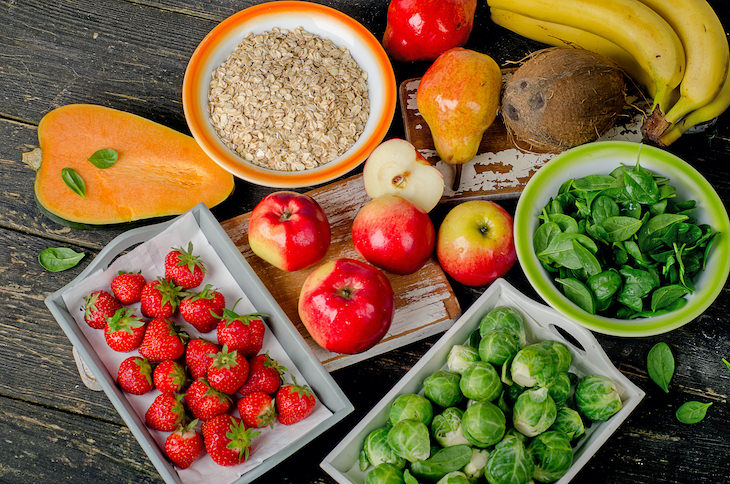
6 Dietary Tips for Better Sleep, fiber rich food
Whole foods packed with fiber have a myriad of health benefits, and one of them is keeping your stomach happy at night. Complex carbohydrates that are slow-digesting help keep the body balanced and settle the digestive system. Legumes, squash, quinoa, and buckwheat are all good examples of such food. 
 
On the other hand, processed carbs and foods that contain mich added sugar such as bread, cereals, muffins, and cookies prompt a short-term spike in blood sugar, followed by a crash. When blood sugar levels drop sharply adrenalin, glucagon, and cortisol are released to regulate blood glucose levels. All of these hormones can act as stimulants, causing you to sleep less restfully or struggle to fall asleep. 
 
3. Time your meals correctly
It isn’t just what you eat, but when you eat it, too. “Allow two hours or more between your last bite of food and bed, no matter what you choose to eat, and one hour before when it comes to beverages,” is the advice of Kylene Bogden, a registered dietitian-nutritionist and wellness adviser. 
 
Moreover, try to space out your meals four to five hours apart so your body has time to digest the food.

4. Stay away from sugar and caffeine

We aren't saying that you should cut out coffee and chocolate from your life completely, that could be an extremely difficult task for some of us, but try to restrict those indulgences to the first half of the day. Since it takes the body about six hours to metabolize caffeine, drinking or eating foods with caffeine is not recommended within several hours before lights out. 
 
We must note decaffeinated beverages aren’t a good substitute, as they still contain stimulants that can disrupt your sleep. The same is true for sugar, which gives the body a temporary energy boost and should be avoided up to 6 hours before you go to bed.

5. Drink a caffeine-free hot beverage in the evening

6 Dietary Tips for Better Sleep, golden milk
The sleep benefits of a ‘glass of warm milk’ aren’t entirely a myth. Drinking a warm caffeine-free beverage in the evening can indeed do wonders to your quality of sleep. 
 
Chamomile tea is a good option, as it was also found to reduce anxiety in humans. Another recommended drink is golden milk - turmeric-based almond milk with dates, as a sweetener. Turmeric is a powerful, anti-inflammatory spice that promotes a sense of calm and aids in digestion, thereby enhancing sleep quality. While golden milk can also be made with regular cow’s milk, experts strongly recommend opting for a plant-based milk variety, as cow’s milk can be inflammatory for some people (bloating really isn’t optimal for sleeping). 
 
6. Keep spicy food at a minimum

6 Dietary Tips for Better Sleep, spicy
Spicy dishes can be irritating as they work their way through your digestive system, which can result in discomfort or even pain, as the food moves through your gastrointestinal tract. 
 
If you’re a fan of spicy food, you can still have your favorite dishes, but perhaps not as the last meal of the day. If you want some spice in your dinner, experts recommend to bring it to a minimum and not make it the dominant feature of the meal, as to not compromise your sleep.

This is only for your information, kindly take the advice of your doctor for medicines, exercises and so on.     

https://gscrochetdesigns.blogspot.com. one can see my crochet creations  
https://gseasyrecipes.blogspot.com. feel free to view for easy, simple and healthy recipes    
https://kneereplacement-stickclub.blogspot.com. for info on knee replacement

Labels: , , , , , , , ,

Sunday, January 27, 2019

These 10 Tips Will Keep Your Bones Stronger for Longer

Bone mineral density refers to the amount of minerals in our bones, which indicates their strength and density. Bone mineral density that is below the normal levels, but is not low enough to be classified as osteoporosis, is known as osteopenia.

Osteopenia usually doesn't cause pain or other symptoms, but it is very important to understand how it can be prevented as it can progress to osteoporosis (where the bones become so weak that they fracture extremely easily). 

Aging is a common cause of low bone mineral density. Other factors that contribute to osteopenia include eating disorders, metabolism problems, exposure to radiation, chemotherapy, family history, lack of physical activity, smoking, regular consumption of sodas, and excessive alcohol consumption. There are no obvious symptoms of osteopenia. Therefore, you should take a bone density test every few years after you have turned 35.
Here are 10 top ways to prevent the loss of bone mineral density.


1. Consume Adequate Calcium 


Calcium is one of the most important nutrients for improving your bone density. Our bones are made of calcium, so this nutrient is essential for preventing any bone-related diseases. People between the ages of 19 and 50 should consume around 1,000 mg of calcium per day. Women, who are at a higher risk of contracting bone diseases, should consume 1,200 mg of calcium a day.
You can get your daily requirement from sardines, dark green vegetables, organic dairy products, blackstrap molasses, dried fruits, and fortified soy products such as tofu. If you do not have a balanced diet, you should speak to your doctor about taking calcium supplements.


2. Boost Your Vitamin D intake
Vitamin D is another essential nutrient that improves bone health and reduces the risk of osteopenia. Furthermore, vitamin D also helps your body utilize calcium better. You can get vitamin D into your body by eating eggs, salmon, swordfish, sardines, and fortified foods such as cereal and orange juice. Our bodies also produce vitamin D when exposed to the sun, so take the time to enjoy 10-15 minutes of early morning sun exposure each day.

3. Stay Active
Regular exercise is great for overall health and bone health is no exception to this rule. Our bones form and remodel in response to physical stress, thus regular physical activity is a great way to prevent the loss of bone mineral density. For good bone health, aim for around 30 minutes of weight-bearing activities most days of the week. Activities like walking, hiking, and dancing are all great choices.

4. Quit Smoking


Smoking is bad for our overall health, especially bone health. Smoking prevents the body from efficiently absorbing calcium, thus decreasing bone mass. In fact, smokers are at a much higher risk of fractures than non-smokers. Therefore, you should try to quit smoking as soon as possible. You can get help from professionals as well as family members and friends.

5. Consume Less Caffeine                                             
Coffee does have some health benefits when consumed in limited amounts, but too much caffeine in any form is no good for your bones. Excess caffeine intake can interfere with the body's ability to absorb calcium, which is vital for good bone health.

6. Eat Foods Rich in Vitamin K
Vitamin K will give a boost to your bone mineral density level. This particular vitamin helps the body make proteins for healthy bones and reduces the amount of calcium that is excreted by the body. Vitamin K rich foods include kale, Brussels sprouts, turnip greens, fermented dairy products, broccoli, and prunes.

7. Reduce Your Sodium Intake
Salt causes excessive calcium excretion through the kidneys. In fact, too much salt appears to be a risk factor for bone fragility. To improve your bone health, it's essential that you limit your salt intake. The American Heart Association suggests consuming less than 1,500 mg of salt a day.

8. Pump Up Your Potassium Level 

Potassium is known to be important for muscle health, but it is also beneficial for bone health. This mineral neutralizes acids that remove calcium from the body. The recommended daily intake of potassium for adults is 4700 mg. The best sources of potassium are avocados, bananas, strawberries, kiwis, mangoes, apricots, carrots, dates, sweet potatoes, spinach, broccoli, and red peppers.

9. Eat Magnesium-Rich Foods
To improve bone health and reduce the risk of getting osteopenia, you should eat magnesium-rich foods every day. Magnesium is needed in over 325 enzyme systems in the body that control thousands of chemical interactions and it's also vital for bone health. It stimulates the hormone calcitonin, which preserves bone structure by drawing calcium out of the blood and soft tissues and back into the bones.

Great sources of magnesium are almonds, avocados, beans, bananas, pumpkin seeds, tofu, soy milk, pecans, walnuts, potatoes with skin, yogurt, whole grains, and green leafy vegetables.

10. Eat Foods Rich in Vitamin C
Vitamin C can also help prevent loss of bone mineral density. Collagen is the main protein in bones, and vitamin C plays a major role in collagen synthesis. To get vitamin C into your diet, eat fruit and vegetables such as bell peppers, oranges, broccoli, strawberries, Brussels sprouts, kiwi, pineapple, and cauliflower. You can also take vitamin C supplements, but please consult your doctor first.


THIS IS ONLY FOR INFORMATION, ALWAYS CONSULT YOU PHYSICIAN BEFORE HAVING ANY PARTICULAR FOOD/ MEDICATION/EXERCISE/OTHER REMEDIES.                                    PS- THOSE INTERESTED IN RECIPES ARE FREE TO  VIEW MY BLOG-                                                                                           https://gseasyrecipes.blogspot.com/       
                                                                                                                                                                      FOR INFO ABOUT KNEE REPLACEMENT, YOU CAN VIEW MY BLOG-                                                  https:// kneereplacement-stickclub.blogspot.com/           
                                                                           FOR CROCHET DESIGNS                                                                                                                                                                                                  https://gscrochetdesigns.blogspot.com 
 

Labels: , , , , , , , , , , , , , ,

Thursday, July 05, 2018

Sweating

This important bodily function occurs when the body is hot. The body exudes water that vaporizes from the surface of the skin, decreasing the body's temperature. Sweating occurs when we exercise, when we feel stressed, or because of different illnesses. Sweat is comprised of 99% water and 1% salts, acids and organic compounds.
Fact: It's impossible to turn off sweating, however, it can be reduced. To do this you need to cut down on caffeine, hot spicy foods, alcohol, wear high-quality clothes and use excellent cosmetics. 

THIS IS ONLY FOR INFORMATION, ALWAYS CONSULT YOU PHYSICIAN BEFORE HAVING ANY PARTICULAR FOOD/ MEDICATION/EXERCISE/OTHER REMEDIES.                                                                                                                                                                                                        PS- THOSE INTERESTED IN RECIPES ARE FREE TO  VIEW MY BLOG-                                                                                           https://gseasyrecipes.blogspot.com/  

FOR INFO ABOUT KNEE REPLACEMENT, YOU CAN VIEW MY BLOG-                                                                                        https:// kneereplacement-stickclub.blogspot.com/                              
FOR CROCHET DESIGNS                                                                                                                                                                                                                                 https://gscrochetdesigns.blogspot.com


Labels: , , , , , , , ,

Friday, February 03, 2017

Tips Which Will Keep Your Bones Stronger for Longer

Bone mineral density refers to the amount of minerals in our bones, which indicates their strength and density. Bone mineral density that is below the normal levels, but is not low enough to be classified as osteoporosis, is known as osteopenia.
 
Osteopenia usually doesn't cause pain or other symptoms, but it is very important to understand how it can be prevented as it can progress to osteoporosis (where the bones become so weak that they fracture extremely easily).
Aging is a common cause of low bone mineral density. Other factors that contribute to osteopenia include eating disorders, metabolism problems, exposure to radiation, chemotherapy, family history, lack of physical activity, smoking, regular consumption of sodas, and excessive alcohol consumption. There are no obvious symptoms of osteopenia. Therefore, you should take a bone density test every few years after you have turned 35.
Here are 10 top ways to prevent the loss of bone mineral density.

1. Consume Adequate Calcium 
Calcium is one of the most important nutrients for improving your bone density. Our bones are made of calcium, so this nutrient is essential for preventing any bone-related diseases. People between the ages of 19 and 50 should consume around 1,000 mg of calcium per day. Women, who are at a higher risk of contracting bone diseases, should consume 1,200 mg of calcium a day.
You can get your daily requirement from sardines, dark green vegetables, organic dairy products, blackstrap molasses, dried fruits, and fortified soy products such as tofu. If you do not have a balanced diet, you should speak to your doctor about taking calcium supplements.

2. Boost Your Vitamin D Intake
Vitamin D is another essential nutrient that improves bone health and reduces the risk of osteopenia. Furthermore, vitamin D also helps your body utilize calcium better. You can get vitamin D into your body by eating eggs, salmon, swordfish, sardines, and fortified foods such as cereal and orange juice. Our bodies also produce vitamin D when exposed to the sun, so take the time to enjoy 10-15 minutes of early morning sun exposure each day.

3. Stay Active
Regular exercise is great for overall health and bone health is no exception to this rule. Our bones form and remodel in response to physical stress, thus regular physical activity is a great way to prevent the loss of bone mineral density. For good bone health, aim for around 30 minutes of weight-bearing activities most days of the week. Activities like walking, hiking, and dancing are all great choices.
4. Quit Smoking
 Smoking is bad for our overall health, especially bone health. Smoking prevents the body from efficiently absorbing calcium, thus decreasing bone mass. In fact, smokers are at a much higher risk of fractures than non-smokers. Therefore, you should try to quit smoking as soon as possible. You can get help from professionals as well as family members and friends.
5. Consume Less Caffeine                                             
Coffee does have some health benefits when consumed in limited amounts, but too much caffeine in any form is no good for your bones. Excess caffeine intake can interfere with the body's ability to absorb calcium, which is vital for good bone health.

6. Eat Foods Rich in Vitamin K
Vitamin K will give a boost to your bone mineral density level. This particular vitamin helps the body make proteins for healthy bones and reduces the amount of calcium that is excreted by the body. Vitamin K rich foods include kale, Brussels sprouts, turnip greens, fermented dairy products, broccoli, and prunes.

7. Reduce Your Sodium Intake
Salt causes excessive calcium excretion through the kidneys. In fact, too much salt appears to be a risk factor for bone fragility. To improve your bone health, it's essential that you limit your salt intake. The American Heart Association suggests consuming less than 1,500 mg of salt a day.

8. Pump Up Your Potassium Level 
Potassium is known to be important for muscle health, but it is also beneficial for bone health. This mineral neutralizes acids that remove calcium from the body. The recommended daily intake of potassium for adults is 4700 mg. The best sources of potassium are avocados, bananas, strawberries, kiwis, mangoes, apricots, carrots, dates, sweet potatoes, spinach, broccoli, and red peppers.

9. Eat Magnesium-Rich Foods
To improve bone health and reduce the risk of getting osteopenia, you should eat magnesium-rich foods every day. Magnesium is needed in over 325 enzyme systems in the body that control thousands of chemical interactions and it's also vital for bone health. It stimulates the hormone calcitonin, which preserves bone structure by drawing calcium out of the blood and soft tissues and back into the bones.
Great sources of magnesium are almonds, avocados, beans, bananas, pumpkin seeds, tofu, soy milk, pecans, walnuts, potatoes with skin, yogurt, whole grains, and green leafy vegetables.

10. Eat Foods Rich in Vitamin C
Vitamin C can also help prevent loss of bone mineral density. Collagen is the main protein in bones, and vitamin C plays a major role in collagen synthesis. To get vitamin C into your diet, eat fruit and vegetables such as bell peppers, oranges, broccoli, strawberries, Brussels sprouts, kiwi, pineapple, and cauliflower. You can also take vitamin C supplements, but please consult your doctor first.

 this is only for your information, kindly take the advice of your doctor for medicines, exercises and so on.
https://gscrochetdesigns.blogspot.com. one can see my crochet creations
https://gseasyrecipes.blogspot.com. feel free to view for easy, simple and healthy recipes 
https://kneereplacement-stickclub.blogspot.com. for info on knee replacement
 

Labels: , , , , , , , , ,

Monday, April 28, 2014

Ways To Build Healthy Bones


"Weak bones may seem like a problem of aging, but there’s plenty we can do early in life (in our teens and 20s) to make sure bones stay healthy down the line" 

Bones are quite literally the support system of the body, so it’s super important to keep them strong and healthy. Bones are continuously being broken down and rebuilt in tiny amounts. Before about age 30, when bones typically reach peak bone mass (which varies from person to person), the body is creating new bone faster, but after age 30, the bone building balance naturally shifts and more bone is lost than gained. 

Some people have a lot of savings in their “bone bank” because of factors including genetics, diet and how much bone they built up as teenagers. The natural depletion of bone doesn’t affect these lucky ducks too drastically. But in those with a smaller bone fortune, when the body can’t create new bone as fast as the old bone is lost, osteoporosis can set in, causing bones to become weak and brittle and allowing them to fracture more easily. The disease is most common in postmenopausal women over the age of 65 and in men over the age of 70. 

Although all this talk of menopause and older age makes the threat of osteoporosis seem like a long way off, know that once it sets in, it’s extremely hard to reverse. Since there’s no way of being 100% positive you’ll develop osteoporosis, the best way to counteract it is to take steps earlier in life to beef up bone mass (and prevent its loss) as much as possible. 

Unfortunately, some are more likely than others to develop osteoporosis and weak bones in general (namely white and Asian postmenopausal women). Also unfortunately, it’s awfully difficult to change your race, gender or menopausal status. But never fear — there are some things that can be changed to bump up bone mass. Here are 10 tips to make deposits in your bone bank for a healthier future. 

1. Know your family history. As with many medical conditions, family history is a key indicator of bone health. Those with a parent or sibling who has or had osteoporosis are more likely to develop it. “So, how’s your bone density, Grandma?” might seem like an awkward question at Thanksgiving dinner, but ask anyway before she passes the gravy. 

2. Boost calcium consumption. When most people think bones, they think calcium. This mineral is essential for the proper development of teeth and bones. (Not to mention it’s a huge helper in proper muscle function, nerve signaling, hormone secretion, and blood pressure.) 

But calcium isn’t the end-all, be-all bone loss cure. The key might be to help the body absorb calcium by pairing calcium-rich foods with those high in vitamin D. Some studies on postmenopausal women have shown that simply adding calcium alone to the diet doesn’t have a huge affect on bone density (though follow-up studies have suggested the opposite). 

Foods that are good sources of calcium include yogurt, cheese, milk, spinach and collard greens. Not a dairy fan? Check out our list of non-dairy sources of calcium. 

3. Don’t forget the vitamin D. Where there’s calcium, there must be vitamin D: the two work together to help the body absorb bone-boosting       calcium. Boost vitamin D consumption by munching on shrimp, fortified foods like cereal and orange juice, sardines, eggs (in the yolks) and tuna, or opt for a vitamin D supplement. Greatist Expert Eugene Babenko suggests getting your vitamin D (specifically vitamin D3) levels checked at your next doctor’s appointment, and to discuss the use of supplements with your doctor. 

The body also produces vitamin D when exposed to the sun — 10 to 15 minutes of exposure three times per week will do. Vitamin D’s importance to bone health has been proven in studies on “seasonal bone loss” — elderly people can lose more bone mass during the winter because of lack of sun exposure. Though these and many other studies on bone loss looked at elderly people specifically, bone health is all about prevention, so younger folks should catch a few rays to stock up on D. 

4. Boost bone density with vitamin K. Vitamin K is mostly known for helping out with blood clotting, but it also helps the body make proteins for healthy bones. However, the exact way vitamin K contributes to bone health is unclear. Two studies on young girls showed that vitamin K had different effects: one showed that vitamin K slowed bone turnover, but it didn’t have any effect on bone mineral density, while the other found the reverse. 

Another study specifically compared the effects of vitamins K and D on calcium absorption in rats, and it turns out the two vitamins work well as a team: vitamin D stimulated calcium absorption in the intestines, while vitamin K reduced the amount of calcium excreted by the body. 

Regardless of how vitamin K might help, fill up on it with foods like kale, broccoli, Swiss chard and spinach. 

5. Pump up the potassium. Potassium isn’t necessarily known for aiding bone health: it’s a mineral that helps nerves and muscles communicate and also helps cells remove waste. But it turns out potassium may neutralize acids that remove calcium from the body. 

Studies in both pre- and postmenopausal women have shown that a diet high in potassium can improve bone health. In fact, the study involving premenopausal women showed an 8% difference in bone density between women with high potassium intake and those with low potassium intake. 

Load up on potassium by eating foods like sweet potatoes, white potatoes (with the skin on), yogurt and bananas. 

6. Make exercise a priority. Seriously. Regular exercise is key to keep a number of health issues at bay, and bone health is no exception. In fact, living a sedentary lifestyle is considered a risk factor for osteoporosis. One study comparing bone density in college women with various body weights and activity levels found that athletes with low body weight had the highest bone density of any group in the study, showing exercise (and low body weight) can have a positive effect on bone density. 

What type of exercise is most effective? Weight-bearing exercises like running, walking, jumping rope, skiing and stair climbing keep bones strongest. Resistance training has also been shown to improve bone health in several studies, so pick up the weights after going for a jog. Bonus for the older readers: improved strength and balance helps prevent falls (and the associated fractures) in those who already have osteoporosis. 

7. Consume less caffeine. Caffeine does have some health benefits, but unfortunately not for our bones. Too much of it can interfere with the body’s ability to absorb calcium. One study showed that drinking more than two cups of coffee per day accelerated bone loss in subjects who also didn’t consume enough calcium. Another study (albeit on elderly women) showed that more than 18 ounces of coffee per day can accelerate bone loss by negatively interacting with vitamin D. So enjoy the java, but keep it in moderation and consume enough calcium, too. 

8. Cool it on the booze. But like caffeine, there’s no need to quit entirely. While heavy alcohol consumption can cause bone loss (because it interferes with vitamin D doing its job), moderate consumption (that’s one drink per day for women, two per day for men) is fine — and recent studies actually show it may help slow bone loss. Bottoms up! 

9. Quit smoking. Here’s yet another reason to lose the cigarettes: multiple studies have shown that smoking can prevent the body from efficiently absorbing calcium, decreasing bone mass. 

10. Don’t be an astronaut. Not to kill any childhood dreams, but because       of those hours and hours of weightlessness and low-calcium diets, astronauts often suffer from space-induced osteoporosis. Space-anything sounds kind of awesome, but space bones definitely aren't: astronauts can lose up to 1% to 2% of their bone mass per month on a mission! For those who simply must visit the moon, there is a possible solution: two studies have found that vitamin K can help build back astronauts’ lost bone — more than calcium and vitamin D.

.
Image removed by sender.

PS- THIS IS ONLY FOR INFORMATION, ALWAYS CONSULT YOU PHYSICIAN BEFORE HAVING ANY PARTICULAR FOOD/ MEDICATION/EXERCISE/OTHER REMEDIES.
PS- THOSE INTERESTED IN RECIPES ARE FREE TO VIEW MY BLOG-
HTTP:GSEASYRECIPES.BLOGSPOT.COM/
FOR INFO ABOUT KNEE REPLACEMENT, YOU CAN VIEW MY BLOG-
HTTP://KNEE REPLACEMENT-STICK CLUB.BLOGSPOT.COM/

FOR CROCHET DESIGNS


HTTP://MY CROCHET CREATIONS.BLOGSPOT.COM

Labels: , , , , , , , , , , , ,