Friday, September 14, 2018

How To Prevent Prostate Cancer

n the last year alone, 221,000 men, including  some famous actors  were diagnosed with prostate cancer, of which 29,000 ended up losing their lives. Such statistics might sound terribly grim, but there is actually a reason to be optimistic since there are quite a number of methods that you can adopt to prevent and even cure prostate cancer. Keep reading to learn all about them:
 
 Prevention
1. Try a Mediterranean Diet
A study showed that men who eat over 10g of garlic a day end up halving their chances of getting prostate cancer halved, compared to those men who consumed less than 2g a day. The Mediterranean diet also typically includes red wine, which contains resveratrol, an antioxidant that may stop the growth of prostate cancer.

2. Love Yourself Regularly
According to a recent study, men who masturbate five or more times a week were 34% less likely to get prostate cancer by the time they reached 70. The lead study author, says that "seminal fluid contains substances that are carcinogenic,” and that "regular ejaculation may help flush them out."
Treatiment
1. Consume More Herbs
Scientists  have discovered that a mixture of herbs including rosemary, ginger, green tea, and oregano decreased prostate cancer cell growth by 78%. Scientists believe that this works by inhibiting the activity of COX-2, which is a protein linked to the cancer's progression.

2. Use CAD (Computer-Assisted Doctor)
If you decide to use a prostatectomy to solve the problem, you may want to consider getting the new robot-assisted version done, which is far less intrusive and has a lower recovery time. Data shows that 50% fewer men became impotent and 90% fewer men became incontinent after having a CAD prostatectomy performed on them in comparison with traditional methods.
3. Restore Your Erections
The cavernous nerves, which are responsible for causing erections, often suffer after a prostate removal. This can obviously wreak havoc on your sex life, however taking a nerve graft from your ankle as a replacement has been found to be a highly effective solution. If you decide to go down this route, then the only side effect you should experience is a slight numbness in your foot.

THIS IS ONLY FOR INFORMATION, ALWAYS CONSULT YOU PHYSICIAN BEFORE HAVING ANY PARTICULAR FOOD/ MEDICATION/EXERCISE/OTHER REMEDIES.                                                                                                                                                                                  PS- THOSE INTERESTED IN RECIPES ARE FREE TO  VIEW MY BLOG-                                                                                           https://gseasyrecipes.blogspot.com/  
FOR INFO ABOUT KNEE REPLACEMENT, YOU CAN VIEW MY BLOG-                                                                                                                                                                                               https:// kneereplacement-stickclub.blogspot.com/                              

FOR CROCHET DESIGNS                                                                                                                                                                                                                                 https://gscrochetdesigns.blogspot.com


Labels: , , , , , , , , , , , , , ,

Sunday, July 27, 2014

The Health Benefits of Black Salt

Salt is one of those substances that human civilization is built upon, not only for its taste, but also for its health benefits and its ability to preserve food. 

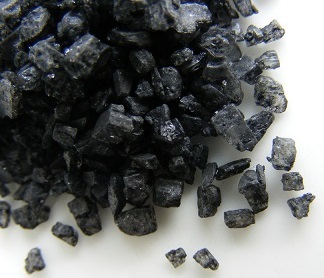
The Indian black salt, also known as 'Kala Namak', is a popular variety of Indian volcanic stone salts. It sees extensive use in India, Pakistan and internationally, by those who know its benefits. Its unusual color comes from the presence of tiny amounts of iron and other minerals.
 
black salt
 
This special salt is found in the Himalayan mountain ranges and has some excellent health benefits that you should know about. In India, black salt is often prescribed for patients with high blood pressure or those who require a low-salt diet. Why? Because black salt is low on sodium, and so doesn't raise the blood pressure like normal salt does. It is also a popular treatment for heartburn and intestinal gas. In short, it provides a boost to the digestive system.

The health benefits of black salt:

1. A healthy alternative to sea salt

Salt is incredibly common in everyday life. We find it in a huge amount of snacks and dishes. This is usually iodized salt or sea salt. However, an overdose of salt in our daily lives is a common problem that may lead to paralysis, thyroid problems and high blood pressure, to count a few. The two most dangerous chemicals in sea salt are potassium iodate and aluminum silicate. This is why sea salt is banned in some countries. However, black salt is a great alternative to iodized salt, and here are a few of its benefits compared to iodized salt:

- Treats arthritis problems
- Treats paralysis problems
- Lowers high blood pressure
- Deals with impotency issues


2. The therapeutic benefits

According to centuries of tradition, black salt is a 'cooling' salt that is filled with therapeutic benefits. It can be used as a laxative and as a cure for intestinal disorders. It has benefits for eyesight and unlike common salt, does not enhance your sodium intake. Due to its high sulfur content. However, due to its high sulfur content, it can also weaken the digestion in large amounts, and so a balanced use is recommended, no more than you would regular salt.


3. Soft, beautiful looking skin

Another use for black salt is skincare. Instead of chemical peels, special soaps and spas, consider adding black salt to your bath water. It works as an excellent healing agent, especially good for cracked, swollen feet, athlete's foot, warts and sprains. Just sit back and let it heal your pain and relieve your worries while you enjoy a truly refreshing bath. When you come out, your body will feel truly rejuvenated. 

Note: If your skin is sensitive to irritation, it's best not to make the water too hot, or you may incur some itchiness.


4. Strong, problem-free hair

If you're one of many who suffer from a receding hairline, you're probably frustrated by all the supplements and tonics that never seem to work. So try something more natural this time. The essential minerals in black salt will boost your hair's natural growth, strengthen it and treat its split ends. If you have dandruff or acute hair loss, I recommend taking black salt with tomato juice at least once a day. Not only will it encourage hair growth, but will also make your hair thicket, with more sheen and luster.


Do try to use this wonderful natural product and see the difference for yourself. 
 THIS IS ONLY FOR INFORMATION, ALWAYS CONSULT YOU PHYSICIAN BEFORE HAVING ANY PARTICULAR FOOD/ MEDICATION/EXERCISE/OTHER REMEDIES.


PS- THOSE INTERESTED IN RECIPES ARE FREE TO VIEW MY BLOG-
HTTP:GSEASYRECIPES.BLOGSPOT.COM/
FOR INFO ABOUT KNEE REPLACEMENT, YOU CAN VIEW MY BLOG-
HTTP://KNEE REPLACEMENT-STICK CLUB.BLOGSPOT.COM/

FOR CROCHET DESIGNS


HTTP://MY CROCHET CREATIONS.BLOGSPOT.COM
 

Labels: , , , , , , , , , , , , , , , ,

Wednesday, February 02, 2011

What is testicular cancer? risk factors, symptoms, diagnosis, treatment


What is testicular cancer?

Testicular cancer is a disease in which cells become malignant (cancerous) in one or both testicles.
The testicles (also called testes or gonads) are a pair of male sex glands. They produce and store sperm and are the main source of testosterone (male hormones) in men. These hormones control the development of the reproductive organs and other male physical characteristics. The testicles are located under the penis in a sac-like pouch called the scrotum.
Based on the characteristics of the cells in the tumor, testicular cancers are classified as seminomas ornonseminomas. Other types ofcancer that arise in the testicles are rare and are not described here. Seminomas may be one of three types: classic, anaplastic, or spermatocytic. Types of nonseminomas include choriocarcinoma, embryonal carcinoma, teratoma, and yolk sac tumors. Testicular tumors may contain both seminoma and nonseminoma cells.

Testicular cancer accounts for only 1 percent of all cancers in men in the United States. About 8,000 men are diagnosed with testicular cancer, and about 390 men die of this disease each year. Testicular cancer occurs most often in men between the ages of 20 and 39, and is the most common form of cancer in men between the ages of 15 and 34. It is most common in white men, especially those of Scandinavian descent. The testicular cancer rate has more than doubled among white men in the past 40 years, but has only recently begun to increase among black men. The reason for the racial differences in incidence is not known.

What are the risk factors for testicular cancer?

The exact causes of testicular cancer are not known. However, studies have shown that several factors increase a man's chance of developing this disease.
  • Undescended testicle (cryptorchidism): Normally, the testicles descend from inside the abdomen into the scrotum before birth. The risk of testicular cancer is increased in males with a testicle that does not move down into the scrotum. This risk does not change even after surgery to move the testicle into the scrotum. The increased risk applies to both testicles.
  • Congenital abnormalities: Men born with abnormalities of the testicles, penis, or kidneys, as well as those with inguinal hernia (hernia in the groin area, where the thigh meets the abdomen), may be at increased risk.
  • History of testicular cancer: Men who have had testicular cancer are at increased risk of developing cancer in the other testicle.
  • Family history of testicular cancer: The risk for testicular cancer is greater in men whose brother or father has had the disease.

How is testicular cancer detected? What are symptoms of testicular cancer?

Most testicular cancers are found by men themselves. Also, doctors generally examine the testicles during routine physical exams. Between regular checkups, if a man notices anything unusual about his testicles, he should talk with his doctor. Men should see a doctor if they notice any of the following symptoms:
  • a painless lump or swelling in a testicle
  • pain or discomfort in a testicle or in the scrotum
  • any enlargement of a testicle or change in the way it feels
  • a feeling of heaviness in the scrotum
  • a dull ache in the lower abdomen, back, or groin
    • a sudden collection of fluid in the scrotum
    These symptoms can be caused by cancer or by other conditions. It is important to see a doctor to determine the cause of any of these symptoms.

    How is testicular cancer diagnosed?

    To help find the cause of symptoms, the doctor evaluates a man's general health. The doctor also performs a physical exam and may order laboratory and diagnostic tests. These tests include:
    • Blood tests that measure the levels of tumor markers. Tumor markers are substances often found in higher-than-normal amounts when cancer is present. Tumor markers such as alpha-fetoprotein (AFP), Beta-human chorionic gonadotropin (�HCG), and lactate dehydrogenase (LDH) may suggest the presence of a testicular tumor, even if it is too small to be detected by physical exams or imaging tests.
    • Ultrasound, a test in which high-frequency sound waves are bounced off internal organs and tissues. Their echoes produce a picture called a sonogram. Ultrasound of the scrotum can show the presence and size of a mass in the testicle. It is also helpful in ruling out other conditions, such as swelling due to infection or a collection of fluid unrelated to cancer.
      • Biopsy (microscopic examination of testicular tissue by a pathologist) to determine whether cancer is present. In nearly all cases of suspected cancer, the entire affected testicle is removed through an incision in the groin. This procedure is called radical inguinal orchiectomy. In rare cases (for example, when a man has only one testicle), the surgeon performs an inguinal biopsy, removing a sample of tissue from the testicle through an incision in the groin and proceeding with orchiectomy only if the pathologist finds cancer cells. (The surgeon does not cut through the scrotum to remove tissue. If the problem is cancer, this procedure could cause the disease to spread.)
      If testicular cancer is found, more tests are needed to find out if the cancer has spread from the testicle to other parts of the body. Determining the stage (extent) of the disease helps the doctor to plan appropriate treatment.

      How is testicular cancer treated? What are the side effects of treatment?

      Although the incidence of testicular cancer has risen in recent years, more than 95 percent of cases can be cured. Treatment is more likely to be successful when testicular cancer is found early. In addition, treatment can often be less aggressive and may cause fewer side effects.
      Most men with testicular cancer can be cured with surgery, radiation therapy, and/or chemotherapy. The side effects depend on the type of treatment and may be different for each person.
      Seminomas and nonseminomas grow and spread differently and are treated differently. Nonseminomas tend to grow and spread more quickly; seminomas are more sensitive to radiation. If the tumor contains both seminoma and nonseminoma cells, it is treated as a nonseminoma. Treatment also depends on the stage of the cancer, the patient's age and general health, and other factors. Treatment is often provided by a team of specialists, which may include a surgeon, a medical oncologist, and a radiation oncologist.
      The three types of standard treatment are described below.
      • Surgery to remove the testicle through an incision in the groin is called a radical inguinal orchiectomy. Men may be concerned that losing a testicle will affect their ability to have sexual intercourse or make them sterile (unable to produce children). However, a man with one healthy testicle can still have a normal erection and produce sperm. Therefore, an operation to remove one testicle does not make a man impotent (unable to have an erection) and seldom interferes with fertility (the ability to produce children). For cosmetic purposes, men can have a prosthesis (an artificial testicle) placed in the scrotum at the time of their orchiectomy or at any time afterward.

        Some of the lymph nodes located deep in the abdomen may also be removed (lymph node dissection). This type of surgery does not usually change a man's ability to have an erection or an orgasm, but it can cause problems with fertility if it interferes with ejaculation. Patients may wish to talk with their doctor about the possibility of removing the lymph nodes using a special nerve-sparing surgical technique that may preserve the ability to ejaculate normally.
      • Radiation therapy (also called radiotherapy) uses high-energy rays to kill cancer cells and shrink tumors. It is a local therapy, meaning that it affects cancer cells only in the treated areas. External radiation (from a machine outside the body), aimed at the lymph nodes in the abdomen, is used to treat seminomas. It is usually given after surgery. Because nonseminomas are less sensitive to radiation, men with this type of cancer usually do not undergo radiation therapy.
      • Radiation therapy affects normal as well as cancerous cells. The side effects of radiation therapy depend mainly on the treatment dose. Common side effects include fatigue, skin changes at the site where the treatment is given,loss of appetitenausea, and diarrhea. Radiation therapy interferes with sperm production, but many patients regain their fertility over a period of 1 to 2 years.
      • Chemotherapy is the use of anticancer drugs to kill cancer cells. When chemotherapy is given to testicular cancer patients, it is usually given as adjuvant therapy (after surgery) to destroy cancerous cells that may remain in the body. Chemotherapy may also be the initial treatment if the cancer is advanced; that is, if it has spread outside the testicle at the time of the diagnosis. Most anticancer drugs are given by injection into a vein.

        Chemotherapy is a systemic therapy, meaning drugs travel through the bloodstream and affect normal as well as cancerous cells throughout the body. The side effects depend largely on the specific drugs and the doses. Common side effects include nausea, hair loss, fatigue, diarrheavomiting,fever, chills, coughing/shortness of breath, mouth sores, or skin rash. Other side effects include dizziness, numbness, loss of reflexes, or difficulty hearing. Some anticancer drugs also interfere with sperm production. Although the reduction in sperm count is permanent for some patients, many others recover their fertility.

        Some men with advanced or recurrent testicular cancer may undergo treatment with very high doses of chemotherapy. These high doses of chemotherapy kill cancer cells, but they also destroy the bone marrow, which makes and stores blood cells. Such treatment can be given only if patients undergo a bone marrow transplant. In a transplant, bone marrow stem cellsare removed from the patient before chemotherapy is administered. These cells are frozen temporarily and then thawed and returned to the patient through a needle (like a blood transfusion) after the high-dose chemotherapy has been administered.
      • Men with testicular cancer should discuss their concerns about sexual function and fertility with their doctor. It is important to know that men with testicular cancer often have fertility problems even before their cancer is treated. If a man has pre-existing fertility problems, or if he is to have treatment that might lead to infertility, he may want to ask the doctor about sperm banking (freezing sperm before treatment for use in the future). This procedure allows some men to have children even if the treatment causes loss of fertility.

      Is follow-up treatment for necessary? What does it involve?

      Regular follow-up exams are extremely important for men who have been treated for testicular cancer. Like all cancers, testicular cancer can recur (come back). Men who have had testicular cancer should see their doctor regularly and should report any unusual symptoms right away. Follow-up varies for different types and stages of testicular cancer. Generally, patients are checked frequently by their doctor and have regular blood tests to measure tumor marker levels. They also have regular x-rays and computed tomography, also called CT scans or CAT scans (detailed pictures of areas inside the body created by a computer linked to an x-ray machine). Men who have had testicular cancer have an increased likelihood of developing cancer in the remaining testicle. Patients treated with chemotherapy may have an increased risk of certain types of leukemia, as well as other types of cancer. Regular follow-up care ensures that changes in health are discussed and that problems are treated as soon as possible.

Labels: , , , , , , ,