Friday, April 16, 2021

We Bet You Didn’t Know These Household Tricks!

1. Helping the bees...
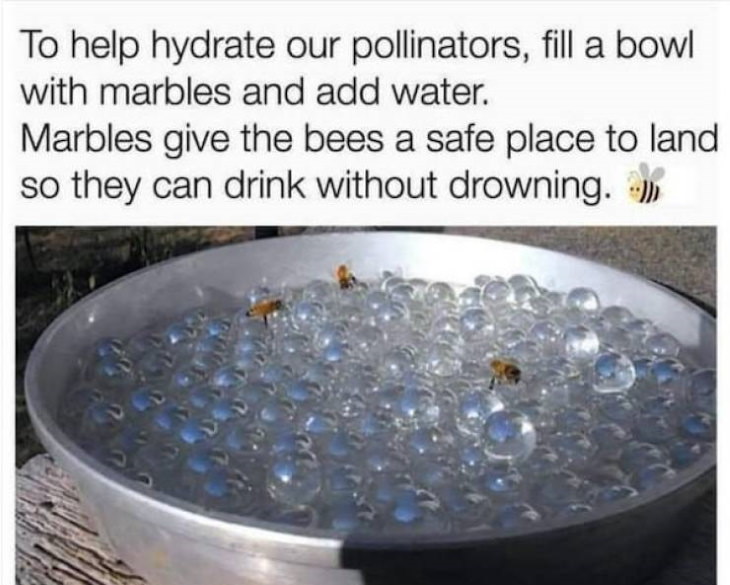
Household Tricks Helping bees
2. Use a fitted sheet at the beach to avoid getting sand on everything.

Household Tricks a fitted sheet at the beach
3. Attach a bread clip at the end of a tape roll to never worry about it ever again.

Household Tricks bread clip at the end of a tape
4. An easy way to prevent groceries from shuffling around in the trunk.

Household Tricks prevent groceries from shuffling around in the trunk
5. Sew a piece of microfiber on the (inside) end of your shirt so you can clean your glasses more easily.
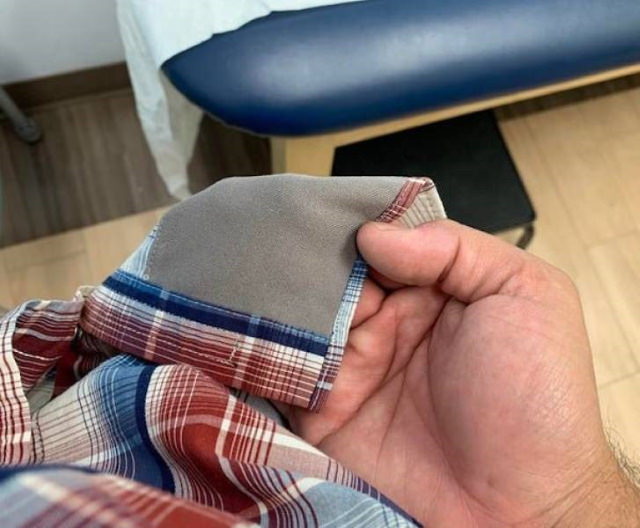
Household Tricks "Sew a piece of microfiber on the (inside) end of your shirt so you can clean your glasses more easily."
6. Carrying some superglue in your bag is a great idea, but it can leak and ruin the bag. Here's a great solution for that problem:
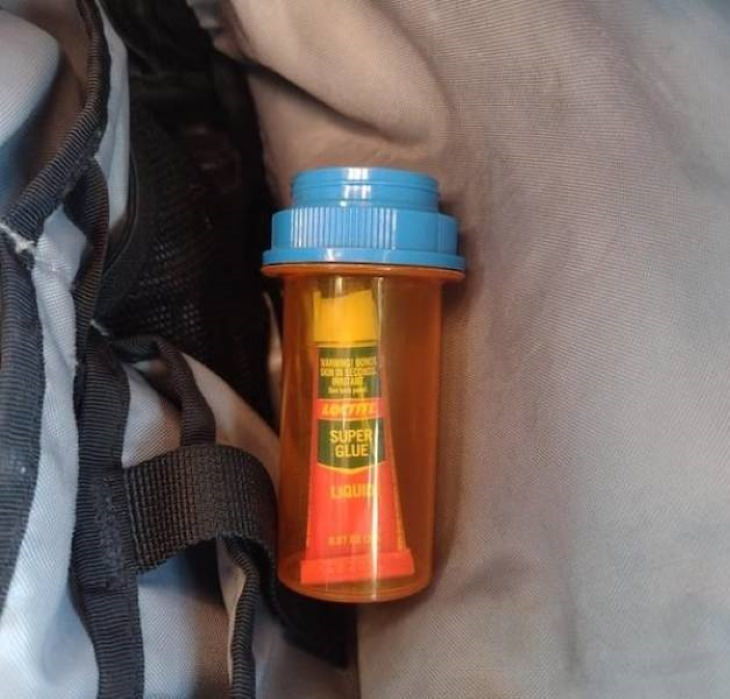
Household Tricks super glue
7. Use cardboard to cover houseplant potting soil if you’ve got babies or pets that like to dig in it

Household Tricks cardboard to cover houseplant

This is only for your information, kindly take the advice of your doctor for medicines, exercises and so on.     

https://gscrochetdesigns.blogspot.com. one can see my crochet creations  
https://gseasyrecipes.blogspot.com. feel free to view for easy, simple and healthy recipes    
https://kneereplacement-stickclub.blogspot.com. for info on knee replacement

Labels: , , , , , , , , , , , , , , , , ,

Thursday, July 18, 2019

The Most Dangerous Bug Bites and Stings

As summer washes over the northern hemisphere, so do bug bites and stings, leading to rashes, diseases, and potentially-deadly allergic reactions. Being able to tell a sting from a bite and recognizing its source is extremely important, as it could help inform your doctor better about the appropriate treatment to your problem.
But why are stings and bites more common in summer, to begin with? Well, as biology teachers tell us, invertebrates such as insects and arachnids are “cold-blooded” (or ectotherms, in more precise terminology), meaning that they don’t have an internal heat-regulating system as we mammals do. This means that, in order to survive, many bugs need a warm and humid climate. An additional reason people get bit and stung more often in the summer is that they tend to spend more time outdoors, leading to more exposure to all sorts of creepy crawlies.
 
Spiders
Bites and stings: brown recluse
Brown recluse, note the darker markings on the head.
Spiders are among the most hated and feared arthropods around, but in most cases the revulsion is unwarranted. Spiders are not parasitic nor especially territorial and do not bite unless provoked. In fact, most people who report getting bitten by a spider don’t actually see the culprit and just assume it was a spider because of the symptoms, which can also appear in cases of bed bug and flea bites, and even herpes and MRSA.
 
Bites and stings: black widow
Female black widows are black with red markings on the abdomen.
That being said, spiders *can* bite if agitated or threatened. In those rare cases where you are absolutely certain a spider is to blame (never assume it was unless you saw the spider), the bite can trigger an allergic reaction or get infected.     
In most cases, an icepack, some antihistamines, and an antibiotic ointment will do the trick. If you can definitively identify the spider as either a brown recluse (native only to the southern US, east of I-25) or a black widow, seek medical attention.
Again, there is no reason to assume a spider bite unless you see the spider in action, and in some cases, misidentifying a non-bite lesion caused by disease could lead to misdiagnosis and severe damage.
Mosquitoes
Bites and stings: mosquito
If you ask someone what animal kills the most humans every year, some might think about snakes, a particularly clever person may answer “humans”, but the deadliest creature around is actually the mosquito. Though the malicious, sleep-disrupting bloodsuckers aren’t venomous and rarely induce allergic reactions, they can transmit several dangerous diseases, including malaria, dengue fever, Zika and West Nile virus. North of the Tropics, disease transmission is not a serious risk, so if you live in North America or Europe, you should be perfectly safe.
Note: crane flies, sometimes called “daddy long legs” are often misidentified as giant mosquitoes. They are actually completely harmless, beyond their annoying buzz.
Ticks
Bites and stings: ticks
Though awareness of deer-ticks and Lyme disease is on the rise, not many people are aware of other species of ticks and the unique risks they pose to those bitten, such as tick-induced red meat allergy, Powassan virus, and more. In all of these cases, the best treatment is prevention. Wear longer clothing while hiking through grass, do not lie on exposed grass and check for ticks after spending time outdoors. If you find and remove ticks on time, they won’t have enough time to transmit the disease.
Bees and wasps
Bites and stings: wasps
While bees are generally timid creatures and are crucial for the pollination of countless flowers, as well as honey production, wasps and hornets aren’t as easy to forgive. All of these buzzers are venomous, but the venom itself isn’t dangerous for most people, except in some extreme cases, such as the Asian giant hornet. Bees, wasps, and hornets pose the greatest danger to allergic people who may go into anaphylactic shock, which may result in asphyxiation or heart attack.
Both bees and wasps get aggressive in close vicinity to their nest. The problem with wasps is that they tend to nest in close vicinity to humans. And while bees are not interested in humans, wasps are curious and may be drawn to us because of a scent they picked up. If a wasp does land on you, remain still and wait until it flies away. If you’ve got a wasp nest problem, call a professional exterminator. Attempting to remove the nest by yourself may result in a cloud of furious wasps.
Kissing bugs
Bites and stings: kissing bug
Endemic to the Americas, these innocuously-named parasitic insects are not named for their romantic tendencies, but rather for their feeding M.O.
Kissing bugs (sometimes more aptly nicknamed “vampire bugs”) are bloodsuckers, and as such prefer areas where the skin is easier to break, namely the lips and around the eyes.
Kissing bugs are vectors of the Chagas disease, a parasitic infection which can result in an abnormally enlarged colon, esophagus or heart chambers. If the heart is affected, the disease can result in heart failure, while an enlarged colon or esophagus may cause food or fecal matter to become lodged, requiring surgery to remove it.
 
THIS IS ONLY FOR INFORMATION, ALWAYS CONSULT YOU PHYSICIAN BEFORE HAVING ANY PARTICULAR FOOD/ MEDICATION/EXERCISE/OTHER REMEDIES.                                    PS- THOSE INTERESTED IN RECIPES ARE FREE TO  VIEW MY BLOG-                                                                                           https://gseasyrecipes.blogspot.com/                                                                                                                                                FOR INFO ABOUT KNEE REPLACEMENT, YOU CAN VIEW MY BLOG-                                                  https:// kneereplacement-stickclub.blogspot.com/                                                                      FOR CROCHET DESIGNS                                                                                                    
                                https://gscrochetdesigns.blogspot.com
 

Labels: , , , , , , , , , , , , , , ,

Tuesday, October 22, 2013

Breast milk, bee venom and bone marrow transplants – the different things that could cure HIV/AIDS!

Scientists have for the first time identified a protein in breast milk that neutralises HIV and may protect babies from acquiring the virus from their infected mothers. The protein, called Tenascin-C or TNC, had previously been recognised as playing a role in wound healing, but had not been known to have antimicrobial properties. The discovery could lead to potential new HIV-prevention strategies. Researchers found the TNC protein in breast milk binds to and neutralises the HIV virus, protecting exposed infants who might otherwise become infected from repeated exposures to the virus.
‘Even though we have antiretroviral drugs that can work to prevent mother-to-child transmission, not every pregnant woman is being tested for HIV, and less than 60 per cent are receiving the prevention drugs, particularly in countries with few resources,’ said senior study author. ‘So there is still a need for alternative strategies to prevent mother-to-child transmission, which is why this work is important,’ she said.
In their study, the team screened mature milk samples from uninfected women for neutralising activity against a panel of HIV strains, confirming that all of the detectable HIV-neutralisation activity was contained in the high molecular weight portion. Using a multi-step protein separation process, the researchers narrowed the detectable HIV-neutralisation activity to a single protein, and identified it as TNC.
Should we be optimistic or cautious? This isn’t the first time that we’ve been presented with tales that an HIV cure is on its way. The most famous of them are: 
 The Berlin Patient Case – Leukaemia
For a long time researchers believed there was no cure. Even five years ago, a scientist who wanted to work on HIV cure research was laughed at. But all that changed with the Berlin Patient. He – an HIV-positive man who developed leukaemia. After first-line cancer treatments failed, a bone marrow transplant procedure was done. Two transplants later, not only was his leukaemia in remission, his immune system actually managed to ward off HIV. He no longer takes antiretroviral drugs or tests positive for HIV. Essentially, he was cured.  
Bee venom to cure HIV?
A study suggested that bee venom might have the potency to kill the human immunodeficiency virus (HIV). Researchers had demonstrated that a toxin called melittin which is found in bee venom is the reason for this. The researchers used nanoparticle technology to target the virus. Particles smaller than HIV were infused with bee venom and since HIV cells are smaller than normal body cells the nanoparticles only targeted HIV.
‘Melittin on the nanoparticles fuses with the viral envelope,’ said research instructor. ‘The melittin forms little pore-like attack complexes and ruptures the envelope, stripping it off the virus.’ Adding, ‘We are attacking an inherent physical property of HIV. Theoretically, there isn’t any way for the virus to adapt to that. The virus has to have a protective coat, a double-layered membrane that covers the virus.’
Stem cell therapy to overcome HIV?
In a path-breaking breakthrough two people were believed to have overcome HIV after undergoing stem-cell therapy! The news has met with widespread elation with experts believing that a cure might be on the cards. Doctors announced  that two previously HIV-positive patients no longer had detectable virus levels in their blood or tissue after having bone marrow stem-cell transplants to treat cancer between two and four years ago.
Aggressive antiretroviral treatment 
There were reports in March 2013 of a toddler who was completely cured of the virus after being born of it. She has been cured of the disease after following an aggressive regime of drugs. This was the second documented case of a person being completely cured of the virus after an adult known as the Berlin Patient was cured as a result of bone-marrow transplant. This startling piece of information was discovered when the baby’s mother stopped treatment and doctors lost track of the baby who was given a bout of heavy drugs (current procedure suggests only a modest daily dose of antiretroviral treatment) about 30 hours after she was born at a rural hospital, doctors said at a medical meeting. However, a doctor poured cold water on cold water on what was termed ‘the greatest medical breakthrough of the century’.  
In his piece, the Dr.   pointed out in his column, exposure to HIV doesn’t mean that the baby will have HIV. ‘We will likely never know if those cells were from the child or maternal cell that has been transmitted during pregnancy or birth.’ When a child is born, he or she has some maternal cells in his system so it’s impossible to tell whether the child actually had HIV or not, or the tests detected the maternal HIV positive cells.
The MX2 gene
According to a study published scientists have discovered a new gene which can inhibit the HIV virus from spreading after it has entered the body.  It was conducted by introducing the virus to two separate lines of human cells. On one line, they introduced the MX2 gene along with the virus, while on the other they didn’t. The line on which the MX2 gene was introduced, it was seen that the virus had stopped replicating. 
ps- this is only for information, always consult you physician before having any particular food/ medication/exercise/other remedies.
ps- those interested in recipes are free to view my blog-

http://gseasyrecipes.blogspot.com/


for info about knee replacement, you can view my blog-


http://Knee replacement-stick club.blogspot.com/


for crochet designs


http://My Crochet Creations.blogspot.com


Labels: , , , , , , , , , , , , , , , ,

Sunday, July 07, 2013

Quick And Effective Remedy For Bee And Wasp stings

Bees and wasps inject venom by stinging. The stinger is sometimes left in the skin. The venom causes local pain and swelling. In rare cases, a severe allergic reaction may develop and be fatal.

Symptoms

pain, redness, itchiness & swelling at the site.
indications of severe reaction include- swelling round eyes & lips
difficulty in breathing/ wheezing
abdominal pain
rapid drop in blood pressure ( shock)

Do's

if a stinger is present in the skin, quickly scrape it out.
observe a person for at least 30 minutes to see if he/she develops a severe reaction.
activate emergency medical response.
ask if he/she is carrying a prescribed epinephrine auto-injector or EPI-PEN.
If so, assist him in using it.

Don't s

do not remove the stinger with a plucker or finger nails. 
This breaks the stinger & leads to the venom spreading further.


ps- this is only for information, always consult you physician before having any particular food/ medication/exercise/other remedies.


ps- those interested in recipes are free to view my blog-

http://gseasyrecipes.blogspot.com/


for info about knee replacement, you can view my blog-


http://Knee replacement-stick club.blogspot.com/


for crochet designs


http://My Crochet Creations.blogspot.com/


I've not given details about designs, but those interested are free to mail me for the same.

Labels: , , , , , , , , , , , , , ,

Sunday, February 26, 2012

Search like a bee for good memory


Those with the best memory foraging strategies are better at recalling things.

New research finds that people move from one patch of memory to another in a manner similar to that of bees flitting between flowers for pollen or birds searching for berries in bushes. This suggests that people with the best memory foraging strategies are better at recalling items. Be cause of the way human attention has evolved, the scientists wondered if humans use the same strategies to forage in memory. For e.g., when hunting for animals in memory, most people start with a patch of household pets like cat, dog & hamster. But then as this patch becomes depleted, they look elsewhere. They might then alight to another semantically distinct patch like predatory animals.

Scientists asked people to name as many animals as they could in 3 minutes & compared these results with a classic model of optimal foraging, the marginal value theorem, which predicts how long animals will stay in one patch before jumping to another. Researchers said, being able to search memory effectively would be an educational advantage. Here, knowing when to give up one attempted solution & try something new is the question that a good mind must be trained to answer. Simply trying a failing solution repeatedly is like the bird that keeps foraging in the patch, even after all the berries are gone. 

Labels: , , ,

Tuesday, January 31, 2012

Anaphylactic shock


Anaphylactic shock

What it is
A life-threatening allergic reaction possibly to certain foods, such as peanuts, or to a bee or wasp sting.
Signs and symptoms
Sudden dramatic swelling of your newborn baby’s face. Your baby will have difficulty breathing, turn pale, feel clammy and cold and may lose consciousness.
What your doctor can do
Give the baby an injection to reverse the shock.
What you can do
Take your baby immediately to your doctor or to an A&E.

Labels: , , , , , , , ,

Monday, July 25, 2011

How to protect yourself from bug, snake, spider & other skin problems


JeJellyfish Stings

A jellyfish sting may cause intense pain, rash and welts, and may progress to vomiting and muscle spasms. Severe reactions can cause difficulty breathing, coma, and death. Box jellyfish stings require immediate medical care. Flood the area with vinegar and keep still until help arrives. For other jellyfish stings, soak the area in vinegar.


Stingray Sting
Sting symptoms can include sharp pain, bleeding from the wound, vomiting, chills, and paralysis. Death may even occur. Most stingray injuries require immediate medical care. If help isn’t readily available, immerse the injured area in hot water, remove the stingers, and scrub the wound with soap and fresh water. Apply pressure to stop the bleeding.

Mosquito Bites
Mosquitoes aren't just annoying; scratching a bite can cause a skin infection, too. Mosquitoes can also carry West Nile virus, dengue fever, and other diseases. To protect yourself from mosquitoes, apply insect repellent and cover up when you go outdoors, use door and window screens, and get rid of standing water in your yard, which is where mosquitoes lay their eggs.

Ticks
If you enjoy the outdoors, be careful of ticks -- they can attach to you as you brush past grass and plants. Ticks don't always carry diseases, and most bites aren’t serious. But they can carry diseases including Lyme disease and Rocky Mountain spotted fever. A bite can also trigger an allergic reaction. Be sure to remove a tick properly. To prevent tick bites, keep arms, legs, and head covered in grassy areas and use tick repellant.

Bee Stings
Most reactions to bee stings are mild, causing minor swelling, pain, and itching. Severe allergic reactions occur in some people, with symptoms including hives, swelling of the mouth or throat, and difficulty breathing. If you have a severe anaphylactic reaction, lie down and remove the stinger.  Give yourself an epinephrine injection, if you have access one, and get immediate medical care. If you don't have an allergic reaction, remove the stinger, clean the sting site, apply ice, and take an oral antihistamine for itching.


Chiggers
Chiggers are tiny mites found in tall grass or weeds. They attach to the skin by inserting tiny mouth parts to penetrate and liquefy the skin cells on which they feed. Their bites are painless. But after a few days of being attached to the skin, chiggers fall off – leaving very itchy red welts. Over-the-counter products can help relieve the itch, but see a doctor if your skin appears infected or the welts seem to be spreading.


Flip-Flop Hazards
They may be fun and fashionable, but flip-flops offer little protection against stubbed toes, glass cuts, puncture wounds, or having a heavy object smash your foot. Another danger: insect and snake bites. Emergency room physicians on both sides of the country report seeing adults and children with snake bites to the feet while wearing flip-flops or sandals. Consider wearing close-toed shoes that offer better protection this summer.


Poisonous Snake Bites
Bite symptoms may include severe burning pain at the bite site, swelling that spreads out from the bite, weakness, trouble breathing, and changes in heart rate. Bite severity depends on many factors, including the amount of venom injected, bite location, and a person’s age and health. Seek immediate medical care if you think you’ve been bitten by a poisonous snake.


Nonpoisonous Snake Bites
A bite may leave fang marks or other puncture wounds that can be treated at home to relieve symptoms and prevent infection. However, large nonpoisonous snake bites, such as those from pythons or boa constrictors, can cause injury to skin, joints, bones, and muscles because of the force of the bite. See a doctor for these bites.


Black Widow Spiders
Wood piles and tree stumps -- that's where poisonous female black widows hide. Her bite may cause sharp, shooting pain up the limb, but it may also be painless. Look for one or two red fang marks, redness, tenderness, and a nodule at the bite site. Muscle cramps, nausea, vomiting, seizure, and rise in blood pressure may follow soon after a bite. Seek medical care if bitten.


Brown Recluse Spiders
Hiding in attics and closets – in Midwestern and South central states – that's where you'll find these spiders. They range in color from yellowish-tan to dark brown, with darker legs. Their venom is extremely poisonous, and their bite can cause serious wounds and infection. The bite itself is often painless -- then skin reddens, turns white, develops a red "bull's-eye," blisters, and becomes painful. Bites warrant immediate medical care.


Burns from Fireworks
An estimated 9,200 people were treated in emergency rooms in 2006 for injuries related to fireworks. Most injuries involved the hands, eyes, head, face, and ears. Burns were the most common injury. Minor burns smaller than a person's palm can often be treated at home. Run it under cool water, then cover with a clean, dry cloth. Larger burns, and ones to the hands, feet, face, genitals, and major joints usually require emergency care.


Skin Cancer
Skin cancer is the most prevalent of all cancers in the U.S. An uncontrolled growth of abnormal skin cells, it results in tumors that are benign or malignant. There are three main types of skin cancer: basal cell carcinoma, squamous cell carcinoma, and melanoma. Consult a doctor if a mole or spot changes in size, shape, or color, has irregular edges, is more than one color, is asymmetrical, or itches, oozes, or bleeds.


Heat Rash
The result of blocked sweat ducts, heat rash looks like small pinkish pimples and is usually found on body areas covered by clothing. Most common in children, it may also affect adults in hot, humid climates. Most rashes heal on their own. To alleviate symptoms, apply cold compresses or take a cool bath. Air dry and avoid lotions. If baby's skin is irritable to the touch, ask your doctor about using calamine or hydrocortisone cream.


Sunburn

Too much exposure to the sun's UV rays can result in the redness and pain of sunburn. Sunburn usually appears within hours after sun exposure and may take weeks to fade. Pain relievers, cold compresses, aloe, hydrocortisone, or moisturizing creams may ease discomfort. Second-degree sunburn -- characterized by redness, swelling, and blistering – is usually more painful and takes longer to heal. See a doctor if you have a blistered sunburn.ll


For more infor kindly read=

Labels: , , , , , , , , , , ,