Friday, April 16, 2021

We Bet You Didn’t Know These Household Tricks!

1. Helping the bees...
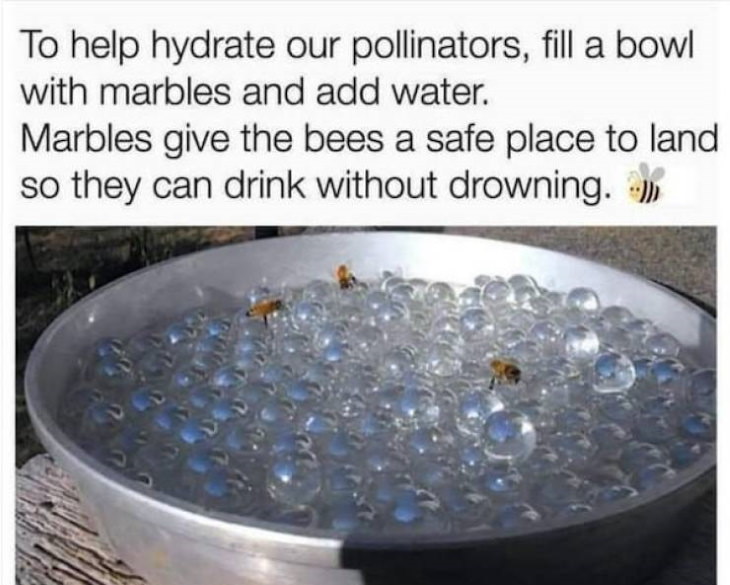
Household Tricks Helping bees
2. Use a fitted sheet at the beach to avoid getting sand on everything.

Household Tricks a fitted sheet at the beach
3. Attach a bread clip at the end of a tape roll to never worry about it ever again.

Household Tricks bread clip at the end of a tape
4. An easy way to prevent groceries from shuffling around in the trunk.
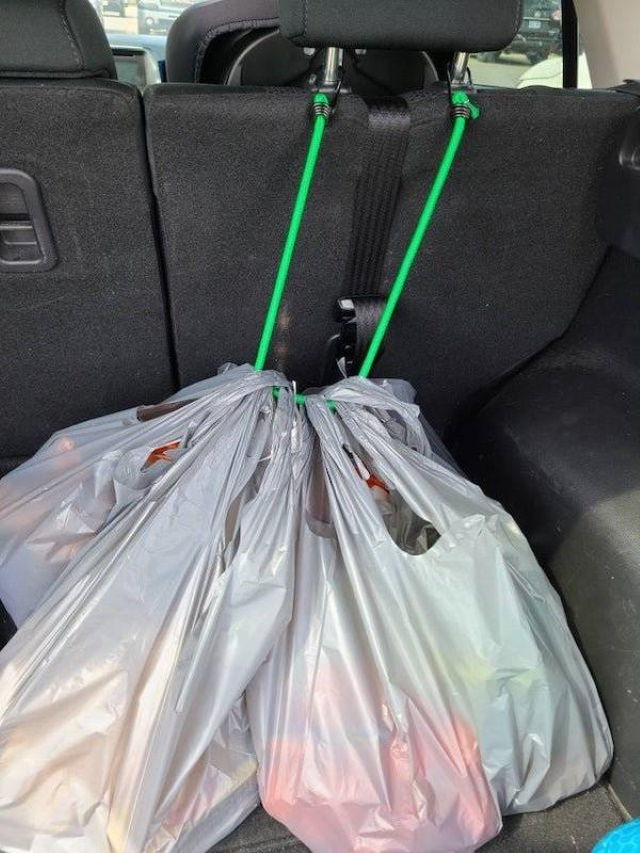
Household Tricks prevent groceries from shuffling around in the trunk
5. Sew a piece of microfiber on the (inside) end of your shirt so you can clean your glasses more easily.
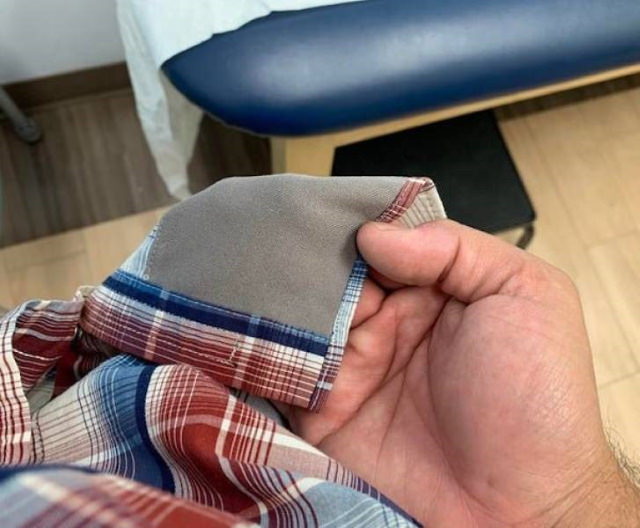
Household Tricks "Sew a piece of microfiber on the (inside) end of your shirt so you can clean your glasses more easily."
6. Carrying some superglue in your bag is a great idea, but it can leak and ruin the bag. Here's a great solution for that problem:
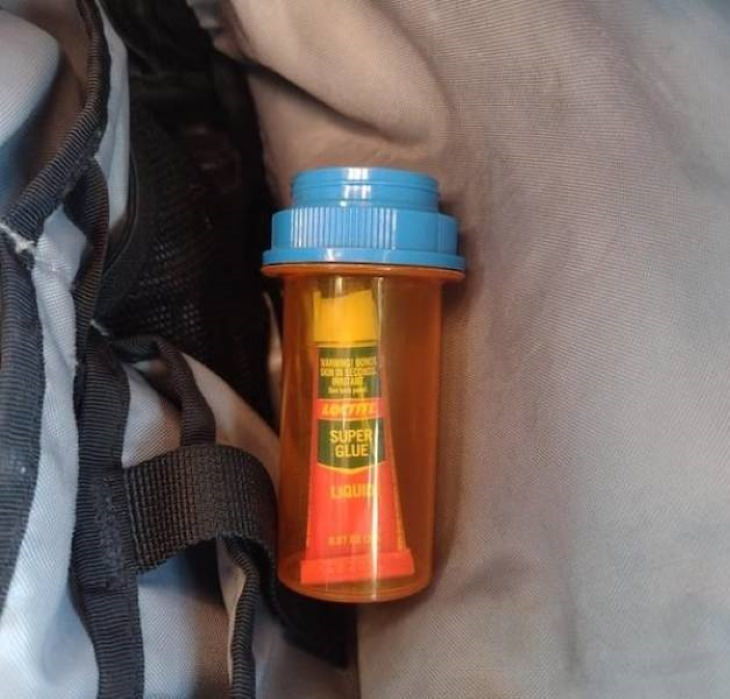
Household Tricks super glue
7. Use cardboard to cover houseplant potting soil if you’ve got babies or pets that like to dig in it
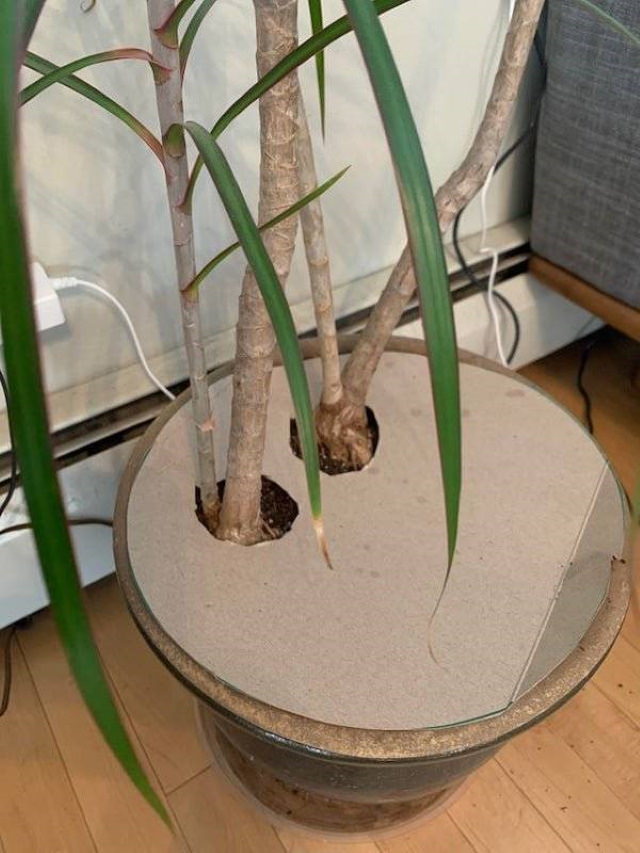
Household Tricks cardboard to cover houseplant

This is only for your information, kindly take the advice of your doctor for medicines, exercises and so on.     

https://gscrochetdesigns.blogspot.com. one can see my crochet creations  
https://gseasyrecipes.blogspot.com. feel free to view for easy, simple and healthy recipes    
https://kneereplacement-stickclub.blogspot.com. for info on knee replacement

Labels: , , , , , , , , , , , , , , , , ,

Wednesday, April 22, 2020

Helplines for people with disabilities abuzz with calls for food supplies, e-passes for caregivers, medicines

Aditya Sen, who handles a recently launched helpline to cater to people with disabilities (PwDs), was signing off after a busy day when his phone rang. It was past 8.30 pm. The number flashing on his mobile screen was familiar, of an NGO partner. On the other end was the frantic voice from a lady who informed that a single mother and her eight-year-old hearing-impaired daughter needed medicines and grocery urgently.

Wasting no time, he called up the woman, who picked up on the first ring. Scared about her daughter, she said, ‘Sir isko high fever ho raha hai aur thodi khaasi bhi hai’ (Sir, my daughter has high fever and has some cough too). Sen, a volunteer with Project Delhi, made a few calls and within an hour, the little girl was taken to a hospital for treatment. “We have ensured that the mother and daughter got their stock of groceries too!” read the account online. These a familiar refrain on helplines launched by civil society organisations, central and state governments as well as those teaming up with young non-disabled volunteers to take up the cause of PwDs amid the prevailing coronavirus pandemic and the consequent lockdown measures.


“Many PwDs are primarily struggling to get groceries, medicines,” explained disability rights activist Nipun Malhotra, who is also the co-founder of Project Delhi, which receives close to 30 calls and 20 text messages per day. He added that it becomes “difficult for PwDs” who have mobility issues and high support needs to step out for buying essentials.


Concurred Praveen Kumar G, social inclusion advisor, VSO International, who is visually-impaired, “For blind people in particular, tactile communication and navigation is inevitable, so many people tend to rely on another’s support for purchasing groceries and food essentials.”

Disability rights activist Anjlee Agarwal’s Samarthyam-run helpline ‘COVID-19 Action Collaborative’ is inundated with 140-170 calls/messages per day including through social media. “We have been receiving more calls for issues with e-passes for caregivers, dry ration and food supplies, medicines and some seeking help for regular check-ups at hospitals,” Agarwal, whose organisation’s helpline provides doorstep delivery of essential services with the help of 11 volunteers, told indianexpress.com.

From calls for food to everyday supplies, medicines, the need for blood transfusions and access to hospitals, the helplines have been abuzz. On March 26, the Department of Empowerment of Persons with Disabilities (GOI) issued Disability Inclusive Guidelines to secure the protection and safety of PwDs during this crisis.

Amarjit Singh Anand, president, Chaanan Association for Mentally Retarded Children (Regd), Jalandhar, Punjab told indianexpress.com that as a volunteer organisation, they received “leads” from the district administration of Jalandhar helpline. “All PwDs, widows and senior citizens are being provided services of medicines, kirana or any help they need,” he said, while mentioning that the government-run helpline has 28 non-disabled volunteers.


How do helplines work?

Anand explained that once a call is received on the helpline, it is forwarded to the district coordinator who deputes a volunteer who is close to the needy person. “They then buy the required essentials and deliver against payment as per directives given by our nodal officer and district programme officer,” he said.

However, given the rising numbers of the contagious disease and the issue of e-passes for volunteers, the district administration officials themselves have been rendering the services, stated Anand. He remarked, “The situation is grim and the administration does not want to risk leaving any further damage.”


“My team of eight is working from home and we reach out to the persons concerned through our partners across the country or the government agencies, whatever works in the area. Mostly, people call for ration, medicine, pension money announced by the government and caregiver passes. Also, for information on government orders issued during the lockdown,” commented Arman Ali, executive director, National Centre for Promotion of Employment for Disabled People (NCPEDP).
While Ali’s is not a designated helpline number, his colleague and he together receive about 10-15 calls each day pertaining to the Covid-19 crisis. Notably, caregivers, including family members, need passes to collect benefits like ration on behalf of PwDs, which is proving to be a challenge. “Amar (name changed) in Rajkot, (Gujarat) has been instructed to be present in person to receive his rations. Amar is a person with orthopaedic disability and is bedridden. The authorities have refused to hand over the rations to his sister although she stays with him,” claimed Ali. The guidelines issued by the Ministry of Health and Family Welfare state that “caregivers of PwDs should be allowed to reach PwDs by exempting them from restrictions during lockdown or providing passes in a simplified manner on priority”.

The guidelines for State/District authorities also suggest that “during quarantine, essential support services, personal assistance, and physical and communication accessibility should be ensured e.g. blind persons, persons with intellectual/ mental disability (psycho-social) are dependent on caregiver support. Similarly PwDs may seek assistance for rectification of fault in their wheelchair and other assistive devices.”

Meanwhile, the guidelines also call for 24X7 helpline numbers at the state-level to be set up exclusively for ‘divyangjan’ with facilities of sign language interpretation and video calling. 

However, Dr Alim Chandani, deaf activist and founder of Access Mantra Foundation asks, “Are the helplines accessible to deaf people?”

As per Dr Chandani, deaf people can’t make phone calls and most are not fluent in English or Hindi to write emails due to the lack of access to education in Indian Sign Language. However, a few state helplines, such as the Tamil Nadu government, are offering video calling and sign language interpretation facility. Dr Chandani mentioned, “We should have deaf individuals to lead the helplines once we have experts providing training to them. Direct communication with deaf is essential and much better.” He further said that National Association of the Deaf India should advocate for it.
“PwDs are present in all 29 states, not just the few that are taking proactive steps. The fundamental right to life and dignity cannot be dispensed with, even in a medical emergency. PwDs are not a homogeneous, distinct group, they are to be found in every strata of society and in every aspect of life and they need to be enabled during this pandemic,” asserted Ali.

Here is a list of helplines

The Ministry of Health and Family Welfare, Government of India’s common helpline numbers are 1075, 011-23978046, 9013151515
While one can access the government helplines here, many organisations and individuals have started with their own helplines.

New Delhi

Astha
For essential supplies as well as services like counselling.
Call
Rakesh – +91 995608-74098
Danish – +91 98914-14742

Project Delhi 
Providing groceries/medicines
For groceries, Call/WhatsApp – +91 7411167030
For medicines, Call/WhatsApp – +91 801033000
One of the co-founders of Project Delhi, disability rights activist Nipun Malhotra told indianexpress.com that “many PwDs struggling to get groceries, medicines primarily”, which is why there was a need for the helpline.
Samarthyam India
Executive Director – Anjlee Agarwal
Whats App: +91 9711190806
Call: +919810558321
Phone number – 01141019389
Email address – samarthyamindia@gmail.com

Viklang Sahara Samiti Delhi
Kapil Kumar Aggarwal
9811015733, 011-27915733
Address:- G-Block Basti Vikas Kender Mangol Puri Delhi-110083
Email : vssd1998@gmail.com

National Centre for Promotion of Employment for Disabled People (NCPEDP)
Arman Ali
Call: 73039 44839
ASL Foundation Trust
A-20 LSC Market Mangolpuri Delhi -83
Director – Preeti Gupta
Phone number – 01127911345
9818693445
Email- aslfoundationtrust@gmail.com

Bengaluru

Samarthanam Trust for the Disabled
For basic groceries and mask kits
Naveen – +91 94498-64786
Sunil – +91 94498-64691

Big Bazaar and KickStart Cabs are partnering to deliver groceries and vegetables to people’s homes. WhatsApp your grocery list to +91 8105600445.

Mumbai

Project Mumbai
Free delivery of groceries/packed food/medicines.
For groceries/packed food:
Call – +91-98795 08404. WhatsApp – +91 96533 30712
For medicines
Call – +91 9992999929
Disabled people in Mumbai who need dialysis can call Ezy Mov at +91 90290 90880
Samavisht Foundation is also providing this service in partnership with Ezy Mov.

Chennai

list of helplines for persons with disability, PwDs, indianexpress.com, lockdown assistance, lockdown, right of persons with disability, disabled helplines amind covid-19, coronavirus, lockdown, disability, disabled people, Tamil Nadu Government helpline number. The Tamil Nadu government has set up two helplines for disabled people to call with queries and requests for supplies.
Dial toll free at 1800-425-0111.
For WhatsApp and Video Calling: +91 97007-99993. Sign language interpretation facility available.
Free CAB service – Chennai
call: 95000 67082

Kolkata

Sruti Disability Rights Centre 
For online/telephonic counselling services for disabled people and caregivers – Email sruti.darc@gmail.com.

National Mental Health Helpline

080 4611 0007

Punjab

Deaf and hard of hearing people – +91-98881-76357

Youth4Jobs Karuna Helpline for Covid-19 for PwDs in cities

Location Person Mobile timings
Trichy Swathi 9347412609 5pm-7pm
Madurai Rama 9347412613 8am-10am
Ahmednagar Vijay Satdive 7350640303 5pm-7pm
Dehradun Nidhi Rana 8448764159 8pm-10pm
Vijayawada Sayed Saleem 8712721500 5pm-7pm
Tirupati Sikandar 7032777485 5pm-7pm
Warangal Sreevani 7032777497 8am-10am
Guwahati Chayanika 7399069663 8am-10am
Ranchi Siraj Nag 7894300173 8am-10am
Patna Sasanko Roy 7797263537 8am-10am
Bhubaneswar Laxmidhar Jena 8759867477 8am-10am


This is only for your information, kindly take the advice of your doctor for medicines, exercises and so on.     

https://gscrochetdesigns.blogspot.com. one can see my crochet creations  
https://gseasyrecipes.blogspot.com. feel free to view for easy, simple and healthy recipes    
https://kneereplacement-stickclub.blogspot.com. for info on knee replacement

Labels: , , , , , , ,

Sunday, April 19, 2020

Disinfecting Covid-19: B Tech student’s new portable UV racket provides solution

Anant Kumar Rajput, a B Tech mechanical engineering student of Lovely Professional University has developed a portable UV racket that can disinfect almost everything from groceries to currency notes to vehicles.

All one needs to do is wave the racket 4 -5 inches from the object for 60 seconds to disinfect, said project officer and guide Mandeep Singh

LPU has filed a patent for this product and is now looking to tie up with industrial partners for commercialising it.


The racket can run on electricity or via an inbuilt rechargeable battery

LPU researchers have over the last few weeks developed several products like contactless waste collection smart dustbin, Kawach- an IoT device to promote safe social distancing and a Covid19 dashboard to help people track the spread of the deadly virus across the globe.


This is only for your information, kindly take the advice of your doctor for medicines, exercises and so on.     

https://gscrochetdesigns.blogspot.com. one can see my crochet creations  
https://gseasyrecipes.blogspot.com. feel free to view for easy, simple and healthy recipes    
https://kneereplacement-stickclub.blogspot.com. for info on knee replacement

Labels: , , , , , , , , , , , ,

Wednesday, April 15, 2020

Will Cooking Food Kill Coronavirus? What to Know About Food Preparation and COVID-19

By now, you've probably got your (stressful) pandemic grocery shopping routine down: You maintain social distancing, grab only what you and your family need, hit your hands with a dollop of hand sanitizer on the way out—and then wash them again as soon as you get home, and once more after putting all of those groceries away.

But what about when it comes time to finally eat all of those goods you picked up at the store—namely those fresh fruits, veggies, and other ready-to-eat or cook products. Are they safe to consume as-is—and does subjecting the new coronavirus to heat via cooking effectively kill it before it can enter your system?

Can the coronavirus exist on food?
It is important to keep in mind that as of right now, "there is no evidence to support transmission of COVID-19 associated with food," according to the Centers for Disease Control and Prevention. That's primarily because SARS-CoV-2 primarily causes respiratory illness (unlike other viruses, like norovirus and hepatitis, which cause gastrointestinal illnesses). "Coronaviruses are generally thought to be spread from person-to-person through respiratory droplets," the CDC says. Less commonly, a person can get COVID-19 by touching a surface or object contaminated with the virus, then touching their own mouth, nose or eyes.

The biggest concern regarding coronavirus and food safety, per the CDC, depends more on general hygiene than contaminated food—the organization recommends washing your hands with soap and water for 20 seconds before preparing or eating food, as well as doing so at other times throughout the day like after you sneeze or use the bathroom.

In general though, the SARS-CoV-2 is not thought to be a risk on food surfaces. "In general, because of poor survivability of these coronaviruses on surfaces, there is likely very low risk of spread from food products or packaging that are shipped over a period of days or weeks at ambient, refrigerated, or frozen temperatures," says the CDC.

That being said, the organization still recommends implementing the same food safety measures you should always follow, like keeping raw meat separate from other goods, always refrigerating perishable items, and cooking meat to the right temperatures (more on that later). And when it comes to fruits and veggies, make sure to wash them off ASAP before eating—only water is sufficient; there's no evidence that any other techniques (like using a combination of vinegar and water) are any more effective. And please, never wash anything you'll consume with any cleaning products of any sort.

Does cooking food kill coronavirus?

Again, while experts maintain that the new coronavirus is not a foodborne pathogen, it's still a good idea to cook food to the proper internal temperatures—and doing so would also likely reduce any amount of virus on the food, says Sheldon Campbell, MD, PhD, a Yale Medicine pathologist who is the associate director of Yale Medicine’s Clinical Microbiology Lab. There is, of course, on exception to that: “[As long as] the food isn’t contaminated by handling after it cools," he adds.

Urvish Patel, MPH, medical advisor for eMediHealth, explains that many viruses in general are heat-sensitive, and coronaviruses in particular tend to survive for shorter periods of time at higher temperatures and higher levels of humidity than in cooler, dryer environments. Of course, because SARS-CoV-2 is so new, there's no current data or studies to establish a temperature-based cutoff for inactivation, but that it will likely act very similarly to other coronaviruses.

Patel also adds that, because of this, "all measures should be taken care of considering standard guidelines for food cooking." According to the CDC, those proper temperature guidelines for cooking—which not only prevent the growth of viruses but also bacteria on foods—include internal temperatures of:

    145°F for whole cuts of beef, pork, veal, and lamb
    160°F for ground meats, such as beef and pork
    165°F for all poultry, including ground chicken and turkey
    165°F for leftovers and casseroles
    145°F for fresh ham (raw)
    145°F for finfish or cook until flesh is opaque

Another important point: Just because you've previously cooked food doesn't mean you can stop worrying about proper food safety—Patel says it's imperative to refrigerate food within two hours of preparation (that gets cut down to one hour if the temperature outside is above 90 degrees Fahrenheit). And overall, keep this temperature range in mind: 40 degrees Fahrenheit to 140 degrees Fahrenheit—that's considered the "danger zone" in which food—cooked or uncooked—is at "an unsafe temperature and promotes the growth of organisms."

The information in this story is accurate as of press time. However, as the situation surrounding COVID-19 continues to evolve, it's possible that some data have changed since publication. While Health is trying to keep our stories as up-to-date as possible, we also encourage readers to stay informed on news and recommendations for their own communities by using the CDC, WHO, and their local public health department as resources.

Labels: , , , , , ,