Thursday, August 17, 2023

8 Things You Use Everyday That Can Damage Your Health

While you might take extra care to double clean items that you use regularly, there are certain chemicals that you simply cannot avoid. How come? Well, it’s because they’re ingrained in many of the everyday products that you never think twice about.

1. Store receipts
 
Though it’s second nature to crumple up your receipt and toss it in your wallet or pocket, Will Bulsiewicz, MD, MSCI, board-certified gastroenterologist, warns against touching this proof of purchase. Many receipts are printed on thermal paper, which means that they’re covered in a thin coating of powder that develops the dye needed for the type. He says that “this powder contains BPA, an endocrine-disrupting chemical which has been linked to breast cancer, diabetes, and hormone abnormalities in children.” 
 
He goes on to say that many studies have shown that BPA can be absorbed through the skin, making it important to limit your interaction with this chemical. “If you don’t need a receipt, ask the cashier not to print if it is possible. If you do need it, ask for it to be placed in the bag; don’t place the receipt in a bag with food items, particularly items that are consumed raw. Finally be sure you wash your hands well after handling receipts,” he advises
2. Bug Sprays and Repellents  
 
Though they might prevent bug bites, infectious disease specialist and clinical assistant professor Alexea M. Gaffney-Adams, MD, says that some of the ingredients found in bug sprays may raise an eyebrow, specifically, “organophosphates,” found in herbicides, nerve agents, chemical agents, and pesticides. They’re also known as plasticizers, which are about as scary as it sounds. 
 
Gaffney-Adams explains that “these compounds are readily absorbed through the skin and inhaled. They poison insects – and humans – by disrupting neurotransmitters necessary for proper body functions. They can affect breathing and muscle function and can cause cardiovascular collapse and death in large amounts.” Prolonged exposure to these chemicals has been linked to lung and heart disease, delayed reflexes, and cancers.

3. Laundry Detergent 
 8 Things You Use Everyday That Can Damage Your Health
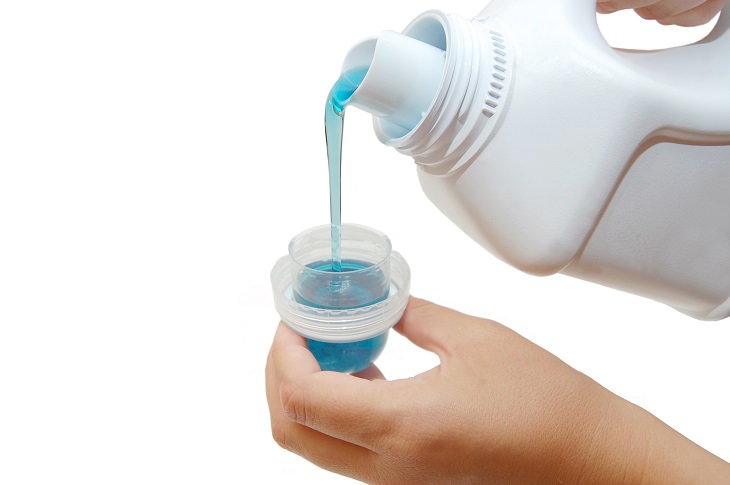
According to family physician and general practitioner Maskfika N. Alam, MD, you might be surprised to know that washing your clothes can actually be dangerous. In addition to being full of harsh chemicals, “many detergents contain phenol, which can be easily absorbed through your skin and can cause renal and hepatic dysfunction,” she says. 
 
When you’re in doubt, go with an organic brand of laundry detergent, especially if you have eczema, allergies, or sensitive skin. 
 
4. Fire Retardants 
  Meant to keep us safe, fire retardants have actually been linked to infertility, cancer, and other disorders, according to Dr. Bulsiewicz. “They are used in most infant clothing and can be found in foam cushions in sofas and chairs, as well as children’s car seats, nursing pillows, and other upholstered products,” he says. 
 
To avoid coming into contact with fire retardants, make sure that you buy only natural fiber clothing, particularly for children and infants. Furthermore, if you’re looking to upgrade your living room, Bulsiewicz recommends only opting for newer furniture products that contain foam, as most furniture made in America after 2005 does not contain fire retardants.  
 
5. Non-Stick Coated Cookware
8 Things You Use Everyday That Can Damage Your Health
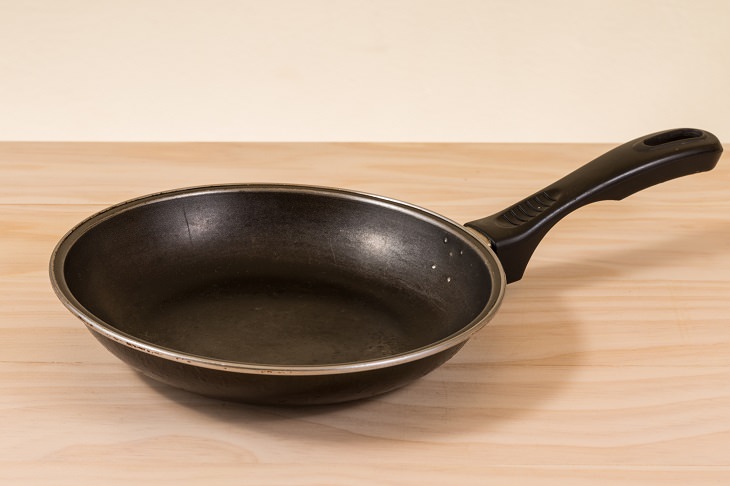
If you need to whip up some miracle recipes, you should opt for non-stick coated cookware pans or casserole dishes. However, Adam S. Gropper, MD, explains that these non-stick coatings can melt when they’re overheated, revealing aluminum that’s super unhealthy when digested. “Ingested aluminum has been linked to Alzheimer’s disease and several cancers. If you see flaking or gauging in your coated cookware, it’s time to replace it,” he advises. 
 
6. Deodorant/Antiperspirant  
Though they are meant to keep you feeling fresh, Dr. Gropper says many formulas utilize aluminum to clot your pores and prevent excessive sweating. Since absorbing aluminum is linked to Alzheimer’s diseases and both prostate and breast cancers, Dr. Gropper recommends trying out natural deodorants instead. 
 
7. Air Fresheners
They might get rid of the stench from the bathroom, but inhaling these chemicals isn’t safe for anyone in your family. The artificial fragrances that are added to air fresheners can irritate your eyes and cause inflammation. Dr. Alam says that “chronic inhalation of phthalates can cause asthma and can damage your lungs.” 
 
 8. Hand Sanitizers and Antibacterial Soap 
 You might think that these products are helping you stay healthy, but they can do more harm than good in the long run. The compound triclosan is found in more than 75% of hand sanitizers and antibacterial soaps, as well as in linens, underwear, gym equipment, and plastic products. “This is another endocrine buster resulting in reproductive toxicity through alterations in hormone regulation according to the FDA,” Dr. Gaffney-Adams explains. 
 
Tricoslan has been linked to allergies, asthma, eczema, and thyroid disease. Furthermore, it’s also a suspected carcinogen, and when you overuse these products, you might build an antibiotic resistance to bacteria, making infections more difficult to treat.

This is only for your information, kindly take the advice of your doctor for medicines, exercises and so on.   

https://gscrochetdesigns.blogspot.com. one can see my crochet creations  
https://gseasyrecipes.blogspot.com. feel free to view for easy, simple and healthy recipes    
https://kneereplacement-stickclub.blogspot.com. for info on knee replacement
https://cancersupportindia.blogspot.com  for infor on cancer and health related topics
https://GSiyers home remedies.blogspot.com   is the latest addition to my blogs. I'm going to add posts there, do give me your valuable feed back on my blogs. Thanks a lot, take care, be healthy and be happy.


Labels: , , , , , , , , , , ,

Wednesday, July 08, 2020

11 Health and Nutrition Myths Debunked in the 2010's


There are many reasons why myths and misconceptions occur. Scientific studies get misconstrued, misleading marketing ploys are created, and the result is a great number of confusing information about even the most serious and crucial of subjects - health and medicine. Luckily, a number of scientists and media outlets alike have made it their mission to clear some of the most dangerous and misleading health myths. To make a fresh and healthier start in the new decade, we shall discuss 11 of such myths in this article, all of which have been debunked during the 2010s.

1. Bottled Water Is Safer Than Tap Water
Staying hydrated is one of the best things you can do to maintain your health, but you have to remember that your body cannot distinguish between tap and bottled water, as both are equally hydrating. Of course, you have to make sure that the water in your tap is safe to use in cooking, and there is a wide range of filtering systems that assure that, even if your municipality isn't providing proper filtration.
However, the fact that the water you buy in bottles is somehow superior is a myth, with studies we covered in a previous article even suggesting that the opposite may actually be true since bottled water is often polluted with microplastics and harmful bacteria. Needless to say, bottled water also creates a great deal of plastic waste and is ridiculously overpriced, with an average American typically paying USD 1,400 annually on bottled water.
2. Using Antiperspirant Causes Cancer
There was a great deal of scaremongering in the past decade related to the use of antiperspirants, with some sources claiming that it can cause cancer, particularly breast cancer, despite the fact that there is no scientific evidence to prove that claim.
In fact, antiperspirants, unlike deodorants, are considered over-the-counter medications, at least in the United States, because they are designed to make your sweat glands stop producing sweat, and not simply masking odors. The FDA places strict regulations on what ingredients and quantities of such are permitted in antiperspirants, and many metals, such as mercury, a possible carcinogen, have been banned in the production of antiperspirants.
3. Carbs, Gluten or Fat Make You Gain Weight
It seems like the ingredient that is blamed for causing weight gain changes every year or so, with articles from the early 2010's claiming that fats and cholesterol are the source of all evil, but later in the decade, carbs and gluten have become the most demonized nutrients.
The truth is that neither of these ingredients is bad unless you have a condition that makes it bad for you, like Celiac-disease causing gluten intolerance. In fact, we need most of these nutrients in our diet to stay healthy, and it's the overconsumption of certain foods that can contribute to weight gain.
 
4. Brain Cells Can't Regrow
This myth maintains that every person is born with all of the brain cells they will ever have, and once some of them die, you will never be able to regrow them. This myth is fueled by early findings in patients with brain lesions and neurodegenerative diseases, such as Alzheimer's, with patients not being able to regain memory, motor, and cognitive functions.
It wasn't until the past few years that this belief had slowly started to sound suspicious, as scientists started to note that several parts of our brains continue to grow and develop until our 20's, which would be impossible without the production of new brain cells - a process called neurogenesis. But the most convincing finding of new nerve cells being formed came in 2019 when scientists actually found that even the brains of elderly individuals and Alzheimer's patients continued growing new cells.
5. Activated Charcoal is the Key to Health and Beauty
This myth started in 2014 when actress Gwyneth Paltrow proclaimed that activated charcoal juices are a digestive cleanser. In just a few years, this snowballed into a trend, with grocery and coffee shops selling charcoal drinks, activated charcoal being added to desserts and even toothpaste. Supposedly, the charcoal was supposed to improve your skin, increase your energy levels, make your teeth whiter and improve digestion.
Unfortunately, charcoal can do none of that, although it can have detoxifying effects in people suffering from serious poisoning or drug overdose, which is exactly how it's used in medicine. Charcoal does that by binding with the poison molecules, making them impossible for your body to absorb.
The problem is that charcoal binds to all the nutrients in your stomach, not only the poison, which means that it will also deprive you of the vitamins and other nutrients you ate that day, rendering that juice useless. It's could even cause vitamin and nutrient deficiencies if consumed regularly. Apart from that, charcoal can also bind to the medications you take orally and decrease their effectiveness.

6. You Need a Detox
Speaking of detoxifying, another popular myth of the past decade claims that you have toxins building up in your body that require you to go on a detox diet, a juice cleanse or whatnot to get rid of them. With the exception of the very few people suffering from food or other types of poisoning, no one actually has toxins building up in the body, or else you'd be in the hospital, explained Edzard Ernst, emeritus professor of complementary medicine at Exeter University in a 2014 interview with the Guardian.
In fact, a number of our organs, such as the liver, skin, even lungs work day and night to keep your body toxin-free. Of course, this means that by keeping these organs healthy, you are essentially boosting your body's detoxifying abilities.
7. Sitting Is As Dangerous As Smoking
As catchy as this myth may sound, the dangers of a sedentary lifestyle can't possibly be compared in magnitude to the pervasive effects of smoking on the entire human body, and this is a scientific fact, as a whole international team of scientists compared and evaluated the effects of sitting and smoking on long-term health in 2018. 

The results were published in the American Journal of Public Health, and Canadian, American and Australian researchers were involved in the study. The research concluded that sitting for more than 8 hours a day increased the risk of chronic diseases (cardiovascular issues and some cancers) and premature death by 10-20%.

Smoking, on the other hand, increased the risk of premature death by 180%, and more than doubled the risks of developing cardiovascular issues and a number of cancers. Needless to say, the health risks of sitting pale in comparison to those of smoking.


8. Cracking Your Knuckles and Joints Causes Arthritis
Contrary to popular belief, knuckle cracking does not contribute to arthritis development. According to Harvard Health, the "popping" a cracked knuckle makes is caused by tiny nitrogen bubbles bursting in the fluid that helps lubricate your joints called the synovial fluid, and should not be cause for concern.
Note, however, that knuckle cracking should be painless, and if you experience pain while stretching or cracking any of your joints, it can point to inflammation. But even if the joint cracking is painless, medical professionals recommend not to overdo it, as it can potentially cause reduced grip strength.


9. We Only Use 10% of Our Brains
This myth is nearly as old as neuroscience itself, as the first mentions of the 10% brain myth date back to the 1890's. The concept was popularized in 1936, when American writer and broadcaster Lowell Thomas announced in Dale Carnegie's How to Win Friends and Influence People the following, "Professor William James of Harvard used to say that the average man develops only ten percent of his latent mental ability".
More than a decade later, the myth still persists, although neuroimaging studies, namely fMRI studies that have become increasingly widespread in the past decade, have time and time debunked this myth. As a matter of fact, the majority of our brain is active all the time, which is one of the major problems when researchers study the brain since it's often difficult to isolate the brain areas that are responsible for a specific behavior.
10. A Piece of Gum Takes 7 Years To Digest If You Swallow It
Chewing gum can be blamed for many things, such as a high sugar content or digestive issues, but what it cannot do is stay in your stomach for 7 years. The base of chewing gum is made of plant-based materials that are indigestible for humans, and like any other things you can't digest, chewing gum just passes through your body.
Ingesting chewing gum is harmless in the vast majority of cases, and it only becomes a health hazard when it's consumed while stuck with other inedible materials, like metal objects, hair, etc., so keep chewing gum away from children.


11. Your Body Loses 50% of Heat Through the Head
Your body doesn't lose 50% of its heat through your head, but it doesn't mean that you should stop wearing hats in the winter. This myth likely comes from military experiments in the 1950s, with a US Army Field Manual even listing a 40-50% range. However, this question has been revisited in the 21st century, with recent research from the BMJ listing a much lower percentage, only about 7% of body heat, which is roughly proportional to the area of the body exposed when you're not wearing a hat.
So, it turns out that our head is no more special than any other body part in terms of its ability to lose heat, we just happen to wear hats a lot less than any other item of clothing.

This is only for your information, kindly take the advice of your doctor for medicines, exercises and so on.     

https://gscrochetdesigns.blogspot.com. one can see my crochet creations  
https://gseasyrecipes.blogspot.com. feel free to view for easy, simple and healthy recipes    
https://kneereplacement-stickclub.blogspot.com. for info on knee replacemen


Labels: , , , , , , , , , , , , , , , , , ,