Sunday, September 21, 2025

Love pomegranates? You may be tossing healthiest part

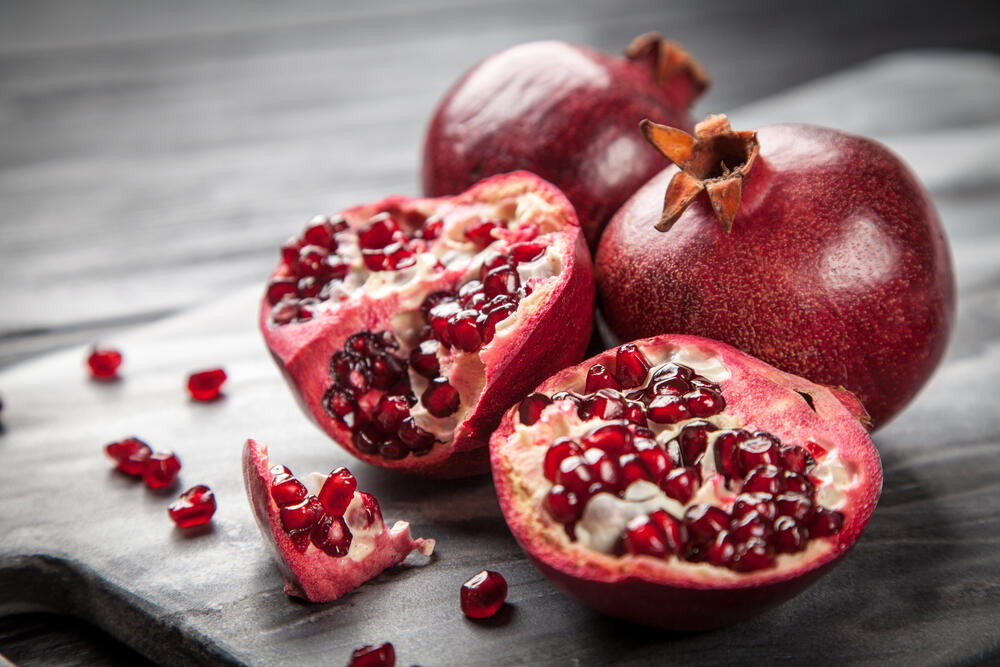
For most of us, pomegranates are a once-a-year treat for Rosh Hashanah. But research suggests they deserve a permanent spot in our diets. 
 
Among their many health benefits: lowering blood pressure, strengthening skin, and protecting the heart. Surprisingly, the parts we usually discard, the peel and the white seeds, contain the highest concentration of nutrients.
 רימון רימונים 
 Pomegranate has been part of human culture for thousands of years, symbolizing abundance, fertility, and new beginnings. Each year, it returns to center stage on Rosh Hashanah tables, wrapped in vibrant red and bursting with glistening seeds that evoke tradition. But beyond its symbolic appeal lies a trove of nutritional and medicinal properties.
 
In recent years, the pomegranate has become one of the most extensively studied fruits, earning a place among other so-called superfoods as science continues to uncover its powerful qualities.  
 
What’s especially surprising is that the parts pushed aside, the peel and the white seeds, hold the fruit’s most potent health benefits.

In ancient cultures like Persia and India, pomegranate peel was widely used to treat intestinal illnesses, infections, and inflammation. 


Modern research backs many of these traditional practices. Pomegranate peel is particularly rich in polyphenols and tannins, powerful antioxidants found in much higher concentrations than in the seeds. 
These compounds have been shown to inhibit the spread of cancer cells in lab studies, reduce inflammation, and fight bacterial growth. 

The supplement and cosmetics industries have already taken notice of the results, and pomegranate peel extract now appears in capsules, creams, and facial masks designed to protect the skin and combat oxidative damage.

If the peel is packed with antioxidants, then the hard white seeds inside the fruit contain a rare oil with equally impressive benefits: pomegranate seed oil. This oil is rich in punicic acid, a unique fatty acid that has been the subject of numerous studies in recent years. 

Findings suggest it helps reduce LDL ("bad") cholesterol, improves vascular elasticity, and protects heart muscle.

In dermatology, pomegranate seed oil is one of the most sought-after ingredients thanks to its ability to slow aging and defend against UV radiation. 

The seeds themselves also provide dietary fiber that supports healthy digestion and nourishes the gut microbiome, the community of beneficial bacteria in the intestines. So even the part we often find bothersome in our teeth turns out to be a nutritional powerhouse.

The benefits of pomegranate juice

But it doesn’t end with the peel and seeds. A growing body of scientific evidence highlights the powerful health benefits of pomegranate juice and the whole fruit.  
 
Clinical studies have shown that drinking pomegranate juice can help lower blood pressure and slow the progression of atherosclerosis, a major risk factor for cardiovascular disease.
 
Pomegranate’s active compounds, especially ellagic acids, are potent antioxidants that may also protect brain cells. Preliminary lab studies have indicated a positive impact on memory and cognitive function.
 
The fruit also helps reduce chronic inflammation, boosts immune function, and promotes a balanced gut microbiome.
 
Early clinical findings suggest that pomegranate compounds break down in the gut into so-called “anti-aging metabolites,” particularly urolithin A, which may enhance mitochondrial function (the cell’s energy powerhouse) and support muscle health.
 
Even the skin benefits: topical use of pomegranate juice or seed oil has been shown to improve elasticity, protect against UV damage, and help maintain a youthful appearance. It’s no wonder global cosmetics companies have embraced pomegranate seed oil, incorporating it into high-end serums and therapeutic creams.
 
In short, the pomegranate delivers a broad range of health advantages, from cardiovascular support to brain health, digestion, skin care, and immune balance.
 
For those wondering how to enjoy the benefits in daily life, simple steps are enough: brew tea from dried peel for an antioxidant boost, drizzle a teaspoon of seed oil over a salad or smoothie or generously sprinkle fresh seeds on a green salad. 
 
These three easy uses show how a fruit that starts as a holiday symbol can become part of a mindful, healthy routine.
  
 
This is only for your information, kindly take the advice of your doctor for medicines, exercises and so on.   

https://gscrochetdesigns.blogspot.com. one can see my crochet creations  
https://gseasyrecipes.blogspot.com. feel free to view for easy, simple and healthy recipes    
https://kneereplacement-stickclub.blogspot.com. for info on knee replacement
https://GSiyers home remedies.blogspot.com   is the latest addition to my blogs

Labels: , , , , , , , ,

Sunday, August 01, 2021

Swimming gives your brain a boost – but scientists don’t know yet why it’s better than other aerobic activities

It’s no secret that aerobic exercise can help stave off some of the ravages of aging. But a growing body of research suggests that swimming might provide a unique boost to brain health.

Regular swimming has been shown to improve memory, cognitive function, immune response and mood. Swimming may also help repair damage from stress and forge new neural connections in the brain.

But scientists are still trying to unravel how and why swimming, in particular, produces these brain-enhancing effects.

As a neurobiologist trained in brain physiology, a fitness enthusiast and a mom, I spend hours at the local pool during the summer. It’s not unusual to see children gleefully splashing and swimming while their parents sunbathe at a distance – and I’ve been one of those parents observing from the poolside plenty of times. But if more adults recognized the cognitive and mental health benefits of swimming, they might be more inclined to jump in the pool alongside their kids.

New and improved brain cells and connections

Until the 1960s, scientists believed that the number of neurons and synaptic connections in the human brain were finite and that, once damaged, these brain cells could not be replaced. But that idea was debunked as researchers began to see ample evidence for the birth of neurons, or neurogenesis, in adult brains of humans and other animals.

Now, there is clear evidence that aerobic exercise can contribute to neurogenesis and play a key role in helping to reverse or repair damage to neurons and their connections in both mammals and fish.

Research shows that one of the key ways these changes occur in response to exercise is through increased levels of a protein called brain-derived neurotrophic factor. The neural plasticity, or ability of the brain to change, that this protein stimulates has been shown to boost cognitive function, including learning and memory.

Smiling child in swimming pool

Studies in people have found a strong relationship between concentrations of brain-derived neurotrophic factor circulating in the brain and an increase in the size of the hippocampus, the brain region responsible for learning and memory. Increased levels of brain-derived neurotrophic factor have also been shown to sharpen cognitive performance and to help reduce anxiety and depression. In contrast, researchers have observed mood disorders in patients with lower concentrations of brain-derived neurotrophic factor.

Aerobic exercise also promotes the release of specific chemical messengers called neurotransmitters. One of these is serotonin, which – when present at increased levels – is known to reduce depression and anxiety and improve mood.

In studies in fish, scientists have observed changes in genes responsible for increasing brain-derived neurotrophic factor levels as well as enhanced development of the dendritic spines – protrusions on the dendrites, or elongated portions of nerve cells – after eight weeks of exercise compared with controls. This complements studies in mammals where brain-derived neurotrophic factor is known to increase neuronal spine density. These changes have been shown to contribute to improved memory, mood and enhanced cognition in mammals. The greater spine density helps neurons build new connections and send more signals to other nerve cells. With the repetition of signals, connections can become stronger.

But what’s special about swimming?

Researchers don’t yet know what swimming’s secret sauce might be. But they’re getting closer to understanding it.

Swimming has long been recognized for its cardiovascular benefits. Because swimming involves all of the major muscle groups, the heart has to work hard, which increases blood flow throughout the body. This leads to the creation of new blood vessels, a process called angiogenesis. The greater blood flow can also lead to a large release of endorphins – hormones that act as a natural pain reducer throughout the body. This surge brings about the sense of euphoria that often follows exercise.

Most of the research to understand how swimming affects the brain has been done in rats. Rats are a good lab model because of their genetic and anatomic similarity to humans.

In one study in rats, swimming was shown to stimulate brain pathways that suppress inflammation in the hippocampus and inhibit apoptosis, or cell death. The study also showed that swimming can help support neuron survival and reduce the cognitive impacts of aging. Although researchers do not yet have a way to visualize apoptosis and neuronal survival in people, they do observe similar cognitive outcomes.

One of the more enticing questions is how, specifically, swimming enhances short- and long-term memory. To pinpoint how long the beneficial effects may last, researchers trained rats to swim for 60 minutes daily for five days per week. The team then tested the rats’ memory by having them swim through a radial arm water maze containing six arms, including one with a hidden platform.

Rats got six attempts to swim freely and find the hidden platform. After just seven days of swim training, researchers saw improvements in both short- and long-term memories, based on a reduction in the errors rats made each day. The researchers suggested that this boost in cognitive function could provide a basis for using swimming as a way to repair learning and memory damage caused by neuropsychiatric diseases in humans.

Although the leap from studies in rats to humans is substantial, research in people is producing similar results that suggest a clear cognitive benefit from swimming across all ages. For instance, in one study looking at the impact of swimming on mental acuity in the elderly, researchers concluded that swimmers had improved mental speed and attention compared with nonswimmers. However, this study is limited in its research design, since participants were not randomized and thus those who were swimmers prior to the study may have had an unfair edge.

Another study compared cognition between land-based athletes and swimmers in the young adult age range. While water immersion itself did not make a difference, the researchers found that 20 minutes of moderate-intensity breaststroke swimming improved cognitive function in both groups.

Kids get a boost from swimming too

The brain-enhancing benefits from swimming appear to also boost learning in children.

Another research group recently looked at the link between physical activity and how children learn new vocabulary words. Researchers taught children age 6-12 the names of unfamiliar objects. Then they tested their accuracy at recognizing those words after doing three activities: coloring (resting activity), swimming (aerobic activity) and a CrossFit-like exercise (anaerobic activity) for three minutes.

They found that children’s accuracy was much higher for words learned following swimming compared with coloring and CrossFit, which resulted in the same level of recall. This shows a clear cognitive benefit from swimming versus anaerobic exercise, though the study does not compare swimming with other aerobic exercises. These findings imply that swimming for even short periods of time is highly beneficial to young, developing brains.

The details of the time or laps required, the style of swim and what cognitive adaptations and pathways are activated by swimming are still being worked out. But neuroscientists are getting much closer to putting all the clues together.

For centuries, people have been in search of a fountain of youth. Swimming just might be the closest we can get.

This is only for your information, kindly take the advice of your doctor for medicines, exercises and so on.   

https://gscrochetdesigns.blogspot.com. one can see my crochet creations  
https://gseasyrecipes.blogspot.com. feel free to view for easy, simple and healthy recipes    
https://kneereplacement-stickclub.blogspot.com. for info on knee replacement


Labels: , , , , , , , ,

Wednesday, July 08, 2020

11 Health and Nutrition Myths Debunked in the 2010's


There are many reasons why myths and misconceptions occur. Scientific studies get misconstrued, misleading marketing ploys are created, and the result is a great number of confusing information about even the most serious and crucial of subjects - health and medicine. Luckily, a number of scientists and media outlets alike have made it their mission to clear some of the most dangerous and misleading health myths. To make a fresh and healthier start in the new decade, we shall discuss 11 of such myths in this article, all of which have been debunked during the 2010s.

1. Bottled Water Is Safer Than Tap Water
Staying hydrated is one of the best things you can do to maintain your health, but you have to remember that your body cannot distinguish between tap and bottled water, as both are equally hydrating. Of course, you have to make sure that the water in your tap is safe to use in cooking, and there is a wide range of filtering systems that assure that, even if your municipality isn't providing proper filtration.
However, the fact that the water you buy in bottles is somehow superior is a myth, with studies we covered in a previous article even suggesting that the opposite may actually be true since bottled water is often polluted with microplastics and harmful bacteria. Needless to say, bottled water also creates a great deal of plastic waste and is ridiculously overpriced, with an average American typically paying USD 1,400 annually on bottled water.
2. Using Antiperspirant Causes Cancer
There was a great deal of scaremongering in the past decade related to the use of antiperspirants, with some sources claiming that it can cause cancer, particularly breast cancer, despite the fact that there is no scientific evidence to prove that claim.
In fact, antiperspirants, unlike deodorants, are considered over-the-counter medications, at least in the United States, because they are designed to make your sweat glands stop producing sweat, and not simply masking odors. The FDA places strict regulations on what ingredients and quantities of such are permitted in antiperspirants, and many metals, such as mercury, a possible carcinogen, have been banned in the production of antiperspirants.
3. Carbs, Gluten or Fat Make You Gain Weight
It seems like the ingredient that is blamed for causing weight gain changes every year or so, with articles from the early 2010's claiming that fats and cholesterol are the source of all evil, but later in the decade, carbs and gluten have become the most demonized nutrients.
The truth is that neither of these ingredients is bad unless you have a condition that makes it bad for you, like Celiac-disease causing gluten intolerance. In fact, we need most of these nutrients in our diet to stay healthy, and it's the overconsumption of certain foods that can contribute to weight gain.
 
4. Brain Cells Can't Regrow
This myth maintains that every person is born with all of the brain cells they will ever have, and once some of them die, you will never be able to regrow them. This myth is fueled by early findings in patients with brain lesions and neurodegenerative diseases, such as Alzheimer's, with patients not being able to regain memory, motor, and cognitive functions.
It wasn't until the past few years that this belief had slowly started to sound suspicious, as scientists started to note that several parts of our brains continue to grow and develop until our 20's, which would be impossible without the production of new brain cells - a process called neurogenesis. But the most convincing finding of new nerve cells being formed came in 2019 when scientists actually found that even the brains of elderly individuals and Alzheimer's patients continued growing new cells.
5. Activated Charcoal is the Key to Health and Beauty
This myth started in 2014 when actress Gwyneth Paltrow proclaimed that activated charcoal juices are a digestive cleanser. In just a few years, this snowballed into a trend, with grocery and coffee shops selling charcoal drinks, activated charcoal being added to desserts and even toothpaste. Supposedly, the charcoal was supposed to improve your skin, increase your energy levels, make your teeth whiter and improve digestion.
Unfortunately, charcoal can do none of that, although it can have detoxifying effects in people suffering from serious poisoning or drug overdose, which is exactly how it's used in medicine. Charcoal does that by binding with the poison molecules, making them impossible for your body to absorb.
The problem is that charcoal binds to all the nutrients in your stomach, not only the poison, which means that it will also deprive you of the vitamins and other nutrients you ate that day, rendering that juice useless. It's could even cause vitamin and nutrient deficiencies if consumed regularly. Apart from that, charcoal can also bind to the medications you take orally and decrease their effectiveness.

6. You Need a Detox
Speaking of detoxifying, another popular myth of the past decade claims that you have toxins building up in your body that require you to go on a detox diet, a juice cleanse or whatnot to get rid of them. With the exception of the very few people suffering from food or other types of poisoning, no one actually has toxins building up in the body, or else you'd be in the hospital, explained Edzard Ernst, emeritus professor of complementary medicine at Exeter University in a 2014 interview with the Guardian.
In fact, a number of our organs, such as the liver, skin, even lungs work day and night to keep your body toxin-free. Of course, this means that by keeping these organs healthy, you are essentially boosting your body's detoxifying abilities.
7. Sitting Is As Dangerous As Smoking
As catchy as this myth may sound, the dangers of a sedentary lifestyle can't possibly be compared in magnitude to the pervasive effects of smoking on the entire human body, and this is a scientific fact, as a whole international team of scientists compared and evaluated the effects of sitting and smoking on long-term health in 2018. 

The results were published in the American Journal of Public Health, and Canadian, American and Australian researchers were involved in the study. The research concluded that sitting for more than 8 hours a day increased the risk of chronic diseases (cardiovascular issues and some cancers) and premature death by 10-20%.

Smoking, on the other hand, increased the risk of premature death by 180%, and more than doubled the risks of developing cardiovascular issues and a number of cancers. Needless to say, the health risks of sitting pale in comparison to those of smoking.


8. Cracking Your Knuckles and Joints Causes Arthritis
Contrary to popular belief, knuckle cracking does not contribute to arthritis development. According to Harvard Health, the "popping" a cracked knuckle makes is caused by tiny nitrogen bubbles bursting in the fluid that helps lubricate your joints called the synovial fluid, and should not be cause for concern.
Note, however, that knuckle cracking should be painless, and if you experience pain while stretching or cracking any of your joints, it can point to inflammation. But even if the joint cracking is painless, medical professionals recommend not to overdo it, as it can potentially cause reduced grip strength.


9. We Only Use 10% of Our Brains
This myth is nearly as old as neuroscience itself, as the first mentions of the 10% brain myth date back to the 1890's. The concept was popularized in 1936, when American writer and broadcaster Lowell Thomas announced in Dale Carnegie's How to Win Friends and Influence People the following, "Professor William James of Harvard used to say that the average man develops only ten percent of his latent mental ability".
More than a decade later, the myth still persists, although neuroimaging studies, namely fMRI studies that have become increasingly widespread in the past decade, have time and time debunked this myth. As a matter of fact, the majority of our brain is active all the time, which is one of the major problems when researchers study the brain since it's often difficult to isolate the brain areas that are responsible for a specific behavior.
10. A Piece of Gum Takes 7 Years To Digest If You Swallow It
Chewing gum can be blamed for many things, such as a high sugar content or digestive issues, but what it cannot do is stay in your stomach for 7 years. The base of chewing gum is made of plant-based materials that are indigestible for humans, and like any other things you can't digest, chewing gum just passes through your body.
Ingesting chewing gum is harmless in the vast majority of cases, and it only becomes a health hazard when it's consumed while stuck with other inedible materials, like metal objects, hair, etc., so keep chewing gum away from children.


11. Your Body Loses 50% of Heat Through the Head
Your body doesn't lose 50% of its heat through your head, but it doesn't mean that you should stop wearing hats in the winter. This myth likely comes from military experiments in the 1950s, with a US Army Field Manual even listing a 40-50% range. However, this question has been revisited in the 21st century, with recent research from the BMJ listing a much lower percentage, only about 7% of body heat, which is roughly proportional to the area of the body exposed when you're not wearing a hat.
So, it turns out that our head is no more special than any other body part in terms of its ability to lose heat, we just happen to wear hats a lot less than any other item of clothing.

This is only for your information, kindly take the advice of your doctor for medicines, exercises and so on.     

https://gscrochetdesigns.blogspot.com. one can see my crochet creations  
https://gseasyrecipes.blogspot.com. feel free to view for easy, simple and healthy recipes    
https://kneereplacement-stickclub.blogspot.com. for info on knee replacemen


Labels: , , , , , , , , , , , , , , , , , ,