Monday, April 07, 2025

How to Maintain Healthy Digestion while Traveling

Ultimately, traveling should be a relaxing experience, an opportunity to change the mundane setting to something new and exciting, and a chance to enjoy yourself. Sadly, while we do enjoy ourselves, typically by trying new foods, drinking more than usual and relaxing on the beach, it often happens that vacation ends up being a challenge for your body, especially for your gut, with over half of vacationers experiencing some sort of digestive problem. The majority of travelers suffer from such issues as diarrhea, constipation, heartburn and bloating, and anything starting from the food you eat to air travel to your activity levels can affect your digestive health. 
 
These annoyances can be extremely uncomfortable and can even ruin your vacation plans, but they don’t have to. You can prevent these common traveler’s gut issues by taking into account a few things and following the tips we suggest in this article.

1. Watch your fiber intake
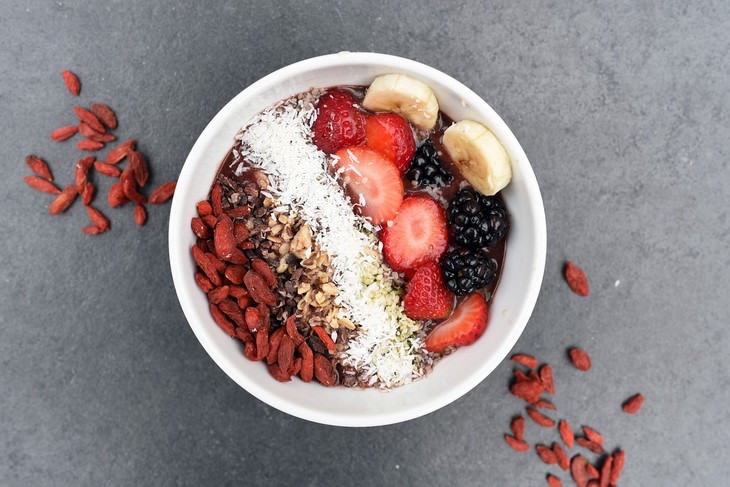
 digestive health while traveling a cereal bowl
 
Fiber is essential for our digestive health in so many ways, so making sure you’re eating plenty of it is important every day. Sufficient fiber intake is especially crucial when you’re traveling, as up to 48% of vacationers were reported to experience traveler’s constipation, and fiber helps to keep things moving even when you’re stressed and not very active.

To make sure you’re getting enough fiber, you can make a rule for yourself to eat plenty of fruit and veggies while you’re traveling, or include more whole grains into your diet, even if you mainly eat out. Packing an apple and a whole grain energy bar into your bag as a healthy snack is also a great way to increase your fiber intake.

2.Water and herbal teas are your friend
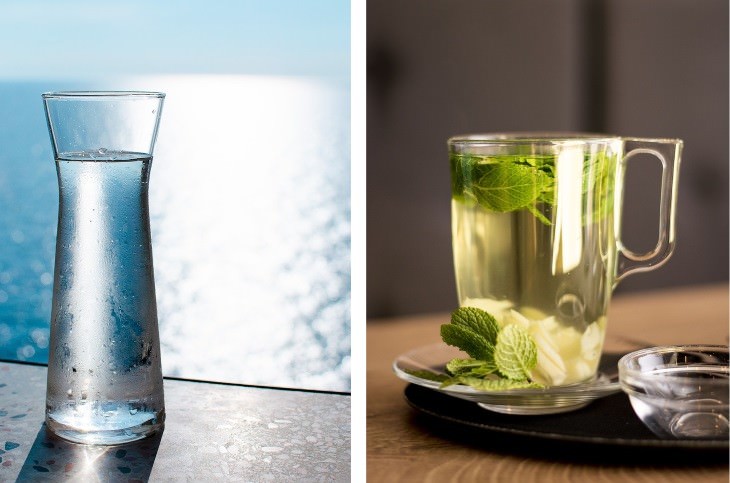
digestive health while traveling water and peppermint tea
Becoming dehydrated while traveling is alarmingly easy, as we tend to forget about our water intake when we’re on the beach or exploring a new and exciting place, and it might be a hassle to drink enough on a plane or while driving. Those are exactly the pitfalls that can cause constipation and worsen your diarrhea symptoms, and so we recommend to drink enough water and then some more to prevent those issues.

And while replacing your water with cool soft drinks, coffee or cocktails may sound tempting, don’t submit to that temptation, as all of these drinks can actually trigger digestive issues ranging from heartburn to diarrhea. Finally, it might also be a smart decision to stock up on some peppermint tea if you’re prone to constipation, bloating and gas, as it may help relieve the bloating and calm your gut.


3. Avoid trigger foods

 digestive health while traveling bloody mary and french fries
 
Even if you know 100% that the food you eat while on your vacation is safe and properly cooked, you’re not clear of digestive issues. This is because we tend to sleep less, eat more and change our meal schedule while on vacation, all of which makes our gut more sensitive to the types of foods we eat.

And we all know what kind of food we indulge in on vacation: everything that’s too sweet, too salty, veg-free, and preferably fried. And while trying new local foods and cooking the least amount of food possible is certainly part of any adventure, we recommend you to be mindful of the type of foods you choose to eat.
 
Oily, greasy and overly-processed foods can cause constipation, and sugary foods and drinks, as well as dairy, can trigger diarrhea. Eating portions that are too big, too fast, or overindulging in coffee and acidic foods can cause acid reflux, whereas consuming a lot of beans, broccoli, and cabbage can make you bloated.

There are also some trigger foods that worsen your symptoms specifically, so if you know, for example, that milk chocolate often makes you constipated, steer clear of it even on your vacation.


4. Don't ignore your gut
 If you’re used to a certain meal schedule, try to keep it up while you’re traveling as much as you can. This will make sure you have plenty of energy and keep your digestive flow steady.

Another common mistake people are guilty of is ignoring the urge to go to the bathroom, which can lead to constipation. Even if you don’t feel particularly comfortable using a public bathroom or the one at your hotel, it’s important to listen to your body, otherwise, you are risking turning your entire vacation into an extensive and often painful bathroom break.

5. Stay active
Now, it makes sense to give your exercise routine a break when you’re traveling, but you still have to stay active when you’re on vacation, otherwise, your digestive system may become more sluggish and slow, which can bring about a variety of digestive symptoms.

Doctors point out that medium intensity exercise can improve digestion and prevent constipation (obviously, not only when you’re on vacation). Even if you’re relaxing on the beach 24/7, try to take regular walks (or swims) each day to keep your body, and especially your gut, active and happy.

6. Wash your hands often
Washing your hands with soap as often as you can is a great way to prevent food poisoning, as, despite popular belief, we catch a lot of bad gut bacteria and viruses from our own hands and not infected food per se. Pools, bathroom stalls, doorknobs, planes, and buses are all a breeding ground for harmful bacteria, with often thousands of people passing by these places each day.

Even if you can’t wash your hands before and after every meal, make sure to carry around wet wipes, napkins and a hand sanitizer on you at all times and use them constantly. When washing your hands, make sure to use soap and avoid closing the tap or touch any doorknobs directly with your hands in a bathroom after washing your hands (use a towel or napkin instead), as bathrooms are notorious for spreading all kinds of harmful microorganisms.

7, Do your research
Before traveling to a certain country, research food safety in that destination, as in many countries, restaurant and street food, as well as tap water may not be as safe as in your home country. If any of the above-mentioned are an issue, always avoid street food and choose restaurants carefully.
If water is an issue, also avoid ice cubes in your drinks. Some doctors even recommend sticking to bottled water no matter where you’re planning to go, as the composition of the local tap water may differ from what your body is used to, which can upset your stomach. 
 
It’s also safer to stick to cooked rather than raw foods, as well as to choose pasteurized products to make sure your food is free from harmful bacteria.

8. Stock up on these -just in case
 digestive health while traveling first aid kit
 
As you may have noticed, all the tips we mentioned previously were ways to prevent an upset stomach and gut, which is, of course, optimal, but what can you do if there you are, in the tourist destination of your dreams, suffering from a digestive issue? For that purpose, you should have a well-stocked first-aid kit that will get you back on your feet in no time.

The same works for people who know that they always suffer from a certain issue while traveling, and this way they will be well-stocked ahead of time. Here are some OTC meds you might want to pick up: 
 
1. If you suffer from persistent traveler’s constipation, you will benefit from psyllium husks or bulk-forming laxatives, which, unlike other laxatives, don’t cause dependency and are not likely to have complications. Do keep in mind that you will need to drink a lot of water if you’re taking these, or else they can worsen your symptoms. 
 
2. If heartburn is your main concern, you can take antacids, which will improve the symptoms, but keep in mind that you shouldn’t take them for more than a week. 
 
3. If you experience mild traveler’s diarrhea, you can stock up on Pepto-Bismol or loperamide (Imodium). 
 
Do keep in mind, however, that persistent or severe symptoms will require professional medical attention, especially if they are accompanied by a fever, cramps, blood in the stool, etc.


This is only for your information, kindly take the advice of your doctor for medicines, exercises and so on.   

Labels: , , , , , , , ,

Wednesday, March 06, 2024

Useless Products We All Buy

We’re living in a hyper-commercial world where everything we need is readily available if we’ve got to the cash to pay for it. But it’s also full of pitfalls, where many people are trying to sell us stuff we don’t actually need, or worse- products that do absolutely nothing. Sadly, we’ve all fallen victim to marketing ploys and manipulations one time or another, but it’s even scarier when these products are items we always include in our shopping cart.


1. Probiotics

 Useless Products: probiotics

Some of the most overpriced products in any pharmacy are these supposed miracle supplements which promise to foster a better microbiome and promote better digestion. That being said, not only are probiotics easily found in fermented foods such as yogurt and pickles, there is zero clinical evidence that probiotics are helpful except as a complementary treatment after taking antibiotics or some marginal attenuation of IBS symptoms.


2. Feminine Rinse
Useless Products: douche cleaning
Products such as douches are everywhere, but the truth is that there is no real medical or hygienic need for them. under normal conditions, the human body is perfectly capable of taking good care of its internal cleanliness, and this is particularly true of the vagina. Moreover, these rinses can actually do more harm than good, causing dryness, irritation, and even infections.


3. Cellulite Creams
Useless Products: cellulite cream
An unfortunate physiological fact that nearly all women need to contend with are the pocks and dimples that cellulite leaves on the skin. Everyone wants a magical solution to cellulite, but there simply is none. If you’re using cellulite cream with the expectation that it will make cellulite go away over time, prepare to be disappointed. At best, what these creams can do is temporarily mask them.


4.  Bottled Water

Imagine paying for stuff you can get for free. Incredible, right? But companies that sell bottled water have caught on to a genius marketing ploy: people will always rather spend a couple of dollars for a vague promise of quality and health benefits. The truth is most bottled water comes from the same sources as your tap water, and actually undergoes a less stringent screening for contamination than what comes out of your tap. And this is to say nothing of the amount of plastic waste bottled water produces.


This is only for your information, kindly take the advice of your doctor for medicines, exercises and so on.   

https://gscrochetdesigns.blogspot.com. one can see my crochet creations  
https://gseasyrecipes.blogspot.com. feel free to view for easy, simple and healthy recipes    
https://kneereplacement-stickclub.blogspot.com. for info on knee replacement
https://cancersupportindia.blogspot.com  for infor on cancer and health related topics
https://GSiyers home remedies.blogspot.com   is the latest addition to my blogs. I'm going to add posts there, do give me your valuable feed back on my blogs. Thanks a lot, take care, be healthy and be happy.

Labels: , , ,

Wednesday, July 08, 2020

11 Health and Nutrition Myths Debunked in the 2010's


There are many reasons why myths and misconceptions occur. Scientific studies get misconstrued, misleading marketing ploys are created, and the result is a great number of confusing information about even the most serious and crucial of subjects - health and medicine. Luckily, a number of scientists and media outlets alike have made it their mission to clear some of the most dangerous and misleading health myths. To make a fresh and healthier start in the new decade, we shall discuss 11 of such myths in this article, all of which have been debunked during the 2010s.

1. Bottled Water Is Safer Than Tap Water
Staying hydrated is one of the best things you can do to maintain your health, but you have to remember that your body cannot distinguish between tap and bottled water, as both are equally hydrating. Of course, you have to make sure that the water in your tap is safe to use in cooking, and there is a wide range of filtering systems that assure that, even if your municipality isn't providing proper filtration.
However, the fact that the water you buy in bottles is somehow superior is a myth, with studies we covered in a previous article even suggesting that the opposite may actually be true since bottled water is often polluted with microplastics and harmful bacteria. Needless to say, bottled water also creates a great deal of plastic waste and is ridiculously overpriced, with an average American typically paying USD 1,400 annually on bottled water.
2. Using Antiperspirant Causes Cancer
There was a great deal of scaremongering in the past decade related to the use of antiperspirants, with some sources claiming that it can cause cancer, particularly breast cancer, despite the fact that there is no scientific evidence to prove that claim.
In fact, antiperspirants, unlike deodorants, are considered over-the-counter medications, at least in the United States, because they are designed to make your sweat glands stop producing sweat, and not simply masking odors. The FDA places strict regulations on what ingredients and quantities of such are permitted in antiperspirants, and many metals, such as mercury, a possible carcinogen, have been banned in the production of antiperspirants.
3. Carbs, Gluten or Fat Make You Gain Weight
It seems like the ingredient that is blamed for causing weight gain changes every year or so, with articles from the early 2010's claiming that fats and cholesterol are the source of all evil, but later in the decade, carbs and gluten have become the most demonized nutrients.
The truth is that neither of these ingredients is bad unless you have a condition that makes it bad for you, like Celiac-disease causing gluten intolerance. In fact, we need most of these nutrients in our diet to stay healthy, and it's the overconsumption of certain foods that can contribute to weight gain.
 
4. Brain Cells Can't Regrow
This myth maintains that every person is born with all of the brain cells they will ever have, and once some of them die, you will never be able to regrow them. This myth is fueled by early findings in patients with brain lesions and neurodegenerative diseases, such as Alzheimer's, with patients not being able to regain memory, motor, and cognitive functions.
It wasn't until the past few years that this belief had slowly started to sound suspicious, as scientists started to note that several parts of our brains continue to grow and develop until our 20's, which would be impossible without the production of new brain cells - a process called neurogenesis. But the most convincing finding of new nerve cells being formed came in 2019 when scientists actually found that even the brains of elderly individuals and Alzheimer's patients continued growing new cells.
5. Activated Charcoal is the Key to Health and Beauty
This myth started in 2014 when actress Gwyneth Paltrow proclaimed that activated charcoal juices are a digestive cleanser. In just a few years, this snowballed into a trend, with grocery and coffee shops selling charcoal drinks, activated charcoal being added to desserts and even toothpaste. Supposedly, the charcoal was supposed to improve your skin, increase your energy levels, make your teeth whiter and improve digestion.
Unfortunately, charcoal can do none of that, although it can have detoxifying effects in people suffering from serious poisoning or drug overdose, which is exactly how it's used in medicine. Charcoal does that by binding with the poison molecules, making them impossible for your body to absorb.
The problem is that charcoal binds to all the nutrients in your stomach, not only the poison, which means that it will also deprive you of the vitamins and other nutrients you ate that day, rendering that juice useless. It's could even cause vitamin and nutrient deficiencies if consumed regularly. Apart from that, charcoal can also bind to the medications you take orally and decrease their effectiveness.

6. You Need a Detox
Speaking of detoxifying, another popular myth of the past decade claims that you have toxins building up in your body that require you to go on a detox diet, a juice cleanse or whatnot to get rid of them. With the exception of the very few people suffering from food or other types of poisoning, no one actually has toxins building up in the body, or else you'd be in the hospital, explained Edzard Ernst, emeritus professor of complementary medicine at Exeter University in a 2014 interview with the Guardian.
In fact, a number of our organs, such as the liver, skin, even lungs work day and night to keep your body toxin-free. Of course, this means that by keeping these organs healthy, you are essentially boosting your body's detoxifying abilities.
7. Sitting Is As Dangerous As Smoking
As catchy as this myth may sound, the dangers of a sedentary lifestyle can't possibly be compared in magnitude to the pervasive effects of smoking on the entire human body, and this is a scientific fact, as a whole international team of scientists compared and evaluated the effects of sitting and smoking on long-term health in 2018. 

The results were published in the American Journal of Public Health, and Canadian, American and Australian researchers were involved in the study. The research concluded that sitting for more than 8 hours a day increased the risk of chronic diseases (cardiovascular issues and some cancers) and premature death by 10-20%.

Smoking, on the other hand, increased the risk of premature death by 180%, and more than doubled the risks of developing cardiovascular issues and a number of cancers. Needless to say, the health risks of sitting pale in comparison to those of smoking.


8. Cracking Your Knuckles and Joints Causes Arthritis
Contrary to popular belief, knuckle cracking does not contribute to arthritis development. According to Harvard Health, the "popping" a cracked knuckle makes is caused by tiny nitrogen bubbles bursting in the fluid that helps lubricate your joints called the synovial fluid, and should not be cause for concern.
Note, however, that knuckle cracking should be painless, and if you experience pain while stretching or cracking any of your joints, it can point to inflammation. But even if the joint cracking is painless, medical professionals recommend not to overdo it, as it can potentially cause reduced grip strength.


9. We Only Use 10% of Our Brains
This myth is nearly as old as neuroscience itself, as the first mentions of the 10% brain myth date back to the 1890's. The concept was popularized in 1936, when American writer and broadcaster Lowell Thomas announced in Dale Carnegie's How to Win Friends and Influence People the following, "Professor William James of Harvard used to say that the average man develops only ten percent of his latent mental ability".
More than a decade later, the myth still persists, although neuroimaging studies, namely fMRI studies that have become increasingly widespread in the past decade, have time and time debunked this myth. As a matter of fact, the majority of our brain is active all the time, which is one of the major problems when researchers study the brain since it's often difficult to isolate the brain areas that are responsible for a specific behavior.
10. A Piece of Gum Takes 7 Years To Digest If You Swallow It
Chewing gum can be blamed for many things, such as a high sugar content or digestive issues, but what it cannot do is stay in your stomach for 7 years. The base of chewing gum is made of plant-based materials that are indigestible for humans, and like any other things you can't digest, chewing gum just passes through your body.
Ingesting chewing gum is harmless in the vast majority of cases, and it only becomes a health hazard when it's consumed while stuck with other inedible materials, like metal objects, hair, etc., so keep chewing gum away from children.


11. Your Body Loses 50% of Heat Through the Head
Your body doesn't lose 50% of its heat through your head, but it doesn't mean that you should stop wearing hats in the winter. This myth likely comes from military experiments in the 1950s, with a US Army Field Manual even listing a 40-50% range. However, this question has been revisited in the 21st century, with recent research from the BMJ listing a much lower percentage, only about 7% of body heat, which is roughly proportional to the area of the body exposed when you're not wearing a hat.
So, it turns out that our head is no more special than any other body part in terms of its ability to lose heat, we just happen to wear hats a lot less than any other item of clothing.

This is only for your information, kindly take the advice of your doctor for medicines, exercises and so on.     

https://gscrochetdesigns.blogspot.com. one can see my crochet creations  
https://gseasyrecipes.blogspot.com. feel free to view for easy, simple and healthy recipes    
https://kneereplacement-stickclub.blogspot.com. for info on knee replacemen


Labels: , , , , , , , , , , , , , , , , , ,