Saturday, March 20, 2021

Coconut oil for weight loss: How to add it to your diet

Coconut oil can help you lose weight faster!

Coconut oil is an elixir oil and if you thought it was just for your hair and skin, you couldn't be more wrong. If used well, coconut oil can double up as a great weight loss tool. Yes, you read that right.

How to add this to your diet

Unlike other oils, coconut oil isn't really taste bud friendly and you may take a while to get acquainted to its taste. However, it doesn't have to be as difficult as that. If you consume it right, it can help you reach your goals in a faster, effective way. Here are three ways you can add the traditional oil in your diet:

Use it as a cooking oil
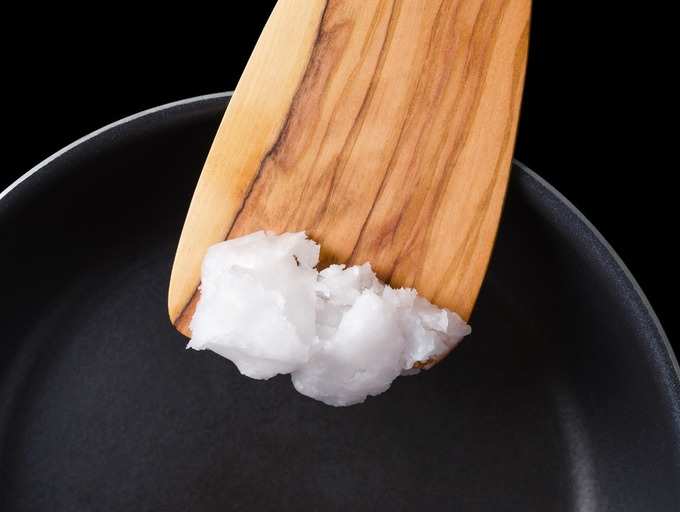
Needless to say, fats are an essential source in your weight loss diet and coconut oil particularly can help you burn fat faster. One way of adding it your diet is to use coconut oil as a means to cook and substitute it with other non-healthy cooking oils such as refined, vegetable oils or butter. Coconut oil is thermogenic in nature, which implies that it accelerates the fat burning process and the MCT oil present in it can also help manage weight loss in the long run.

Practice coconut oil pulling

While coconut oil pulling is a traditional remedy to improve your oral health, what many don't know is that a teaspoon of coconut oil consumed every day can also make a lot of difference to your digestive health, beat stomach related ailments which contribute to weight gain in the first place. Second, it helps act as a detoxifier for the body, cleansing the body of toxins and free radicals. Studies are still underway to test the efficacy of the same.

Coconut oil bulletproof coffee

When it comes to weight loss, there's a lot of support as well as cons to it. However, if you choose to add a nutritious fat like coconut oil or ghee to it, it can turn into a healthy drink. It can suppress the production of the hunger hormone, slow down digestion, make you eat less and at the same time, help you cut back on sweeteners as well. So, you can go ahead and have your cuppa joe without any guilt!

Caution

While coconut oil comes packed with all these amazing weight loss promoting benefits, it is important that you practice the art of moderation. Coconut oil is a good source of medium-chain triglyceride (MCT) oil which is fat-loss enabling, but is also rich in other forms of fats, which you should be careful about. If you don't remember to count the calories, it can lead to weight gain as well. As a rule of thumb, consuming 110-120 calories per day, through coconut oil sources (i.e., 1-2 tablespoons) can help you make the most out of your health.


Labels: , , , , , , ,

Monday, November 04, 2019

Scientists 3D-print living skin with blood vessels

Scientists in the US have created 3D-printed skin complete with blood vessels, an advancement which they hope could be a significant step toward creating grafts that are more like the skin our bodies naturally produce. 

The team of researchers at Rensselaer Polytechnic Institute in New York and Yale School of Medicine combined cells found in human blood vessels with other ingredients, including animal collagen, and printed a skin-like material.

After a few weeks, the cells started to form into vasculature (the arrangement of blood vessels in an organ or part), after which the skin was transplanted onto a mouse. Following this procedure, the team found the skin connected with the animal’s vessels.

“Right now, whatever is available as a clinical product is more like a fancy Band-Aid,” said Pankaj Karande, an associate professor of chemical and biological engineering and member of the Center for Biotechnology and Interdisciplinary Studies (CBIS) at Rensselaer.

“It provides some accelerated wound healing, but eventually it just falls off. It never really integrates with the host cells,” he added.

A significant barrier to the integration between cells has been the absence of a functioning vascular system in the skin grafts. For several years, Karande and his team have been working to tackle this challenge.

In one of the team’s first papers on the subject, the researchers found they could take two types of living human cells, make them into ‘bio-inks’ and print them into a skin-like structure.

Since then, he and his team have been working with researchers from Yale School of Medicine to incorporate vasculature to these cells.

In their latest study, the researchers demonstrated that if they add key elements – including human endothelial cells, which line the inside of blood vessels, and human pericyte cells, which wrap around the endothelial cells – with animal collagen and other structural cells typically found in a skin graft, the cells start communicating and forming a biologically relevant vascular structure within the span of a few weeks.

Karande said: “As engineers working to recreate biology, we’ve always appreciated and been aware of the fact that biology is far more complex than the simple systems we make in the lab.

“We were pleasantly surprised to find that, once we start approaching that complexity, biology takes over and starts getting closer and closer to what exists in nature.”

Once the Yale team grafted it onto a special type of mouse, the vessels from the skin printed by the Rensselaer team began to communicate and connect with the mouse’s own vessels.

“That’s extremely important because we know there is actually a transfer of blood and nutrients to the graft which is keeping the graft alive,” Karande added.

In order to make this process usable at a clinical level, however, the researchers would need to be able to edit the donor cells using CRISPR (gene editing) technology to ensure that the vessels can integrate and be accepted by the patient’s body.

“We are still not at that step, but we are one step closer,” Karande said.

“This significant development highlights the vast potential of 3D bioprinting in precision medicine, where solutions can be tailored to specific situations and eventually to individuals,” said Deepak Vashishth, the director of CBIS. “This is a perfect example of how engineers at Rensselaer are solving challenges related to human health.”

Karande added that more work will need to be done to address the challenges associated with burn patients, which include the loss of nerve and vascular endings.

However, the grafts his team have created bring researchers closer to helping people with more discrete issues such as diabetic or pressure ulcers.

“For those patients, these would be perfect, because ulcers usually appear at distinct locations on the body and can be addressed with smaller pieces of skin,” Karande explained. “Wound healing typically takes longer in diabetic patients and this could also help to accelerate that process.”

this is only for your information, kindly take the advice of your doctor for medicines, exercises and so on.     
https://gscrochetdesigns.blogspot.com. one can see my crochet creations  
https://gseasyrecipes.blogspot.com. feel free to view for easy, simple and healthy recipes    
https://kneereplacement-stickclub.blogspot.com. for info on knee replacement


Labels: , , , , , , , , , , ,

Thursday, August 15, 2019

Air pollution as bad as smoking a cigarette pack per day

Researchers have found that ozone air pollution which is increasing with climate change can accelerate lung disease as much as that by smoking a pack of cigarettes a day.

“We were surprised to see how strong air pollution’s impact was on the progression of emphysema on lung scans, in the same league as the effects of cigarette smoking, which is by far the best-known cause of emphysema,” said a Prof.

If you live in areas with increased levels of ozone, researchers found an increase in emphysema roughly the equivalent of smoking a pack of cigarettes a day for 29 years.

The study,  demonstrates an association between long-term exposure to major air pollutants – especially ozone – with an increase in emphysema seen on lung scans.


Emphysema is a condition in which destruction of lung tissue leads to wheezing, coughing and shortness of breath and increases the risk of death.

The results are based on an extensive, 18-year study involving more than 7,000 people and a detailed examination of the air pollution they encountered between 2000 and 2018 in six metropolitan regions across the US. The participants were drawn from the Multi-Ethnic Study of Atherosclerosis (MESA) Air and Lung studies.

“To our knowledge, this is the first longitudinal study to assess the association between long-term exposure to air pollutants and progression of percent emphysema in a large, community-based, multi-ethnic cohort,” said an Assistant Prof.

While most of the airborne pollutants are in decline because of successful efforts to reduce them, ozone has been increasing, researchers said. Ground-level ozone is mostly produced when ultraviolet light reacts with pollutants from fossil fuels.

 
THIS IS ONLY FOR INFORMATION, ALWAYS CONSULT YOU PHYSICIAN BEFORE HAVING ANY PARTICULAR FOOD/ MEDICATION/EXERCISE/OTHER REMEDIES.                                    PS- THOSE INTERESTED IN RECIPES ARE FREE TO  VIEW MY BLOG-                                                                                           https://gseasyrecipes.blogspot.com/                                                                                                                                                FOR INFO ABOUT KNEE REPLACEMENT, YOU CAN VIEW MY BLOG-                                                                       https:// kneereplacement-stickclub.blogspot.com/                                                                                                                     FOR CROCHET DESIGNS                                                                                                   
                                https://gscrochetdesigns.blogspot.com


Labels: , , , , , , , , , , , , , ,

Monday, January 14, 2019

New biodegradable nanofibre bandage enables faster healing

An international team of scientists has developed a new bandage with a strong antibacterial effect and which can be kept on over long periods of time without needing to be changed, thereby accelerating skin regrowth and reducing the risk of infection. The new dressing material has great potential for future application in the healing of wounds, does not require changing, and can literally be put on over top of one another as they degrade, the Sputnik news agency reported.

The traditional use of an antiseptic in the treatment of wounds, consisting of washing the affected area with a solution and using gauze dressing to increase the outflow of fluids, repeated several times.
However, such treatment, particularly the use of antibiotics kill not only dangerous bacteria but also the useful bacteria. And when dressings are changed, the fragile area undergoing healing is disturbed, causing severe pain to patients.

But according to scientists, the new biocompatible dressing material can act locally on the area of inflammation. As the material slowly releases their antibiotic, the dressings gradually dissolve on the skin.

The material was made using polycaprolactone nanofibres -- a biocompactable, bioresabsorable material -- and attached gentamicin, a broad-spectrum antibiotic, to the fibres.

"What we found was that the action was prolonged: we observed a significant decrease in the number of bacteria even 48 hours after the material was applied," a researcher was quoted as saying.

"Usually, surfaces with an antibacterial effect fulfill their potential within the first day or even the first hours of use," the researcher  explained. In the study, reported in the Materials and Design academic journal, the team performed experiments using three strains of E. coli bacteria, with the strains showing varying levels of resistance to the antibiotics, but nonetheless combated against effectively by the dressing.

The new material is potentially applicable not only for treatment to heal skin, but to treat inflammatory bone diseases such as osteoporosis and osteomyelitis, the report noted.

THIS IS ONLY FOR INFORMATION, ALWAYS CONSULT YOU PHYSICIAN BEFORE HAVING ANY PARTICULAR FOOD/ MEDICATION/EXERCISE/OTHER REMEDIES.                                                                                
 PS- THOSE INTERESTED IN RECIPES ARE FREE TO  VIEW MY BLOG-                                                                                           https://gseasyrecipes.blogspot.com/                                                                                                                                                                             FOR INFO ABOUT KNEE REPLACEMENT, YOU CAN VIEW MY BLOG-                                               
     https:// kneereplacement-stickclub.blogspot.com/                                                                                     
  FOR CROCHET DESIGNS                                                                                                                                                                                                  https://gscrochetdesigns.blogspot.com
  

Labels: , , , , , , , , , ,

Monday, January 23, 2017

Glucose could cut duration of induced labour, say researchers

Researchers are of the opinion that administering glucose supplements to women during childbirth, especially for the first birth, may shorten the labour time.

A prolonged labour, or a failure to progress, is a labour that takes more than 20 hours for first-time mothers and more than 14 hours for mothers who have given birth before.

A prolonged labour is not only defined by the duration, it is regarded as prolonged but, when cervical dilation takes place at less than 1 centimetre per hour. Prolonged labour can be harmful to maternal and foetal health. 

According to the study, because glucose supplementation is known to improve muscle performance, adding glucose to the intravenous hydration solution women receive during childbirth could accelerate labour. 

“Glucose supplementation significantly reduces the total length of labour without increasing the rate of complication. This is great news for women experiencing induced labour,” said Josianne Pare from the University of Sherbrooke in Quebec, Canada. 


For the study, 200 pregnant women were randomly assigned to receive either a standard hydration solution containing salt and water or a solution containing glucose, salt and water.

The results showed that the median duration of labour was 76 minutes shorter in the group of women receiving glucose. 

However, “there was no difference in the mode of delivery -- caesarean section, forceps, etc. -- or the neonatal well-being measures,” Pare said.

Thus, being a low-cost and safe intervention, glucose should be the solute of choice during labour, the researchers recommended.
The findings will be presented at the Society for Maternal-Fetal Medicine’s annual meeting, in Quebec.

this is only for your information, kindly take the advice of your doctor for medicines, exercises and so on.
https://gscrochetdesigns.blogspot.com. one can see my crochet creations
https://gseasyrecipes.blogspot.com. feel free to view for easy, simple and healthy recipes 
https://kneereplacement-stickclub.blogspot.com. for info on knee replacement
   

Labels: , , , ,

Saturday, January 21, 2017

Delirium could accelerate dementia-related mental decline:

Delirium, a condition in which people become acutely confused and disorientated, may have long-lasting consequences, including accelerated dementia-related mental decline, a new study has warned. The study is the first to show the multiplying effects of delirium, that affects a quarter of older patients, and dementia in these people, researchers said. Episodes of delirium in people who are not known to have dementia, might also reveal dementia at its earliest stages, researchers, including those at University College London in the UK, found.

While both delirium and dementia are important factors in cognitive decline among the elderly, delirium is preventable and treatable through dedicated geriatric care. Further research is needed to understand exactly how delirium interacts with dementia, and how this could be blocked, researchers said. “If delirium is causing brain injury in the short and long-term, then we must increase our efforts to diagnose, prevent and treat delirium. Ultimately, targeting delirium could be a chance to delay or reduce dementia,” said Daniel Davis, who led the research while at the University of Cambridge in the UK.

Scientists looked at three European populations – in Finland, Cambridge and UK-wide – and examined brain specimens in 987 people aged 65 and older. Each person’s memory, thinking and experience of delirium had been recorded over 10 years towards the end of their life. When these were linked with pathology abnormalities due to Alzheimer’s and other dementias, those with both delirium and dementia-changes had the most severe change in memory.

 “Unfortunately, most delirium goes unrecognised. In busy hospitals, a sudden change in confusion is not noticed by hospital staff,” Davis said. “Patients can be transferred several times and staff often switch over – it requires everyone to ‘think delirium’ and identify that a patient’s brain function has changed,” he added. The study was published in the journal JAMA Psychiatry.

this is only for your information, kindly take the advice of your doctor for medicines, exercises and so on.
https://gscrochetdesigns.blogspot.com. one can see my crochet creations
https://gseasyrecipes.blogspot.com. feel free to view for easy, simple and healthy recipes 
https://kneereplacement-stickclub.blogspot.com. for info on knee replacement
  

Labels: , , ,