Monday, February 15, 2021

Alzheimer’s and Gum Disease: Can One Bacterium Cause Both?

Gum problems affect more than half of the world’s population, but most people choose to ignore their oral health - a decision that can have dire consequences, as it turns out. An increasing number of scientific findings point out how gum disease causing bacteria can spread and affect the entire body, even your brain. In a previous article, we’ve discussed how poor oral health can contribute to heart disease and problems with episodic memory, but an even more worrying finding has been made in 2019, suggesting that a strain of bacteria that is typically involved in gum disease called Porphyromonas gingivalis may be the cause of Alzheimer’s disease.

The Science Behind Alzheimer’s Disease
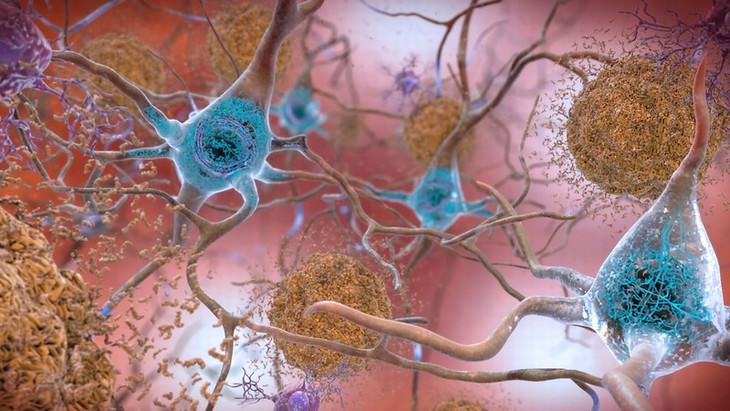
For decades, beta-amyloid plaques and TAU tangles have been considered the cause of Alzheimer’s disease. These plaques and tangles bunch together causing clumps in the brain tissue that interfere with the function of our brain cells. As a result, certain brain functions, such as short term memory, executive functioning, and even emotional perception, just to name a few, become affected, making Alzheimer’s sufferers progressively less and less independent and capable of living life at its fullest.

Alzheimer’s and Gingivitis study amyloid plaques and tangles
An Illustration of Beta-Amyloid Plaques and TAU Tangles in the Brain Image Source: NIH Image Gallery/ Flickr
Indeed, beta-amyloid plaques and TAU tangles are a unique and frequent finding in post-mortem studies in Alzheimer’s patients, and for decades, the reason behind their development was a mystery. One of the major hypotheses was that the cause may be due to an infection, and once again, post-mortem research suggested that it might be a strain of the herpes virus or even a fungus that trigger the condition. 
 
However, these studies were small, and their results too unconvincing for the global medical community to recognize that infections cause the neurodegenerative condition, especially since other factors, such as genetics and age are known risk factors of Alzheimer’s. 
 
The Link Between Gum Disease and Alzheimer’s 
In 2019, a new study was published in the Science Advances journal finding a bacterium typically associated with gum disease in the brains of Alzheimer’s patients. But the researchers didn’t stop there and did a follow-up study in an attempt to find not only a cause but also a cure for the condition.

The scientists suggested that toxins called gingipains produced by Porphyromonas gingivalis bacteria were to blame for the creation of plaques and tangles, and they developed a drug they called COR388 that blocks these gingipains. During this second experiment, mice were exposed to the Porphyromonas gingivalis bacteria, and after 6 weeks, the bacteria already appeared in their brain and started causing plaques. 
 
Then, the mice were treated with the drug the researchers had developed, which resulted in a significant reduction of plaques in the mice’s brains and halted neurodegeneration. The researchers conclude that Alzheimer’s disease is caused by the Porphyromonas gingivalis bacterium, and they are already in the process of conducting clinical trials on human subjects to test the efficacy of the experimental drug. 
 
In an interview with the New Scientist in December of 2019, one of the leading authors of the study Steve Dominy revealed that 570 people with mild to moderate Alzheimer’s from 95 health centers across the US and Europe were enrolled in the clinical trial, and we should expect the results in 2021. 
 
A Critical View

Alzheimer’s and Gingivitis study family member supporting senior

While the gum disease study definitely uncovered one way the beta-amyloid plaques and TAU tangles characteristic of Alzheimer’s can occur, many leading scientists in the field point out that we should look at the bigger picture instead of stating that Porphyromonas gingivalis is the exclusive cause of Alzheimer’s, as any other microorganism could likewise be responsible for the formation of plaques and tangles. 
 
Still, the research is exemplary, as it makes us reimagine what the plaques and tangles found in Alzheimer's patients' brains really are - a symptom of the disease, instead of its definitive cause. The study also managed to show how an infection considered relatively harmless managed to contribute to the development of the most widespread neurodegenerative condition - Alzheimer’s disease. 
 
The lesson here is clear: good overall health, including dental hygiene and oral health, as well as a timely treatment of any infections, even seemingly minor one, is key in preventing serious future health issues.

This is only for your information, kindly take the advice of your doctor for medicines, exercises and so on.     

https://gscrochetdesigns.blogspot.com. one can see my crochet creations  
https://gseasyrecipes.blogspot.com. feel free to view for easy, simple and healthy recipes    
https://kneereplacement-stickclub.blogspot.com. for info on knee replacement

Labels: , , , , , , , , , , , ,

Monday, June 01, 2020

The Science Behind Alzheimer’s Disease


Due to the highly complex nature of Alzheimer’s disease, scientists around the world are still not completely sure what causes it, and how it works. However, many years of research have led us to understand a number of key points.
Specifically, we know that Alzheimer’s causes certain brain cells to lose their functions and die, and this is what causes memory loss. A process called atrophy (shrinking of the brain) also takes place, which causes a harmful loss of brain volume.
This loss of brain function is believed to be due to the interactions of two types of proteins, known as amyloid and tau, which have been found to block communication between brain neurons. Amyloid has been observed accumulating into plaque-like clusters, while tau has a tendency to build up inside dying cells in what researchers call ‘neurofibrillary tangles’.
Other researchers also believe that chronic inflammation in the brain may also play a role in the onset and development of Alzheimer’s. Inflammation often occurs as a part of the human body’s defense system, and it aids white blood cells in destroying toxins and waste products.
However, scientists have found that certain waste products, such as amyloid plaque and tau tangles, are not being eliminated by Alzheimer’s patients' brains, causing their brain cells to remain permanently inflamed, which ultimately leads to the death of many more brain cells each day.
How to Prevent the Onset of Alzheimer’s
While there’s no proven way to guarantee that you’ll never get Alzheimer’s, there are many lifestyle and dietary changes that you can make, which have been found to decrease or delay your chances of contracting this disease later on in life.
Lifestyle Changes
• Maintain a healthy average weight
• Never stop learning new skills and expanding your areas of knowledge
• Maintain a varied circle of friends
• Start taking estrogen supplement after menopause (women only)
• Use the internet frequently to stimulate your brain
• Make sure you get a good night’s sleep
• Keep your stress levels in check
• Brush your teeth twice a day
• Take care of your eyes
• Try and be as physically active as possible
• Keep diabetes under tight control
Dietary Changes
• Eat plenty of antioxidant-rich superfoods, such as black raspberries, elderberries, raisins, and blueberries.
• Avoid eating bad fats
• Treat yourself to cocoa powder and dark chocolate regularly
• Raise your levels of good cholesterol
• Drink 2 to 4 cups of coffee a day
• Drink more black and green tea
• Eat curry or take curcumin pills
• Add a lot more vinegar to your meals
• Take 500 to 1000mcg of vitamin B12 daily
• Drink a glass of wine each day
• Start following a brain-boosting Mediterranean diet
Drugs to Help Manage the Symptoms
Even though there’s still no cure for Alzheimer’s disease, there are two specific types of medication that can aid in managing the disease’s main symptoms – cholinesterase inhibitors and memantine. Both of these drugs have been approved for use by the FDA to treat the symptoms of Alzheimer’s disease, and should always be used under a doctor’s supervision.
Cholinesterase inhibitors are usually used to treat the symptoms of mild to moderate Alzheimer’s. They work by boosting the strength of certain nerve cells that the disease typically attacks. While they can’t completely stop or reverse the disease’s destructive process, they can slow it down quite a bit.
Common side effects of cholinesterase inhibitors include diarrhea, nausea, and vomiting, all of which can be reduced by taking your medication with food, and by starting low and upping the dose gradually.
The most common types of cholinesterase inhibitors prescribed are:
• Galantamine (Razadyne) for mild to moderate Alzheimer's
• Rivastigmine (Exelon) for mild to moderate Alzheimer's
• Donepezil (Aricept) for all stages of Alzheimer’s
Memantine (Namenda) is usually used to treat the symptoms of severe Alzheimer’s. It works by regulating one of the brain’s most important messenger chemicals – glutamate. Memantine is typically taken in the form of a syrup or pill, and the most common side effects include confusion, agitation, headaches, and dizziness.
If none of the medications above are working on their own, the FDA has also approved the use of donepezil in combination with memantine (Namzaric), which is usually found in capsule form. Common side effects include headaches, diarrhea, nausea, and vomiting.
Coping Tips For Alzheimer’s Sufferers
Being diagnosed with Alzheimer’s disease is always devastating news, but as soon as you get over the initial shock, you need to start finding ways to cope, so that you’ll be able to maximize your independence for the foreseeable future. Here are some tips that will help you better handle your day-to-day tasks, and keep on living a meaningful life:
• Create a strong coping strategy by identifying new challenges, prioritizing them, and creating a solution that works best for you.
• Set realistic goals, and only focus on things that you can do today!
• Develop a daily routine that’s easy to follow.
• Never try and multitask!
• Learn to recognize stress triggers.
• Realize that you have more than one shot at fixing most problems.
• Draw inner strength from family, friends, prayer, pets, hobbies, or anything else that you love!
• Try your best to be independent, but don’t be afraid to ask for help.
Coping Tips For Caregivers
It can be sad to see a relative, loved one or friend deteriorate from the effects of Alzheimer’s, but there are quite a few things that you can do to help make their quality of life a lot better, as well as making your job a little easier. Here are a few things you should keep in mind as a caregiver:
• Don’t even think about trying to argue with an Alzheimer’s sufferer – you will get nowhere.
• Ignoring the symptoms won’t make them go away.
• Be aware that too much medication can actually cause further memory loss, so always check with your doctor which ones are really necessary.
• Always listen to what they have to say, even if it makes little sense to you.
• It’s never too late to work on improving their brain health.
• Share your struggles and be open to receiving help.
• Remember to give yourself a break every once in a while.
• Don’t forget to prioritize!
• Remember that 20 minutes for you can feel like a whole day for them.
• Have difficult conversations about medical/legal issues early on, so that you can ensure that you will honor their wishes later on.
We’d also recommend trying out some of these 7 meaningful acts to help people with dementia.
Tips for better communication with Alzheimer’s
When asking questions-
1)      Ask one question at a time.
2)      Use short simple words and phrases
3)      Avoid using logic and reason
4)      Avoid quizzing
5)      Avoid asking—do you remember when---

The Most Promising Scientific Studies So Far


With every year that passes, members of the scientific community keeps gaining more and more knowledge about how Alzheimer’s disease works, and are constantly searching for new ways to prevent it, slow down its progression, and ultimately to cure it.

Update - 28th March 2018: Scientists Discover Anti-Alzheimer's Antibodies

Scientists have now found yet another way to reverse the symptoms of Alzheimer's in mice. By using an antibody called HAE-4, researchers from the Washington University School of Medicine were able to successfully reduce the amount of Alzheimer's-causing amyloid plaque in the mice's brains by around 50%.
They also found that this process was selective enough to only affect cells within the brain, while leaving other areas untouched, thereby greatly reducing the chance of side effects being present. The researchers are now planning to explore the way in which similar antibodies work, before preparing to test this process out on human patients. 
 Update - 5th April 2018: Low Dopamine Levels Are Linked to Alzheimer's
A new study, published in the Journal of Alzheimer’s Disease, has now found that people with low dopamine levels may be at an increased risk of suffering from Alzheimer's disease in the future. The researchers analyzed 110 adults with certain memory testing techniques, as well as 3Tesla MRI technology, which is a type of MRI scan that's twice as powerful as normal, which allows for more accurate scans.

Their results showed that if the dopamine-rich area of the brain, called the ventral tegmental area, doesn't spend enough dopamine to the hippocampus, then the ability for a person to learn new information will gradually decline, which could ultimately end up causing Alzheimer's.

Scientists from UT Southwestern have recently discovered the earliest point in a neurodegenerative process that is thought to lead to dementia. The researchers have described their discovery like finding the 'Big Bang' of Alzheimer’s disease, and they hope that their work leads to new treatments and ways to detect the disease before major symptoms occur.

This new research focuses on a particular protein that is called tau, which can accumulate and kill neurons, and many researchers believe it to be the cause of Alzheimer's. It was previously believed that isolated tau proteins didn’t have a distinctly harmful shape until they began to aggregate with other tau proteins, but this new research has shown that a toxic tau protein actually presents itself as misfolded, exposing parts that are usually folded inside, before it begins to aggregate. It’s these exposed parts of the protein that enable aggregation, forming the larger toxic tangles.
Now that this early alteration in the shape of tau molecules has been identified, researchers can focus on potential drug targets to inhibit the toxic accumulation at this stage.

Update - 27th August 2018: Scientists Discover & Cure Alzheimer's 'Zombie Cells'
 
A type of cellular stress that is linked to both cancer and aging has now also been found to be connected to Alzheimer's disease. UT Health San Antonio faculty researchers recently reported this discovery in the scientific journal, Aging Cell, and it is being hailed by leading scientists as a potentially massive step forward.

The researchers discovered that this stress, known as cellular senescence, does not outright kill the cell, but it may cause it to become zombie-like, altering its functions and killing surrounding cells. Incredibly, the researchers were able to decrease their presence, as well as the malignant tau protein tangles, using a combination of drugs including dasatinib and quercetin.

This is only for your information, kindly take the advice of your doctor for medicines, exercises and so on.     

https://gscrochetdesigns.blogspot.com. one can see my crochet creations  
https://gseasyrecipes.blogspot.com. feel free to view for easy, simple and healthy recipes    
https://kneereplacement-stickclub.blogspot.com. for info on knee replacement


Labels: , , , , , , , , ,