Wednesday, March 19, 2025

How to Do Walking Meditation

Stress and anxiety have escalated everywhere right now owing to the ongoing coronavirus pandemic. One of the many suggestions made by mental health professionals is to practice walking meditation in this phase to calm your mind. Walking meditation, also known as mindful walking, is a form of meditation in action.
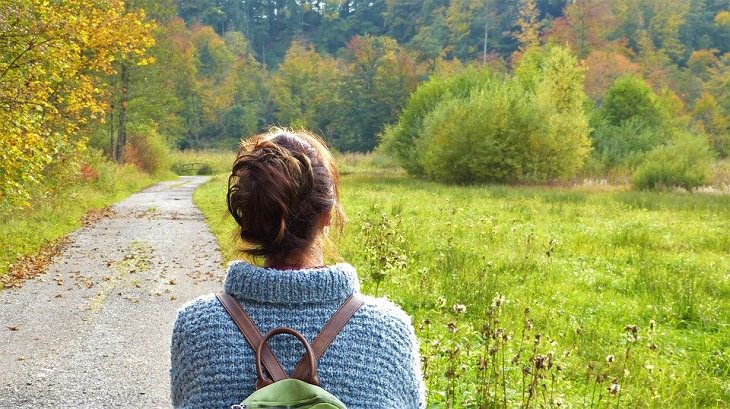
Many of you might be aware of the benefits of meditation but not everyone feels comfortable sitting in the same position for a long time. In walking meditation, you use the experience of walking as your primary focus. It helps you be aware of your mind and body and allows you to be mindful of all your thoughts, emotions, and sensations. This practice, if done properly, can turn into a tool for mindfulness and stress reduction.

Now that you know the importance of mindful walking, you would surely like to know exactly how to follow the practice. Here, we help you understand how to do walking meditation through simple yet effective steps. 
 
1. Find a place to walk
 How to do walking meditation, location
One of the cool advantages of walking meditation is that it can be done inside or outside if the area is relatively quiet. It can be the verandah inside your house or the little park outside your place. However, it would better if you avoid steep hills or places where you would be forced to stop regularly. Generally, a lane that allows you to walk back and forth for 10-15 paces without being disturbed would be ideal. Also, the lane doesn’t need to be very long as you don’t have to reach a specific destination through walking meditation. 
 
Now, before you begin walking, do some basic stretches to loosen your body. Your spine should be straight and you should have a good posture before you start. Another good tip is that initially, you should try meditation walking indoors as there would be fewer distractions. 
 
2. Start walking
Once you’ve chosen your spot, you can begin walking. To practice walking meditation properly, first, take 10-15 steps along the lane you’ve chosen while breathing normally. Walk slowly and take small steps. After you have finished your steps, pause, and breathe again. Don’t be in a rush and always take your time. Once you feel comfortable and have finished breathing, take another 10-15 steps in the opposite direction. Continue this process for at least 15 minutes. 
 
If you are not comfortable going back and forth, however, you can also meditate by walking in a straight path. It is crucial to remember here that you are not aiming for a good workout through this routine but are trying to connect to your body and mind. 
 
 
3. Connect your breathing with your steps
One of the main goals of walking meditation is to create unity between your body and your mind. You can achieve this by following a few instructions regularly. Firstly, breathe in as you take two or three steps. Then, you have to breathe out and take three, four, or five steps. To keep the cycle going, you should alter the number of steps you take with each breath. However, make sure that you don’t stress yourself in doing so. There's shouldn't be any rush. Find what is comfortable for your body and mind.

Remember that it may take you a while to find your rhythm and the pattern that you find convenient. However, your breathing should be slow and relaxed no matter what pattern you adopt. 
 
4. Awareness of your body
A vital part of walking meditation is to be aware of each part of your body. As you are walking, you should notice how your feet feel when they are touching the ground. Also, take note of how your muscles contract as you take each step and the myriad sensations you feel in each part of your body. Even small things like the changing position of your hip as you lift your leg to take a step or how your arms and shoulders swing as you walk should be observed and felt. 
 
You don’t have to think about these body movements, though. You just need to notice and feel the different sensations in your body as you move. This will allow you to connect with it on a deeper level.

 
5. Awareness of your feelings
 Meditation walking also involves being aware of your feelings. When you are walking, notice if there are things that feel pleasant or unpleasant in your body, or outside of you. There are bound to be a few, surely. When you do notice things that are unpleasant in your body, don’t cling onto them but don’t push them away either. Just take note of them. If there are unpleasant things in the outside world that you notice, allow them to drift by. Don’t follow them or change your gaze for those things. 
 
Keep reminding yourself as you walk that there are no right or wrong feelings. You needn’t fight your sentiments. Instead, accept whatever you feel and let it be a part of your meditation walking experience.


6. Take a note of your thoughts and emotions
 When you are mediation walking you will experience a range of emotions, too. Your emotions will be affected by what is currently happening in your life. It may be some happiness over a new job or sadness over some other issue. You might also be irritated or anxious about something in your life. Whatever emotions you might be feeling at that point, just observe them and don’t let yourself cling on to them. Allow your thoughts to flow naturally. 
 
Also, notice your mind during this process. Is your mind at peace or are you thinking about things unconnected with this practice? Whether you are experiencing negative or positive thoughts, just notice them without any judgment and focus on your walking. 
 
7. Honing your ability to focus
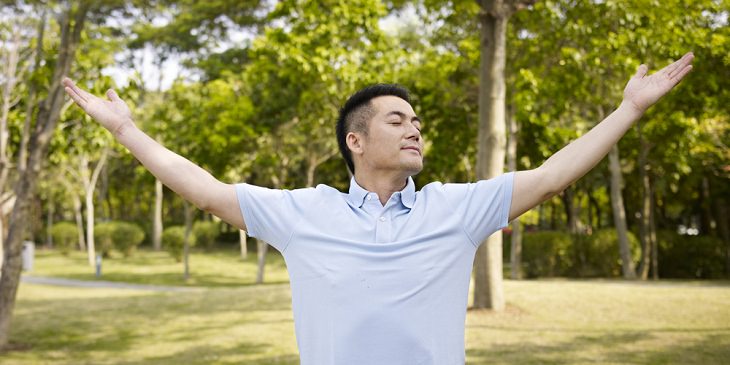
One of the most difficult things to attain in walking meditation is to be aware of your body, feelings, and emotions. This might feel daunting initially and hence it would be better if you break it down and make it simpler. Start by focusing only on your body at first. Give it time and don’t feel agitated if the focus doesn’t come easily in the beginning. It will take time so you need to keep at it. Once you have become a little comfortable on focusing on your body, you can switch to being aware of your feelings and thoughts. This, too, will take time. The more you practice, the better you will get. 
 
Once you have gotten the hang of it, you can modify your focus based on your needs. For instance, you may want to become more aware of your feelings at a certain point and don’t want to be aware of your body or thoughts. Walking meditation allows you to do that once you practice it regularly and integrate it into your daily life. Over time, with the help of this technique, you will feel that your ability to focus, despite the distractions, keeps improving. 
 
8. Allow yourself to live in the moment
 
How to do walking meditation, live in the moment
The primary idea behind walking meditation is to allow yourself to live in the moment. You don’t have to reach any destination as you should only focus on the journey of this unique exercise. Live in the moment and forget the past. While you are walking, your mind may wander. Let it do so without feeling anxious. Observe those thoughts and let your mind come back to the present moment, to the present breath, whenever it feels comfortable. 
 
Let yourself be free as you walk and don’t worry about any goal. You will feel light and relaxed with time. As you make this into a habit you will start to learn how to live in the present moment rather than always being worried about the future.


This is only for your information, kindly take the advice of your doctor for medicines, exercises and so on.   


Labels: , , , , , ,

Saturday, August 21, 2021

How to Do Walking Meditation, According to Experts

Walking meditation is a form of mindfulness meditation practiced all over the world. At its core, walking meditation is simply bringing your attention to your feet, your body and the ground below you and focusing your mind on what it feels like to walk. It's easy, requires no special equipment and can be worked into your everyday life.

This form of meditation is a standard part of a practice for Buddhists and others who meditate regularly. "According to Buddhist teachings, there are four basic postures of the human body: sitting, standing, walking and lying down," explains Mushim Ikeda, a Buddhist teacher associated with the East Bay Meditation Center in Oakland, California. "And meditation can be practiced—and should be practiced—in all four postures," she adds.

You can use walking meditation as an introduction to meditation or simply practice it as a way to help yourself stay centered and block out stress and distraction during the day. Like other forms of movement meditation (including yoga), it also offers the opportunity to practice mindfulness while caring for our bodies by engaging in light exercise.

What Is Walking Meditation, Exactly?

"When we say walking meditation, that is not a term that means one thing," says Ikeda. "There are different styles of walking meditation, different forms of it, in the same way that when we say 'yoga' it doesn't mean one thing." Some Theravada Buddhists, for instance, practice a form of walking meditation that includes walking barefoot or in very light shoes so that they can feel the ground below them. Other forms of walking meditation combine walking with breathing exercises or visualizations. Followers of Thich Nhat Hanh's meditations mentally repeat phrases like "I have arrived, I am home" with each step.

Health Benefits of Walking Meditation

A few minutes of walking meditation can leave you feeling calm, centered and collected and help you connect to the experience of being in your body. Like all forms of meditation, it also has proven health benefits: it can increase self-awareness, reduce stress and negative emotions, increase imagination and creativity, and promote mental health. Over the long term, meditation may also help practitioners manage and improve a variety of health issues, from chronic pain to anxiety and depression and even high blood pressure, heart disease and asthma. There's also a link between regular meditation and a reduced risk of Alzheimer's disease. Moreover, because walking meditation involves actually taking some time to walk around, it can also improve your physical health by helping you move your body.

Practicing walking meditation can also help you reevaluate what you think "relaxing" should look like. "Mindfulness requires us to be in a state, ideally, that is both relaxed and alert, which is very different from the way most Americans (myself included) think about relaxation, which is kicking back and watching Netflix and having some ice cream or something," says Ikeda. "It's not alert, in other words. If we're alert, we think we've got to be on edge. There's this element of tension in it. So we want to release tension and we want to be alert, which is very good for mental and physical health."

Lastly, many people practice this form of meditation because it makes them happy. "Looking at Thich Nhat Hanh's way of walking meditation, we can say that we do it to bring joy into our life," says Ikeda. "We can think about 'Can this path lead to joy?' 'Can our walking meditation bring more lightness, more ease to our lives?'"

How to Start Doing Walking Meditation

The easiest form of walking meditation to begin with is a simple mindfulness meditation. When you first begin your practice, it helps to set aside some dedicated time and space. (According to the Greater Good Science Center at UC Berkeley, you'll want to dedicate 10 minutes a day to the practice for the first week, or longer, because studies show that mindfulness increases as you get more practice.)

In some instances, this style of meditation doesn't require you to walk in a certain way or at a certain pace—just to pay attention to how your body feels as you move through the world. Some people choose specific "walking paths" to move along during their meditation, but you can also do this meditation anytime, anywhere by simply bringing your attention to the sensation of walking.

  1. Pick a path—a field at a park, a section of your yard or just an open space next to your kitchen table—to walk along. The path should be long enough for you to walk at least 10 to 15 steps before turning around.
  2. Bring your awareness to your body: Stand with your feet planted firmly on the ground and let your body rest comfortably. Feel the pressure of the earth beneath your feet and the sensations throughout your body. (You can close your eyes for part of this step, if it's helpful.)
  3. Begin walking along your "path." Ikeda notes that if you're feeling nervous, you should just start walking normally, to relax your body, without thinking about it as meditation. Once you get going, think about holding your body with ease and confidence. (Mindfulness expert Jack Kornfield calls this walking "as if you were a king or queen out for a royal stroll.")
  4. Once you relax, you can start walking a little more slowly than you normally walk, as a way to help focus your mind on your movement. If you like, you can really slow down and notice all the different elements of each step, taking note of the feelings of the movement (and the uplift in the spine, the balance in the body) as well as the sensations of the world around you (the sun, the breeze). (If you get so slow that you start to wobble, Ikeda recommends picking up your speed by one notch, so that you're comfortable and at ease.)
  5. With each step, feel the sensation of lifting your foot off the ground, moving it forward, putting it back down and shifting your weight. Continue walking easily, being mindful of how your body feels as you lift and place your feet. As you're walking, if you're indoors and safe, you could choose to be hyper-focused on the feeling of the walking. But in most places, you should maintain situational awareness and notice the world around you (gopher holes, cars, etc.) so that you stay safe.
  6. When your attention wanders (and it will, a lot!), gently bring your mind back to your feet and your body. This action of noticing when your mind wanders—whether it's every few seconds or every minute or two—and bringing your attention back to your purpose is one of the core experiences of any mindfulness practice.
  7. When you reach the end of your path, pause, take a few breaths, gather your attention in your body, then turn around. Continue walking around or along your path for 10 to 20 minutes (or longer, if you like). Adjust your speed to whatever pace feels comfortable for your body. As you get used to meditation, your mind might wander less, but no matter how often your mind wanders—or how long it has wandered for—you should never feel bad about it. Instead, simply note where your mind wandered to and bring your attention back to walking.
  8. Once you're comfortable with walking meditation, you can continue a formal practice, walking along a set path for a set amount of time each day. You can also begin employing this skill when you need to feel centered, no matter where you're walking—on the way to the train, on a walk through your neighborhood or as you're doing errands.
  9. While practicing, remember that you don't have to focus all of your attention on walking to the exclusion of everything else. Ikeda notes that Thich Nhat Hanh says that if we see a flower or feel the sunshine, we might want to stop and be with that sensation for a bit. "We can look at that flower, or touch that tree, and again affirm that life on Earth can be so wonderful, so refreshing, so beautiful," she says.

Guided Walking Meditation and Walking Meditation Apps

If you're looking for some help with walking meditation, you can find a number of different apps and guided meditations to get you started. Leading meditation experts like Jack Kornfield and Sharon Salzberg offer taped instructions for getting started or guided meditations that you can listen to while you walk. If you'd prefer an app you can keep on your phone, try Headspace, which has lessons like 'Walking in the City' and 'Walking in Nature,' or Calm, which offers different lengths of walking meditations starting at a short, 5-minute meditation and ending with a 30-minute meditation. You can also combine a walking meditation with another kind of meditation, like focusing on phrases of loving kindness.

Other Movement Meditations

Of course, walking meditation doesn't work for everyone. "The first thing to remember is disability and access; not everyone can do walking meditation," says Ikeda. If you can't walk (or can't walk comfortably), there are other forms of movement meditation that you can try. Ikeda recommends Mahasati or "great mindfulness" meditation (sometimes also called "rhythmic meditation"), which is done with just arm and hand movements. The practice, which comes from Thailand, involves repeating a simple sequence of movements with the arms and hands, usually slowly lifting one hand at a time and placing it first over the stomach and then over the heart.

This practice can also be useful to anyone looking for another form of meditation or for a form of meditation that can be practiced during everyday moments. "It can also be boiled down to just starting with the hand palm-down, turning it up on the side mindfully, feeling the sensation and then turning the hand palm-down," says Ikeda. "You could do this if you're riding on a bus, if you're a passenger in a car or, if you're in a meeting, you could do it under the table, on your lap, and no one would even know."


This is only for your information, kindly take the advice of your doctor for medicines, exercises and so on.   

https://gscrochetdesigns.blogspot.com. one can see my crochet creations  
https://gseasyrecipes.blogspot.com. feel free to view for easy, simple and healthy recipes    
https://kneereplacement-stickclub.blogspot.com. for info on knee replacement


Labels: , , , , , , , , , , ,

Thursday, June 11, 2020

Here’s a Simple Guide on How to Do Walking Meditation


Stress and anxiety have escalated everywhere right now owing to the ongoing coronavirus pandemic. One of the many suggestions made by mental health professionals is to practice walking meditation in this phase to calm your mind. Walking meditation, also known as mindful walking, is a form of meditation in action.

Many of you might be aware of the benefits of meditation but not everyone feels comfortable sitting in the same position for a long time. In walking meditation, you use the experience of walking as your primary focus. It helps you be aware of your mind and body and allows you to be mindful of all your thoughts, emotions, and sensations. This practice, if done properly, can turn into a tool for mindfulness and stress reduction. Now that you know the importance of mindful walking, you would surely like to know exactly how to follow the practice. Here, we help you understand how to do walking meditation through simple yet effective steps.

1. Find a place to walk
One of the cool advantages of walking meditation is that it can be done inside or outside if the area is relatively quiet. It can be the verandah inside your house or the little park outside your place. However, it would better if you avoid steep hills or places where you would be forced to stop regularly. Generally, a lane that allows you to walk back and forth for 10-15 paces without being disturbed would be ideal. Also, the lane doesn’t need to be very long as you don’t have to reach a specific destination through walking meditation.
Now, before you begin walking, do some basic stretches to loosen your body. Your spine should be straight and you should have a good posture before you start. Another good tip is that initially, you should try meditation walking indoors as there would be fewer distractions.
2. Start walking
Once you’ve chosen your spot, you can begin walking. To practice walking meditation properly, first, take 10-15 steps along the lane you’ve chosen while breathing normally. Walk slowly and take small steps. After you have finished your steps, pause, and breathe again. Don’t be in a rush and always take your time. Once you feel comfortable and have finished breathing, take another 10-15 steps in the opposite direction. Continue this process for at least 15 minutes.
If you are not comfortable going back and forth, however, you can also meditate by walking in a straight path. It is crucial to remember here that you are not aiming for a good workout through this routine but are trying to connect to your body and mind.
3. Connect your breathing with your steps
One of the main goals of walking meditation is to create unity between your body and your mind. You can achieve this by following a few instructions regularly. Firstly, breathe in as you take two or three steps. Then, you have to breathe out and take three, four, or five steps. To keep the cycle going, you should alter the number of steps you take with each breath. However, make sure that you don’t stress yourself in doing so. There's shouldn't be any rush. Find what is comfortable for your body and mind.
Remember that it may take you a while to find your rhythm and the pattern that you find convenient. However, your breathing should be slow and relaxed no matter what pattern you adopt.

4. Awareness of your body
A vital part of walking meditation is to be aware of each part of your body. As you are walking, you should notice how your feet feel when they are touching the ground. Also, take note of how your muscles contract as you take each step and the myriad sensations you feel in each part of your body. Even small things like the changing position of your hip as you lift your leg to take a step or how your arms and shoulders swing as you walk should be observed and felt.
You don’t have to think about these body movements, though. You just need to notice and feel the different sensations in your body as you move. This will allow you to connect with it on a deeper level.
5. Awareness of your feelings 
Meditation walking also involves being aware of your feelings. When you are walking, notice if there are things that feel pleasant or unpleasant in your body, or outside of you. There are bound to be a few, surely. When you do notice things that are unpleasant in your body, don’t cling onto them but don’t push them away either. Just take note of them. If there are unpleasant things in the outside world that you notice, allow them to drift by. Don’t follow them or change your gaze for those things.
Keep reminding yourself as you walk that there are no right or wrong feelings. You needn’t fight your sentiments. Instead, accept whatever you feel and let it be a part of your meditation walking experience.
6. Take note of your thoughts and emotions
When you are mediation walking you will experience a range of emotions, too. Your emotions will be affected by what is currently happening in your life. It may be some happiness over a new job or sadness over some other issue. You might also be irritated or anxious about something in your life. Whatever emotions you might be feeling at that point, just observe them and don’t let yourself cling on to them. Allow your thoughts to flow naturally.
Also, notice your mind during this process. Is your mind at peace or are you thinking about things unconnected with this practice? Whether you are experiencing negative or positive thoughts, just notice them without any judgment and focus on your walking.

7. Honing your ability to focus
One of the most difficult things to attain in walking meditation is to be aware of your body, feelings, and emotions. This might feel daunting initially and hence it would be better if you break it down and make it simpler. Start by focusing only on your body at first. Give it time and don’t feel agitated if the focus doesn’t come easily in the beginning. It will take time so you need to keep at it. Once you have become a little comfortable on focusing on your body, you can switch to being aware of your feelings and thoughts. This, too, will take time. The more you practice, the better you will get. 
Once you have gotten the hang of it, you can modify your focus based on your needs. For instance, you may want to become more aware of your feelings at a certain point and don’t want to be aware of your body or thoughts. Walking meditation allows you to do that once you practice it regularly and integrate it into your daily life. Over time, with the help of this technique, you will feel that your ability to focus, despite the distractions, keeps improving.
8. Allow yourself to live in the moment 
The primary idea behind walking meditation is to allow yourself to live in the moment. You don’t have to reach any destination as you should only focus on the journey of this unique exercise. Live in the moment and forget the past. While you are walking, your mind may wander. Let it do so without feeling anxious. Observe those thoughts and let your mind come back to the present moment, to the present breath, whenever it feels comfortable. 
Let yourself be free as you walk and don’t worry about any goal. You will feel light and relaxed with time. As you make this into a habit you will start to learn how to live in the present moment rather than always being worried about the future.

This is only for your information, kindly take the advice of your doctor for medicines, exercises and so on.     

https://gscrochetdesigns.blogspot.com. one can see my crochet creations  
https://gseasyrecipes.blogspot.com. feel free to view for easy, simple and healthy recipes    
https://kneereplacement-stickclub.blogspot.com. for info on knee replacement


Labels: , , , , , , , , , , ,