Monday, February 23, 2026

New Study: Can Broccoli Sprouts Help Lower Blood Sugar?

A recent study published in Nature Microbiology suggests that a chemical compound found in broccoli sprouts could help individuals with prediabetes manage their blood sugar levels more effectively. This finding adds to a growing body of research exploring natural interventions for blood sugar management before full-blown diabetes develops. 
 
Understanding Prediabetes
Prediabetes is a health condition marked by blood sugar levels that are higher than normal but not yet high enough to be diagnosed as type 2 diabetes. It affects approximately 5-10% of adults worldwide, though many remain unaware of their condition.
 
Risk factors include having family members with type 2 diabetes, following an unhealthy diet, limited physical activity, and having a higher body mass index (BMI). Early intervention is important as prediabetes can often be reversed through lifestyle modifications.  
 
The Potential of Sulforaphane
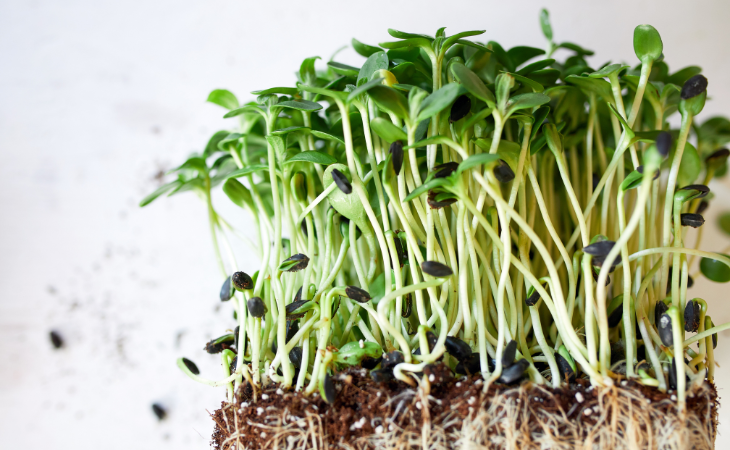
 
Broccoli Sprouts
Researchers at the University of Gothenburg in Sweden conducted a study involving 89 participants with elevated fasting blood sugar—a key indicator of prediabetes. All participants were between 35 and 75 years old and were either overweight or obese. 
 
The 12-week trial randomly assigned participants to receive either sulforaphane (a compound abundant in broccoli sprouts) or a placebo. Neither the researchers nor the participants knew who received which treatment, making it a double-blind study. By the end, 74 participants had completed all phases of the research. 
 
Results showed that individuals who took sulforaphane experienced greater reductions in fasting blood sugar compared to those who received the placebo. On average, the sulforaphane group showed blood sugar levels that were 0.2 millimoles per liter lower than the placebo group.
Who Benefits Most
Interestingly, the study revealed that certain individuals responded more favorably to the sulforaphane treatment. The most substantial improvements occurred in people with: 
- Early signs of mild age-related diabetes
 - Lower BMI (within the study's context)
 - Low insulin resistance
 - Minimal fatty liver disease- Lower insulin secretion 
 
In this specific subgroup, the difference increased to 0.4 millimoles per liter compared to those on placebo.
 
The Gut Microbiome Connection 
 The research team also investigated how gut bacteria might influence sulforaphane's effectiveness. They discovered that certain bacteria appear to interact with sulforaphane, potentially making it more potent at lowering blood sugar. 
 
The most dramatic results—a reduction of 0.7 millimoles per liter—were seen in participants who both belonged to the responsive subgroup mentioned above and also had specific gut bacteria present. 
 
Senior researcher Anders Rosengren, PhD, explained that sulforaphane works by targeting increased glucose production in the liver, which is a common issue in early diabetes. By reducing this excess production, fasting blood glucose levels can be maintained at healthier levels.

Can Sulforaphane Replace Lifestyle Changes?
 
While these findings are promising, obtaining therapeutic amounts of sulforaphane through diet alone would be challenging. According to Rosengren, one would need to consume several kilograms of broccoli daily to reach the doses used in the study. 
 
Instead, concentrated broccoli sprout extracts might offer a more practical solution. However, he cautions that sulforaphane content varies widely among commercially available products, so consumers should be selective when choosing supplements. 
 
Expert dietitians have noted that sulforaphane is already well-known for its anti-inflammatory, antioxidant, and cancer-fighting properties. They say that while the current research shows potential, the most benefit appeared in people who already had low insulin resistance and healthy gut microbes. 
 
Prediabetes is often preventable and reversible, making lifestyle interventions particularly important. An imbalanced gut microbiome can contribute to elevated blood sugar and insulin resistance—suggesting that addressing gut health should be a priority. 
 
The study helped establish a connection between gut microbiome health and effective blood glucose control. Those with healthier gut bacteria appeared more likely to benefit from the broccoli sprout extract. 
 
Recommendations for Managing Prediabetes

Nutrition experts often talk about the importance of maintaining a healthy gut microbiome through diet:
 
- Reduce consumption of ultra-processed foods, refined carbohydrates, and high saturated fat foods 
 
- Eat more prebiotic fiber and foods in their natural forms
 
- Include fermented foods like yogurt, kombucha, kimchi, and pickled vegetables 
 
- Consume a wide variety of fruits, vegetables, and whole grains to provide both soluble and insoluble fiber 
 
Experts recommend focusing on these dietary approaches before considering sulforaphane supplementation. They suggest that improving overall gut health might make any interventions—whether medication or supplements—more effective for blood sugar control.

Looking Ahead 
This research opens possibilities for more targeted approaches to prediabetes management. As Rosengren noted, the findings point toward potential "precision treatment" options that could be tailored to those most likely to benefit. 
 
While lifestyle modifications remain the cornerstone of prediabetes management, this study adds to our understanding of how specific plant compounds might work in conjunction with these efforts—especially for individuals with certain metabolic and microbiome profiles. 
 
As research continues, the relationship between plant compounds, gut bacteria, and metabolic health may lead to more personalized approaches for preventing diabetes progression in at-risk individuals.


This is only for your information, kindly take the advice of your doctor for medicines, exercises and so on.   


Labels: , , , ,

Saturday, July 26, 2025

Why I eat broccoli every single day for my hormonal health- By Morgan Fargo

If the words fibre, florets and sulforaphane don’t already inspire thoughts of a hormonal health super-food, well… they’re about to. Because broccoli (which possesses all three) is one of the most underrated foods for better hormonal health. In fact, the unassuming green vegetable is so beneficial, I’ve scarcely gone a day without eating it for the past five years.

Below, I’ve picked the brain of Hannah Alderson, BANT-registered nutritionist, hormone specialist and author of Everything I Know About Hormones: Six Steps to Optimal Health & Happiness, to find out exactly how broccoli can help with everything from detoxing excess oestrogen to supporting healthy liver function (the key, you’ll discover, for almost everything hormonal), and helping better regulate hormone metabolism. Here are the three reasons why I incorporate it into my diet every single day.

1. Broccoli helps get rid of excess oestrogen

Broccoli and broccoli sprouts are both part of the cruciferous vegetable family, meaning they contain a compound called indole-3-carbinol (or I3C). “When digested, I3C converts into diindolylmethane (DIM), which helps support the liver’s breakdown of oestrogen into safer, more easily excreted metabolites,” Alderson explains.

This metabolisation of oestrogen is incredibly important, as too much of the hormone can lead to heavy and painful periods, tender breasts in the luteal phase, bloating, PMS, mood swings, fatigue and much more. The compound I3C helps to properly break it down, which makes it easier for the body to then get rid of it.

There is a hierarchy of broccoli, though. Normal broccoli–chunky, with one stalk and lots of florets–has lots of benefits, including soluble and insoluble fibre, both highly beneficial for gut health and gut motility (digestion). Broccoli sprouts, on the other hand, contain much higher levels of sulforphane, which is a powerful detoxifying compound that helps to support the liver.

“Think of sprouts as the concentrated version. They’re great in small doses and can be a fantastic daily addition to salads or smoothies, or for anyone looking to give their detoxifying pathways a little extra love,” says Alderson.

2. Broccoli supports liver function

The liver is the body’s in-built filtration system, and good liver function is the key to better hormonal function, being able to fight infection, and to efficiently remove toxins. The compounds present in broccoli sprouts and broccoli help to maintain the healthy functioning of the liver. “Raw or lightly steamed broccoli may also up-regulate an important liver enzyme known as CYP1A1,” Alderson tells me.

“This enzyme plays a key role in detoxification. Think of it as unlocking the first step in the liver’s hormonal clearance process,” she explains. To borrow one of her metaphors: broccoli helps your body (and liver) package up and ship out oestrogen more efficiently, and in the safest way.

3. Broccoli contains 5g of fibre per cup

Fiber is crucial for both gut and hormonal health, and broccoli can help you hit your daily fibre goals. “Fiber helps keep things moving but it also feeds the gut microbiome, helps regulate blood sugar, lowers inflammation and supports detoxification pathways through the liver and bowels,” nutritionist Rose Ferguson previously shared with British Vogue.

“In functional medicine, we think of fibre as a kind of daily therapy, as so much of the body’s regulation (for mental clarity but also hormonal health) starts in the gut. It’s fundamental.” When it comes to hormonal health, excess oestrogen can be eliminated through bowel movements, so long as you consume enough fibre to keep things moving efficiently.

So, how much fibre should you aim for per day? For adults in the UK, the NHS recommendation is around 30g of fibre a day. One cup of broccoli contains around 5g of fibre – a decent chunk of your goal. As a side with lunch or shredded into a slice of frittata, broccoli is a brilliant fibrous option to add to dishes. Remember, too, that the stalks are edible. Simply slice up (I prefer rounds, rather than strips) and cook as you would the rest of the vegetable. When cooked, the stalks take on an asparagus-like texture that’s absolutely delicious.


This is only for your information, kindly take the advice of your doctor for medicines, exercises and so on.   


Labels: , , , , , ,

Wednesday, February 05, 2020

Food With Low Nutritional Quality & Cancer - Is There A Link?

We easily get attracted to foods that look appealing, smell delicious, and taste good. Most of the times, junk foods are the one to blame. No matter how hard you try to resist yourself from digging into a tub of ice cream or from taking a bite of a pizza slice, you always fail. These foods only satiate your hunger and cravings but do not really contribute to your good health – they are low in nutrition but high in calories.

While binging on junk food occasionally is fine, people who consume low-nutrition value foods daily or frequently are at high risk of cancer! Low or zero nutrition foods contain nothing but calories in the form of fats, sugar, and other artificial ingredients. Here are a few examples of foods, which have little or no nutritional value –

• French fries

• Potato chips

• Cheeseburgers

• Pizza, pasta

• Aerated drinks, soda, cola

• Ice cream

• Candy bars

• Cookies, pastries, muffins

• Frozen meat – sausages, bacon

• Canned fruits and- fruit juice

• Breakfast cereals

These foods are devoid of proteins, healthy fats, essential minerals, vitamins, and carbohydrates – everything that your body needs to function. Moreover, many of these foods or drinks contain components and preservatives that may even cause cancer. For instance, processed meats (bacon, sausages, salami), which are preserved by salting, curing and adding chemical preservatives, release heterocyclic aromatic amines – a carcinogen.

Cancer is one deadly disease, which spreads rapidly from the affected organ to other parts of the body. The best way to counter cancer is to prevent its onset.

Healthy eating can reduce the risk of cancer. Want to know what foods can cure the disease naturally by killing the cancer cells? Here is a list –

• Broccoli – contains a plant compound named sulforaphane, which is known to have anti-cancer properties

• Carrots – a few chunks of carrot in your meal can lower the risk of lung, prostate, and stomach cancer

• Beans – contain a high amount of fibre, which shields you against colon cancer

• Berries – these are rich in anthocyanins (plant pigments having antioxidant properties) and are linked to a decreased risk of certain forms of cancer

• Cinnamon – extracts of cinnamon are known to destroy and prevent tumours from spreading

• Turmeric
– Turmeric consists of a chemical named curcumin, which has been shown to minimize the growth of various types of cancer and lesions

• Tomatoes – the compound lycopene, found in tomatoes, has anticancer properties and reduces the risk of prostate cancer

• Flax-seeds – high in fibre and healthy fats, flaxseeds also reduce breast and prostate cancer growth

• Fatty fish – fishes like salmon, mackerel, Pomfret and others are rich in omega-3 fatty acids and vitamins, both of which are believed to keep cancer at bay

• Citrus fruits - they are best known for their high vitamin-C content, which helps protect against cancer

Apart from citrus fruits like lemons, oranges, grapefruits and others, experts recommend eating soursop (also known as custard apple or graviola). This ‘super fruit’ can kill cancer cells. Lab studies have confirmed its effectiveness in curing liver cancer and breast cancer. The efficacy of soursop leaves in destroying cancer cells is about 80%. Nevertheless, what makes custard apples a preferred natural cure for cancer is that, unlike chemotherapy drugs, its effects are specific to cancer cells and not the healthy cells of the body.

How do you beat cancer naturally?

The key to beating cancer naturally is good nutrition. Your body executes a hundred different functions, most of which are dependent on high nutrition value foods. Make sure that you steer away from foods that are low in nutritional value, and switch to those that are known to kill cancer cells. Besides, also ensure that you are maintaining a healthy body weight – exercise is a great way to keep yourself active. Therefore, ditch those unhealthy, low-nutrition value foods and ask for a balanced diet chart from your dietician instead.


This is only for your information, kindly take the advice of your doctor for medicines, exercises and so on.     
https://gscrochetdesigns.blogspot.com. one can see my crochet creations  
https://gseasyrecipes.blogspot.com. feel free to view for easy, simple and healthy recipes    
https://kneereplacement-stickclub.blogspot.com. for info on knee replacement
 

Labels: , , , , , , , , , , , , , , , ,

Thursday, January 16, 2020

Five foods that can help fight cancer

A healthy diet is key to healthy and happy life. What you eat can also affect your health and increase or decrease your risk of developing chronic diseases like heart disease, diabetes and cancer.Scientists believe that a balanced diet can help reduce the risk of cancer by up to 70 percent and it may also support the healing process from cancer treatments too. Many foods contain beneficial compounds that could help reduce cancer growth. People with cancer are recommended to follow a healthy, balanced diet that includes plenty of lean protein, healthy fats, fruits, vegetables and whole grains. They also need to their intake of sugar, caffeine, salt, processed foods and alcohol.Several studies have shown that a higher intake of certain foods could lower risk of the disease.Here are five foods that may be capable of reducing the risk of certain cancers. Make sure to add these cancer-fighting foods to your grocery list in the New Year.

1. Broccoli--Sulforaphane, a major component of broccoli and other cruciferous vegetables, might be a powerful cancer-fighting agent. Studies have shown that sulforaphane might be able to shrink the size of tumors and also reduce the risk of colon and colorectal cancers.

2.Carrots--While carrots have been linked with eye health because of their high vitamin A content, studies show that they might reduce the risk of stomach cancer by nearly 26 percent and prostate cancer by 18 percent. Other studies have also noted that smokers who didn’t include carrots in their diet were thrice as likely to develop lung cancer when compared to their peers who ate carrots.

3. Cinnamon- Known for its anti-inflammatory properties and ability to regulate blood sugar levels, cinnamon might help prevent the spread of cancer cells too. Studies showed that it may curtail the multiplication of cancer cells and reduce the size of tumors associated with head and neck cancers. 

4. Beans--Researchers have found that a couple of servings of cooked, dried beans might help reduce the risk of colon cancer and its recurrence. Studies conducted on animals found that beans were 75 percent successful in stopping the development of cancer cells.

5. Nuts--A handful of nuts may be good for heart health, but it looks like they may also provide protection from some types of cancer. A study that observed over 30,000 individuals for almost three decades found that those who consumed nuts consistently had a considerably reduced risk of developing pancreatic, endometrial and colorectal cancers.

This is only for your information, kindly take the advice of your doctor for medicines, exercises and so on.     
https://gscrochetdesigns.blogspot.com. one can see my crochet creations  
https://gseasyrecipes.blogspot.com. feel free to view for easy, simple and healthy recipes    
https://kneereplacement-stickclub.blogspot.com. for info on knee replacement


Labels: , , , , , , , , , , , , , ,