Sunday, February 21, 2021

Shoveling Snow - How to Stay Safe and Prevent Injuries

With the heavy snowfalls the world has experienced in the past few weeks, many of us are forced to pick up the snow shovel for the first time in years. If you’re not used to shoveling snow on a regular basis and don’t know how to do it safely, it can be more dangerous than you’d think. Every year, 11,500 people in the United States are admitted to the hospital with cardiac events and injuries caused by shoveling snow. 
 
As many as a hundred people die as a result of shoveling snow annually. The most common concern is a lower back injury, but cardiovascular injuries are the most dangerous and potentially life-threatening. In order to stay safe while shoveling snow and prevent related injuries, follow these tips. 
 
1. Shoveling snow is a strenuous activity How to Shovel Snow Safely man in hospital

Are you suffering from cardiovascular issues or heart disease? If so, shoveling snow should be off the table for you, as the cold weather combined with the heavy lifting will be very taxing on the heart. When you shovel snow, your heart rate increases and your body needs more oxygen. Someone with a faulty heart valve, coronary artery disease, or a weak heart muscle will simply not be able to deal with all this pressure. 
 
The cold weather doesn’t help either. As Shoeb Sitafalwalla, MD, a cardiologist, said in a statement, “In the cold weather, your smaller arteries, particularly in your feet and arms, have a tendency to constrict, and it creates a lot of back pressure on the heart.” Therefore, it’s best not to take any chances. 
 
Cardiac-related issues are the number one cause of death as a result of shoveling snow. So if you’re suffering from any heart condition, find someone else to clear the snow for you.
 
 2. Warm up before you start
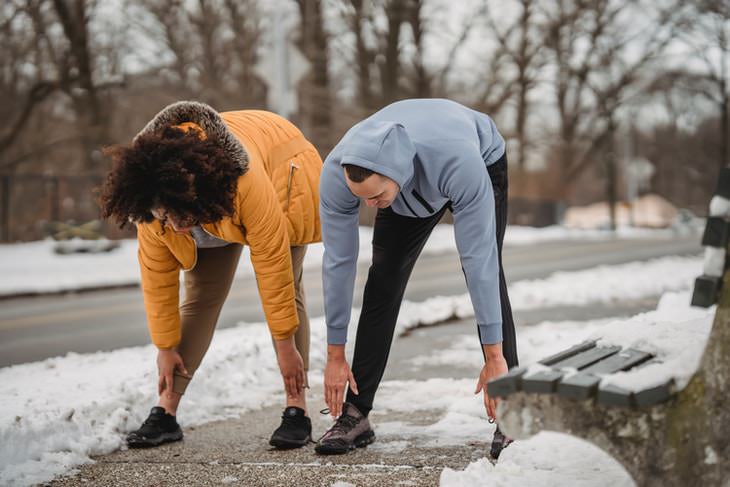
 How to Shovel Snow Safely hamstring stretch
First and foremost, let’s point out that it’s imperative to wear footwear with a good grip while shoveling snow. This way, you can protect yourself from slipping and falling while you’re clearing the snow. As with any exercise or demanding activity, it’s also a good idea to warm up the body before you start shoveling snow. Do a few squats or jumping jacks, stretch your shoulders and arms by making big circles with your arms, and do a few hamstrings stretches to warm up the legs. 
 
Since the most common injury related to snow shoveling is a back injury, it’s also a good idea to stretch your back muscles after clearing the snow. If you need a few ideas as to the specific stretches you can do, read our previous article titled 5 Back Strengthening Stretches That Anyone Can Do.
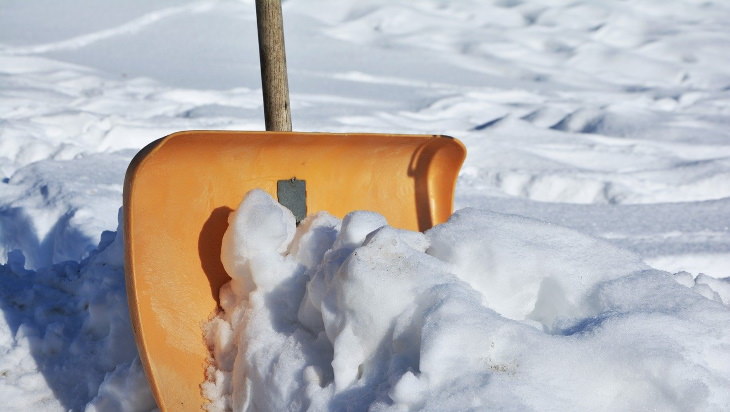
3. Stay in shape  How to Shovel Snow Safely woman in the snow with a shovel
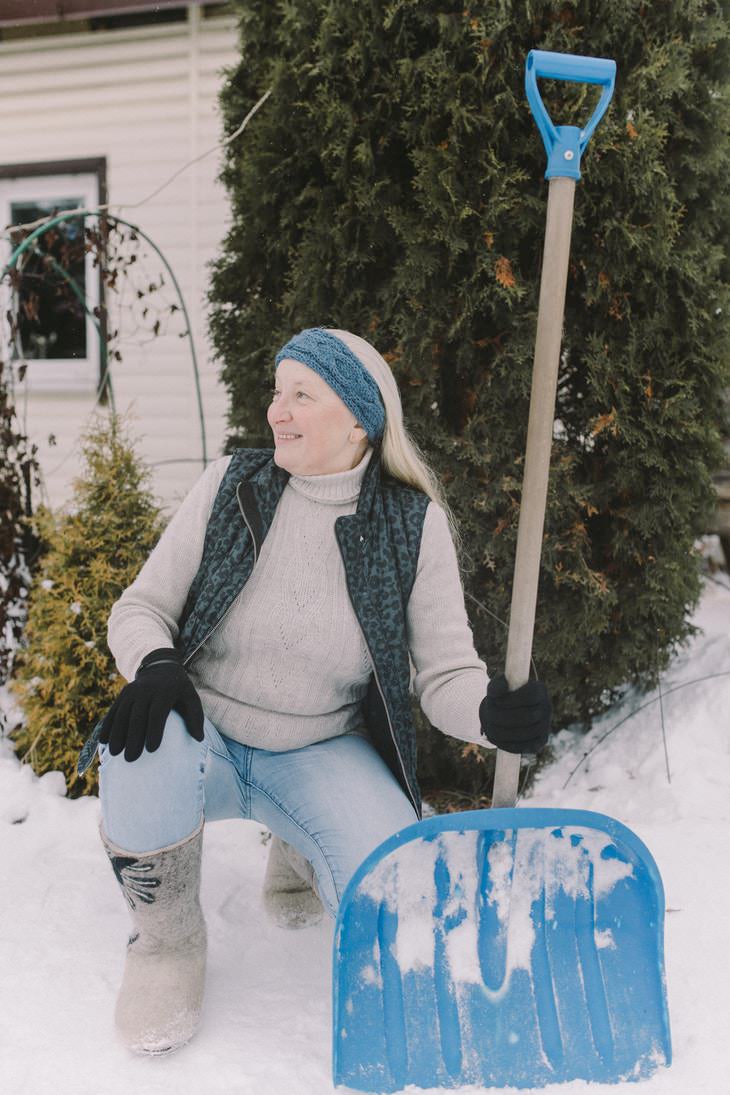
Those who don’t exercise regularly have a 70-80% higher risk of having a heart attack when shoveling snow compared to those who stay in shape year-round. Don’t underestimate the physical strength and toughness that this activity requires, and be very careful or avoid doing it altogether if you don’t exercise often and you’re not engaged in physically-demanding activities on a regular basis. 
 
Try to take breaks while shoveling snow and monitor your heart health during the breaks, especially if you’re not shoveling snow regularly. Stop immediately and take your heart medication (for those with cardiovascular issues) if you feel tightness or pain in the chest, shortness of breath, or any other unsettling symptoms.
 
4. Avoid having a heavy meal right before shoveling snow
 
This seems unrelated, but doctors point out that digestion requires a lot of oxygen-rich blood, so combining a heavy meal with a strenuous activity like shoveling snow may be a bit too much for your system, especially if you’re not doing it regularly. 
 
Alcohol isn’t a good idea either. You may think that alcohol will warm you up before you go outside, but it actually constricts the blood vessels and worsens the back pressure on the heart, so it’s best to enjoy a different warm drink, like tea, before your head out to clear out the snow. 
 
5. Shovel less snow but more often 
How to Shovel Snow Safely Shovel in the snow
This last tip we'll include is logical and easy, but many people still often wait until the last minute and end up lifting heavy piles of packed and wet snow for some reason. Doctors heavily advise everyone to shovel the snow as often as they can during a heavy snowfall instead of waiting for the snow to pile up. 
 
Fresh and powdery snow is much easier to clear away than heavy piles of wet snow. Whenever safe and possible, clear out the snow in small layers to reduce the strain on your system. 
 
Also, use the right technique when shoveling snow: remember to push the snow to the sides of the path or driveway instead of lifting it with the shovel whenever possible. This way, you’ll be putting much less strain on your back, arm muscles, and heart. When you do have to lift some snow, bend and lift with your legs instead of the arms.
 

This is only for your information, kindly take the advice of your doctor for medicines, exercises and so on.     

https://gscrochetdesigns.blogspot.com. one can see my crochet creations  
https://gseasyrecipes.blogspot.com. feel free to view for easy, simple and healthy recipes    
https://kneereplacement-stickclub.blogspot.com. for info on knee replacement


Labels: , , , , , ,

Wednesday, December 12, 2018

The 6 most dangerous times you're at risk for a heart attack


In 25 years of treating heart patients, I've noticed that heart attacks don't always strike randomly. 
There are certain predictable "danger zones," especially for patients with heart disease or a risk for it, like smoking, diabetes, high cholesterol, or high blood pressure. Being aware of these high-risk windows might lead you to tweak your lifestyle and lessen your chance of problems.

A bout of flu

As if extreme exhaustion, achiness, and high fever weren't bad enough, the flu may quadruple your odds of having a heart attack for up to three days following the illness. The virus may trigger an inflammatory response that can damage arteries.  Being dehydrated thickens the blood, making it prone to clot. A fever can increase your heart rate, forcing the heart to work harder. A few days after contracting the flu, seek medical help.

A big sporting event
 
Don't let your love for your team kill you.
Believe it or not, even cheering for your team can break your heart — if you get so wrapped up in the game that your emotions spiral out of control. Soccer's World Cup is serious business in Brazil. When researchers studied four Cups' worth of data, they found that heart attacks increased during the tournament's finals and rates were highest when Brazil was playing compared with other teams. If you're a screaming sports fan, you could ask your doctor about taking a daily baby aspirin. Better yet, try to take things down a notch.

A manic Monday

Sunday-night blues make your heart sad too. A day-by-day breakdown of the incidence of heart attacks reveals that attacks spike on the days when we return to work after a break. Stress over the coming workweek raises levels of adrenaline and cortisol, which may increase blood pressure and clotting. Starting the week on a calmer note with even five to ten minutes of morning yoga or meditation has helped my patients. Recite these magic phrases that calm anxiety when your to-do list gets too long. Walking at lunch to relieve midday stress is another good idea. 
Magic phrases-
1) Just do it.
2) anxiety is uncomfortable but not dangerous
3) I'm thankful for all that you've.
4) Practice mindfulness- be here now.
5) Give in- surrender
6) This too shall pass
7) Pep talk- I can do it.
8)  I've enough, I'm enough
9) Recognise your panic- anxiety is a false alarm
10) Fact check- Feeling like I can't doesn't mean it's true.
11) Go for positivity- I'm loving
12)Think about the upside- This is an opportunity
13) Embrace your emotions- I can live fully, even with anxiety
14) Be defiant.

Shoveling snow

To reduce your risk, make sure to dress warmly, take frequent breaks, and stay hydrated.
The cardiac stress of cold weather and heavy labor can be extreme — and one of the surprising risks for heart attacks. In case studies, researchers have described heart attacks in patients who suffered a clot in a previously placed heart stent during or soon after shoveling snow. (We've seen similar heart attack risks in hunters dragging game out of cold fields.) I tell my patients with heart disease to dress warmly, take frequent breaks, stay hydrated, and, in some cases, just play it safe and leave shoveling to someone else.

The death of a loved one

Researchers who analyzed thousands of U.S. heart attack victims found that those grieving a death were more likely to have an increased heart attack risk in the week following their loved one's passing. Swedish research found that the heart attack risk remains elevated for several years after the death of an adult sibling. If you are suffering from a loss and feel alone or depressed, seek out counseling and support from your doctor, friends, and family. In addition to counseling, try out these habits to help overcome depression naturally. Don't sit home alone and suffer.

A devastating natural disaster
It's essential for first responders to be aware of what natural disasters can do to a person's health.

In the three weeks following the 8.9-magnitude earthquake and accompanying tsunami that killed thousands of people in Japan in 2011, the rate of heart attacks among survivors increased threefold, compared with the rate during the same calendar weeks in past years. It's important for first responders and health-care providers to be aware of this. 

THIS IS ONLY FOR INFORMATION, ALWAYS CONSULT YOU PHYSICIAN BEFORE HAVING ANY PARTICULAR FOOD/ MEDICATION/EXERCISE/OTHER REMEDIES.                                                                                                                                                                                                                                                                                        PS- THOSE INTERESTED IN RECIPES ARE FREE TO  VIEW MY BLOG-                                                                                           https://gseasyrecipes.blogspot.com/                                                                                                                                                                             FOR INFO ABOUT KNEE REPLACEMENT, YOU CAN VIEW MY BLOG-                                                                                                                             https:// kneereplacement-stickclub.blogspot.com/                                                                                       FOR CROCHET DESIGNS                                                                                                                                                                                                                                 https://gscrochetdesigns.blogspot.com    

Labels: , , , , , , , , , , , , ,

Wednesday, February 15, 2017

Shoveling Heavy snowfall linked to heart attack

People living in regions that see heavy snowfall, like India’s Himalayan region, better be careful as you are at an increased risk of a heart attack after a heavy snowstorm, a new study suggests. 

The risk was found to be particularly higher for men and researchers believe that shoveling is the main mechanism linking snowfall with heart attack, or myocardial infarction (MI).

“Men are potentially more likely than women to shovel, particularly after heavy snowfalls. Snow shoveling is a demanding cardiovascular exercise requiring more than 75 per cent of the maximum heart rate, particularly with heavy loads,” said study co-author Nathalie Auger from University of Montreal Hospital Research Centre in Quebec, Canada.

The team of researchers looked at data from two separate administrative databases on 128,073 individual hospital admissions and 68,155 deaths from heart attack (MI) in the province of Quebec between 1981 and 2014. 

They restricted analysis to months in which snow falls, November to April, and obtained detailed weather information from Environment Canada for each health region included in the study.

About 60 per cent of hospital admissions and deaths due to heart attack were in men, showed the study published in the Canadian Medical Association Journal.

The day after a snowfall had the strongest association.

“Quantity of snowfall was associated with an increased likelihood of hospital admission or death due to MI the following day among men,” the study said.

  this is only for your information, kindly take the advice of your doctor for medicines, exercises and so on.
https://gscrochetdesigns.blogspot.com. one can see my crochet creations
https://gseasyrecipes.blogspot.com. feel free to view for easy, simple and healthy recipes 
https://kneereplacement-stickclub.blogspot.com. for info on knee replacement

Labels: , , , ,