Sunday, September 22, 2019

Researchers decode how harsh sounds produced by alarms or from human shrieks disturb our brain

In a first, researchers have decoded what happens in our brain when we hear harsh sounds produced by alarms or from human shrieks -- an advance that may help us better diagnose mental illnesses like schizophrenia. In such diseases, patients show atypical responses to certain sounds.

Alarms such as a car horn or natural human screams are are made of repetitive sound fluctuations in the frequency range of 40 and 80 Hertz (Hz), the study noted.

To understand how some of these sounds were perceived as unpleasant, neuroscientists, analysed how people react when they listen to a range of different sounds. The researchers tried to determine the extent to which repetitive sound frequencies are unpleasant.

When studying the areas of the brain stimulated by listening to these frequencies, they found that both the conventional sound-processing circuit and the more advanced brain areas involved in processing salience and aversion were also activated.

The researchers played repetitive sounds between zero and 250 Hz to 16 participants closer and closer together to define the frequencies that the brain found unbearable.

"We then asked participants when they perceived the sounds as being rough (distinct from each other) and when they perceived them as smooth (forming one continuous and single sound)," said co-author.

From the participants' responses, the scientists established the upper limit of sound roughness as around 130 Hz. "Above this limit, the frequencies are heard as forming only one continuous sound," said the author.

To understand why 130 Hz was the upper limit here, the neuroscientists asked participants to listen to a different set of frequencies, which they had to classify on a scale of one to five -- one being bearable, and five being unbearable.

"The sounds considered intolerable were mainly between 40 and 80 Hz, i.e. in the range of frequencies used by alarms and human screams, including those of a baby," he said.

According to the researchers, as humans evolved, it was crucial from a survival perspective to capture attention from these sounds from a distance, unlike a visual stimulus.

"That's why alarms use these rapid repetitive frequencies to maximise the chances that they are detected and gain our attention," the author said. The researchers added that when the repetitions are spaced less than about 25 milliseconds apart, the brain cannot anticipate them and tried to suppress them.

The brain, the study noted, is constantly on alert and attentive to the stimulus. Harsh sounds fall outside the conventional auditory system, note the researchers, who then attempted to find out what exactly happened to such sound signals in the brain.

"We used an intracranial EEG, which records brain activity inside the brain itself in response to sounds," said a neurologist and researcher.

The auditory cortex in the upper temporal lobe is activated when sounds are perceived as continuous i.e above 130 Hz, the study noted.

"This is the conventional circuit for hearing," said a researcher,


But for harsh sounds, especially between 40 and 80 Hz, they induce a persistent response that activates a large number of more advanced regions of the brain which are not part of the conventional auditory system, the researchers said.

"These sounds solicit the amygdala, hippocampus and insula in particular, all areas related to salience, aversion and pain. This explains why participants experienced them as being unbearable," said the author.

Even while the sound frequencies between 40 and 80 Hz have been used for long in alarm systems, this is the first time this frequency range has been shown to mobilise these neural networks, the study noted.

"Something particular happens at these frequencies, and there are also many illnesses that show atypical brain responses to sounds at 40 Hz. These include Alzheimer's, autism and schizophrenia," the author said.

this is only for your information, kindly take the advice of your doctor for medicines, exercises and so on.   
https://gscrochetdesigns.blogspot.com. one can see my crochet creations 
https://gseasyrecipes.blogspot.com. feel free to view for easy, simple and healthy recipes    
https://kneereplacement-stickclub.blogspot.com. for info on knee replacement


Labels: , , , , , , , , , ,

Sunday, November 25, 2018

Reasons For Your Joint Aches

There are many reasons why your joints might be achy, exercise could be one plausible explanation. So, when the cause of your discomfort is that obvious, there's no reason to panic. But if the pain doesn't go away, you should seek advice from your doctor. There are instances, however, were your joints may hurt, and you may not know why. In these rare instances, your joint pain might be a signal that something pretty serious is going on, including the possibility of a sexually transmitted disease or an autoimmune disorder. Here are some possible reasons that could be making your joints sore:
 
1. Infectious (septic) arthritis
achy joints
If you get a cut or puncture wound that you didn't clean well a nearby joint can get infected with common bacteria like Staphylococcus aureus or Streptococcus. Symptoms include an intense swelling and pain in the area. Fever and chills will likely follow. 
The knees tend to be the most commonly affected joint, but the hips, ankles and wrists are also possible targets. Treatment is required as you might need IV antibiotics and your doctor may need to drain fluid from the infected joint. If left untreated, septic arthritis can lead to full body-sepsis which can be fatal. 
2. Gout
achy joints
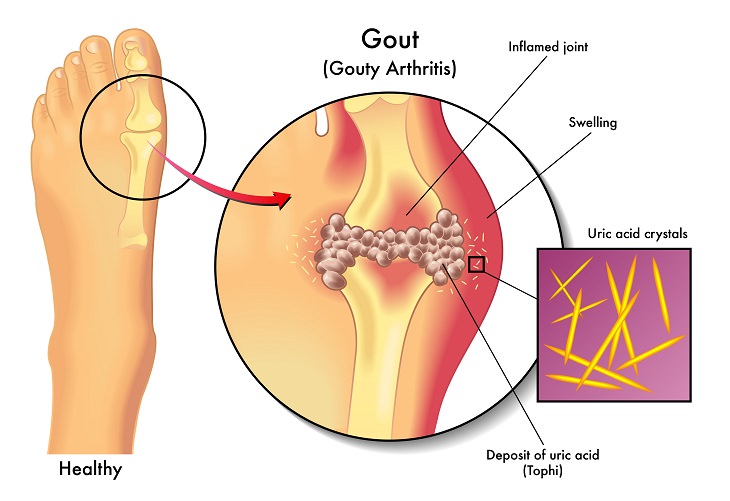
A diet that includes too much protein may also affect your joints. When you eat too much protein, your body produces a lot of uric acid. As the body is unable to excrete all of it, it may cause an intense inflammatory reaction. 
Known as gout, it is one of the most painful types of arthritis you can experience. Symptoms may include heat, swelling redness and pain that is hard to ignore. The pain usually starts off in your big toe which eventually spreads to other joints. Protein overload isn't the only contributing factor. Drinking too much alcohol or sugary drinks, dehydration and even certain types of medicines can cause gout. Being overweight also puts you at risk. 

3. Lyme disease
An estimated 30,000 people are bitten by a tick each year, causing them to come down with this disease. The tick latches onto the skin, sucking blood out of the body. In doing so, your bloodstream can become infected. Early symptoms of Lyme disease includes fatigue, fever, headache and in many cases, a bull's eye rash. 
It tends to be difficult to diagnose if you're not in an area endemic to ticks. Consequently, if Lyme disease remains untreated, the bacteria can spread to your joints, particularly your knees. You may also develop neck stiffness and sore hands and feet. Over time, your heart and nervous system may also be affected. 
4. Lupus
This autoimmune disorder can cause pain in all your joints if left untreated. Lupus is the result of an overactive immune system which can mistakenly target your joints, skin, blood, kidneys and other organs. Aside from swollen, painful joints, symptoms also include a butterfly-shaped rash across your cheeks. Still, not all symptoms appear equally for everyone. Hair loss, trouble breathing, memory problems, mouth sores, as well as dry eyes and mouth can also be a sign of lupus. 
5.  Gonorrhea
It may come as a surprise to discover that this sexually transmitted disease (STD) doesn't just affect your genitals. It may cause problems on your joints too and can result in a painful condition known as gonococcal arthritis. It tends to affect women more so than men and is most common among sexually active teen girls. 
Alongside symptoms of the STD itself,which includes a burning sensation when you urinate or increased discharge in the penis or vagina, other symptoms include hot, red swollen joints - although several painful areas in large joints is not uncommon either.
 
6. Rheumatoid arthritis
achy joints
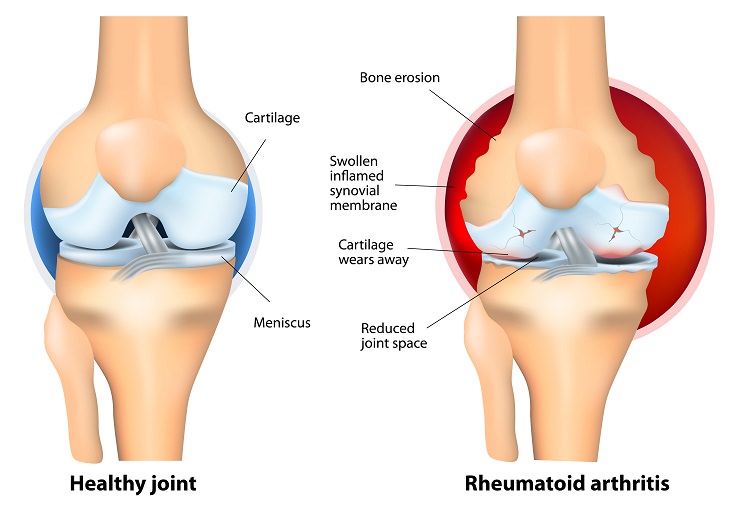
Rheumatoid arthritis is a different kind of wear and tear that commonly develops with age. Rather, it is an autoimmune disorder and is most common among women. In fact, statistics show that from the 1.3 million people in the US who have it, 75% are female. Tender, swollen joints and feeling stiff in the morning are classic RA symptoms. You may also experience fatigue, fever or unexplained weight loss. 
Joint pain cannot always be cured, though it can be treated. Some will require a course of antibiotics or other prescription medicine. Others may improve in their own with time and rest. Nevertheless, any lingering pain in your joints should be a good enough reason to check with your doctor. 

THIS IS ONLY FOR INFORMATION, ALWAYS CONSULT YOU PHYSICIAN BEFORE HAVING ANY PARTICULAR FOOD/ MEDICATION/EXERCISE/OTHER REMEDIES.                                                                                                                                                                                                                                                                                        PS- THOSE INTERESTED IN RECIPES ARE FREE TO  VIEW MY BLOG-                                                                                           https://gseasyrecipes.blogspot.com/                                                                                                                                                                             FOR INFO ABOUT KNEE REPLACEMENT, YOU CAN VIEW MY BLOG-                                                                                                                             https:// kneereplacement-stickclub.blogspot.com/                                                                                       FOR CROCHET DESIGNS                                                                                                                                                                                                                                 https://gscrochetdesigns.blogspot.com


Labels: , , , , , , , ,

Sunday, April 23, 2017

Weight Loss Drugs and Their Common Side Effects

There are a number of FDA (U.S. Food and Drug Administration) approved medications that can be used to treat obesity. However, while they have been proven to aid weight loss, they all have side effects - some that are serious. Everyone should be aware of these side effects, so we have provided them below.
 
Orlistat (Xenical, Alli)
Orlistat can be found in both a prescription form (originally marketed as Xenical) and a non-prescription, over-the-counter form (currently marketed under the brand name Alli).
The difference between the two is the dosage; the prescription version contains 120mg of orlistat, while the over-the-counter version contains 60mg of orlistat.
In a safety announcement back in 2010, the FDA stated that it was adding a new warning to the labels of the prescription and over-the-counter versions of orlistat in order to make everyone aware of the severe liver damage that had, on the rare occasion, been reported with taking this medicine.
Other side effects that have been reported with orlistat, mainly because it blocks fat absorption, include oily bowel movements, flatulence, and sensing the urgency to move the bowels. However, these side effects are often short-lived.
Orlistat may also block some fat-soluble vitamins, such as Vitamin A and D, and beta-carotene, and thus patients who are taking orlistat may need to take vitamin supplements to ensure that they are getting adequate nutrition.
According to the package insert for Xenical, orlistat must not be taken by pregnant women, people with chronic malabsorption, and people with cholestasis (a medical condition in which bile flow from the liver to the duodenum is blocked).
Phentermine/Topiramate (Qsymia)
The drug combination of phentermine and topiramate, currently marketed under the name Qsymia, is a prescription medication that was approved by the FDA back in 2012.
Potentially serious health concerns have arisen during the clinical trials of this drug. These concerns have included birth defects and higher resting heart rate. Preliminary data suggested that pregnant women who took topiramate during pregnancy were much more likely to have infants with an orofacial cleft (such as cleft palate). Therefore, phentermine/topiramate should not be taken by pregnant women, or by those who are planning on getting pregnant.
It is not known whether phentermine/topiramate can be passed on to newborn children via breast milk, and thus, to be on the safe side, nursing mothers are advised to discontinue taking the drug, or discontinue breastfeeding.
Drug labeling for phentermine/topiramate recommends regular heart-rate monitoring, and recommends that those with cardiovascular disease refrain from taking it. It is also very important to note that the information accompanying this drug states that taking it along with another weight-loss medication has not been established to be safe.
According to the package insert, phentermine/topiramate must not be taken by patients with glaucoma or hyperthyroidism.
Lorcaserin (Belviq)
Lorcaserin, marketed under the brand name Belviq, is a prescription drug that was also approved by the FDA in 2012.
Due to the possibility of birth defects, lorcaserin should not be taken by pregnant women or by women who are planning to become pregnant. Also, it is not yet know whether lorcaserin can be passed to a newborn child via breast milk, and thus, newborn mothers are advised to take this into account when deciding whether to take the drug or not.
As an agonist of the serotonin receptor, lorcaserin is a "serotonergic drug," and therefore there is the potential risk of serotonin syndrome or neuroleptic malignant syndrome (NMS) - like reactions. This risk increases when used with other serotonergic drugs or drugs that impair the metabolism of serotonin. These may include medications such as tricyclic antidepressants, dietary supplements like St. John's Wort, monoamine oxidase inhibitors (MAOIs), triptans, or bupropion.
Therefore it is important to pay attention to the drug information that accompanies lorcaserin. This information states that using this drug alongside other weight-loss medication has not been established as safe. Furthermore, the safety of lorcaserin when it comes down to cardiovascular events has not yet been established.
Naltrexone/Bupropion (Contrave)
This medication, a combination of Naltrexone hydrochloride and Bupropion hydrochloride, is known by the brand name Contrave. This drug was approved by the FDA in 2014.
Contrave has been given a black box warning because it contains bupropion, which has been linked to an increase in suicidal thoughts and behaviors.  The more common side effects of Contrave include nausea, constipation, vomiting, headache, diarrhea, dizziness, insomnia, and a dry mouth.
The FDA noted that Contrave can cause seizures and, as a result, it should not be used by patients with seizure disorders. Another serious side effect is an increase in blood pressure and heart rate. Therefore, those who suffer from uncontrolled high blood pressure should avoid this drug. When someone is taking Contrave, their blood pressure and pulse should be monitored regularly. Furthermore, if you are taking Contrave, you should not take any other products that contain bupropion.
Due to its naltrexone component, Contrave must not be taken by patients who are taking opioids or who are being treated for opiod dependency. Patients who are abruptly discontinuing alcohol, barbiturates, benzodiazepines, or antiepileptic drugs should also avoid Contrave.

Liraglutide (Saxenda)
In 2014, the FDA approved liraglutide as a treatment option for chronic weight management. This medication, which is an injection, has been marketed under the brand name Saxenda.
Saxenda has a black box warning as it is known to cause thyroid tumors in rodents. However, it is not yet known whether it can cause these tumors in humans.
Serious side effects of Saxenda include pancreatitis, kidney disease, gallbladder disease, and suicidal thoughts. Furthermore, Saxenda can raise heart rate, so it should be discontinued in any patient who experiences a sustained increase in resting heart rate. The most common side effects of Saxenda include nausea, constipation, diarrhea, vomiting, decreased appetite, and low blood sugar.
Due to the theoretical risk of thyroid tumors, Saxenda should not be taken by patients who have a rare endocrine disorder known as multiple endocrine neoplasia syndrome type 2 (MEN-2), or by patients who have a personal/family history of medullary thyroid carcinoma.
Others who should refrain from taking Saxenda include children, women who are pregnant or breastfeeding, and anyone who has ever had a serious hypersensitivity reaction to liraglutide.

 this is only for your information, kindly take the advice of your doctor for medicines, exercises and so on.   
  https://gscrochetdesigns.blogspot.com. one can see my crochet creations 
  htps://gseasyrecipes.blogspot.com. feel free to view for easy, simple and healthy recipes    
https://kneereplacement-stickclub.blogspot.com. for info on knee replacement   

Labels: , , , , , , , , , ,

Thursday, February 11, 2016

9 Potentially Fatal Medication Mistakes You Should Avoid

THIS IS ONLY FOR INFORMATION, ALWAYS CONSULT YOUR PHYSICIAN BEFORE HAVING ANY PARTICULAR FOOD/ MEDICATION/EXERCISE/OTHER REMEDIES.

FOR INFO ABOUT KNEE REPLACEMENT, YOU CAN VIEW MY BLOG
HTTP://KNEE REPLACEMENT-STICK CLUB.BLOGSPOT.COM/

FOR CROCHET DESIGNS- http://My Crochet Creations.blogspot.com/


The numbers are nothing less than shocking – no less than 1.5 million people are injured or made ill due to medication mistakes, and some 100,000 of those actually end up dying each year. The sad thing is that all these deaths are completely preventable. The answer to avoiding such tragic and unfortunate situations is to protect ourselves from the following medication mistakes:
1. Confusing two medications with similar names
This could happen for a whole variety of reasons, from your doctor’s illegible handwriting, to an incorrect input into a pharmacy computer, or even the wrong drug being pulled from the shelf. According to the national Medication Error Reporting Program in the US, similar drug names account for 25 per cent of all reported errors.
How to avoid it: Ask your doctor to write down what your medication is when he’s writing your prescription in addition to the name and dosage. Check the label on your medication when you pick it up from the pharmacy and ensure that the name, dosage and directions for use are the same as on your prescription.


2. Taking two or more drugs that magnify each others side effects
While it’s true that any drug can have side effects, the side effects you experience can be exponentially worse when you combine two or more drugs that interact with each other negatively.
How to avoid it: Ask your doctor about potential side effects when given a new prescription, and make sure your pharmacy gives you a printout about the medication so that you can review it later. If you see the same side effect listed for more than one medication, make sure you check with your pharmacist or doctor to see if they’re safe to take in combination.
3.Overdosing by combining medications with similar properties
It’s very easy to end up taking medications that all work in a similar way to each other, even though they may have been prescribed to treat different conditions. For example, the pain and anxiety medications you’re taking could both be sedatives, and their combined effect on your body could be toxic.
How to avoid it: Pay attention to warnings written on the packaging of any over-the-counter medication you may be purchasing, as well as the risks listed in the documentation for prescription. Look out for key words, such as “sleepy”, “drowsy”, “dizzy”, “sedation” and their equivalents.


4. Taking wrong dosages
Medication is prescribed in a variety of units of measure, which are sometimes annotated as abbreviations or symbols. This offers plenty of opportunity for a disaster to happen – all it takes is a misplaced decimal point for 1.0mg to become 10mg. It goes without saying that such a miscalculation can be fatal.
How to avoid it: If you can’t read the dosage of a medication on your prescription, then chances are that a pharmacist or nurse will also have difficulty. Ask the pharmacist to check whether the dosage you’ve been prescribed by your doctor is within the range that’s typical for the particular type of medication. If you’re in the hospital, don’t be afraid to speak up if you think you’re about to receive incorrect medication or an incorrect dosage.
 
5. Mixing alcohol with medications
Alcohol turns into a deadly poison when mixed with any of a long list of painkillers, sedatives or other medications. In fact, medical experts say it’s not safe to drink when taking any kind of medication unless your doctor has explicitly said it is safe to do so.
How to avoid it: It’s better to check with your doctor whether it’s safe to take the medication you’ve been prescribed and also drink alcohol. He or she may prescribe you an entirely different medication if you happen to be a heavy drinker. Also check the label on your medication to see if it has any alcohol content.
6. Double-dosing by taking a brand-name medication and a generic version of it simultaneously
It’s quite a common occurrence for patients to get confused and end up with bottles or boxes of a brand-name medication and a generic version of it with a different name. This can result in both being taken simultaneously.
How to avoid it: Ask your doctor to write down both the brand-name and generic names of the medication you’ve been prescribed. Also ask him or her to include what the medication is for, its correct dosage, how often and when to take it. You should try and remember these names for future reference. Furthermore, research both brand-name and generic versions of your prescriptions before checking all of your medications, for any duplication.


7. Eating certain foods that can react dangerously with your medications
Grape juice is definitely something to avoid when you’re taking medication because it acts as an inhibitor for a crucial enzyme that helps the body metabolize it and break it down. This results in an overloaded liver, which can lead to an overdose with potentially fatal consequences. Coffee and iron interactions should also be approached with caution – coffee interferes with iron absorption.
How to avoid it: Ask your doctor about taking your medication without food, as well as whether you can eat certain foods while on the medication. Also alert them to any dietary issues or concerns you may have.
 8. Failing to adjust dosages in the event of liver or kidney function loss
Impaired liver or kidney function means that your body is less able to rid itself of toxins than when you’re completely healthy, and this means that medications could build up in your system at higher-than-intended dosages. A serious (sometimes fatal) mistake that doctors make is not decreasing medication dosages in the event of liver or kidney function loss. While liver and kidney function tests should take place before doctors prescribe certain medications, research has indicated that these tests are not conducted as often as they should be.
How to avoid it: Make sure you check the medications you’ve been prescribed to see if they mention liver or kidney function. Let your doctor know if you’ve had a recent liver or kidney screening.
9. Taking medication that’s unsafe for your age
As you age, your body begins to process medications differently. Drugs that cause side effects such as dementia, dizziness, or high blood pressure are much riskier to take for people over the age of 65.
How to avoid it: The Beers List, which is a list of medications that can no longer be considered safe for people over 65, was first compiled in the early 1990s. Take a copy of this list to your doctor and ask him or her to check all your prescribed medications against it. If you’re taking a medication that’s considered risky, ask for your doctor to find you a safer alternative.

Labels: , , , , , , , ,

Tuesday, October 21, 2014

Type 1 Diabetes

In people with type 1 diabetes, the pancreas cannot make insulin. This vital hormone helps the body's cells convert sugar into energy. Without it, sugar builds up in the blood and can reach dangerous levels. To avoid life-threatening complications, people with type 1 diabetes must take some form of insulin for their entire lives.

Warning Sign: Unusual Thirst

The symptoms of type 1 diabetes tend to come on suddenly and may include:
  • Feeling more thirsty than usual
  • Dry mouth
  • Fruity breath
  • Frequent urination
 Weight Loss
As blood sugar levels remain high, type 1 diabetes often leads to:
  • Unintentional weight loss
  • Increase in appetite
  • Lack of energy, drowsiness

Skin Problems

Many people with type 1 diabetes experience uncomfortable skin conditions, including:
  • Bacterial infections
  • Fungal infections
  • Itching, dry skin, poor circulation 
Girls with type 1 diabetes are more likely to get genital yeast infections. Babies can develop candidiasis, a severe form of diaper rash caused by yeast that can easily spread from the diaper area to the thighs and stomach.

More Dangerous Signs

When blood sugars are not controlled, type 1 diabetes can cause more serious symptoms, such as:
  • Numbness or tingling in the feet
  • Blurred vision
  • Low blood sugar/hypoglycemia
  • Loss of consciousness
Some patients have no obvious warning signs before falling into a diabetic coma, which requires emergency treatment.

Ketoacidosis
Without treatment, type 1 diabetes deprives the body's cells of the sugar they need for energy. Your body starts burning fat for energy instead, which causes ketones to build up in the blood. These are acids that can poison the body. High levels of acid in the blood and the other abnormalities that result from the change in your blood's pH level may trigger a life-threatening coma known as diabetic ketoacidosis. This is an emergency that must be treated quickly and oftentimes in the hospital.

Type 1 vs. Type 2 Diabetes

In type 1 diabetes, the body's immune system mistakenly attacks and destroys the pancreatic cells that produce insulin. In type 2 diabetes, the pancreas is not under attack and usually produces enough insulin. But for numerous reasons, the body doesn’t use the insulin effectively. The symptoms of the two forms are similar, but usually come on more rapidly in people with type 1.

Causes Type 1 Diabetes

 Doctors aren't sure what makes the immune system turn against the pancreas, but most suspect a combination of genetic susceptibility and environmental factors. Scientists have identified 50 genes or gene regions that raise the risk of developing type 1 diabetes. But genetics alone don't account for all the risk, so having these genes doesn’t mean that you’ll develop type 1 diabetes. Some researchers believe that environmental triggers, such as a virus, or dietary or pregnancy-related factors may play a role as well.


Who Gets Type 1 Diabetes

 Type 1 diabetes can develop at any age. However, it accounts for two-thirds of the new cases of diabetes diagnosed in those under the age of 19. There appear to be two peaks in the "age of onset": the first in early childhood and the second during puberty. The condition affects males and females equally, but is more common in whites than in other ethnic groups. According to the World Health Organization, type 1 diabetes is rare in most African, Native American, and Asian population.

Labels: , , , , , , , , ,