Wednesday, June 10, 2026

If Your Joints Ache, These 6 Shocking Reasons May be Why

 There are many reasons why your joints might be achy, exercise could be one plausible explanation. So, when the cause of your discomfort is that obvious, there's no reason to panic. But if the pain doesn't go away, you should seek advice from your doctor. There are instances, however, were your joints may hurt, and you may not know why. In these rare instances, your joint pain might be a signal that something pretty serious is going on, including the possibility of a sexually transmitted disease or an autoimmune disorder. Here are some possible reasons that could be making your joints sore: 

1. Infectious (septic) arthritis

If you get a cut or puncture wound that you didn't clean well a nearby joint can get infected with common bacteria like Staphylococcus aureus or Streptococcus. Symptoms include intense swelling and pain in the area. Fever and chills will likely follow. 


The knees tend to be the most commonly affected joint, but the hips, ankles, and wrists are also possible targets. Treatment is required as you might need IV antibiotics and your doctor may need to drain fluid from the infected joint. If left untreated, septic arthritis can lead to full body-sepsis which can be fatal. 

2. Gout
achy joints
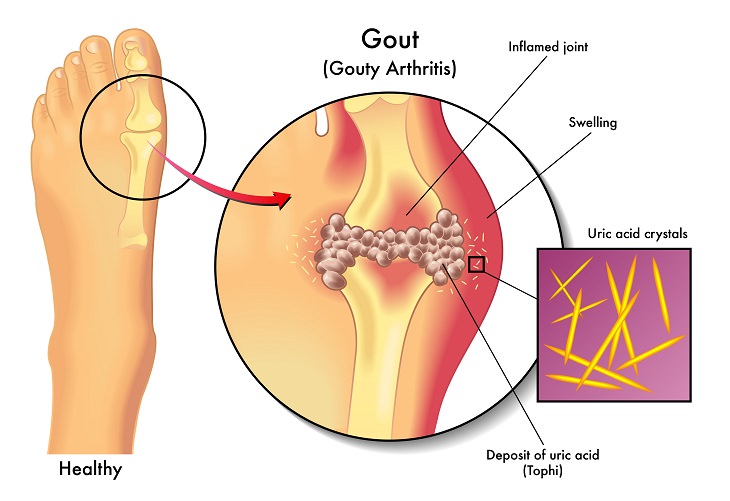
A diet that includes too much protein may also affect your joints. When you eat too much protein, your body produces a lot of uric acid. As the body is unable to excrete all of it, it may cause an intense inflammatory reaction. 

Known as gout, it is one of the most painful types of arthritis you can experience. Symptoms may include heat, swelling redness, and pain that is hard to ignore. The pain usually starts off in your big toe which eventually spreads to other joints. Protein overload isn't the only contributing factor. Drinking too much alcohol or sugary drinks, dehydration and even certain types of medicines can cause gout. Being overweight also puts you at risk. 

3. Lyme disease

achy joints

An estimated 30,000 people are bitten by a tick each year, causing them to come down with this disease. The tick latches onto the skin, sucking blood out of the body. In doing so, your bloodstream can become infected. Early symptoms of Lyme disease include fatigue, fever, headache and in many cases, a bull's eye rash. 

It tends to be difficult to diagnose if you're not in an area endemic to ticks. Consequently, if Lyme disease remains untreated, the bacteria can spread to your joints, particularly your knees. You may also develop neck stiffness and sore hands and feet. Over time, your heart and nervous system may also be affected.

4. Lupus

 This autoimmune disorder can cause pain in all your joints if left untreated. Lupus is the result of an overactive immune system that can mistakenly target your joints, skin, blood, kidneys and other organs. Aside from swollen, painful joints, symptoms also include a butterfly-shaped rash across your cheeks. Still, not all symptoms appear equally for everyone. Hair loss, trouble breathing, memory problems, mouth sores, as well as dry eyes and mouth can also be a sign of lupus. 

5. Gonorrhea
It may come as a surprise to discover that this sexually transmitted disease (STD) doesn't just affect your genitals. It may cause problems on your joints too and can result in a painful condition known as gonococcal arthritis. It tends to affect women more so than men and is most common among sexually active teen girls. 

Alongside symptoms of the STD itself, which includes a burning sensation when you urinate or increased discharge in the penis or vagina, other symptoms include hot, red swollen joints - although several painful areas in large joints is not uncommon either.

6. Rheumatoid Arthritis
 achy joints

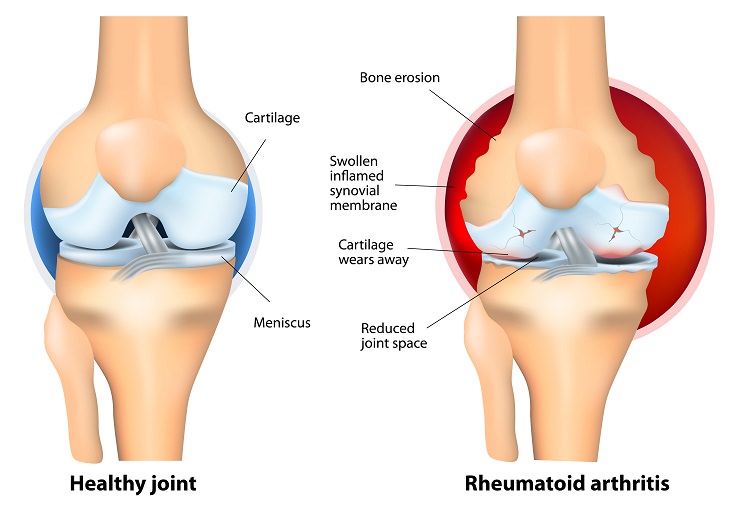
 Rheumatoid arthritis is a different kind of wear and tear that commonly develops with age. Rather, it is an autoimmune disorder and is most common among women. In fact, statistics show that from the 1.3 million people in the US who have it, 75% are female. Tender, swollen joints and feeling stiff in the morning are classic RA symptoms. You may also experience fatigue, fever or unexplained weight loss.

Joint pain cannot always be cured, though it can be treated. Some will require a course of antibiotics or other prescription medications. Others may improve on their own with time and rest. Nevertheless, any lingering pain in your joints should be a good enough reason to check with your doctor.

This is only for your information, kindly take the advice of your doctor for food, medicines, exercises and so on.   


Labels: , , , , , ,

Tuesday, November 04, 2025

10 of the Most Common Misdiagnoses Made by Doctors .

The chances of getting a medical misdiagnosis is actually a lot higher than you could possibly imagine. In fact, a study carried out in 2013 found that diagnostic errors may affect as many as 12 million - or one out of every 20 - American adults. Furthermore, according to the study's author, half of these errors could end up being potentially harmful. 

Mark Graber, MD, founder and president of the Society to Improve Diagnosis in Medicine states that, "you have a good chance of being misdiagnosed if you have a really rare disease or a really common disease which presents non-specifically or in some atypical fashion." In other words, some diseases and conditions are difficult to diagnose because they present the same common symptoms. Therefore, it's extremely important for patients to seek a second medical opinion. Below are 10 conditions that are commonly missed or mistaken for something else.

1. Hypothroidism
 What Is It? Abnormally low thyroid production 
Symptoms: 
• Sadness plus fatigue 
• Weight gain 
• Insomnia 
• Muscle aches/stiffness 
• Constipation 
• Dry skin 
 
Commonly Mistaken For: 
• Depression 
• Aging 
 
Tests for Detection 
A TSH blood test. 
 
Did You Know? 
• It can be easily and completely treated with thyroid hormone replacement. 
 
2. Parkinson's Disease
What Is It? A degenerative disorder of the central nervous system. 
 
Symptoms: 
• Tremors in hands, arms, legs, or head. 
• Stiff muscles 
• Problems with balance or walking 
 
Commonly Mistaken For:  
• Alzheimer's 
• Stroke 
• Stress 
• Traumatic head injury 
• Essential tremor 
 
Tests for Detection  
There are no tests that can be given. In order for Parkinson's to be diagnosed, a complete neurological exam must be administered. Often a Parkinson's disease medicine is given to the patient, and if progress is made, this helps to diagnose the illness. 
 
Did You Know? 
• 7-10 million people in the world are living with Parkinson's. 
• Men are 1.5 times more likely to get Parkinson's than women. 
• There is a 2-4% risk of contracting Parkinson's among people over the age of 60, compared to the 1-2% risk for the rest of the population. 


3. Fibromyalgia
What Is It? A chronic arthritis-like disorder characterized by widespread pain. 
 
Symptoms: 
• Anxiety or depression 
• Increased sensitivity to pain • Incapacitating fatigue 
 
Commonly Mistaken For
• Rheumatoid arthritis 
• Chronic fatigue syndrome 
 
Tests for Detection 
Diagnosis is made after a physical exam and after having had a chat with the patient - a lot of the diagnosis is based on the way you feel. A blood test, known as a FM/a, identifies markers produced by immune system blood cells in people with fibromyalgia. The following two questions are taken into account when diagnosing patients: 
1. Has there been widespread pain in all four quadrants of your body for a minimum of three months? 
2. Do you have tenderness or pain in at least 11 of 18 specific tender points when pressure is applied?

Did You Know? 
• 200 to 400 million people around the world have fibromyalgia, that's 2-4% of the population. 
• It's 7x more likely in women than in men. 
• It takes an average of 5 years to get a correct fibromyalgia diagnosis.

4. Normal Pressure Hydrocephalus (NPH) 
 
What Is It? A buildup of cerebrospinal fluid in the brain. It most commonly occurs after a stroke or a head injury from a fall. However, most of the time, the cause is unknown. 
 
Symptoms
• Unsteady gait 
• Progressive dementia 
• Urinary problems, most often, incontinence 
 
Commonly Mistaken For: 
• Alzheimer's 
• Parkinson's 
 
Tests for Detection 
Tests include brain scans, intracranial pressure monitoring, spinal tap or lumbar catheter, and neuropsychological tests. 
 
Did You Know?  
• It's most common in the elderly population, ages 70-75. 
 
5. Multiple Sclerosis 
What Is It?  
A progressive autoimmune disease that attacks the central nervous system. 
 
Symptoms: 
• Muscle spasms 
• Lack of coordination 
• Balance Problems 
• Blurred vision 
• Cognitive impairment 
 
Commonly Mistaken For
• Viral infection
• Lupus 
• Alzheimer's 
• Bipolar disorder 
 
Tests for Detection 
Tests include an MRI (used to detect MS in 90% of patients), a spinal tap, and an evoked potential test - these tests can indicate problems along the pathway of certain nerves. 

Did You Know? 
 • It's usually diagnosed between the age of 18-40. 
• Children with MS are more likely to have seizures (5%) than adults (2-3%) 
 
 6. Celiac Disease 
What Is It?  
An autoimmune disorder marked by the inability to digest gluten, a protein in wheat, rye and barley. 
 
Symptoms
• Vomiting 
• Abdominal pain and bloating 
• Diarrhea 
• Weight loss 
• Anemia 
• Leg cramps 
 
Commonly Mistaken For: 
• Irritable bowel syndrome (IBS) 
• Crohn's disease 
• Cystic fibrosis 
 
Tests for Detection 
An antibody blood test and a small intestinal biopsy. 
 
Did You Know? 
• In America, around 3 million people are living with celiac disease. 
• Women are 2-3 times more likely to have the disease. 
 
7. Chronic Fatigue Syndrome

What Is It?  
A complex disorder with a combination of symptoms with an unknown cause. 
 
Symptoms: 
• Loss of memory or concentration 
• Sore throat 
• Painful lymph nodes in neck or armpits 
• Unexplained muscle and joint pain 
 
Commonly Mistaken For:  
• Sinus problems 
• Hepatitis 
• Fibromyalgia 
• Lupus 
• Rheumatoid arthritis 
 
Tests for Detection  
There are no specific tests for diagnosis since it mimics many other health problems. Therefore, diagnosis is based on exclusion of similar disorders. However, you must have unexplained persistent fatigue for six months or more along with other symptoms. 
 
Did You Know? 
 • The body becomes more susceptible to infection, as it disrupts the immune system. 
• CFS prolongs and worsens the effects of low blood pressure. 
 
8. Lupus 
 
What Is It? 
A chronic inflammatory disease. 
 
Symptoms: 
• Fatigue 
• Kidney, heart and lung damage 
• Rash 
• Joint paint 
 
Commonly Mistaken For
• Chronic fatigue syndrome 
• Fibromyalgia 
• Rheumatoid arthritis 
 
Tests for Detection  
There are a number of blood tests that can detect lupus and these include: 
• C-Reactive Protein (CRP) 
• Complete Blood Cell Count (CBC) 
• Anti-Sm 
• Antinuclear antibody (ANA) 
• Antiphospholipid Antibodies (APLs) 
 
Did You Know? 
• 50% of lupus patients see 3 doctors in 4 years before being diagnosed. 
• It affects around 1.5 million Americans. 
• 90% of those with lupus are women. 
 
9. Heart Attack 

What Is It? 
A serious medical emergency in which the supply of blood to the heart is suddenly blocked, usually by a blood clot. 
 
Symptoms:  
• Discomfort, pressure, heaviness, or pain in the chest, arm, or below the breastbone 
• Fullness, indigestion, or choking feeling (may feel like heartburn) 
• Sweating 
• Vomiting 
• Dizziness 
• Nausea 
• Shortness of breath 
 
Commonly Mistaken For:  
• Anxiety 
• Indigestion 
 
Tests for Detection  
An electrocardiogram (ECG) will be taken to see if any damage has occurred to your heart muscle and where it has occurred. In addition to this, your heart rate and rhythm will be monitored. Blood tests might be carried out to see if there are any cardiac enzymes in your blood. These enzymes are usually found only in your heart, but will be released into the bloodstream if any damage occurs to your heart. Therefore, by measuring the levels of these enzymes in your blood, doctors can determine the size of the heart attack (if you have indeed had one) and where it started. 
 
Did You Know? 
• Every 43 seconds, someone in the US is having a heart attack. 
• 1 in 5 heart attacks is silent - the damage is done, but the person is not aware of it.
• Men are more susceptible to heart attacks than women. 
 
0. Aortic Dissection 
 
What Is It? 
A tear develops in the aorta, the largest blood vessel branching from the heart, which causes the inner and middle layers to separate. 
 
Symptoms: 
• Sudden chest or upper back pain 
• Loss of consciousness 
• Shortness of breath 
• Sweating 
• Weak pulse in one arm compared to the other 

Commonly Mistaken For: 
• Heartburn 
• Heart attack 
• Stroke 
 
Tests for Detection 
Imaging procedures such as a computerized tomography (CT) scan, a magnetic resonance angiogram (MRA), and transesophageal echocardiogram (TEE) scans are the most accurate. 
 
Did You Know? 
• It most frequently occurs in men, aged 60-70 
• Chronic high blood pressure can stress the aortic tissue, making a person more susceptible to a tear. 
 
Have You Been Misdiagnosed?
Here are some common questions you should ask yourself if you think that you've been misdiagnosed. 
 
Are You Getting Better with Your Prescribed Treatment? 
If you have been taking medicine for a prescribed time and no positive results have started to show, visit your doctor for a follow-up appointment. 
 
Do Your Symptoms Match the Diagnosis You Were Given?  
Look up your diagnosis to see whether or not the symptoms you have mimic the symptoms associated with the illness. 
 
Were You Only Given a Lab Test for Your Diagnosis? 
Sometimes, tests come back wrong, so it is good to get a second opinion, preferably from a specialized lab. 
 
Have You Done Your Research? 
Don't always take your doctor's word. Do some research and don't be afraid to ask a lot of questions. 
 
Is No News Really Good News? 
It's as easy as a chart or piece of paper getting stuck together or misplaced for you not to receive a very important call regarding a diagnosis. Always follow up for results, even if you have been told that not hearing from the doctor is a good thing.


This is only for your information, kindly take the advice of your doctor for medicines, exercises and so on.   


Labels: , , , , , , , , ,