If Your Joints Ache, These 6 Shocking Reasons May be Why
There are many reasons why your joints might be achy, exercise could be one plausible explanation. So, when the cause of your discomfort is that obvious, there's no reason to panic. But if the pain doesn't go away, you should seek advice from your doctor. There are instances, however, were your joints may hurt, and you may not know why. In these rare instances, your joint pain might be a signal that something pretty serious is going on, including the possibility of a sexually transmitted disease or an autoimmune disorder. Here are some possible reasons that could be making your joints sore:
1. Infectious (septic) arthritis
If you get a cut or puncture wound that you didn't clean well a nearby
joint can get infected with common bacteria like Staphylococcus aureus
or Streptococcus. Symptoms include intense swelling and pain in the
area. Fever and chills will likely follow.
The knees tend to be the most commonly affected joint, but the hips,
ankles, and wrists are also possible targets. Treatment is required as
you might need IV antibiotics and your doctor may need to drain fluid
from the infected joint. If left untreated, septic arthritis can lead to
full body-sepsis which can be fatal.
2. Gout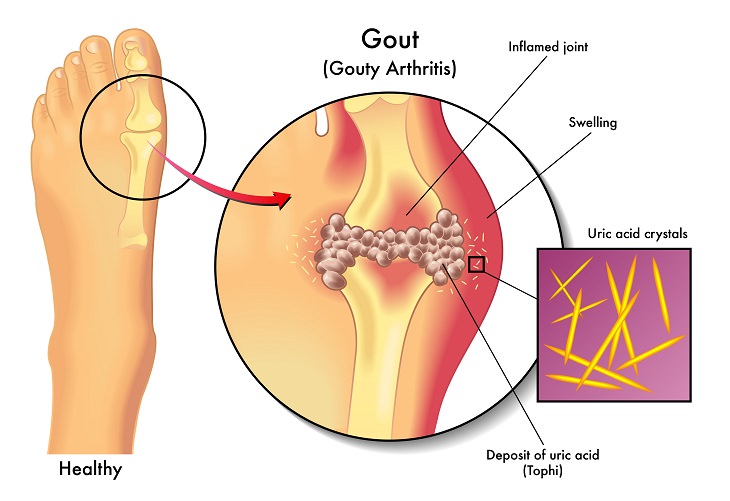
A diet that includes too much protein may also affect your joints. When
you eat too much protein, your body produces a lot of uric acid. As the
body is unable to excrete all of it, it may cause an intense
inflammatory reaction.
Known as gout, it is one of the most painful types of arthritis you can experience. Symptoms may include heat, swelling redness, and pain that is hard to ignore. The pain usually starts off in your big toe which eventually spreads to other joints. Protein overload isn't the only contributing factor. Drinking too much alcohol or sugary drinks, dehydration and even certain types of medicines can cause gout. Being overweight also puts you at risk.
3. Lyme disease
An estimated 30,000 people are bitten by a tick each year, causing them to come down with this disease. The tick latches onto the skin, sucking blood out of the body. In doing so, your bloodstream can become infected. Early symptoms of Lyme disease include fatigue, fever, headache and in many cases, a bull's eye rash.
It tends to be difficult to diagnose if you're not in an area endemic to
ticks. Consequently, if Lyme disease remains untreated, the bacteria
can spread to your joints, particularly your knees. You may also develop
neck stiffness and sore hands and feet. Over time, your heart and
nervous system may also be affected.
4. Lupus
This autoimmune disorder can cause pain in all your joints if left untreated. Lupus is the result of an overactive immune system that can mistakenly target your joints, skin, blood, kidneys and other organs. Aside from swollen, painful joints, symptoms also include a butterfly-shaped rash across your cheeks. Still, not all symptoms appear equally for everyone. Hair loss, trouble breathing, memory problems, mouth sores, as well as dry eyes and mouth can also be a sign of lupus.
5. Gonorrhea
It may come as a surprise to discover that this sexually transmitted
disease (STD) doesn't just affect your genitals. It may cause problems
on your joints too and can result in a painful condition known as
gonococcal arthritis. It tends to affect women more so than men and is
most common among sexually active teen girls.
Alongside symptoms of the STD itself, which includes a burning sensation
when you urinate or increased discharge in the penis or vagina, other
symptoms include hot, red swollen joints - although several painful
areas in large joints is not uncommon either.
6. Rheumatoid Arthritis 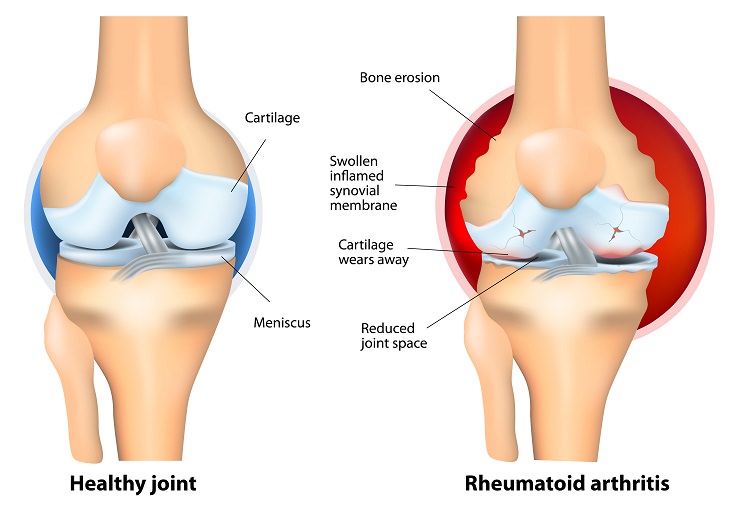
Rheumatoid arthritis is a different kind of wear and tear that commonly
develops with age. Rather, it is an autoimmune disorder and is most
common among women. In fact, statistics show that from the 1.3 million
people in the US who have it, 75% are female. Tender, swollen joints and
feeling stiff in the morning are classic RA symptoms. You may also
experience fatigue, fever or unexplained weight loss.
Joint pain cannot always be cured, though it can be treated. Some will
require a course of antibiotics or other prescription medications.
Others may improve on their own with time and rest. Nevertheless, any
lingering pain in your joints should be a good enough reason to check
with your doctor.