Sunday, March 19, 2023

Never Eaten Artichoke Leaves? Here’s Why You Should!

Some people go through a lifetime without ever tasting artichoke, but by doing so they deprive themselves of the many important health benefits attributed to them. Although artichoke hearts are the main part that we consume, it is recommended that you also start to eat the leaves, which contain most of the important nutrients in the vegetable, including a huge amount of antioxidants. 
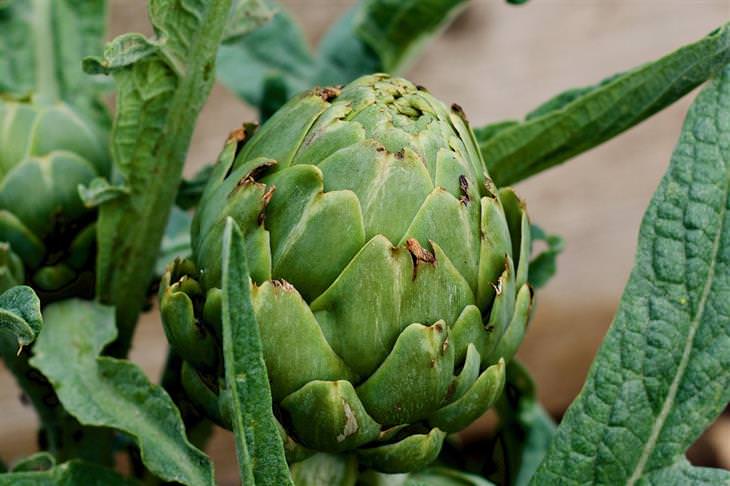
 artichoke
Eating artichoke has many health benefits, and in the next article you’ll get to know 7 of them that will make you want to add it to your menu regularly, and at the end you’ll also find how to choose and prepare the artichokes, including the leaves if you didn’t already know how to.
1. Protects against cancer  
Artichokes have antioxidants and phytonutrients, such as quercetin, rutin, cysteine, and gallic acid, and are therefore included on ORAC – a list of the most antioxidant-rich foods. One of the major advantages of this ability is the prevention of many different types of cancer, especially breast cancer, due to the fact that cancer cells develop, among other things, because of a high amount of free radicals in the body.

2. Fights cardiovascular disease 
Artichoke consumption is associated with a reduction in the amount of bad cholesterol in the blood, and it also prevents inflammation and improves blood flow in general. High cholesterol and inflammation increase the risk of heart disease, but the potent cysteine in artichoke is one of the best substances in nature to lower cholesterol levels. For this purpose, it is better to consume artichoke leaves over artichoke hearts.

3. Improves digestion processes 
Artichoke consumption helps reduce symptoms of gastric problems, so artichoke is included in the GAPS diet, which is designed for various stomach diseases. The cysteine in artichoke helps to increase the production of gastric juices, a process that occurs in the liver, which helps the stomach absorb the food we consume more efficiently. In general, eating artichokes helps prevent irritable bowel syndrome, constipation, diarrhea, and swelling. 
artichoke
4. Helps in weight loss 
Artichokes have a very high amount of fiber, which helps food pass smoothly through the intestines and helps remove waste from the body, which includes excess sugar and toxins. In addition, fiber consumption makes us feel more satisfied after a meal, and many studies have shown that soluble fiber intake, such as those found in artichokes, helps prevent the storage of abdominal fat, which is considered to be extremely dangerous.

5. Improves cognitive functioning 
The artichoke contains about 12% of the recommended amount of vitamin K per day, and this vitamin may be especially important for preventing nerve damage caused by the aging process, according to a study published in the English journal Hypatheose. Eating artichokes can help prevent dementia and Alzheimer's disease, which increases the risk of aging. 
 
6. Prevents anemia 
Vitamin K in artichoke is important for increasing the amount of iron in the blood, and because most of the iron in our body we consume from animals, if you maintain a vegetarian or vegan diet, the artichoke is one of the foods that you must put into your regular menu. Low levels of iron lead to anemia, and in this condition the blood fails to deliver enough oxygen to all parts of the body, leading to fatigue, a weakened immune system, and stomach problems. For women, artichoke intake is generally recommended, as iron deficiency is a more common problem for them, especially before menopause.

7. Strengthens bones Another important role of vitamin K is the production of bone tissue, and because artichoke also contains vitamin C, it helps to inject collagen into the body which also helps this process. Along with these vitamins, magnesium and potassium in artichokes also play a role in building the bones, so eating artichokes regularly helps keep bones stronger and healthier. 
 
How to choose and prepare artichokes 
When you buy artichokes, make sure they’re green and don’t look dry. The most obvious sign of fresh artichoke is closed leaves, which indicate that they are also soft to eat - press them a little and if you hear a "crunching" sound you’ll know for sure that the artichoke is fresh. To eat it, rinse it first with cold water and clean it thoroughly with a brush. Cut about 2.5 cm from the top and the stem, then separate the leaves from the center of the vegetable, and sprinkle a little lemon juice between them to prevent them from browning during cooking. You can steam, cook or bake the artichokes: 
 
Steaming: Place the artichoke face up on a steamer and leave it there for 30 minutes once the water is boiling, or more depending on the size of the artichoke. You can add garlic cloves to enhance its taste, and you should know that steaming is the best cooking method as it allows the artichoke to keep its nutrients. 
 
Cooking: Put the artichoke in a pot with boiling water and cook it for 30 minutes in simmering water. 
 
Baking: Sprinkle a favorite spice over the leaves and pour some olive oil. Wrap the artichoke in two layers of aluminum foil and place it on a baking pan. Bake at 220 degrees for about an hour, and be careful not to bake it too little or too long - when done properly, the artichoke will have a creamy texture and won’t fall apart. Keep in mind that the larger the artichoke, the longer the baking time. The time mentioned here is for medium sized artichokes.


This is only for your information, kindly take the advice of your doctor for medicines, exercises and so on.  

https://gscrochetdesigns.blogspot.com. one can see my crochet creations  
https://gseasyrecipes.blogspot.com. feel free to view for easy, simple and healthy recipes    
https://kneereplacement-stickclub.blogspot.com. for info on knee replacement
https://GSiyers home remedies.blogspot.com     is my latest addition to my blogs. I'm going to add posts there, do give me your valuable feed back on my blogs. Thanks a lot, take care, be healthy and be happy.  

Labels: , , , , , ,

Wednesday, April 10, 2019

Study finds cancer-fighting gene to prevent birth defects


A new research has revealed how p53 gene plays a pivotal role in healthy neural tube development. The p53 is a tumour subdue famous throughout scientific literature and history for its role in protecting humans from cancer. The neural tube is a vital element required for the proper formation of the brain and spinal cord.

The findings explain p53's involvement in a molecular process specific to females called 'X chromosome inactivation'. The new findings helped to clarify why more females are born with neural tube birth defects such as Spina Bifida than males.

–– ADVERTISEMENT ––
One of the researchers said that the study showed how p53 influenced the function of genes required for fostering the production of healthy neural tube cells in the female embryo.

"Healthy development is a very precise and precariously balanced process. p53 helps with this balancing act in the female embryo by producing normal levels of Xist RNA, part of an intricate molecular process important for X chromosome inactivation. This, in turn, leads to healthy neural tube development. Simply put, healthy neural tube development in the female embryo requires the help of p53," said the researcher.

Another researcher states that the study confirmed a long-standing theory that females had an additional risk factor for neural tube defects and that a breakdown in the associated X chromosome inactivation process could help to explain why females were more likely than males to have neural tube-related birth defects.

"Females have two copies of the 'X' sex chromosome, while males only have one copy. In order to maintain health in females, one of these X chromosomes must be inactivated in cells early on during development. If this inactivation does not occur efficiently, the neural tube will not form properly. Previous research indicated that p53 plays a role in normal neural tube development, but it had never been shown exactly how this worked until now," opines the researcher.

THIS IS ONLY FOR INFORMATION, ALWAYS CONSULT YOU PHYSICIAN BEFORE HAVING ANY PARTICULAR FOOD/ MEDICATION/EXERCISE/OTHER REMEDIES.                                    PS- THOSE INTERESTED IN RECIPES ARE FREE TO  VIEW MY BLOG-                                                                                           https://gseasyrecipes.blogspot.com/        
                                                                                                                                                 FOR INFO ABOUT KNEE REPLACEMENT, YOU CAN VIEW MY BLOG-                                                  https:// kneereplacement-stickclub.blogspot.com/           
 
                   FOR CROCHET DESIGNS                                                                                                                                                                                                  https://gscrochetdesigns.blogspot.com

Labels: , , , , , , , ,

Wednesday, May 18, 2016

The Health Benefits of Strawberries

THIS IS ONLY FOR INFORMATION, ALWAYS CONSULT YOUR PHYSICIAN BEFORE HAVING ANY PARTICULAR FOOD/ MEDICATION/EXERCISE/OTHER REMEDIES.


FOR INFO ABOUT KNEE REPLACEMENT, YOU CAN VIEW MY BLOG
HTTP://KNEE REPLACEMENT-STICK CLUB.BLOGSPOT.COM/

FOR CROCHET DESIGNS- http://My Crochet Creations.blogspot.com/


  with just 49 calories per cup, a relatively low amount of sugar and a good source of dietary fiber, strawberries are possibly one of the most nutrient dense fruits you can eat. 
 
 
Packed with Nutritional Goodness
 
Just one cup of strawberries contains:
  • 0 grams of fat
  • 7 grams of sugar
  • 3 grams of fiber
  • 1 gram of protein
  • 4 mg Vitamin C (149%)*
  • 2 IU Vitamin A (89%)*
  • .6 mg Manganese (29%)*
  • (9%)*Folate 36 mcg
  • 233 mg Potassium (7%)*
  • 8 mg Magnesium (5%)*
  • 3 mcg Vitamin K (4%)*
 
How to Select and Buy Strawberries
 
The strawberries you select have an important impact on the health benefits you'll reap (read on to discover more). So, when purchasing strawberries, bear in mind the following factors:
1. Look at the color and the condition of the skin. They should be a bright, deep, red color.
2. Check their smell. Strawberries should have a fragrant, sweet smell, showing that they have become ripe enough.
3. Berries that appear dark and mushy should be avoided. This indicates that they are going to spoil pretty quickly.
4. An under-ripe strawberry will have a white or slightly green color at the top. These should be avoided as they lack flavor. Alternatively, you could wait for several days for them to ripen before eating them.
5. Keep strawberries refrigerated and unwashed. This will prolong their freshness. Washing strawberries ahead of time can cause them to grow mold.  

8 Incredible Health Benefits of Strawberries
 
1) Rich in anti-oxidants
Studies conducted on strawberries show that they contain a high source of various antioxidants. Strawberries also contain two essential micronutrients (vitamins A and C) which act as antioxidants in the body. These essential vitamins are one of the body's first lines of defense. They help reduce free radical (an atom or molecule that has a single unpaired electron in an outer shell) damage that leads to inflammation and chronic diseases.
Antioxidants 'donate' electrons to unstable free radicals which are missing electrons. They also slow the occurrence of oxidative stress, which is primarily responsible for the aging process as well as the formation of most diseases, including cancer, heart disease, diabetes and neurological disorders. Eating strawberries therefore counteracts the damaging effects caused by free radicals, slowing the aging process and reducing inflammation. 
2) Protect against cancer
Research has shown that strawberries may help fight against cancer. In fact, studies show that strawberries may block initiation of cancer cell formation (known as carcinogenesis). They have also been found to suppress the progression and proliferation of cancerous tumors.
Furthermore, in a controlled study among participants who were given strawberry extract containing anthocyanin antioxidants, human liver cancer cells were significantly inhibited in comparison to the group that did not receive the extract. In addition, studies show that consuming berries lowers the risk for breast, colon, prostate and skin cancer.
 3) Protect against heart diseases
The antioxidants in strawberries have been found to lower the risk of cardiovascular disease by slowing down LDL (bad) cholesterol, limiting plaque build-up in the arteries. They have also been found to improve blood vessel function and blood pressure, as well as decrease the formation of dangerous blood clots inside blood vessels (known as thrombosis).
Strawberry extracts have been shown to decrease the inflammatory response within the body - a major cause of heart disease. Furthermore, oxidative damage has also been linked to an increased risk of heart attack and stroke, so eating strawberries which are packed with antioxidants can help fight this process too.
4) Protect the skin from damage
 As we age, the condition and appearance of the skin is altered. Usually a result of a poor diet, sun exposure and environmental toxins, the skin undergoes photo-aging, inflammation and may also show signs of immune dysfunction, acne and other skin disorders.
Studies show that one of the best foods for skin health is strawberries and other berries, primarily because they are rich in antioxidants like vitamins A and C, which have been found to improve skin properties, lowering levels of wrinkles and discoloration as well as boosting elasticity. Vitamin C has also been found to promote collagen synthesis, photo-protection from ultraviolet A and B, as well as lightening hyper-pigmentation and improving a variety of inflammatory rashes.
5)They boosts brain health and prevent neuron-degenerative diseases
 Studies show that diets rich in strawberries have the potential to protect the brain against aging. Strawberries are high in flavanoids like anthocyanidins, which has been found to improve cognition in experimental studies. As long-term intakes of berries and flavonoids reduce the rate of oxidation damage in the brain, health practitioners therefore recommend that people include berries in their diet as much as possible to defend against oxidative stress and inflammation in the brain, as well as the loss of memory and diseases like Alzheimer's and dementia. 

6) Help in detoxification
Most westerners have a diet high in convenience and packaged foods, which are usually packed with sugar, refined fats, artificial ingredients and toxins - all of which are hard on the digestive system. Strawberries may help detoxify the body, restoring the health of the digestive tract, promoting digestive regularity and providing anti-inflammatory antioxidants. Vitamins A and C found in strawberries also help the body to detoxify, as do the vital antioxidants they contain. Both help the body to neutralize and eliminate toxins, including excessive free radical damage, inflammation and digestive conditions. 
7)Help to prevent neurological disorders like Parkinson's Disease
Just one cup contains an impressive 29 percent of your daily manganese intake. Manganese is an essential nutrient needed for proper nervous system and brain health. It helps prevent neurological disorders like Parkinson's disease and epilepsy. This mineral is also essential in the formation of bones, connective tissues, making blood-clotting possible and producing enough reproductive sex hormones. 
8)Helps to support a healthy pregnancy
 Strawberries are a great source of folate - one cup supplies about 9 percent of your RDA. This B vitamin helps tissues grow, cells properly function and is also crucial for a healthy pregnancy. In fact, consuming a good amount of strawberries before and during pregnancy has been found to prevent certain birth defects, including spina bifida. Folate also prevents anemia.

Labels: , , , , , , , , , ,