Thursday, December 08, 2016

WARNING SYMPTOMS OF A HEART ATTACK EVEN BEFORE IT HAPPENS

1. Fatigue 
When your arteries become narrow, your heart receives a lot less blood than it's used to. As a result, your heart has to work overtime, leaving you feeling tired and drowsy all the time.
2. Shortness of Breath
When your heart is getting less blood than it's used to, your lungs are not going to be getting the oxygen they need. This is because the two systems depend on one another, so if one isn't working up to scratch, the other won't be either. If you are having difficulty breathing it's best to see your doctor as soon as possible, as this could mean that a heart attack is just around the corner.
 3. Weakness
When, all of a sudden, your body becomes weak, it's because your blocked arteries are not allowing your blood to circulate properly. Poor circulation will prevent your muscles from getting the oxygen that they need and, as a result, you may feel very weak and may even collapse.
4. Flu or Cold Symptoms
 If you experience flu symptoms out of the blue this could be because a heart attack is about to happen in the not-so-distant-future. Many people who have had heart attacks say that they feel like they developed a cold before their attacks.
 
 5. Dizziness and Cold Sweats Poor circulation will also restrict the blood flow to your brain. This is life threatening in itself, and will at first cause dizziness and clamminess. Do not ignore this!
 
6. Chest Pressure
If you are experiencing the onset symptoms of a heart attack, chances are you have also been experiencing a discomfort in your chest - whether it's minor pain or a built-up pressure. This discomfort will gradually increase until the heart attack itself happens.

 this is only for your information, kindly take the advice of your doctor for medicines, exercises and so on.

https://gscrochetdesigns.blogspot.com. one can see my crochet creations
https://gseasyrecipes.blogspot.com. feel free to view for easy, simple and healthy recipes 
https://kneereplacement-stickclub.blogspot.com. for info on knee replacement
 

Labels: , , , , , , , ,

Wednesday, October 15, 2014

*FEMALE HEART ATTACKS*

*Women rarely have the same dramatic symptoms that men have ... you know, the sudden stabbing pain in the chest, the cold sweat, grabbing the chest & dropping to the floor that we see in movies. Here is the story of one woman's experience with a heart attack.*

*I had a heart attack at about 10:30 PM with NO prior exertion, NO prior emotional trauma that one would suspect might have brought it on. I was sitting all snugly & warm on a cold evening, with my purring cat in my lap.*

*A moment later, I felt that awful sensation of indigestion, when you've been in a hurry and grabbed a bite of sandwich and washed it down with a dash of water, and that hurried bite seems to feel like you've swallowed a golf ball going down the esophagus in slow motion and it is most uncomfortable. You realize you shouldn't have gulped it down so fast. This was my initial sensation--the only trouble was that I hadn't taken a bite of anything since about 5:00 p.m.*

*After it seemed to subside, the next sensation was like little squeezing motions that seemed to be racing up my SPINE (hind-sight, it was probably my aorta spasms), gaining speed as they continued racing up and under my sternum (breast bone, where one presses rhythmically when administering
CPR).*

*This fascinating process continued on into my throat and branched out into both jaws. 'AHA!! NOW I stopped puzzling about what was happening -- we all have read and/or heard about pain in the jaws being one of the signals of an MI happening, haven't we? I said aloud to myself and the cat, Dear God, I think I'm having a heart attack!*

*I pulled myself up with the arms of the chair, walked slowly into the next room and dialed the Paramedics..I told her I thought I was having a heart attack due to the pressure building under the sternum and radiating into my jaws. I didn't feel hysterical or afraid, just stating the facts. She said she was sending the Paramedics over immediately, asked if the front door was near to me, and if so, to un-bolt the door and then lie down on the floor where they could see me when they came in.

I unlocked the door and then laid down on the floor as instructed and lost consciousness,I know it sounds like all my thinking and actions at home must have taken at least 20-30 minutes before calling the paramedics, but actually it took perhaps 4-5 minutes before the call, and both the fire station and St Jude are only minutes away from my home, and my Cardiologist was already to go to the OR in his scrubs and get going on restarting my heart (which had stopped somewhere between my arrival and the procedure) and installing the stents.

Why have I written all of this to you with so much detail? Because I want all of you who are so important in my life to know what I learned first hand.

1. Be aware that something very different is happening in your body, not the usual men's symptoms but inexplicable things happening (until my sternum and jaws got into the act). It is said that many more women than men die of their first (and last) MI because they didn't know they were having one and commonly mistake it as indigestion.

2. Note that I said 'Call the Paramedics.' And if you can, take an aspirin. Ladies, TIME IS OF THE ESSENCE!

Do NOT try to drive yourself to the ER - you are a hazard to others on the road.

Do NOT have your panicked husband who will be speeding and looking anxiously at what's happening with you instead of the road.

Do NOT call your doctor -- he doesn't carry the equipment in his car that you need to be saved! The Paramedics do, principally OXYGEN that you need ASAP. Your Dr. will be notified later.

3. Don't assume it couldn't be a heart attack because you have a normal cholesterol count. Research has discovered that a cholesterol elevated reading is rarely the cause of an MI (unless it's unbelievably high and/or accompanied by high blood pressure). MIs are usually caused by long-term stress and inflammation in the body, which dumps all sorts of deadly hormones into your system to sludge things up in there. Pain in the jaw can wake you from a sound sleep. Let's be careful and be aware. The more we know the better chance we could survive.

A cardiologist says if everyone who gets this mail sends it to 10 people, you can be sure that we'll save at least one life.


Labels: , , , ,

Friday, August 08, 2014

What Happens During A Heart-Attack

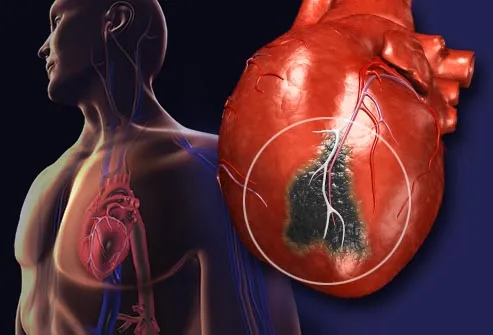
What Is a Heart Attack?illustration of heart attack

A heart attack happens when the blood flow to your heart is suddenly reduced or cut off. Your blood carries oxygen to the heart. During a heart attack, your heart muscle doesn't get the oxygen it needs. Without oxygen, the heart muscle can be damaged or destroyed.

Getting your blood flow restored quickly is the key to recovery. Get medical help right away if you think you're having symptoms of a heart attack.


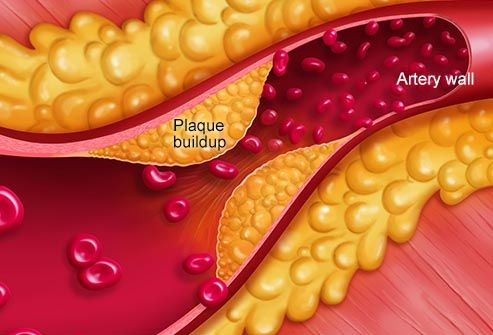
illustratino of plaque buildup in artery
Causes of a Heart Attack

A buildup of cholesterol and a fatty material called plaque in your artery walls usually causes a heart attack. The buildup of plaque takes years.

Most heart attacks happen when plaque breaks off your artery wall. A blood clot then forms around the broken-off plaque, blocking the artery.

Heart Attack Symptoms

Men and women have different symptoms, but both may have pain, pressure, or discomfort in the chest. Other symptoms include shortness of breath, sweating, fainting, and nausea. You may also have pain in the neck, jaw, or shoulders.

Men are more likely to break out in a cold sweat and feel pain move down the left arm during a heart attack.

Symptoms in Women

About 435,000 women have heart attacks in the U.S. each year. The symptoms can be so mild they are often dismissed as something minor.

Women are more likely than men to have back or neck pain, heartburn, shortness of breath, nausea, vomiting, and indigestion. They may also feel extremely tired, light-headed, or dizzy. Flu-like symptoms and sleep problems may also occur 2 weeks before a heart attack.


What to Do

If you or someone you're with has symptoms that might be a heart attack, call 911 right away. You're more likely to survive if you get treated within 90 minutes.

While you're calling 911, the person with heart attack symptoms should chew and swallow an aspirin to lower the risk of a blood clot (unless they're allergic). If the person is unconscious, hands-only CPR can double his chances of survival.

Diagnosis of a Heart Attack

An EKG, which checks your heart's electrical activity, can help doctors see if you're having a heart attack. It can also show which artery is clogged.

Doctors can also diagnose a heart attack with blood tests that measure the proteins that are released when heart muscle cells die.

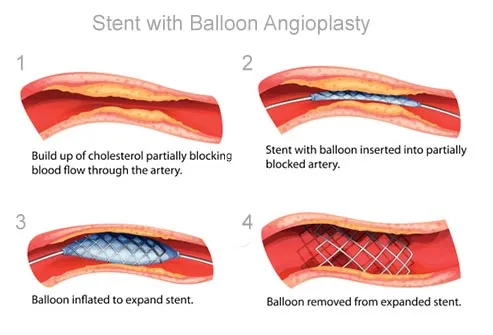
illustration of stent with balloon angioplastyHeart Attack Treatment

Doctors will move quickly to restore the flow of blood to your heart. You may get drugs that dissolve blood clots in your arteries.

You'll likely get a procedure called a coronary angiogram. Doctors put a thin tube with a balloon on the end through your artery. It opens up the blockage by flattening the plaque in your arteries. Most times doctors place a small, mesh tube called a stent in your artery to make sure it stays open.


Risks for Heart Attack

Your odds of having a heart attack go up with age, and men have a greater risk than women. A family history of heart disease also increases your risk.

Smoking can raise your risk of a heart attack. So can having high blood pressure, high cholesterol levels, diabetes, and being obese. Other things that can raise your risk of a heart attack are a lack of exercise, depression, and stress.

How to Prevent a Heart Attack

If you smoke, stop. It will immediately cut your chances of a heart attack by a third.

Get exercise and eat right. The American Heart Association recommends 150 minutes of moderate-intensity exercise per week. Eat plenty of fruits, veggies, and whole grains to keep your arteries healthy.

Taking a daily aspirin helps some people prevent a heart attack. Talk to your doctor to see if it's right for you.

Find positive ways to manage stress.

Life After a Heart Attack

If you're in the hospital for a heart attack, you may come home in just a few days. You can resume your normal activities after a few weeks.

Cardiac rehab can help you recover. You'll get a fitness program that's made just for you, and learn how to keep up a heart-healthy lifestyle. Counselors give you support if you're depressed or worried about getting a second heart attack.


THIS IS ONLY FOR INFORMATION, ALWAYS CONSULT YOU PHYSICIAN BEFORE HAVING ANY PARTICULAR FOOD/ MEDICATION/EXERCISE/OTHER REMEDIES.


PS- THOSE INTERESTED IN RECIPES ARE FREE TO VIEW MY BLOG-
HTTP:GSEASYRECIPES.BLOGSPOT.COM/
FOR INFO ABOUT KNEE REPLACEMENT, YOU CAN VIEW MY BLOG-
HTTP://KNEE REPLACEMENT-STICK CLUB.BLOGSPOT.COM/

FOR CROCHET DESIGNS


HTTP://MY CROCHET CREATIONS.BLOGSPOT.COM

Labels: , , , , , , , , , , ,