Thursday, March 24, 2022

Daily consumption of cranberries can improve cardiovascular health
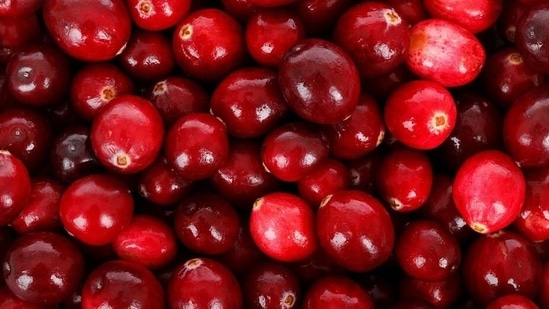
According to a new clinical trial led by King's College, daily consumption of cranberries for one month can improve cardiovascular function in healthy men.
Low consumption of fruits and vegetables is one of the top modifiable risk factors associated with a higher incidence of cardiovascular disease worldwide(Pixabay)
Low consumption of fruits and vegetables is one of the top modifiable risk factors associated with a higher incidence of cardiovascular disease worldwide

According to a new clinical trial led by King's College, daily consumption of cranberries for one month can improve cardiovascular function in healthy men. The findings of the study were published in the journal, 'Food & Function'. The study has included 45 healthy men who consumed whole cranberry powder equivalent to 110g of fresh cranberries per day (9 g powder) or a placebo for one month.

Those consuming cranberry had a significant improvement in flow-mediated dilation (FMD), which signals improvement of heart and blood vessel function. FMD is considered a sensitive biomarker of cardiovascular disease risk and measures how blood vessels widen when blood flow increases.

Dr Ana Rodriguez-Mateos, the Senior Lecturer in Nutrition at the Department of Nutritional Sciences at King's College London and senior author of the study, said, "The increases in polyphenols and metabolites in the bloodstream and the related improvements in flow-mediated dilation after cranberry consumption emphasise the important role cranberries may play in cardiovascular disease prevention. "

He further added, "The fact that these improvements in cardiovascular health were seen with a number of cranberries that can be reasonably consumed daily makes cranberry an important fruit in the prevention of cardiovascular disease for the general public. "

Low consumption of fruits and vegetables is one of the top modifiable risk factors associated with a higher incidence of cardiovascular disease worldwide. Growing evidence continues to link the polyphenols from berries with heart health benefits. Cranberries are rich in unique proanthocyanidins that have distinct properties compared to polyphenols found in other fruits.

This study explored whole cranberry freeze-dried powder, equivalent to 100g of fresh cranberries, and its impact on cardiovascular health. The results demonstrated that the consumption of cranberries as part of a healthy diet can help reduce the risk of cardiovascular disease by improving blood vessel function.

An initial pilot study was completed with five healthy young men to confirm the biological activity of the whole cranberry freeze-dried powder. The pilot concluded that cranberry consumption increased FMD and confirmed dosing.

The main study was a gold standard study design examining 45 healthy men each consuming two packets of whole cranberry freeze-dried powder equivalent to 100g of fresh cranberries, or a placebo, daily for one month.

The study found significant improvements in FMD two hours after first consumption and after one month of daily consumption showing both immediate and chronic benefit. In addition, metabolites were also identified and predicted the positive effects seen in FMD. These results conclude that cranberries can play an important role in supporting cardiovascular health and good blood vessel function.

Dr Christian Heiss, Professor of Cardiovascular Medicine at the University of Surrey and co-author of the study said, "Our findings provide solid evidence that cranberries can significantly affect vascular health even in people with low cardiovascular risk. This study further indicates that specific metabolites present in the blood after cranberry consumption are related to the beneficial effects."


Labels: , , , , , ,

Thursday, August 19, 2021

The most potent medicine for your mental health minght be in your kichen cabinet !

Food influences your brain directly and indirectly. When food is broken down by the microbiota into fermented and digested materials, its components directly influence neurotransmitters, such as serotonin, dopamine, and GABA (gamma-aminobutyric acid), which travel to the brain and change the way you think and feel. When food is broken down, its constituent parts can also pass through the gut wall into the bloodstream, and certain metabolites can act on the brain that way as well.

Food’s most profound effect on the brain is through its impact on your gut bacteria. Some foods promote the growth of helpful bacteria, while others inhibit this growth. Because of that effect, food is some of the most potent mental health medicine available, with dietary interventions sometimes achieving similar results to specifically engineered pharmaceuticals, at a fraction of the price and with few, if any, side effects.

On the other hand, food can also make you sad—certain food groups and eating patterns can have a negative effect on your gut microbiome and your mental health. Eating healthy, whole foods ensures that your brain is working at peak efficiency.

The idea of using food as medicine for mental health is central to nutritional psychiatry, and in my opinion, it’s crucial to finding meaningful, lasting solutions to mental health problems through simple and sustainable lifestyle changes.

We’ve come a long way since the seriously mentally ill were confined to asylums or hospitals without much understanding of their suffering. But mental health is still in a crisis. (More than 40 million Americans are dealing with a mental health concern—more than the populations of New York and Florida combined.) Mental disorders are among the most common and costly causes of disability. Depression and anxiety are on the rise. Suicide is a staple on lists of top causes of death, no matter what age-group. We’re in a mental health mess, no matter how many people are in denial about it. It has been challenging to find treatments that help people manage their moods, cognition, and stress levels.

Historically, we turned to evidence-based medications and talk therapies that worked for specific conditions. For example, for someone who was depressed, we might have tried a selective serotonin reuptake inhibitor like Prozac. For someone who was panicky, we might have used cognitive behavioral therapy. Those kinds of treatments are still in wide use and can be effective. But for some people, the positive effects last only a short period of time, and they do not completely eliminate symptoms. Sometimes patients develop side effects from the medications and stop taking them. Other times they are afraid of becoming “dependent” on a medication and ask to be taken off it. Some patients who come to see me do not meet the criteria for a disorder such as depression or anxiety. They struggle with symptoms but not enough to warrant a medication intervention.

My own view of where we went wrong is this: Psychiatric diagnoses have no statistical validity, and the conditions have no biomarkers of specific diseases. “Diagnoses” are simply lists of symptoms. We assume that when a person presents with psychological symptoms, the problem rests solely in the brain. It is clear that other organs, such as the gut, play a role in how we think and feel. We need to examine the whole person and their lifestyle in order to better treat them.

The problem is bigger than psychiatry, extending to medicine as a whole. Despite the huge number of health issues that relate to diet, it may sound far-fetched, but many patients don’t hear food advice from their doctors, let alone their psychiatrists. Medical schools and residency programs do not teach students how to talk to patients about dietary choices. Nutrition education for doctors is limited.

Thankfully, we are inching toward a moment in health care when medicine is no longer strictly about prescriptions and a single line of therapy. Thanks to the wealth of medical knowledge accessible to the general public, patients are more empowered and informed than ever. It feels as though all my colleagues are experiencing a similar movement in their specialties, with patients eager to explore a diverse range of ways to feel better. One of my success stories of nutritional treatment was a referral from an infectious disease colleague. Another time, an orthopedic colleague reached out to me to ask more about the data on turmeric as an anti-inflammatory, as his patient with severe knee pain wanted to delay surgery until he’d tried this nutritional intervention.

In psychiatry, we are finally beginning to talk about the power of food as medicine for mental health. The body of research on the microbiome and how food impacts mental health is growing. In 2015, Jerome Sarris and his colleagues established that “nutritional medicine” was becoming mainstream in psychiatry. The goal of nutritional psychiatry is to arm mental health professionals with the information they need so that they can offer patients powerful and practical advice about what to eat. That doesn’t overshadow the importance of working with your doctor, since medication and the appropriate therapy remain a part of the journey to improved mental health. A better diet can help, but it’s only one aspect of treatment. You cannot eat your way out of feeling depressed or anxious (and in fact, trying to do so can make things worse). Food is not going to relieve serious forms of depression or thoughts of suicide or homicide, and it is important to seek treatment in an emergency room or contact your doctor if you are experiencing thoughts about harming yourself or someone else.

It is extremely important to look after your mental health with strategies of mindfulness, meditation, exercise, and proper sleep. The literature on these topics is vast, with methods both ancient and modern (and sometimes a combination of the two!) and I encourage you to explore them on your own. That being said, in addition to taking guidance from your doctor and encouraging mental wellness in other ways, you should support your treatment by paying attention to how and what you eat. The relationship linking food, mood, and anxiety is garnering more and more attention.

This is only for your information, kindly take the advice of your doctor for medicines, exercises and so on.   

https://gscrochetdesigns.blogspot.com. one can see my crochet creations  
https://gseasyrecipes.blogspot.com. feel free to view for easy, simple and healthy recipes    
https://kneereplacement-stickclub.blogspot.com. for info on knee replacement


Labels: , , , , , , , , , , , , ,

Thursday, January 28, 2021

Finally, a Supplement That Actually Boosts Memory – Many Already Take It for Better Sleep

Researchers at Tokyo Medical and Dental University (TMDU) showed that melatonin’s metabolite AMK can enhance the formation of long-term memories in mice. Memory of objects were tested after treatment with melatonin or two of its metabolites. Older mice that normally performed poorly on the memory task showed improvements as dosage increased. The metabolite AMK was found to be the most important as melatonin failed to improve memory if it was blocked from metabolizing into AMK.

Walk down the supplement aisle in your local drugstore and you’ll find fish oil, ginkgo, vitamin E, and ginseng, all touted as memory boosters that can help you avoid cognitive decline. You’ll also find melatonin, which is sold primarily in the United States as a sleep supplement. It now looks like melatonin marketers might have to do a rethink. In a new study, researchers led by Atsuhiko Hattori at Tokyo Medical and Dental University (TMDU) in Japan have shown that melatonin and two of its metabolites help memories stick around in the brain and can shield mice, and potentially people, from cognitive decline.

One of the easiest ways to test memory in mice is to rely on their natural tendency to examine unfamiliar objects. Given a choice, they’ll spend more time checking out unfamiliar objects than familiar ones. The trick is that for something to be familiar, it has to be remembered. Like in people, cognitive decline in mice manifests as poor memory, and when tested on this novel object recognition task, they behave as if both objects are new.

Acute AMK Effects on Long-Term Object Memory

Three 1-minute training trials (A) revealed age-associated object memory decline in middle-aged and old mice at 1 day post-training (B). Systemic AMK (1 mg/kg) administered after a single 1-minute training trial enhanced object memory at 1 and 4 days post-training in all age groups (D-F). Data are presented as mean ± standard error. *P < .05 and **P < .01 indicate significantly different than chance performance (50%). Discrimination index (%) = time exploring novel object/ total object exploration time during test X 100. Credit: Department of Biology,TMDU

The group of researchers at TMDU were curious about melatonin’s metabolites, the molecules that melatonin is broken down into after entering the body. “We know that melatonin is converted into N1-acetyl-N2-formyl-5-methoxykynuramine (AFMK) and N1-acetyl-5-methoxykynuramine (AMK) in the brain,” explains Hattori, “and we suspected that they might promote cognition.” To test their hypothesis, the researchers familiarized mice to objects and gave them doses of melatonin and the two metabolites 1 hour later. Then, they tested their memory the next day. They found that memory improved after treatment, and that AMK was the most effective. All three accumulated in the hippocampal region of the brain, a region important for turning experiences into memories.

For young mice, exposure to an object three times in a day is enough for it to be remembered the next day on the novel object recognition task. In contrast, older mice behave as if both objects are new and unfamiliar, a sign of cognitive decline. However, one dose of AMK 15 min after a single exposure to an object, and older mice were able to remember the objects up to 4 days later.

Lastly, the researchers found that long-term memory formation could not be enhanced after blocking melatonin from being converted into AMK in the brain. “We have shown that melatonin’s metabolite AMK can facilitate memory formation in all ages of mice,” says Hattori. “Its effect on older mice is particularly encouraging and we are hopeful that future studies will show similar effects in older people. If this happens, AMK therapy could eventually be used to reduce the severity of Mild Cognitive Impairment and its potential conversion to Alzheimer’s disease.”


This is only for your information, kindly take the advice of your doctor for medicines, exercises and so on.     

https://gscrochetdesigns.blogspot.com. one can see my crochet creations  
https://gseasyrecipes.blogspot.com. feel free to view for easy, simple and healthy recipes    
https://kneereplacement-stickclub.blogspot.com. for info on knee replacement


Labels: , , , , , , , , , , ,