Wednesday, November 05, 2025

I Tried 'Movement Snacking' At Work, And My Back Has Never Felt Better. I think I'm going to stick with this one. By Amy Glover

In my youth (read: a couple of months ago, when it was still bright out), I tried “Japanese walking,” “Jeffing,” and strength training to stay active.

Now that it’s cold and dark, and I have adopted the appropriate hermit lifestyle, it’s more about walking in what little daylight I can access and, to be honest, skipping the gym. 

This is not, I know, good for me. Staying active in winter is good for our mental health and can even help to regulate our sleep as daylight disappears.

But I need to be realistic, too: I work from home and rarely feel up for getting my good (well, non-PJ) togs on of a gloomy evening or dark morning.

So, I began to try “movement snacking” – a trend that allows me to incorporate tiny workouts in between typing flurries. 

Now, I can’t imagine a work week without it. It’s helped my upper back and shoulder pain a lot, too – I feel a lot less stiff and sore.
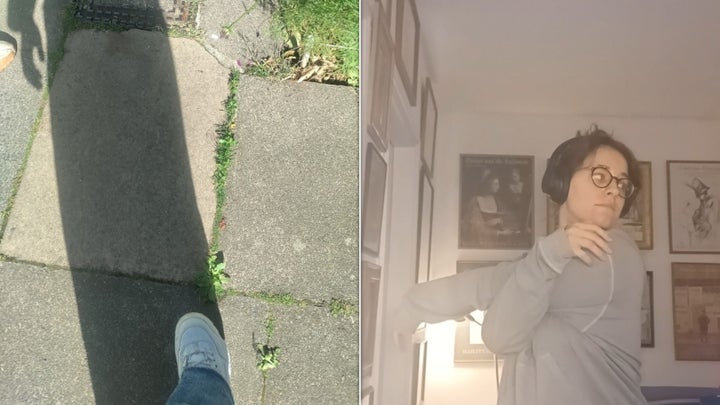
 A quick midday walk on the left: stretching on the right 

What is “movement snacking”?

It involves including multiple small movement sessions, like 10 squats or a five-minute walk, into your day rather than relying on a single large block of exercise.

A 2022 paper found that even one-minute bursts appeared to have health benefits in small proof-of-concept studies.

And a 2025 systematic review showed that “movement snacks” lasting at least five minutes, performed twice daily or more, “improved cardiorespiratory fitness in physically inactive adults”.

For me, that took the form of a couple of squats after writing an article or a little turn around the block during lunch. I reckon I spend, on average, about three to five minutes on roughly four sessions.

Speaking to HuffPost UK, Dr Suzanne Wylie, GP and medical adviser for IQdoctor, said: “I think ‘movement snacking’ is an excellent and very sustainable approach to maintaining musculoskeletal health, especially for people with sedentary jobs.

“It’s realistic, easy to integrate into a busy day, and doesn’t require special equipment or a gym setting. Even a minute or two of stretching, shoulder rolls, or walking around every 30–60 minutes can have cumulative benefits for your comfort, flexibility, and energy levels.”

The doctor added that she often recommends similar approaches to her patients, “as small, consistent movements can make a big difference to how the body feels and functions over time”. 

 Can movement snacking help with back pain?

I’ve noticed that my upper back feels a lot less tense and sore now that I’ve begun “movement snacking” (and I think it’s helped my midday mood, too).

According to Dr Wylie, the two may be related.

“It’s very plausible that your improvement is directly linked to practising ‘movement snacking,’” she shared.

“When we remain seated for prolonged periods, particularly when working at a desk or computer, the muscles in the shoulders, upper back, and neck can become tense and shortened, while the supporting postural muscles weaken over time.

“This can lead to stiffness, discomfort, and even tension headaches. By incorporating short, regular bursts of movement throughout the day, you’re effectively breaking up those long periods of static posture.”

Exercise snacking may help, the GP ended, because “These brief stretches and mobility exercises help improve blood flow to the muscles, reduce joint stiffness, and encourage better posture”. 

In other words, the trend may help more than your back – after all, some experts think it can help to manage your blood pressure, improve your heart health, and even support your metabolism too.

The best bit? From my experience, you won’t even notice you’re doing it – it’s so fun and easy, and helps to break up an otherwise monotonous stretch.


This is only for your information, kindly take the advice of your doctor for medicines, exercises and so on.   


Labels: , , , , , , , ,

Thursday, September 25, 2025

The Tasty Stew That Helps Dr. Jonathan Rasouli Maintain His Memory

Most of us encounter the word "dementia" somewhere between our 30s and 40s. At first, we worry about our parents and older relatives, and only then do we slowly begin to truly understand how important it is to protect our brain. This is crucial to preserving our memories, our ability to think clearly, and our connection to the world over time. The good news is that recent studies show that what we eat may directly impact the risk of cognitive decline in old age and even delay the development of diseases like Alzheimer’s and dementia in general. This is where Dr. Jonathan Rasouli comes in—a neurosurgeon who isn’t afraid to step into the kitchen and cook with a medical book in one hand and a wooden spoon in the other. Dr. Rasouli has a dish he prepares for himself every week that might look like just another homemade stew with vegetables and lentils, but there’s a good chance it’s the smartest meal you’ll put in your pot and stomach soon.


Dementia and Alzheimer’s - What Do We Know and What Can We Do to Protect Ourselves? 
 
It’s important to note that while these are two terms we hear more and more about as the years go by, they don’t describe exactly the same thing. "Dementia" is a general term that describes a decline in cognitive function: memory problems, difficulty with orientation, poor judgment, and changes in behavior or language. It’s not a single disease but a medical condition that can stem from various causes. Alzheimer’s, on the other hand, is the most common cause of dementia because it’s a neurodegenerative disease that progressively and irreversibly damages the brain. All Alzheimer’s is dementia, but not all dementia is Alzheimer’s.
 
In other types of dementia, such as vascular dementia (caused by strokes or impaired blood flow to the brain), it’s sometimes possible to prevent further deterioration by carefully managing blood pressure, diabetes, and cholesterol levels. It’s also important not to neglect the mental and social aspects—people who continue to challenge themselves mentally (e.g., through reading, learning, solving crosswords, etc.), maintain social connections, and participate in activities often retain higher cognitive function over time. 
 
In the case of Alzheimer’s, the damage begins in the brain areas responsible for memory and gradually spreads to other functions. The exact causes of the disease are still not fully clear, but there is evidence linking Alzheimer’s to genetic, inflammatory, and environmental factors. To reduce the risk of developing the disease, it’s recommended to maintain a healthy diet (such as the Mediterranean diet or the MIND diet), engage in regular physical activity, protect heart and vascular health, avoid smoking, and ensure adequate sleep. The earlier you start, the better your chances of delaying the process, and now we’ll show you a tasty and simple way to do so.

From the Operating Room to the Kitchen: Dr. Rasouli’s Recipe 
 
Dr. Jonathan Rasouli is not exactly what people imagine when they think of a surgeon. He is indeed a senior spine neurosurgeon at Northwell Health in New York, but the wisdom he applies in the operating room isn’t reserved solely for scientific papers—he cooks with it. In recent years, Dr. Rasouli has been explaining to others how much impact diet has on memory and how delicious and healthy it is to use it to protect the brain. Rasouli believes that diet is not only a therapeutic tool but also a means of prevention—especially when it comes to brain health. According to him, there are plenty of things we can’t control when it comes to dementia or Alzheimer’s, but there are also things we can, and the food we eat is one of them. After years of medical research and plenty of kitchen experiments, he developed a simple recipe that he eats every week. A warm lentil stew with spinach, garlic, and turmeric—easy to prepare, nutritious, delicious, and above all, brain-boosting.


Dr. Rasouli’s Recipe – A Heartwarming, Brain-Boosting Lentil Stew  See the recipe in m recipe blog please
 
Dr. Rasouli didn’t reinvent the wheel. His stew is based on the principles of the Mediterranean diet and the MIND diet mentioned earlier. Studies have shown that adhering to a menu tailored to these methods may reduce the risk of Alzheimer’s by up to 53%. “It’s not magic—it’s simply understanding what your body needs and giving it that regularly,” says the doctor. “I make the following dish at the end of the week, and it lasts almost the entire week,” he shares. “It’s convenient, healthy, and gives me peace of mind—both in body and mind.”
 
 
In Summary 
If there’s one thing we’ve learned from Dr. Rasouli, it’s that you don’t need a medical degree to start protecting your brain—just good intentions and one simple pot. This dish won’t permanently or completely protect your brain from dementia or Alzheimer’s, but it reminds us that big changes start with small steps: the right seasoning, smart dietary choices, and care for our health. So, before you head out shopping next time, it might be worth adding some spinach, lentils, and turmeric to your cart and cooking for yourself and your loved ones something that could become a small, nourishing tradition for good memory, in body and soul.


This is only for your information, kindly take the advice of your doctor for medicines, exercises and so on.   


Labels: , , , , , , , , , , ,

Thursday, November 18, 2021

Lifestyle changes to make to reduce the risk of heart attack

Lifestyle changes that may prevent a heart attack

Cardiovascular diseases (CVDs) are the leading cause of death across the globe, claiming an estimated 17.9 million lives each year. Out of all the deaths caused due to heart-related complications, 85 per cent are due to heart attack and stroke. Most of the time it is caused due to poor lifestyle and unhealthy dietary choices. While it is difficult to predict when one will suffer from a heart attack, making some lifestyle habits may indeed cut down the risk.

What leads to a heart attack?

Nestled between the rib cages and lungs, our heart is about the size of a clenched fist and weighs between 300 and 450 g. The muscular organ has the crucial task to pump blood to all the parts of the body. The blood pumped by the heart provides our body with the oxygen and nutrients it needs to function.

A person suffers from a heart attack when one or more coronary arteries are blocked. This happens over time due to a buildup of fatty deposits from substances called plaques. The blockage can narrow the arteries and make it harder for the heart to pump the blood to other parts of the body leading to a heart attack. Here are some common lifestyle changes you can make to prevent it. 

Eat healthily

The first and foremost thing is your diet. A well-balanced and nutritious diet can be the best way to fight heart diseases and other chronic health issues. The kind of foods you have regularly can spike your cholesterol level, blood pressure and blood sugar level, all these things together can affect the normal functioning of your heart and over time can lead to a heart attack. Fill your plate with healthy and nutritious food, rich in vitamins and minerals. Limit the intake of unhealthy fat, refined food products and processed food.

​Stay active

People of all age groups need to stay active to live a long and disease-free life. Staying active does not mean that you have to get yourself an expensive gym membership. You just have to ensure that you are not lying sedentary most of the time of the day. Whether you engage more in household chores, prefer to go out for a walk, or practice yoga. You just need to keep moving. If possible, include cardiovascular exercise in your routine. Such exercises strengthen your heart muscles.

​Manage your blood pressure level

High blood pressure is a leading risk factor for heart diseases. Persistent high blood pressure can damage the arteries by making them less elastic. It decreases the flow of blood and oxygen to your heart and eventually leads to a heart attack. Even low blood pressure can lead to a heart attack. So, you must monitor your heart rate regularly and take the necessary steps to keep it constant.

​Manage your blood sugar level

Having high blood pressure increases the risk of developing diabetic heart diseases. High blood sugar levels or unmanaged blood sugar levels can damage the blood vessels and the nerves that control the heart and blood vessels. Studies suggest that about 68 per cent of people aged above 65 and suffering from diabetes die from a heart attack. Monitor your blood sugar level twice a week and eat low glycemic index food to keep your blood sugar level in control.

​Manage your cholesterol

Cholesterol is a type of lipid made from part fat and part protein. Our body requires it to build healthy cells and keep us warm. But excess bad cholesterol can start depositing in your arteries. It narrows the walls of the blood vessel and our heart has to put extra pressure to pump blood and oxygen to different parts of the body. Too much pressure increases the risk of heart attack and stroke.

Manage your stress level

Our mental health and our physical well-being are linked with each other. When you are mentally calm your body has to face the repercussions. Too much stress increases the activity in an area of the brain linked to processing emotions, increasing the risk of developing heart diseases like heart attack and stroke. Try to manage your stress level by practising yoga and meditation.

Manage your weight

Research suggests that most overweight and obese people are prone to heart attack as compared to others. That's because being overweight increases the risk of high blood pressure and high cholesterol level, both are major contributors to cardiovascular diseases. Try to manage your weight and for that eat healthy, exercise and follow healthy lifestyle habits.

​Limit alcohol and quit smoking

Both excessive alcohol and chain-smoking can put you at the risk of developing heart diseases. Cigarettes and alcohol can increase your blood sugar level, lead to weight gain and may lead to a heart attack. If you smoke or drink regularly, try to cut it down to live a long and healthy life.

​The bottom line

Apart from the above-mentioned factors your age, sex, race and family history can also increase your risk of developing cardiovascular diseases. It is hard to prevent heart attack, all you can do is follow a healthy lifestyle to cut down the chances.


This is only for your information, kindly take the advice of your doctor for medicines, exercises and so on.   

https://gscrochetdesigns.blogspot.com. one can see my crochet creations  
https://gseasyrecipes.blogspot.com. feel free to view for easy, simple and healthy recipes    
https://kneereplacement-stickclub.blogspot.com. for info on knee replacement

Labels: , , , , , , , , , ,