Thursday, April 25, 2024

Swelling To Itching: 6 Signs of Kidney Disease Detected on Feet
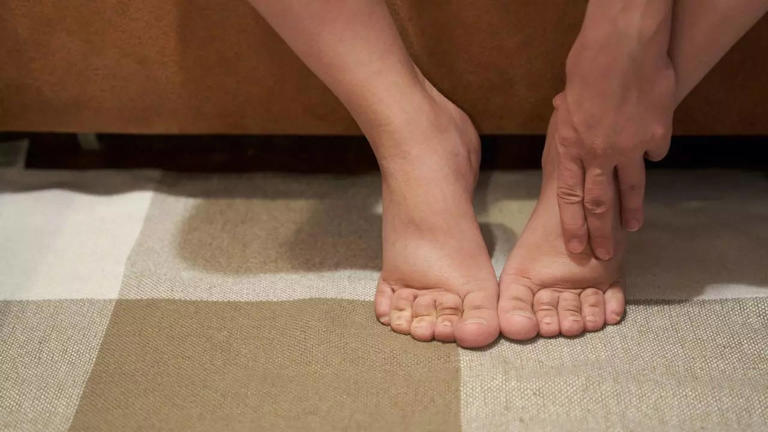
 swelling to itching: 6 signs of kidney disease detected on feet swelling- itching

Your kidneys are one of the most important organs of the body. They help in removing waste products and toxins such as urea, creatinine, and excess ions, from the blood in the form of urine. However, kidney disease affects the functioning of the kidneys. This eventually affects different functions of the body. If kidney disease is left untreated, it can lead to serious complications such as cardiovascular disease, kidney failure requiring dialysis or transplantation, and even death.


Therefore, it is important to spot the early signs of kidney disease so that you can seek the required treatment that prevents the condition from reaching advanced stages which might lead to kidney failure. Here, take a look at some of the signs of kidney disease that might appear on your feet.

Oedema (Swelling)

One of the important signs of kidney disease is oedema, which commonly is seen as swelling in the feet and ankles. Poor kidney function may affect its ability to remove excess fluid and sodium from the body, leading to fluid retention. This accumulation of fluid causes swelling, often noticeable as puffiness or tightness in the feet.

Skin Changes

Chronic kidney disease can result in various skin changes, some of which may be seen on the feet. The skin may become darker, taking a bronze-like or yellowish shade, due to a buildup of waste products in the blood. Also, the texture of the skin may change, becoming dry, itchy or flaky, which can be particularly prominent in the feet.

Pruritus (Itching)

Persistent itching, also known as pruritus, is a symptom associated with kidney damage. Itching is often generalized but may be particularly seen in the lower extremities, including the feet. It is believed that the itching happens due to the buildup of toxins in the bloodstream.

Peripheral Neuropathy

Kidney disease can lead to nerve damage, resulting in peripheral neuropathy. This condition causes symptoms such as tingling, numbness or burning sensations in the feet and legs. Peripheral neuropathy can impact mobility and quality of life for people with kidney disease and it worsens as the condition reaches advanced stages.

Foot Pain

In advanced stages of kidney disease, a rare but serious condition called calciphylaxis can happen. This condition is characterised by painful, non-healing wounds on the skin which typically affect the feet and lower legs. Calciphylaxis is caused by calcium and phosphorus imbalances in the body, leading to the formation of calcifications in small blood vessels, ultimately resulting in tissue damage and necrosis.

Nail Changes

Changes in the appearance and texture of the nails may also be indicative of kidney disease. Nails may become discoloured, thickened or brittle, and these changes may be particularly noticeable in the toenails.


Spotting these signs and symptoms on the feet can help people seek medical evaluation and appropriate treatment for underlying kidney disease. Early detection and treatment are important for slowing the progression of kidney disease and reducing the risk of complications.


This is only for your information, kindly take the advice of your doctor for medicines, exercises and so on.   

https://gscrochetdesigns.blogspot.com. one can see my crochet creations  
https://gseasyrecipes.blogspot.com. feel free to view for easy, simple and healthy recipes    
https://kneereplacement-stickclub.blogspot.com. for info on knee replacement
https://cancersupportindia.blogspot.com  for infor on cancer and health related topics
https://GSiyers home remedies.blogspot.com   is the latest addition to my blogs. I'm going to add posts there, do give me your valuable feed back on my blogs. Thanks a lot, take care, be healthy and be happy.

Labels: , , , , , , , ,

Thursday, June 03, 2021

Massage These 6 Areas Yourself for Soothing Relief

Aches, pains, and stiffness are ailments we become accustomed to as we get older. But what are our options? Should we just learn to live with the pain, or spend a fortune on a massage therapist? Thankfully, there is a third option that I've recently been trying myself - self-massage. I use foam rollers, lacrosse balls, tennis balls and a massage stick (all cheap, easily available and simple to use) for those hard-to-reach spots and consequently, I have found them to be incredibly effective. All it takes is 10 minutes out of my day, and the muscle pain and tension I was experiencing have reduced significantly, in just a matter of days. My flexibility has also increased.

The Benefits: Self-massage tools increase blood circulation and smooth out 'knots' in the muscles and connective tissues caused by dehydration, overuse and, injury. The longer they go untreated, the tighter the surrounding muscle becomes, causing more pain. 
 
Let's take a look at six ways self-massage can help. The videos show you how to perform each technique. 
 
1. Reduce Lower Back Pain
The lower back is often a prime target for pain, predominantly because the spine, made up of 33 small bones called vertebrae, must carry the weight of the whole body. A number of activities can put a lot of stress on the lower back, including running, jumping and chronic sitting. 
 
An effective way to reduce lower back pain is to massage the quadratus lumborum (a back muscle) and the erector spinae (muscles that run along the outside of the vertebrae). As this spot is hard to reach, using a small, dense ball will help.

2. Relieve Tension Headaches
Stress and a slouched posture can often cause throbbing tension headaches. Such a headache occurs due to muscle contractions in the head and neck. Kneading the upper trapezius muscle (the muscle located near your neck and shoulder) with a massage stick ought to alleviate the pain.

3. For Flexible Hips
Most of us have limited hip mobility and flexibility because our quadriceps (upper thigh muscles) are tight. However, keeping your hips flexible means that you are less prone to injury. Using a foam roller on the quadriceps will help loosen up this tissue.  
 
4. Your Posture Will Improve
Sitting down all day creates muscle imbalances. Therefore, some muscles become short, tight and overactive while others weaken out of neglect, causing us to feel pain and making us prone to injury. Rolling on a simple device, known as the 'peanut tool', will loosen and relax your back muscles. To make the peanut tool, just add two small balls (the size of a tennis ball) to a sock, tying a knot firmly at the top to keep the balls in place.

5. Reduce Foot Pain
Pain in the plantar fascia (the muscle that spans the bottom of the foot) can be caused by injury, overuse, a sudden increase in activity or even weight gain. Massaging the soles of your feet with a tennis ball can remove adhesions in the plantar fascia and also send blood flow to your feet, warming up your foot muscles.

6. Release Shoulder Pain
Self-massage is a fantastic way to release discomfort and pain in the shoulder area. A lacrosse ball is the best tool to release adhesions in the shoulder muscles.


This is only for your information, kindly take the advice of your doctor for medicines, exercises and so on.   

https://gscrochetdesigns.blogspot.com. one can see my crochet creations  
https://gseasyrecipes.blogspot.com. feel free to view for easy, simple and healthy recipes    
https://kneereplacement-stickclub.blogspot.com. for info on knee replacement

Labels: , , , , , , ,

Friday, January 17, 2020

Foot Pain Causes, Remedies And Exercises

Foot pain is a common complaint and many suffer it in some form or another. Foot pain can be caused by a wide variety of conditions.

Minor pain and injuries can be reduced with icing and rest. Major injuries may require medical attention, treatments or even surgery. Our post shows you main causes and also we have a video that has some foot pain exercises that will help your condition.


Plantar Fasciitis Heel Pain Symptoms

According to Footcare Facts, Plantar Fasciitis is the number one cause of foot pain and sufferers usually experience uncomfortable heel pain. This can be as a result of pregnancy, ill-fitting shoes, high arches or being overweight.

You may also experience painful sharp, stabbing pain after physical activity. Whilst it generally affects one foot, it can also appear in both. Find out the other causes below.


This infographic from heelthatpain outlines all the most common foot pain causes and also their symptoms. We would also recommend that if you wear stiletto’s, you view our post that shows you the dangers of wearing high heels and the nasty effects.

So, here is the list of the most common recorded conditions.
Plantar Fasciitis

Inflammation and micro tears of the Plantar Fascia ligament. It causes burning, throbbing and stabbing pain in the heel.


Heel Spurs:

Pointed, hooked or shelf-shaped calcium build-ups on the heel bone. They may cause pain in the heel by irritating soft tissue.


Mortons’s Neuroma:
Swelling for the nerves in the toes. Pain is felt in the toes and ball of the foot.


Bunions:

Painful deformity of the joint where the bones of the foot and the big toe meet. Can cause intermittent or chronic pain.


Foot Pain Exercises Infographic


Here’s an excellent Foot Pain Infographic from Healthline that shows you 6 very easy exercises that will assist with some relief.

You can use a towel to stretch your foot and even a can that is placed under your foot and rolled. Continue on to discover 3 additional exercises that are not so well known.

This is only for your information, kindly take the advice of your doctor for medicines, exercises and so on.     
https://gscrochetdesigns.blogspot.com. one can see my crochet creations  
https://gseasyrecipes.blogspot.com. feel free to view for easy, simple and healthy recipes    
https://kneereplacement-stickclub.blogspot.com. for info on knee replacement
 

source-heelthatpain

Labels: , , , , , , ,

Wednesday, September 18, 2019

6 Amazing Plantar Fasciitis Exercises to Release Foot Pain


Regardless of their vital role, we often neglect our feet. Yet, they support our body weight while we walk, stand, jump, and run, so it is no surprise that they can often be painful.
Foot pain is often caused by plantar fasciitis, a painful condition that results from inflammation of the tissue that runs along the bottom of the foot, connecting the toes to the heel.

Plantar fasciitis is often characterized by heel pain, as well as calf tightness, cramping of the feet and toes, intense and sharp foot pain in the morning or after a workout, stabbing pain along the bottom of the feet, as well as pain to touch and a palpable lump on the bottom of your foot near the heel.
This condition can cause you to walk with a limp, and it may limit the ability to run and walk up and down the stairs properly.
It is often caused by improper footwear, lack of strength and stability along the arch of the foot, or repetitive movements that lead to tearing, and obesity.

If the plantar fascia on the bottom of the foot is inflamed and painful, the first step you should do is to address the inflammatory process. This involves applying ice to the painful, inflamed area for 10-15 minutes several times per day.

You can also try ice-bottle massage to reduce the inflammation from plantar fasciitis. The ice will treat the inflammation, and the massage will gently stretch the plantar fascia on the bottom of your foot.
One of the most successful ways to relieve and heal foot pain are stretching exercises, that target the area of the plantar fascia and Achilles tendon and strengthen the calves to improve the stability of the ankles and heel.

Plantar Fascia Stretch

The yoga block should be on the floor. Step the ball of your right foot onto its edge, while the heel remains on the ground.
Then, shift the weight forward over the block to feel a stretch through your calf, ankle, and plantar fascia, and hold for half a minute. Repeat two times on both sides.

Calf Raises

Step up onto the mat with both feet. Place one hand on a wall, and lower the right heel down towards the ground.
Next, press up through the ball of the right foot and flex the calf muscle at the top. Repeat ten times, and switch feet.
Toe Stretch

Step the ball of the foot and toes onto the center of the block, raise the heel up high to feel a stretch through the toes and plantar fascia, and hold for half a minute. Repeat each side three times.

Tennis Ball Rollout

Sit in a chair and put a tennis ball on the floor in front of you. Then, place the arch of the foot on the ball, press a bit to release the tightness in the fascia, and start rolling the foot over the ball. Apply some pressure to feel the ball releasing tightness in the fascia.
Then, slowly begin to roll your foot over the ball, from the toes to the heel. Pause whenever you find a tight spot and hold for 30 seconds. Then, switch sides.
Toe Curl

Place the ball of the foot up on your tennis ball, with the heel on the floor. Curl the toes around the top of the ball, squeeze a bit, and release. Spread the toes wide, make 10 repetitions, and switch feet.
Heel Pump

While sitting in a chair, place a ball on the floor in front and lean the forearms onto your thighs. Place the heel on the top of the tennis ball, and the ball of your foot on the floor.
Then, start pumping the heel up and down on the ball. After a minute, release, and switch sides.
To ensure your optimal condition and body strength, you need to keep the feet and ankles healthy. These exercises will help you alleviate pain prevent discomfort, and lower the risk of injury.
To keep the feet strong and healthy, make sure you also follow these foot health and safety tips:
  • When worn down, replace your shoes.
  • Wear supportive footwear for your everyday activities and sports.
  • Do not overdo activities, but learn to listen to your body.
  • Rest and receive the needed treatment to prevent any recurrence of injury.
  • Before your workout or strenuous physical activity, complete a thorough warm-up routine.
  • To condition the feet and ankles, slowly build up your strength and flexibility.
  • Avoid running uphill too often, and avoid uneven surfaces, especially when running.

All you need is a yoga block and a tennis ball, and perform them 1-2 times a day.

Source:healthyfood


this is only for your information, kindly take the advice of your doctor for medicines, exercises and so on.   
https://gscrochetdesigns.blogspot.com. one can see my crochet creations 
https://gseasyrecipes.blogspot.com. feel free to view for easy, simple and healthy recipes    
https://kneereplacement-stickclub.blogspot.com. for info on knee replacement


Labels: , , , , , , , , , , ,

Wednesday, June 05, 2019

All You Need To Do To Keep Your Bones Healthy At 60

The condition of our bones begins to deteriorate with age. As we grow older, our bones become much weaker and tend to get affected even with the minutest of injuries. Conditions like osteoporosis and fractures are most likely to happen with growing age and many don't know how to prevent any of these occurrences from happening. Another factor that makes us prone to the above conditions is the kind of lifestyle that we live. Not exercising and eating unhealthy food results in making us feel less energetic.

But there are still plenty of things one can do prevent these occurrences and take proper care of bones even after 60. Read more to know how...stay active

Feeling lethargic and less energetic, pain in the joints and getting tired too easily are common things that people experience at 60. But no matter what, you should try to push yourself and exercise moderately, every day for around 150 minutes. This will help in keeping your body warmer and improve the condition of your heart. Exercises like long walks, dancing, carrying groceries and going up and down stairs will make you feel active and will also strengthen your muscles.

Also, you can engage in activities that help in improving balance and coordination. Doing yoga can be helpful in easing stiffness and unsteadiness associated with painful joints. Also people at 60 or above that should avoid sitting for too long in the same place. Along with affecting your muscle and bone strength, this will make your joints stiffer and increase your chances of falling.

Exercises for people with osteoporosis
People with osteoporosis will be prone to risks of fractures. They should be more careful while exercising. Bending knee while lifting objects is a must-do. They should avoid movements that involve awkward bending and lifting movements. You may need to be cautious about some types of high impact exercises. Take expert advice as a precautionary measure.

Diet for healthy bones
Many people tend to experience a loss of appetite with old age. But eating less can devoid your body of essential nutrients and will have an adverse effect on your muscles and bones. While staying active will help you have a good appetite, people should still try and have a balanced diet, which includes a healthy mix of fruits, vegetables, pulses, meats, etc. Maintaining body weight and keeping the muscle and bone strength intact are a few of the benefits of having a well-balanced diet at all times.

Vitamin D
Vitamin D is an essential requirement for people to have strong bones and muscles. Direct sunlight is the best and the most natural source of Vitamin D. But people who are not that exposed to the sun should either take Vitamin D supplements or try and keep outdoors for getting sufficient sunlight. Besides, they can have foods rich in Vitamin D such as salmon, eggs, breakfast cereals, etc.

Other ways to protect your bones
In order to prevent falling too often and fractures, follow these steps as a precautionary measure.

Get your eyesight and hearing checked
Sight plays an important role in controlling balance and mobility, and hearing is extremely important for balance. Get them checked regularly to avoid any unwanted fatalities.

Check for foot pain
Foot pain will make you feel less active and can cause falls and fractures. Get medical check-up instantly if you experience pain in the feet.

Manage your medicines
Some medicines which people eat to control blood pressure can make one feel dizzy or faint. Review this medicine intake regularly. 

THIS IS ONLY FOR INFORMATION, ALWAYS CONSULT YOU PHYSICIAN BEFORE HAVING ANY PARTICULAR FOOD/ MEDICATION/EXERCISE/OTHER REMEDIES.                                    PS- THOSE INTERESTED IN RECIPES ARE FREE TO  VIEW MY BLOG-                                                                                           https://gseasyrecipes.blogspot.com/    
                                                                                                                                                     FOR INFO ABOUT KNEE REPLACEMENT, YOU CAN VIEW MY BLOG-                                                  https:// kneereplacement-stickclub.blogspot.com/  

                            FOR CROCHET DESIGNS                                                                                                                                                                                                  https://gscrochetdesigns.blogspot.com


Labels: , , , , , , , , , , , ,