Monday, November 03, 2025

Shoes You Shouldn't Wear That Often

On average, a person walks 245-292km (152-181 miles) in a year. It is therefore crucial that you wear a pair of shoes which won't damage your feet, since our feet are responsible for carrying all of our weight around, and are already subject to enormous pressure on a daily basis. However, we often don't realize this, wearing all kinds of footwear that make it hard for our feet to do their job. Let's take a look at six types of shoes that while they may be fashionable, will cause harm to your feet. 
1. Pointed shoes may be too tight
 
shoes that hurt feet

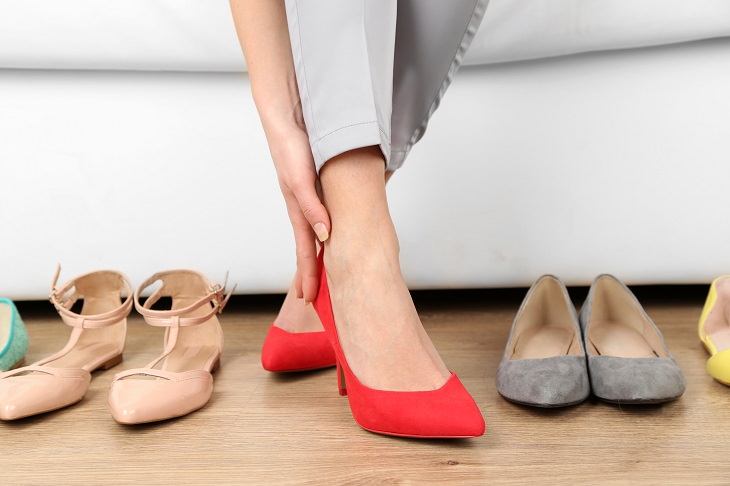
If you have wide feet, you may want to reconsider wearing pointed shoes. These types of shoes are too tight and will put a lot of pressure on your toes, causing nerve pain and blisters. If you keep insisting on these shoes, they may cause lasting nerve damage. So before buying such a pair of shoes, check to see whether your feet feel comfortable while wearing them first. Maybe get a pair that is bigger than you need and stuff the end so you don't have to squeeze your toes. 
 
2. Flip flops cause misalignment in your ankles 
While flip flops are great for summer, as such, they're not all that comfortable. Flip flops rub between your toes causing skin damage and wearing them can lead to misalignment in your ankles and knees because your feet are not supported properly. The soles of your feet rarely get good support from flip-flops and the different walking technique used with flip flops will often make your back pain worse. 
 
3. High heels can cause nerve damage
 
shoes that hurt feet
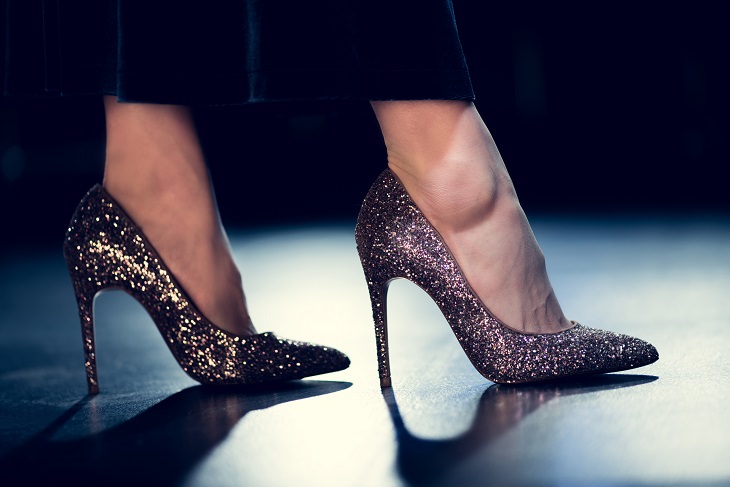
Most women do love to wear high heels, and while they look great and make you feel attractive, they can cause a lot of damage to your feet. Wearing high heels leads to sprains, ingrown toenails, nerve damage, and lower back pain. To get rid of these problems, it is advised that you make sure your everyday heels are no higher than 3 inches.


4. Flat shoes put pressure on the ligaments 
While it may be surprising, flat shoes can damage your legs. This happens because they don't have any arch support, thus putting pressure on the plantar fascia - the ligament that connects your heel bone to your toes. Consequently, you will experience pain in your knees and back. 
 
5. Running shoes that are too light and soft and may cause trauma
 
shoes that hurt feet
Running shoes should only be worn when running. If you wear them every day, because they seem comfortable and light, they may actually damage your feet on impact because they are too flexible and soft. In other words, if you bump your foot while running you may injure yourself quite severely. Athletic shoes with a harder sole are much safer when accidentally slipping or bumping into something with your foot. 
 
6. Platform shoes ruin the mechanism of walking 
Platform shoes are flexible and have rigid footbeds. Our feet need more forgiving shoes. The shoes we opt for should repeat and reinforce the movement of the feet and these actually do the opposite, going completely against the mechanism of walking. It is, therefore, better to not wear platforms on a regular basis but only on rare occasions such as special events.


This is only for your information, kindly take the advice of your doctor for medicines, exercises and so on.   


Labels: , , , , ,

Wednesday, April 24, 2019

How To Choose the Safest Footwear For Warm Weather

The onset of the long-awaited warm sunny weather is a chance to bust out all the footwear that sat and waited patiently somewhere in a shoe box all year just to be worn again this season. This is also the perfect time to go shopping for new footwear. In either scenario, you are risking to end up with a problem on your hands, as a lot of the shoes we so commonly associate with summer take a toll on our tender and vulnerable feet, with flip flops being one of the most dangerous of the bunch. To aid you on this quest for the safest footwear, we wrote this entire article dedicated to the Dos and Don’ts of summer footwear.

1. Flip Flops

Flip flops are easy to put on and take off, and they are usually manufactured from water-resistant materials that make them durable, especially when worn at the beach. This is why putting on a pair of flips flops at the beach or on a picnic is  acceptable. However, wearing flip flops for extensive periods of time (more than 1-3 hours every day) can harm your health. Here’s how:
  • It can exacerbate existing problems, such as cracked heels, athlete’s foot, and calluses.
     
  • Walking in flip flops for extensive periods of time is more tiring than any other footwear, as they don’t adhere well to the foot and don’t have any heels and arch support.
  • Prolonged wear of flip flops can cause blistering between the toes.
     
  • Flip flops are especially prone to cause a condition called plantar fasciitis, which is the overstretching, inflammation and tearing of the fascia in the bottom of your feet that can occur as the result of walking barefoot or in ill-fitting shoes.
     
  • Finally, flip flops don’t protect the foot from any injuries and sunburns, so they are ill-suited for any sports activities, hiking trips, or even a barbecue.
To get the most out of your flip flops, follow these tips:
1. Don’t wear them for more than 3 hours daily.
2. When you do wear flip flops, don't miss the tops of the feet when applying sunscreen, as this area is prone to burning.
3. Take breaks when you have to walk for more than 30 minutes in flip flops.
4. Only wear flip flops when they are necessary, e.g. at the beach or at the swimming pool.
5. Opt for more closely-fitted flip flops that adhere better to the foot, as these will not hit your heels so much and will be more comfortable. If you can find one, get a pair with arch support.

2. Casual Shoes (such as Ballet Flats, Converse, Plimsolls)

All of these flat shoes are quite popular in the summertime, as they are breathable, offer more protection and yet easy to keep on, unlike flip flops. However, even these shoes can be harmful to your posture and health, here’s how:
  • Flat shoes often lack heel and arch support, which can potentially cause pathological alterations in posture, knee pain, etc.
     
  • The cheaper varieties are often not very breathable and can make your feet sweat in the summer. This warm and humid environment, in turn, can promote the spread of bacteria and fungi, which can cause anything starting from smelly feet to fungal infections.
To find a good pair of summer flats, make sure they’re breathable and made of high quality materials. If your shoes don’t have orthopedic arches, you can purchase special insertable insoles that will prevent your feet from hurting.

3. Sandals

summer footwear sandals
If you’re looking for a pair of open footwear that will be both extremely breathable, fitted, and provide support to the feet, sandals are your best bet. And while they still are not suited for hiking trips, as they don’t offer enough protection for the feet, they are a great choice for long city walks and other outdoor activities. Furthermore, they are often made of natural materials that don’t make your feet sweaty. Here is what you should be aware of when wearing sandals:
1. Sandals can be very different.  The soles of some sandals are too flat and thin, which creates the same kind of repercussions as any other flat footwear: painful, tired feet and bad posture. That’s why it is recommended to choose a pair with a thicker sole and supported arch.
2. Choose a pair that will be adjustable to make sure they adhere to the feet, otherwise they’re no better than flip flops.
3. Opt for natural materials that breathe and prevent your feet from sweating.
4. When choosing a heeled sandal, don’t go higher than 2 inches (5 cm) and look for a chunky heel or platform.

4. High-Heeled Shoes

In this category we included stilettos, platform shoes, pumps in a variety of styles, materials and shapes. When the heel is higher than 2 inches (5 cm), this can cause a variety of problems, such as:
  • The so-called pump bump, which is a bony protrusion at your heel that feels like a callus. These can be very painful and are, unfortunately, chronic.
summer footwear high heeled shoes
  • When wearing high heels, you carry most of your weight on your toes and the ball joints of your feet, which is a very unnatural posture, as usually the weight is evenly distributed throughout the foot. This can cause pain and injuries in the front part of the feet.
     
  • Those who wear high-heeled shoes are more likely to get ankle sprains, which can either stretch out or, in more severe cases, tear the ligaments in the ankle joint.
Still, a beautiful high-heeled shoe can accentuate your posture and be the only complementary choice to a dress on a night out. Here are some tips on how to choose and wear high-heeled shoes:
1. Don’t get shoes with a heel higher than 2 inches.
2. Opt for a chunky heel or platform and not a stiletto, which will provide more support.
3. Don’t buy a pair of heels that isn’t comfortable or stable, no matter how gorgeous they might look. Uncomfortable heels are more likely to cause toe injuries and sprained ankles.
4. Wear your high-heeled shoes in before wearing them out. Although this is true about most shoes, heels can be particularly ruthless in causing blisters, so make sure to wear them around the house before wearing them outdoors.

5. Sneakers and Tennis Shoes

summer footwear Sneakers and Tennis Shoes
The last item on our list is probably the ultimate footwear. It’s breathable, lightweight, provides ample protection,  supports the arches of the feet, and can be easily adjusted. It is suitable to most types of activities and doesn’t exert the feet. But even these, seemingly-perfect shoes can potentially be harmful to your feet.
1. For one, bad quality sneakers are often not breathable enough and can exacerbate athletes foot and bacterial infections, so choose a pair that is breathable.
2. Even the best quality sneakers can make your feet sweaty, so make sure to wear a different pair every day to let them vent.
3. Rocker bottom sneakers are a popular trend and they can help strengthen the muscles in your feet, but they are not advised for seniors, as they can affect muscle strength or balance.
4. Don’t choose a shoe that is too tight-fitting or loose around the toe box, as this, too, can affect the distribution of weight throughout the feet. A very tight shoe box, for example, may even cause numbness and pain in the toes, so it is important to wear a pair of sneakers or tennis shoes that will fit your size and foot shape.
THIS IS ONLY FOR INFORMATION, ALWAYS CONSULT YOU PHYSICIAN BEFORE HAVING ANY PARTICULAR FOOD/ MEDICATION/EXERCISE/OTHER REMEDIES.                                    PS- THOSE INTERESTED IN RECIPES ARE FREE TO  VIEW MY BLOG-                                                                                           https://gseasyrecipes.blogspot.com/    
                                                                                                                                                     FOR INFO ABOUT KNEE REPLACEMENT, YOU CAN VIEW MY BLOG-                                                  https:// kneereplacement-stickclub.blogspot.com/  
         
                   FOR CROCHET DESIGNS                                                                                                                                                                                                  https://gscrochetdesigns.blogspot.com  

Labels: , , , , , , , , ,

Wednesday, July 03, 2013

9 habits that may do more harm than good

1. Compulsively using hand sanitizer.

If you reach for hand sanitizer any time you make contact with the outside 

world, you might want to take pause. Unless you're in an especially germ-

prone place like a hospital, soap and water will work just fine. When you're 

not near a sink, hand sanitizing gels can help, but be sure to read the label 

first. Recent research has shown that those containing triclosan may promote 

bacteria and virus resistance to antibiotic medications (this goes for 

antibacterial hand soaps that contain triclosan, too). Instead, choose brands 

which contain at least 60% alcohol, which will kill 99% of bacteria on 

contact.

2. Experimenting with skincare products.

Who isn't tempted to buy the latest skin creams and serums promising to 

shed years from your face? While looking for something that works for you is a 

good idea, overhauling your routine every few weeks in search of the fountain 

of youth isn't. "Women get easily bored with their beauty routine, especially if 

they don't see results right away. It can take between six and eight weeks to 

see changes; if you're using a product to increase collagen, expect to wait six 

months to see results." A Dr. often cautions patients against constantly 

changing products, noting that it may cause adult rosacea (a condition that 

results in red, patchy and sometimes inflamed skin). People may be forming 

sensitive skin by trying out too many different products with high levels of 

fragrance and other sensitizers. In lieu of always trying something new, stick 

with what works for you, or see your dermatologist to develop a new routine. 

And manage your expectations, a consistent regime should "keep your skin 

clear, clean and smooth. Make that your rule of thumb and don't expect 

miracles, especially when it comes to over-the-counter anti- ageing products."
3. Wearing flip-flops.

Forgoing sky-high heels and toe-pinching boots for the freedom of flip-flops is 

giving your feet a much-need break, right? Not exactly. Turns out, your 

summer shoes aren't doing you any favours. "Flip-flops and other unsupported 

sandals, which have no arch support and give no structural support to the 

foot, can lead to stress fractures since your un-cushioned feet become 

strained when they try to support too much weight," she explains. "Extensor 

or flexor tendinitis is also a common problem that happens as a result of 

trying to keep your flip-flips on — the muscles on top or underneath your feet 

overexert themselves while trying to grip your shoes." She also advises 

against walking around shoeless, even if you're by the pool or in your gym's 

locker room. "Aside from not giving your feet any support, going barefoot can 

also be challenging for those prone to infectious skin diseases such as plantar 

warts and athlete's foot, which are easily spread poolside, in pedicure salons 

and in gyms." But that doesn't mean you need to spend your summer in 

closed toe shoes. Dr. recommends comfortable sandals that also provide 

plenty of support, like styles.
4. Brushing your teeth after every meal.

Rushing to brush immediately after every meal may seem like a great way to 

keep your oral health in check, but according to a periodontist, it's better to 

hold off. Food can leave acid on your teeth, which can weaken the enamel, 

"and brushing while the enamel is in a weakened state can actually scrub the 

enamel away." To dislodge any food particles that may remain after eating, 

he recommends simply rinsing your mouth out with water and saving the 

brushing for morning and night. Then when you do brush, be sure to do so in a 

circular motion. According to Dr., this will improve your chances of removing 

harmful bacteria between the teeth and gums. Brushing up and down or back 

and forth, on the other hand, can leave behind harmful bacteria, causing gum 

disease; while applying too much pressure can lead to receding gums.

5. Doing only cardio when you work out.

It's easy to assume that the best way to lose weight is to stick to the same 

cardio workout, but "if you only do cardio, your body will become so 

accustomed to the routine that you'll start to burn less fat over time," says a 

physical therapist. Plus, going through repeated motions on the treadmill or 

elliptical machine can create tight muscles and lead to injury. Trade in a few 

of your cardio workouts for circuit training, which involves doing a number of 

different strength training exercises with little rest between moves in order to 

keep your heart rate up while also working out your entire body, ensuring that 

you'll burn the most calories — without burning out. Integrating resistance 

training into your routine will create muscle mass, which will help you burn 

more calories throughout the day, even when you're at rest. It is also 

recommended revamping your cardio routine by mixing in interval training 

once a week. Try doing 30 seconds of high intensity motion, whether you're 

on the treadmill, elliptical machine or in the swimming pool, followed by 90 

seconds of recovery at a moderate pace, working your way up to 10 

repetitions. The bursts of intensity followed by recovery will effectively and 

efficiently blast calories and fat.
6. Skipping meals to "save up" for later.

For example, many women will hold off on eating lunch so that they can have 

a few glasses of wine to unwind at the end of the day. Not a problem as long 

as you're carefully allocating your calories, right? "Unfortunately when you 

don't eat breakfast or lunch you can develop cravings and irritability, which 

can lead to overeating later on in the day. A smarter approach to eating: Fill 

up on protein-packed meals and nutrient-rich snacks that'll keep your satisfied 

all day, so when dinnertime or cocktail hour rolls around you won't be tempted 

to fill your plate with calorie-rich and high-fat foods.
7. Drinking only bottled water.

By reaching for a bottle of H20 you may think you're doing your body some 

good by avoiding tap water, which can be filled with who-knows-what. But 

that's not the case. "Bottled water contains no fluoride, and we're seeing 

more and more adults suffer from a fluoride deficiency, which can lead to 

tooth decay," says Dr.  Instead, fill your glass with water purified by a  water 

filtration system which will keep your water free from impurities commonly 

found in tap water, but still allow you to reap the benefits of fluoride.
8. Cleaning with disinfecting products.

While keeping your home pristine and germ-free may seem like the path to 

perfect health, using cleansers that boast antibacterial or disinfecting 

properties could have the opposite effect. "These products haven't been 

proven to be any more effective than regular cleaning products, and there is 

significant evidence that the chemicals in these disinfecting cleansers — 

called quaternary ammonium compounds — can lead to asthma," says 

a senior scientist. Other cleaning product chemicals to avoid include 2-

butoxyethanol, which the Environmental Protection Agency considers a human 

carcinogen and has been linked to cancer; alkylphenol ethoxylates, which can 

disrupt hormones; and ethanolamines, which can cause asthma. But because 

cleaning product companies aren't required to list most ingredients on their 

product labels (you can call or go online instead), it can be tough to know 

what to buy. However, Seventh Generation, an eco-friendly company, clearly 

lists their ingredients on their labels, so that's one option. Another, which Dr. 

recommends, is cleaning with a mixture of one part water and one part 

vinegar, or scrubbing surfaces with baking soda, both of which have natural 

antibacterial properties. She emphasizes that when it comes to ousting 

germs, the key is cleaning often and thoroughly—not blasting every surface 

with the harshest cleaner you can find. "Your goal should be to clean 

regularly," says Dr. . "That way you'll get rid of dirt, so there's no place for 

bacteria to grow."
9. Loading up on nutritional supplements.

People often take nutritional supplements without really understanding what 

they're consuming, or if they really need them." Because so many foods are 

fortified these days, she notes that chances are many of us don't have any 

major nutritional deficiencies. If you are already getting enough of what you 

need, the best case scenario is that the supplements will have no effect on 

you. But there are more serious side effects of carelessly popping pills: 

Vitamin A in large amounts can be toxic to a developing foetus, vitamin C in 

large doses can cause gastrointestinal distress as well as interfere with 

glucose readings in people on diabetes medications and too much vitamin B6 

can cause nerve damage. It is now concluded that in the absence of a 

deficiency, eating food instead of taking supplements should be the primary 

way to fulfil nutritional requirements and deliver health benefits. If you find 

out that you need to up your intake of, say, calcium, "try integrating calcium-

rich foods into your diet, like a glass of skim milk or a spinach salad," before 

making a beeline to the supplements aisle. If you do learn that supplements 

are the best choice to remedy a deficiency, look for "USP" printed on the 

label, which signifies that the pill meets the standards of the testing 

organization U.S. Pharmacopeia.


ps- this is only for information, always consult you physician before having any particular food/ medication/exercise/other remedies.


ps- those interested in recipes are free to view my blog-

http://gseasyrecipes.blogspot.com/

for info about knee replacement, you can view my blog-

http://Knee replacement-stick club.blogspot.com/

for crochet designs

http://My Crochet Creations.blogspot.com/

I've not given details about designs, but those interested are free to mail me for the same.

Labels: , , , , , , , , , , , , , , , , , ,