Thursday, July 29, 2021

These 5 Mental Illnesses Can Go Undiagnosed For Years

People suffer from these medical health conditions for years before being properly diagnosed. We are talking about mental health issues. Society has made significant progress in recognizing, diagnosing, and erasing the stigma surrounding mental health. But even with all this mental health awareness, many conditions are either misdiagnosed or not diagnosed at all.
 
Data from the World Health Organization (WHO) suggest that less than half of the people suffering from psychological disorders are diagnosed and receive proper medical treatment. The five mental health conditions we list below are particularly likely to fly under the radar according to mental health experts. 
 
1. Depression  
Depression is one of the most common and well-known mental health issues. Still, the condition is tragically underreported and underdiagnosed all across the world. Even in the US, a country where mental health awareness is rather high, only half of the people suffering from depression are diagnosed and connected with the right treatment. Depression is even more severely under-detected in developing countries. 
 
The main problem with detecting depression is the fact that the condition can present itself in many different ways. For some, sadness and sleepiness are the main symptoms, but for others, depression manifests itself through headaches, cognitive decline, or even anger. 
 
Underdiagnosed Mental Health Conditions depression Like One social category that’s severely underdiagnosed with depression is the senior population. Oftentimes, depression can be confused for dementia or misrepresented as a side effect of chronic pain, cancer, or diabetes in older adults. According to Psychiatric Times, symptoms of depression can also coincide with symptoms of bereavement, namely, excessive guilt, worthlessness, visible slowing of physical and emotional reactions, and difficulty completing daily tasks. This is why depression is also often dismissed as grief. 
 
 It’s important to understand the full picture of depression and its many manifestations to get timely treatment for loved ones or yourself. To read more about the symptoms of depression, consider reading these resources:
 
2. Posttraumatic stress disorder (PTSD) 
Posttraumatic stress disorder, or PTSD, is a mental condition that develops in response to an extremely traumatic life event. Disaster survivors, veterans of war, survivors of abuse or assault often manifest symptoms like social isolation, flashbacks, hypervigilance, insomnia, irritability, and loss of interest in daily activities. 
 
 These symptoms can be mistaken for other conditions, namely panic disorder, phobias, depression, alcohol abuse, and personality disorders. Scientists don’t know why people develop PTSD in response to traumatic events, but research shows that 20% of those who have been through some kind of trauma develop PTSD. 
 
Oftentimes, the patients themselves are not aware of their condition, until a psychiatrist or therapist asks them about past trauma. “It is commonly missed especially when the client or patient doesn’t talk about the trauma of their past or if the psychiatrist or psychotherapist is not asking questions related to their past trauma. I believe PTSD is more common than it is diagnosed and might even be more common than depression, anxiety, and/or bipolar,” says Evanye Lawson, a licensed counselor. 
 
3. Eating disorders
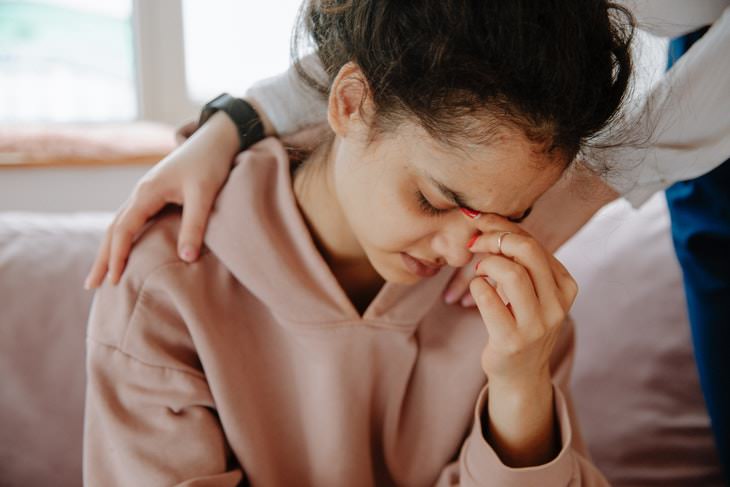
Underdiagnosed Mental Health Conditions therapy Over 90% of people suffering from eating disorders are not medically diagnosed as underweight, which makes the condition extremely difficult to spot. In addition, eating disorders are often dismissed as something that only affects underweight teenage girls. In reality, eating disorders affect millions of people of every age, sex, and ethnicity, and they are especially rarely diagnosed in men and older people. 
 
 A study conducted by researchers at the University of Michigan School of Public Health points out, “Stereotypes about who develops eating disorders could contribute to disparities in diagnosis and treatment, with males, those of higher weight, people of color, and the non-affluent most likely to be slipping through the cracks.” All this is extremely alarming because eating disorders are the second deadliest mental illness - 10,200 Americans die because of an eating disorder every year. 
 
4. Bipolar disorder 
 Bipolar disorder (BP) is one of the most serious mental health conditions. There is no cure for BP, but timely treatment can help patients manage their symptoms and prevent aggravation and complications. Patients with BP experience extreme shifts in mood and energy levels, jumping from states of apathy and depression to a state of mania or hypomania, when they feel overexcited or energized, often to a point that they engage in risky or dangerous behavior. 
 
A survey by the National Depressive and Manic-Depressive Association concluded that 69% of patients with bipolar disorder are misdiagnosed. Of these patients, one-third are misdiagnosed for over 10 years. Most often, bipolar disorder is mistaken for depression. If the doctor fails to ask a depressed patient about manic symptoms, such as abrupt changes in mood, they will misdiagnose them. As Jamie Kreiter, a licensed clinical social worker, explained, “most people come in for treatment when they are depressed and so they meet the diagnostic criteria for depression.” 
 
5. Substance-related issues 

 
Alcoholism, drug use, and substance abuse, in general, are very heavy topics, and not only due to the stigma associated with them. We often think that a person who abuses alcohol, for example, is in control of his or her actions, that they choose to drink. This is not always the case. Yet, due to all the shame surrounding these issues, it easier for some people to hide their addiction than seek help. For this reason, many patients go undiagnosed for years, especially if they fit the mold of a stereotypical alcoholic or addict. 
 
Age is one of the biggest obstacles in the diagnosis of substance-related mental illness. A 2012 report by the Institute of Medicine (IOM) suggested that 5-8million seniors have one or more mental or substance abuse conditions. The study also suggests that these numbers are estimated to increase to 10-14 million by 2030. 
 
Research shows that these kinds of issues are much less likely to be diagnosed in older adults. This is likely due to the fact that the physical and cognitive symptoms of substance abuse often overlap with health conditions associated with aging. Malnutrition, dementia, cognitive decline, unexpected reactions to prescription drugs, and even stroke are all examples of symptoms that could be brought about by substance abuse. Share this important information with others!


This is only for your information, kindly take the advice of your doctor for medicines, exercises and so on.   

https://gscrochetdesigns.blogspot.com. one can see my crochet creations  
https://gseasyrecipes.blogspot.com. feel free to view for easy, simple and healthy recipes    
https://kneereplacement-stickclub.blogspot.com. for info on knee replacement


Labels: , , , , , , , , , , ,

Saturday, June 08, 2019

LGBT women at heightened risk of drug use

Women who find themselves in the LGBT category are at a heightened risk of drug abuse which becomes visible around the age of 13, reveals a new study.

The findings added that the odds of substance use among females who identify as sexual minorities is 400 per cent higher than their heterosexual female peers.

"We saw this striking difference in substance use at age 13 and there was a rapid increase in the rate of cigarette and alcohol use from there," said  the lead author. Among youth, alcohol, marijuana and nicotine are the three most commonly used drugs.

Past research has shown that sexual minority youth reported nearly three times more substance use than heterosexual youth. This disparity may be due in part to stress from discrimination, violence and victimisation rooted in their sexual minority status, she said. The pattern of increased substance use for youth saw a rise in the cases of women.

Using data from about 2,200 participants, a large, longitudinal study of the lives of urban girls, researchers examined substance use among females over time from age 13 to 20, comparing those who identified as heterosexual to those identifying as lesbian/gay or bisexual.

They looked at when disparities in use between heterosexual and sexual minority identifying females began to emerge; rates of change over time for both groups; and how rates change as the girls approach young adulthood.

The researchers found that disparities were already present at age 13. The difference in use between heterosexual and sexual minority girls persisted and increased as they entered their 20s.

The author said, "It's already a risky and vulnerable period for youths' social development, and it's also a vulnerable time for brain development."

THIS IS ONLY FOR INFORMATION, ALWAYS CONSULT YOU PHYSICIAN BEFORE HAVING ANY PARTICULAR FOOD/ MEDICATION/EXERCISE/OTHER REMEDIES.                                    PS- THOSE INTERESTED IN RECIPES ARE FREE TO  VIEW MY BLOG-                                                                                           https://gseasyrecipes.blogspot.com/                                                                                                                                                FOR INFO ABOUT KNEE REPLACEMENT, YOU CAN VIEW MY BLOG-                                                  https:// kneereplacement-stickclub.blogspot.com/  

                            FOR CROCHET DESIGNS                                                                                                                                                                                      https://gscrochetdesigns.blogspot.com


Labels: , , , , , , , , , , ,

Monday, November 26, 2018

Living in a polluted city can reduce your lifespan by over 4 years

People in India would live an average 4.3 years longer if the country met the global guidelines for particulate pollution, according to a study which found that effect of pollution on life expectancy is worse than HIV/AIDS, cigarette smoking, and even terrorism.

According to the new Air Quality Life Index (AQLI), developed by researchers, particulate air pollution cuts global average life expectancy by 1.8 years per person.

The AQLI establishes particulate pollution as the single greatest threat to human health globally, with its effect on life expectancy exceeding that of devastating communicable diseases such as tuberculosis and HIV/AIDS, behavioural killers like cigarette smoking, and even war.

Critically, the AQLI reports these results in tangible terms that are relatable for most people. 


"Around the world today, people are breathing air that represents a serious risk to their health. But the way this risk is communicated is very often opaque and confusing, translating air pollution concentrations into colors, like red, brown, orange and green," said a professor .

"My colleagues and I developed the AQLI, where the 'L' stands for 'life,' to address these shortcomings. It takes particulate air pollution concentrations and converts them into perhaps the most important metric that exists: life expectancy," he said.

The AQLI is based on a pair of studies that quantify the causal relationship between long-term human exposure to particulate pollution and life expectancy.

Seventy-five percent of the global population, or 5.5 billion people, live in areas where particulate pollution exceeds the WHO guideline.

The AQLI reveals that India and China, which make up 36 per cent of the world's population, account for 73 per cent of all years of life lost due to particulate pollution.

On average, people in India would live 4.3 years longer if the country met the WHO guideline - expanding the average life expectancy at birth there from 69 to 73 years.

In the US, about a third of the population lives in areas not in compliance with the WHO guideline. Those living in the country's most polluted counties could expect to live up to one year longer if pollution met the WHO guideline.

Globally, the AQLI reveals that particulate pollution reduces average life expectancy by 1.8 years, making it the greatest global threat to human health.

By comparison, first-hand cigarette smoke leads to a reduction in global average life expectancy of about 1.6 years. Other risks to human health have even smaller effects: Alcohol and drugs reduce life expectancy by 11 months; unsafe water and sanitation take off 7 months; and HIV/AIDS, 4 months.

Conflict and terrorism take off 22 days. So, the impact of particulate pollution on life expectancy is comparable to that of smoking, twice that of alcohol and drug use, three times that of unsafe water, five times that of HIV/AIDS, and more than 25 times that of conflict and terrorism.

"While people can stop smoking and take steps to protect themselves from diseases, there is little they can individually do to protect themselves from the air they breathe," the Prof. said.

"The AQLI tells citizens and policymakers how particulate pollution is affecting them and their communities and reveals the benefits of policies to reduce particulate pollution," he said. 


THIS IS ONLY FOR INFORMATION, ALWAYS CONSULT YOU PHYSICIAN BEFORE HAVING ANY PARTICULAR FOOD/ MEDICATION/EXERCISE/OTHER REMEDIES.                                                                                                                                                                                                                                                                                        PS- THOSE INTERESTED IN RECIPES ARE FREE TO  VIEW MY BLOG-                                                                                           https://gseasyrecipes.blogspot.com/                                                                                                                                                                             FOR INFO ABOUT KNEE REPLACEMENT, YOU CAN VIEW MY BLOG-                                                                                                                             https:// kneereplacement-stickclub.blogspot.com/                                                                                       FOR CROCHET DESIGNS                                                                                                                                                                                                                                 https://gscrochetdesigns.blogspot.com


Labels: , , , , , , , , , ,

Friday, February 02, 2018

Women at the age of 40 and above have an increased risk of preterm birth

Women who plan for a baby at the age of 40 and above may increase the risk of delivering preterm births before the 37th week of pregnancy, a study showed. The researchers noted an association between preterm birth and mother’s age and stated that the maternal age at pregnancy has been increasing worldwide and so has the risk of preterm birth. The research team,  analysed the data from many hospitals  from the year 2008 to 2011. The findings of the study, published in the journal, also mentioned that the mothers who are aged between 30-34 years have the lowest risk of pre-maturity. 

The team studied over 165,282 pregnant women, who were further divided into five different age groups and compared them based on the maternal characteristics, gestational and obstetric complications, and risk factors related to preterm birth. Some of the known risk factors identified more commonly in older mothers, aged 40 and above, included placenta previa, gestational diabetes, medical history, use of assisted reproduction technologies and occurrence of an invasive procedure.  On the other hand, nulliparity — a condition whereby women never complete more than 20 weeks of pregnancy — was associated with factors such as drug use and smoking in the past, were more prevalent in younger mothers, especially 30 years and below. Previous studies have also found that preterm birth may increase heart risk and affect brain maturity of the babies.

THIS IS ONLY FOR INFORMATION, ALWAYS CONSULT YOU PHYSICIAN BEFORE HAVING ANY PARTICULAR FOOD/ MEDICATION/EXERCISE/OTHER REMEDIES.    
PS- THOSE INTERESTED IN RECIPES ARE FREE TO VIEW MY BLOG-                      
HTTP:GSEASYRECIPES.BLOGSPOT.COM/
FOR INFO ABOUT KNEE REPLACEMENT, YOU CAN VIEW MY BLOG-                                                        
HTTP://KNEE REPLACEMENT-STICK CLUB.BLOGSPOT.COM/
FOR CROCHET DESIGNS

HTTP://MY CROCHET CREATIONS.BLOGSPOT.COM

Labels: , , , , , , , , , , , ,