Thursday, March 11, 2021

The Updated COVID-19 Mask Recommendations Explained

In a recent statement, the director of the National Institute of Allergy and Infectious Diseases (NIAID), Dr. Anthony Fauci, stated that he favors double-masking for the new and more infectious Covid-19 variants like the UK strain and others. These new recommendations are in line with the regulations being currently imposed across Europe, where medical-grade face masks like the N95 and the FFP2/3 rather than cloth masks are becoming mandatory in public spaces.
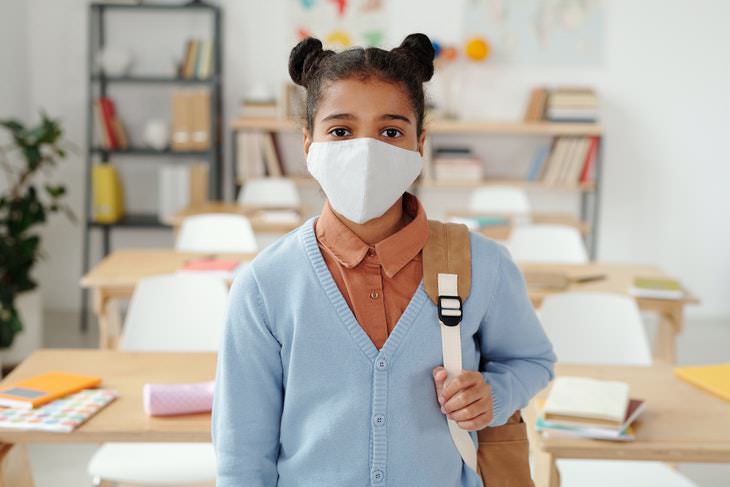
Why the sudden changes? And most importantly, how does one double-mask correctly? Here’s what you need to know. 
 
Why Is Double-Masking Necessary?
Doubling-Up on Masks schoolgirl in a face mask
When it comes to double-masking, it all boils down to extra protection. As Dr. Fauci stated in an interview with the Today show, “If you have a physical covering with one layer, you put another layer on, it just makes common sense that it likely would be more effective.” The main reason why the extra protection is necessary now more than ever is that the new Covid-19 variants are more contagious than the original strain of the SARS-CoV-2 virus. 
 
As we have specified in our previous article titled Covid-19: What’s Known About the New Common Variants, it’s easier for these new Covid-19 mutations to bind to human cells. Therefore, minimizing the number of Novel Coronavirus particles in the air is key, and the easiest way to do so is to make sure that everyone is wearing masks that offer the best possible protection. 
 
One way to do so is by wearing two masks. It's important to cover our noses and mouths completely and for both masks to fit snugly. Not only will double-masking help protect others if someone in a crowd has Covid-19, but it will also decrease every individual mask wearer’s risk of contracting the disease.

All in all, wearing two masks is a better shield between you and the novel coronavirus. But why aren’t doctors advising us to wear three, four, or ten masks at the same time, then? 
 
The main reason why that is not a good idea for most people is that wearing multiple masks will make it difficult for you to breathe, depending on the material. “You can pack on 10 layers, but what you do is you lose breathability, they’re uncomfortable and you’ve overdone the filtering capacity that you want,” states  an infectious diseases specialist and the primary investigator of Yale’s Pfizer COVID-19 trial.
How to Double-Mask Correctly There are a few things to keep in mind if you decide to start double-masking. Here are some key points: 
 
1. Which masks are the best to combine? 
Doubling-Up on Masks face masks various
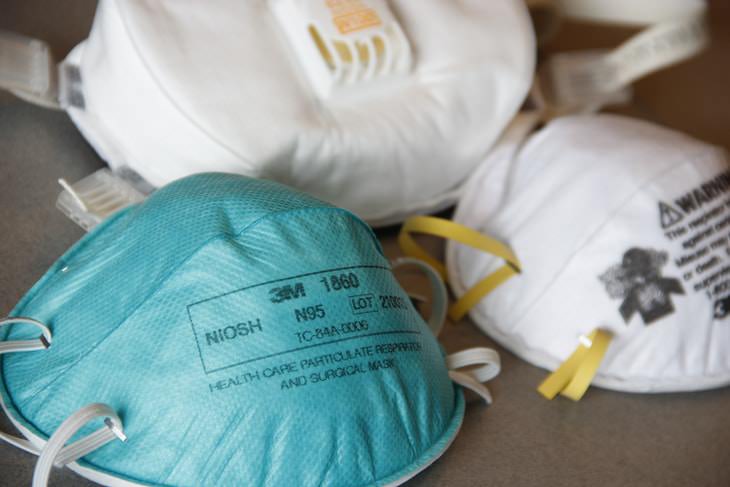
Doubling-Up on Masks face masks various Like As we mentioned in a previous article, research shows that N95 masks offer the best filtration against the novel coronavirus. That said, these masks may not be the best choice for most people because putting on and breathing in an N95 may be quite tough, especially if you have to wear it for hours. Still, if you can handle it, wearing an N95 mask is the gold standard. It is, however, not your only option. 
 
Ideally, you just want to use masks that offer both sufficient air filtration and breathability according to the specialist. A worthy alternative to N95 masks is a combination of a cloth mask with a KN95 mask (shown in the photo below) or a surgical mask. Keep in mind that by "cloth mask", experts mean a face mask that consists of at least two layers of tightly-knit material, and certainly not a bandana or a neck gaiter. 
 
2. How Do I Layer Face Masks?
According to infectious disease experts, the best way to wear two masks is to start with the mask that offers the best air filtration and then wear the other mask, usually a cloth mask, over it. Therefore, put on the KN95 or surgical mask first, and then wear the cloth mask over it. Make sure there are no gaps on the sides of the masks and they provide a tight fit - this will ensure that no contaminated air will be able to sneak in from the sides. 
 
All in all, the idea of double-masking is pretty straightforward, and it’s definitely worth a shot, especially when you have to commute by public transportation or have to spend time in populated areas for a long time. We hope you found this article useful.

This is only for your information, kindly take the advice of your doctor for medicines, exercises and so on.     

https://gscrochetdesigns.blogspot.com. one can see my crochet creations  
https://gseasyrecipes.blogspot.com. feel free to view for easy, simple and healthy recipes    
https://kneereplacement-stickclub.blogspot.com. for info on knee replacement

Labels: , , , , , , ,

Friday, May 01, 2020

Coronavirus treatments: Remdesivir, hydroxychloroquine and vaccines for COVID-19

The coronavirus has spread across the globe with speed and ferocity, reaching almost every country on the planet. The world has been sent into lock down in an attempt to flatten the curve and prevent health care systems from being overwhelmed. Major events, including the Tokyo Olympics, have been postponed or canceled altogether. As health authorities and governments continue to mitigate extensive transmission in the community, scientists and researchers are turning their attention to another goal: Development of treatments and vaccines.

Since coronavirus was first discovered as the causative agent of COVID-19, scientists have been racing to get a better understanding of the virus' genetic makeup and unravel how to effectively treat infections. There's no cure and medical specialists can only treat the symptoms of the disease. Many different treatment options have been proposed and some older drugs seem to be associated with positive outcomes -- but much more work is required. However, the long-term strategy to combat COVID-19, which has spread to every continent on Earth besides Antarctica, is to develop a vaccine.


Developing new vaccines takes time, and they must be rigorously tested and confirmed safe via clinical trials before they can be routinely used in humans. Dr. Anthony Fauci, director of the National Institute of Allergy and Infectious Diseases in the US, has frequently stated that a vaccine is at least a year to 18 months away. Experts agree there's a ways to go yet.

Vaccines are incredibly important in the fight against disease. We've been able to keep a handful of viral diseases at bay for decades because of vaccine development. Even so, there exists confusion and unease about their usefulness. This guide explains what vaccines are, why they are so important and how scientists will use them in the fight against the coronavirus. It also discusses the current treatment options being used and those that show promise in hospitals.


What is a vaccine?

A vaccine is a type of treatment aimed at stimulating the body's immune system to fight against infectious pathogens, like bacteria and viruses. They are, according to the World Health Organization, "one of the most effective ways to prevent diseases."

The human body is particularly resilient to disease, having evolved a natural defense system against nasty disease-causing microorganisms like bacteria and viruses. The defense system -- our immune system -- is composed of different types of white blood cells that can detect and destroy foreign invaders. Some gobble up bacteria, some produce antibodies which can tell the body what to destroy and take out the germs, and other cells memorize what the invaders look like, so the body can respond quickly if they invade again.


Vaccines are a really clever fake-out. They make the body think it's infected so it stimulates this immune response. For instance, the measles vaccine tricks the body into thinking it has measles. When you are vaccinated for measles, your body generates a record of the measles virus. If you come into contact with it in the future, the body's immune system is primed and ready to beat it back before you can get sick.


What's in a vaccine?

Vaccines contain a handful of different ingredients depending on their type and how they aim to generate an immune response. However, there's some commonality between them all. 


The most important ingredient is the antigen. This is the part of the vaccine the body can recognize as foreign. Depending on the type of vaccine, an antigen could be molecules from viruses like a strand of DNA or a protein. It could instead be weakened versions of live viruses. For instance, the measles vaccine contains a weakened version of the measles virus. When a patient receives the measles vaccine, their immune system recognizes a protein present on the measles virus and learns to fight it off.

A second important ingredient is the adjuvant. An adjuvant works to amplify the immune response to an antigen. Whether a vaccine contains an adjuvant depends on the type of vaccine it is.

Some vaccines used to be stored in vials that could be used multiple times and, as such, contained preservatives that ensured they would be able to sit on a shelf without growing other nasty bacteria inside them. One such preservative is thimerosal, which has garnered a lot of attention because it contains trace amounts of easily cleared ethylmercury. Its inclusion in vaccines hasn't been shown to cause harm, according to the CDC. In places like Australia, single-use vials are now common, and thus preservatives such as thimerosal are no longer necessary in most vaccines.

In developing a vaccine for SARS-CoV-2, scientists need to find a viable antigen that will stimulate the body's immune system into defending against infection. 


Why does vaccine production take so long? There are many steps involved and a lot of regulatory hurdles to jump through.

"For any medicine to be sold it needs to go through the standard process of clinical trials including phase 1 [to] 3 trials," said Bruce Thompson, dean of health at Swinburne University in Australia. "We need to ensure that the medicine is safe, will not do harm, and know how effective it is." 

Scientists can't assume their vaccine design will just work -- they have to test, test and test again. They have to recruit thousands of people to ensure the safety of a vaccine and how useful it will be. The process can be broken down into six phases:

    Vaccine design: Scientists study a pathogen and decide on how they will get the immune system to recognize it. 


    Animal studies: A new vaccine is tested in animal models for disease to show that it works and has no extreme adverse effects. 


    Clinical trials (phase I): These represent the first tests in human beings and test the safety, dose and side effects of a vaccine. These trials only enroll a small cohort of patients.


    Clinical trials (phase II): This is a deeper analysis of how the drug or vaccine actually works biologically. It involves a larger cohort of patients and assesses the physiological responses and interactions with the treatment. For instance, a coronavirus trial may assess if a vaccine stimulates the immune system in a certain way.


    Clinical trials (phase III): The final phase of trials sees an even greater amount of people tested over a long period of time. 


    Regulatory approval: The final hurdle sees regulatory agencies, like the US Food and Drug Administration, the European Medicines Agency and Australia's Therapeutic Goods Administration, take a look at the available evidence from experiments and trials and conclude whether a vaccine should be given the all-clear as a treatment option.

Traditionally, then, it could take a decade or more for a new vaccine to go from design to approval. In addition, once the regulatory processes have concluded a vaccine is safe, the drug companies have to send production into overdrive, so they can manufacture enough of the vaccine to increase immunity in the wider population.

With SARS-CoV-2, the process is being expedited in some instances. As STAT news reports, the vaccine in development by Moderna has moved from design straight into Phase I clinical trials of its mRNA vaccine, skipping tests in animal models. Those tests will take place at Seattle's Kaiser Permanente Washington Health Institute, and patients are now being enrolled.


This is only for your information, kindly take the advice of your doctor for medicines, exercises and so on.     

https://gscrochetdesigns.blogspot.com. one can see my crochet creations  
https://gseasyrecipes.blogspot.com. feel free to view for easy, simple and healthy recipes    
https://kneereplacement-stickclub.blogspot.com. for info on knee replacement

Labels: , , , , , , , , , , , , , , ,

Thursday, March 19, 2020

Humans May Recognize Disease with Their Eyes. Study Finds

What does a sick person look like? Could you recognize one if you saw them on the street? These queries feel more pertinent than ever in light of the coronavirus outbreak, but also in general. A fascinating recent study published in the biological research journal 'Proceedings of the Royal Society B' tried to provide the answers.

How Was the Research Conducted?
The researchers started out by taking face photos of 16 healthy people. Later on, those same people were injected with a shot of lipopolysaccharide, a harmless molecule found on many pathogenic bacteria, which releases a response from the immune system. Within only 2 hours, the participants’ faces developed visual symptoms of “sickness”. Another round of photos was taken. Both times, the subjects wore a plain white t-shirt and looked straight into the camera with a neutral expression.  

The pictures were shown to 2 groups of 60 people. The first group was asked to rate simply if each person in the photo looked sick or healthy. The second group was asked to rate how tired or alert each person looked on a scale of 1 to 7.

The researchers point out that the features that revealed people as sick to the observers were mainly:

    Paleness of the skin and lips
    Hanging eyelids
    Swollen face
    Droopier corners of the mouth
    Patchy skin.

How Accurate Is the Research?

It is important to note that the study has a few limitations. The observers were not allowed to look at the photos for longer than 5 seconds, and the study didn’t look at the visual symptoms ad sickness past a few hours’ time. Another setback is that the age, ethnicity, and backgrounds of the participants were not diverse enough for the findings to be generalizable, as most of those who took part were Caucasian young adults.

Out of 1,215 photos that were categorized by observers as ‘sick’, 440 were actually healthy.

So can superficial characteristics we instinctively connect with sickness really be trusted? John Axelsson, one of the lead researchers in the study says that despite those limitations, the overall conclusion is that untrained people are able to recognize sickness in other individuals above chance level. According to him, the information that was collected could be of use in the future – for example, in improving the technology used to monitor how sickness spreads across populations or in diagnosing patients.

There is still a lot to be learned and expanded on the topic – for example, is detecting sickness something that we know genetically or something that is learned? Undoubtedly, more research needs to be done before we can have a clear cut resolution on this interesting topic.


This is only for your information, kindly take the advice of your doctor for medicines, exercises and so on.     

https://gscrochetdesigns.blogspot.com. one can see my crochet creations  
https://gseasyrecipes.blogspot.com. feel free to view for easy, simple and healthy recipes    
https://kneereplacement-stickclub.blogspot.com. for info on knee replacement

Labels: , , , , , , ,

Thursday, March 12, 2020

Isolation vs. Quarantine: What's the Difference?

As the new coronavirus, which causes the respiratory disease COVID-19, continues to challenge  health care professionals across the country, some communities are urging those who have had brushes with the virus to exercise a self-quarantine. The action would limit a person's proximity to others for 14 days; by the end of this period, the symptoms would have manifested if the person was infected. Others are described as being in isolation. What’s the difference between these two restrictive methods of segregation from the public?

According to information from the U.S. Department of Health and Human Services and the Centers for Disease Control and Prevention, a quarantine usually refers to the practice in which a still-healthy person who may have been exposed to a pathogen distances themselves from others for a certain period of time. By avoiding contact with people, the potential spread of disease is limited.

Quarantine is probably best defined as a period of watchful waiting to determine whether someone who has been exposed will begin to exhibit symptoms as well as wait out the duration of being infectious to others. The practice is believed to have started in the 14th century, when foreign ships arriving in Venice were docked for 40 days to reduce transmission of plagues. “Quarantine” comes from the Italian quaranta giorni, or “40 days.”

Isolation refers to the practice of housing a sick patient in an attempt to stop the spread of infectious illness. For those with severe symptoms or highly contagious disease, it usually means a hospital unit. People with mild symptoms might be allowed to self-isolate at home.

In short, a quarantine is enacted to see if someone becomes sick. Isolation applies to those who are already sick.

Federal, state, and local officials all have the authority to impose either status on an individual, though the extent of those powers can vary. Most states consider breaking a quarantine order a criminal misdemeanor, which could theoretically result in jail time or a fine.

This is only for your information, kindly take the advice of your doctor for medicines, exercises and so on.     

https://gscrochetdesigns.blogspot.com. one can see my crochet creations  
https://gseasyrecipes.blogspot.com. feel free to view for easy, simple and healthy recipes    
https://kneereplacement-stickclub.blogspot.com. for info on knee replacement


Labels: , , , , ,