Thursday, June 02, 2022

Dementia: THESE changes can act as early predictors of brain decline

Changes that can occur decades before dementia-related memory loss kicks in

Dementia is a group of illnesses that affects at least two or more brain functions including memory, thinking and/or judgment. It is not a specific disease rather can be an outcome of several diseases.

According to the World Health Organization (WHO), around 55 million people have dementia worldwide, with over 60% living in low- and middle-income countries. It is currently the seventh leading cause of death among all diseases and one of the major causes of disability and dependency among older people around the world, reports the global health agency.

However, an illness so concerning does not have a cure so far. The only way it can be prevented is through early detection and that can be done by understanding the changes that take place in the brain and the body.

Brain changes can signal cognitive decline
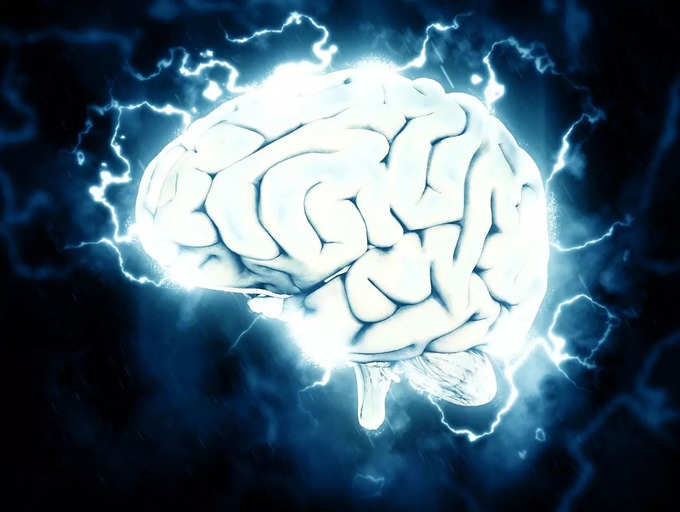
As it is known, dementia is a general term to refer to a group of disorders caused by abnormal brain changes and activities. These then lead to a decline in one's thinking abilities and also affect a person's memory, impairing their day to day functions.

Doctor Sara Imarisio, Head of Research at Alzheimer’s Research UK believes "brain changes linked to the diseases that cause dementia can start in the brain up to 20 years before symptoms like memory loss appear," reports.

“A key early brain change in Alzheimer’s disease is a build-up of the amyloid protein.

"While we can detect levels of this protein with expensive brain scans and other biological tests, not everyone with high levels of amyloid will go on to develop the symptoms of Alzheimer’s," she adds.

What is amyloid protein?
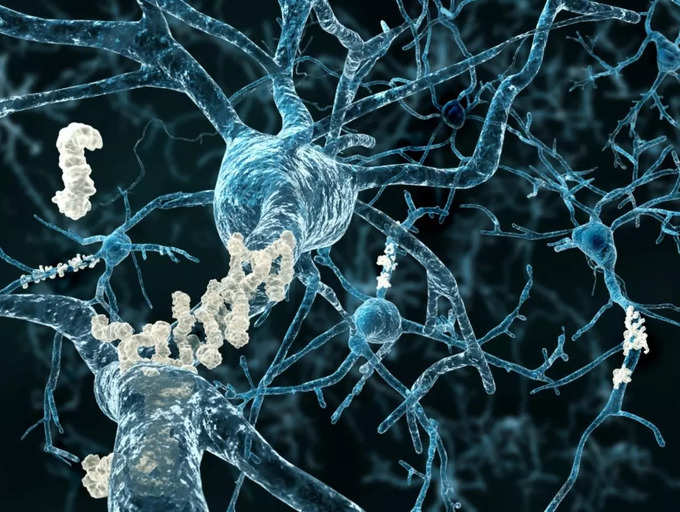
Amyloid is a group of abnormal proteins, usually produced in the bone marrow and can be deposited in any tissue or organ. It can affect different organs in the body including the heart, kidneys, liver, spleen, nervous system and digestive tract. Amyloids are also associated with disorders such as Alzheimer’s disease, a progressive neurologic disorder that affects thinking and memory.

Other changes that can appear years before dementia onset

Apart from certain brain changes, Doctor Imarisio shares that research has also highlighted other changes that precedes classic dementia symptoms.

"People can experience subtle changes in things like sleep, speech, movement, mood and brain activity," the doctor explains.

"These changes might not be noticeable to the human eye, but smart devices could be sensitive enough to detect patterns in them," she adds.

According to her, chronic pain is one such change that can act as an early predictor of dementia.

Study finds chronic pain may be associated with dementia

As per the study, partly funded by National Institute on Aging and published in Journal Pain, those with dementia may experience rising pain 16 years before their diagnosis.

The researchers claimed that both dementia and chronic pain could cause changes to the brain and affect cognitive functions.

Another study conducted by researchers at Université de Paris, which has been collecting data on participants for as many as 27 years, found that those who were diagnosed with dementia complained of slightly more pain as early as 16 years before their diagnosis, driven mostly by differences in pain interference.


This is only for your information, kindly take the advice of your doctor for medicines, exercises and so on.   

https://gscrochetdesigns.blogspot.com. one can see my crochet creations  
https://gseasyrecipes.blogspot.com. feel free to view for easy, simple and healthy recipes    
https://kneereplacement-stickclub.blogspot.com. for info on knee replacement

Labels: , , , , , , , , , , , ,

Friday, January 24, 2020

Researchers discover 102 genes associated with autism

In the largest genetic sequencing study of autism spectrum disorder (ASD) to date, researchers have identified 102 genes associated with risk for autism.

The discovery shows significant progress towards teasing apart the genes associated with autism from those associated with intellectual disability and developmental delay, conditions which often overlap.

According to the World Health Organisation (WHO), one in 160 children has an autism spectrum disorder (ASD).

ASDs begin in childhood and tend to persist into adolescence and adulthood. In most cases the conditions are apparent during the first five years of life.

"This is a landmark study, both for its size and for the large international collaborative effort it required.

"With these identified genes we can begin to understand what brain changes underlie ASD and begin to consider novel treatment approaches," said Joseph D Buxbaum, Director of the Seaver Autism Center for Research and Treatment at Icahn School of Medicine at Mount Sinai.

For the study published in the journal Cell, an international team of researchers from more than 50 sites collected and analyzed more than 35,000 participant samples, including nearly 12,000 with ASD, the largest autism sequencing cohort to date.

Using an enhanced analytic framework to integrate both rare, inherited genetic mutations and those occurring spontaneously when the egg or sperm are formed, researchers identified the 102 genes associated with ASD risk.

Of those genes, 49 were also associated with other developmental delays.

The larger sample size of this study enabled the research team to increase the number of genes associated with ASD from 65 in 2015 to 102 today.

In addition to identifying subsets of the 102 ASD-associated genes, the researchers showed that ASD genes impact brain development or function and that both types of disruptions can result in autism.

"Through our genetic analyses, we discovered that it's not just one major class of cells implicated in autism, but rather that many disruptions in brain development and in neuronal function can lead to autism," said Buxbaum.

It's critically important that families of children with and without autism participate in genetic studies because genetic discoveries are the primary means to understanding the molecular, cellular, and systems-level underpinnings of autism.

"We now have specific, powerful tools that help us understand those underpinnings, and new drugs will be developed based on our newfound understanding of the molecular bases of autism," the researchers noted.


This is only for your information, kindly take the advice of your doctor for medicines, exercises and so on.     
https://gscrochetdesigns.blogspot.com. one can see my crochet creations  
https://gseasyrecipes.blogspot.com. feel free to view for easy, simple and healthy recipes    
https://kneereplacement-stickclub.blogspot.com. for info on knee replacement
 

Labels: , , , , , , , ,

Monday, November 25, 2019

Inflammation shows signs of brain damage in obese adolescents

Researchers using MRI reveals brain damage in obese teens.
There is a positive correlation between brain changes and hormones such as leptin and insulin. (Photo: ANI)
 There is a positive correlation between brain changes and hormones such as leptin and insulin.
According to a study being presented at the annual meeting of the Radiological Society of North America, Researchers using MRI have found signs of damage that may be related to inflammation in the brains of obese adolescents.

Obesity in young people has become a significant public health problem. In the US, the percentage of children and adolescents affected by obesity has more than tripled since the 1970s, according to the Centers for Disease Control and Prevention. Data from the World Health Organization indicates that the number of overweight or obese infants and young children ages five years or younger increased from 32 million globally in 1990 to 41 million in 2016.

While obesity is primarily associated with weight gain, recent evidence suggests that the disease triggers inflammation in the nervous system that could damage important regions of the brain. Developments in MRI like diffusion tensor imaging (DTI), a technique that tracks the diffusion of water along the brain's signal-carrying white matter tracts, have enabled researchers to study this damage directly.

For the new study, researchers compared DTI results in 59 obese adolescence. Scientists present students and 61 healthy adolescents, ages 12 to 16 years. From DTI, the researchers derived a measure called fractional anisotropy (FA), which correlates with the condition of the brain's white matter. A reduction in FA is indicative of increasing damage in the white matter.

The results showed a reduction of FA values in the obese adolescents in regions located in the corpus callosum, a bundle of nerve fibres that connects the left and right hemispheres of the brain. Decrease of FA was also found in the middle orbit ofrontal gyrus, a brain region related to emotional control and the reward circuit. None of the brain regions in obese patients had increased FA.

"Brain changes found in obese adolescents related to important regions responsible for the control of appetite, emotions and cognitive functions," said study co-author .

This pattern of damage correlated with some inflammatory markers like leptin, a hormone made by fat cells that helps regulate energy levels and fat stores. In some obese people, the brain does not respond to leptin, causing them to keep eating despite adequate or excessive fat stores. This condition, known as leptin resistance, makes the fat cells produce even more leptin.

The worsening condition of the white matter was also associated with levels of insulin, a hormone produced in the pancreas that helps regulate blood sugar levels. Obese people often suffer from insulin resistance, a state in which the body is resistant to the effects of the hormone.

"Our maps showed a positive correlation between brain changes and hormones such as leptin and insulin," the Dr. said. "Furthermore, we found a positive association with inflammatory markers, which leads us to believe in a process of neuroinflammation besides insulin and leptin resistance."

Dr.  noted that additional studies are needed to determine if this inflammation in young people with obesity is a consequence of the structural changes in the brain.

"In the future, we would like to repeat brain MRI in these adolescents after multi-professional treatment for weight loss to assess if the brain changes are reversible or not," she added.

this is only for your information, kindly take the advice of your doctor for medicines, exercises and so on.     
https://gscrochetdesigns.blogspot.com. one can see my crochet creations  
https://gseasyrecipes.blogspot.com. feel free to view for easy, simple and healthy recipes    
https://kneereplacement-stickclub.blogspot.com. for info on knee replacement


Labels: , , , , , , , , , , ,