Sunday, April 26, 2026

Using Tennis Balls on Long Flights

Out of all the fitness tools and gadgets available to address pain, circulation issues, and tight muscles, there’s a simple one that you may be overlooking: tennis balls. Furthermore, they might just help prevent blood clots on long trips.

You sit on a plane for hours without any leg room, your neck and back start to stiffen, and your blood flow starts to decrease. Conventional wisdom suggests you get up and walk about during the flight to help circulation, but that’s not always feasible. However, a tennis ball massage always is.

Performing a self-massage improves blood circulation to targeted parts of the body. It also helps to reduce pain and tension in the muscles. To add to this, tennis balls are small enough to carry onto a plane and using one during a flight won’t take up much space at all. 

In addition to working your legs while seated, you can also work your hands, arms, and back. Below are 5 tennis ball exercises that you can adapt to your needs while on a long flight. 
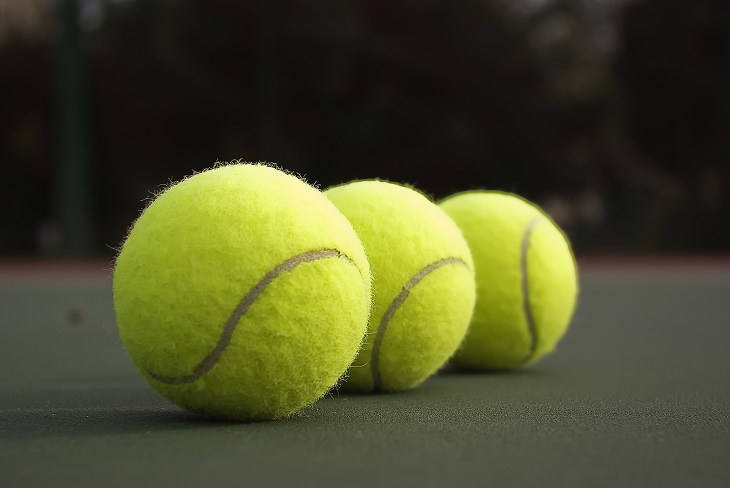
 Tennis Ball Exercises for Long Flights

1. Ankles 

Give your ankles a good stretch. Place the tennis ball under your foot and flex your ankle as you roll the ball back and forth. Hold each position for a few seconds, and then switch to your other foot. You should be able to do this with your shoes on. If the person sitting beside you doesn’t mind, you can also slip your shoes off for this one.

2. Wrists  

It’s easy for circulation to be poor in your hands and fingers too. So, to get the blood flowing again, you can grip a tennis ball with light pressure while bending your wrists inwards and outwards.

3. Thighs  

Massaging your thighs with a tennis ball will improve your circulation while you’re sitting down. Roll the ball vertically from the knee upwards to the top of your thigh. Repeat this motion on your entire thigh, applying gentle pressure. 

 4. Legs and Calves 

Following the same technique as thigh rolls, roll the ball upwards from your ankle to the knee, and on your calf. Repeat on your other leg. Apply gentle pressure and pay special attention to any areas of tension. 

5. Upper Back and Shoulders 

Simply roll the ball across your shoulders, upper back, and neck. Run it over any knots or painful points. You can also wedge a tennis ball between your back and the seat, being careful not to hunch over. 

N.B. These 5 techniques can be used by passengers and drivers on long road trips. Drivers can pull over and take a fifteen-minute break to carry out these exercises. If your back and/or shoulders start to ache while driving, position one or two balls between your back and the seat, and rock back and forth gently.


Labels: , , , , , , , , ,

Wednesday, July 20, 2022

Heart disease: Your ankles can indicate a serious health risk

As per WHO estimates, heart diseases claim close to 18 million lives every year

Heart disease is a silent killer. The signs and symptoms associated with this disease are so mild in the initial stages that it is impossible for a healthy individual to spot these.

There are several common signs of heart diseases which do not seem alarming but can snowball and lead to serious conditions like heart disease.

​Ankles can be an indicator of heart disease

A swollen ankle can be an indication that your heart needs way more attention than you are giving it currently.

How do you spot it? Unexplained swelling in ankles, and ankles appearing swollen without any external injury or bruises should not be taken lightly.

Another potential indicator is that the swollen area appears warm and when pressed it leaves a dent which remains a bit longer; in such conditions the skin does not return back to normal.

For example, when you wear socks you see dent or the impressions of the socks on your legs. Normally these impressions go away once you get rid of the socks, however if these impressions stay for a longer duration you should consult a doctor.

​Peripheral oedema


This condition mostly occurs due to peripheral oedema. It occurs mostly when fluid gathers in the tissue. It is mostly seen in arms and legs. In this condition, the arms and legs feel heavy.

Peripheral oedema can indicate a mild water retention problem, or can also be a potential indicator of a serious disease like heart disease. It can even occur in response to an allergic reaction.

​Signs of peripheral oedema

Apart from swelling in the ankles, other signs of peripheral oedema are puffiness of hands and face, swelling mostly after standing for a long time and also after sitting for a long time, stretched skin, change in skin color, discomfort, stiffness in the joint areas.

Sometimes the patient can also experience neck pain, can lose consciousness, may experience dizziness, and nausea.

​Heart diseases peripheral oedema can indicate

Peripheral oedema can indicate congestive heart failure. When the heart weakens the amount of blood it pumps is affected drastically. This can lead to fluid build up leading to leg oedema.

The common signs of heart disease are:

  • Cough, which does not go away on its own
  • Wheezing
  • Bloating
  • Unexplained weight change
  • Mood swings and confusion
  • Palpitations

Other diseases associated with peripheral oedema

Apart from heart disease, the other ailments associated with peripheral oedema are varicose veins, deep vein thrombosis, kidney disease, less protein in blood, and liver disease.

It can also lead to severe lung conditions called emphysema.

The most common cause of peripheral edema in patients is venous insufficiency and is related to old age, but apart from this many other underlying conditions like heart failure, renal failure, liver failure, and trauma can cause this condition and can occur to an individual of any age group.

How to maintain good heart health?

Apart from living a healthy life and having a clean diet, which are too obvious to follow, one should also keep an eye on minor changes in the body. Signs which seem simple and non-serious to the eyes might just be the tip of the iceberg.

Heart diseases do not happen at once. The symptoms linger within the body and slowly and steadily affect the normal functioning of the heart. By the time an individual experiences the issues, it's already too late.

Regular medical checkups, proper diet, exercise and a healthy lifestyle are very essential to keep the human heart function properly.

This is only for your information, kindly take the advice of your doctor for medicines, exercises and so on.   

https://gscrochetdesigns.blogspot.com. one can see my crochet creations  
https://gseasyrecipes.blogspot.com. feel free to view for easy, simple and healthy recipes    
https://kneereplacement-stickclub.blogspot.com. for info on knee replacement


Labels: , , , , , , , , ,