Friday, April 04, 2025

Microwavable Mitten Warmers

Step 1: Materials

These mitten warmers can be made quickly and easily. This instructable will show you several different methods so you have lots of options depending on your resources and abilities.

Here is a list of supplies you may choose to use:

Essential items:
- mittens (obviously)
- microwave oven
- dry, uncooked rice or lentils - but not popcorn, that's a bad choice.

Choice of cotton fabric:
- old dish towel
- old sock
- old T-shirt
- etc.

One or two of the following items:
- sewing machine
- needle and thread
- fusible webbing
- string
- rubber bands

Step 2: Option One

Option One Option One  Option One

Use a sewing machine to sew a small bag out of some fabric. These ones I made measure about 8cm (3 inches) by 5cm (2 inches).


Begin with a piece of fabric a little wider than you want the finished bag to be, and a little more than twice as long. The extra width is your seam allowance. By the way, you needn't fuss about with a whole lot of cutting, just snip the edge and rip the fabric. Next fold the piece in half with the inside out, and run them through your sewing machine to sew the two sides together. Then turn them right side out, and fill with rice. Tuck the remaining raw edges inside and stitch the opening shut.

Done.

The final thing to do with all these options, is to microwave your finished mitten warmers for between 30 seconds to a minute. The rice will likely have a fair bit of moisture in it so for the first few heatings, so expect the warmers to come out of the microwave a bit damp. If you use basmati rice, like I did, also expect it to smell delicious! You can pop them into your mitts right out of the microwave and enjoy you toasty fingers!

Step 3: Option Two

Option Two  Option Two Option Two

 What? You say you don't have a sewing machine? Well it doesn't take a rocket surgeon to figure out you can do pretty much the same thing as Option One, but do all the sewing by hand. I used a blanket stitch to close up the top seam on mine.

Step 4: Option Three

 Option Three  Option Three  Option Three

Now if you are like me, you're not a big fan of sewing. Well then, let's try to minimize the amount of sewing you need to do.


Find an old pair of socks that you've worn the heels through, but the toes are still in good shape... and make sure they're clean! Lob off the toes to make pockets with enough room to hold the rice. Fill rice into these pockets, and tuck in the raw edges, placing enough fusible webbing between to span the entire opening. Iron this seam together.

Since microwaving these bags will melt the fusible webbing, you need to stitch along the seam. Socks tend to be quite stretchy and the fusible webbing helps stabilize the fabric while you sew it, however you could do without it if you prefer.

Step 5: Option Four

Option Four   Option Four  Option Four

 Option Four  Option Four

What's that? You say you suffer from [http://www.phobia-fear-release.com/aichmophobia.html" aichmophobia] and don't want to sew anything at all? Try this: Either fill the toes of old socks with rice like the previous option, or make a satchel out of an old dishtowel or T-shirt.

One way to make a satchel is to take a square of fabric and push some of it down into one hand that you can fill with rice. Gather up the loose ends over top and tie off with some string. Try not to make the satchel too tight; keep it a little slack. Then just trim off the excess and use.

Step 6: Option Five

 Option Five  Option Five  Option Five

Option Five  Option Five  Option Five

So you never quite managed to learn the whole tying-string-together thing, eh? Not to worry, use rubber bands instead of string. Wrap the rubber band as tightly as possible around the open end of the sock, or satchel.

Step 7: Option Six
 Option Six

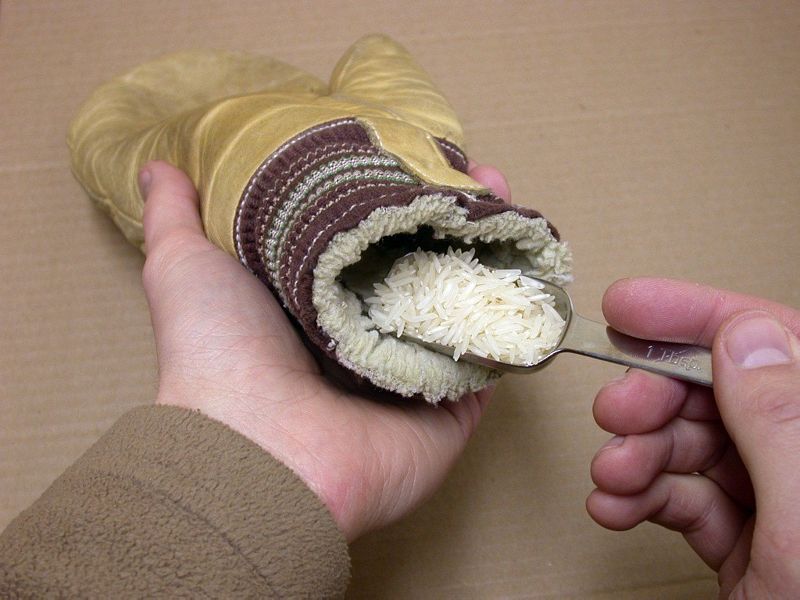
Still too complicated for you? (sigh...) Okay then, just put some rice in a bowl, heat it up in the microwave, and then pour it into your mittens.

Sure the rice will be loose in your mitts and you'll probably loose some if you raise your hand to wave at a friend, but this is absolutely the fastest and easiest mitten warmer I can think of to keep your fingers from freezing when you are outside.


This is only for your information, kindly take the advice of your doctor for medicines, exercises and so on.   

Labels: , , , ,

Tuesday, February 01, 2022

Here Are Top 10 Winter Super Foods to Promote Bone Health And Immunity

Food Tips: Here Are Top 10 Winter Super Foods to Promote Bone Health And Immunity

The winter season is here and so are the lazy days. The want to spend extra five minutes in a cozy blanket can be dangerous to health. Along with this, you also have to make sure that you are eating the right food. Foods have the power to protect you from extreme weather conditions. Foods also prevent skin, hair and other body issues.

A renowned nutritionist shares important foods that will protect you from severe winter. According to her, the top 10 winter superfoods include time tested food practices and include those in the diet. They should provide good immunity, joint and bone health. 

  • Bajra / pearl millets

Benefits: Rich in vitamin B, bajra promotes muscle growth and hair regeneration.
How to add to your diet: Bhakri, laddoo, khichdi, bhajani, thalipeeth etc

  • Goond / edible gum

Benefits: Goond is good for bones, sex drive and digestive aid.
How to add to your diet: Laddoos, gond paani, roasted in ghee and sprinkled with sugar.


  • Green Veggies – palak/ spinach, methi/ fenugreek leaves, pudhina/ mint, sarso / mustard leaves

Benefits: Full of antioxidants, fibre, vitamins, green veggies are anti-inflammatory in nature and reduce burning in hands and feet.
How to add to your diet: Sabzi, saag, raitas and add them to dals and chutneys.

  • Kand And Root Veggies

Benefits: Prebiotic and aid in weight loss. Helps in improving digestion and have loads of nutrients.
How to add to your diet: Tikkis, sabzis, specially dishes like undhiyo. Kand and root vegetables can roasted and eaten with seasoning of salt and chilli powder.

  • Seasonal Fruits – Peru / guava, Sitaphal/ custard apple, Khumani/ apricot, Apple

Benefits: Have micronutrients and fibre. Provides hydration to the skin.
How to add to your diet: Enjoy them ripe, eat fresh and whole after washing. Seasonal fruits are a good mid-meal option.

  • Til (Sesame seeds)

Benefits: Essential fatty acids and Vit E. Sesame seeds are good for bones, skin and hair.
How to add to your diet: Use Chikki, laddoo, chutney and seasoning.

  • Peanuts

Benefits: Amongst world’s healthiest foods, rich in Vitamin B, amino acids, polyphenols they are also good for heart.
How to add to your diet: Have them boiled, roasted, turn them into a chutney, use them for seasoning, in salads and sabzis.

  • Ghee / clarified butter

Benefits: Essential fatty acids, makes it easy to score vitamin D, A, E etc, good taste enhancer.
How to add to your diet: Cook in ghee, add ghee to dals, rice, bhakri, bhatis and rotis.

  • Makkhan (White Butter)

Benefits: Beneficial in joint lubrication, skin hydration, bone health, critical for work from home induced load on neck and spine and reduces gas.

How to add to your diet: A dollop of white butter on bhakri or bhajani, thalipeeth ,added to saags or dal in winter.

  • Kulith / horsegram ( Kollu)( Other forgotten pulses like alsane, navrangi dal, etc) pulses

Benefits: Prevents kidney stones, beats bloating, good source of protein, fibre and micro-nutrients
How to add to your diet: As parathas, soup, dal etc.


This is only for your information, kindly take the advice of your doctor for medicines, exercises and so on.   

https://gscrochetdesigns.blogspot.com. one can see my crochet creations  
https://gseasyrecipes.blogspot.com. feel free to view for easy, simple and healthy recipes    
https://kneereplacement-stickclub.blogspot.com. for info on knee replacement


Labels: , , , , , , , , , , , , , , , , , ,

Friday, January 07, 2022

Three winter millets that can help boost immunity

Best millets for the winter season

Seasonal foods are called seasonal for a reason, and no, the reason isn’t as simple as it might seem. Fruits and vegetables available during a particular season are not called ‘seasonal’ only because of their availability, but also because of the way in which they help the body. Fruits and vegetables that are available during the summers are rich in water content, minerals and vitamins that help the body cope up with the dehydration that happens as a result of excessive heat and tiredness. Foods available during monsoon help the body cope up with the increase in humidity and sweating.

Choosing the right foods for winters

Similarly, winters are a trying time during which the body needs insulation and better blood circulation. Due to lack of activity and better insulation needs, people consume more food as a result of which heat is released in the body but this also leads to weight gain, to battle which the body needs foods that help lose weight. Adding millets and grains like maize, jowar and bajra are gluten free and help the body by providing various health benefits and aiding weight loss. Here are three millets that are fit for consumption during winters.

Bajra

Bajra or pearl millet is rich in protein that helps the body build muscle mass. Lean muscle mass aids weight loss and is a marker of a healthy body. Fiber present in bajra is soluble in water and forms a gel-like substance that settles in the stomach and helps one feel fuller for longer. The fiber also helps digestive processes and metabolism because of which weight loss becomes convenient. Bajra also helps regulate blood glucose levels and cholesterol. With its numerous health benefits and heating affinities, bajra is a suitable option to embrace during the winter.

Ragi

Ragi is rich in protein and calcium. It is a very suitable alternative for vegetarians who refuse to switch to non-vegetarian food just for the sake of maintaining calcium levels in the body. The amount of vitamins and minerals present in ragi is also sufficient for an individual’s overall health and helps prevent anemia. Good skin health and hair health are also promoted by consumption of ragi and makes it a healthy option for consumption during the winter.

Jowar

Jowar is also known as Sorghum and it is a storehouse of nutrients that include Vitamin B, calcium, iron, phosphorus and fiber that ensure overall health. Antioxidants present in jowar help the body resist diseases like cancer. It is gluten free and helps control blood glucose levels, boosts immunity and improves heart health. Including jowar to your daily winter diet will help you survive better in the season.


Labels: , , , , , , ,