Thursday, July 24, 2025

Learn How to Diagnose and Treat a Skin Bump

Skin lumps, also known as lipomas, are any areas of skin that have become abnormally raised, either on the surface or protruding from underneath. Somebody with a lipoma has an abnormal lump, ulcer, bump or sore, and it might also be an abnormally colored area on the skin's surface. Common skin lumps include warts, moles, actinic keratosis, and skin infections. While some may be a cause for concern, many types of skin lumps are benign. Keep reading to learn more about them.
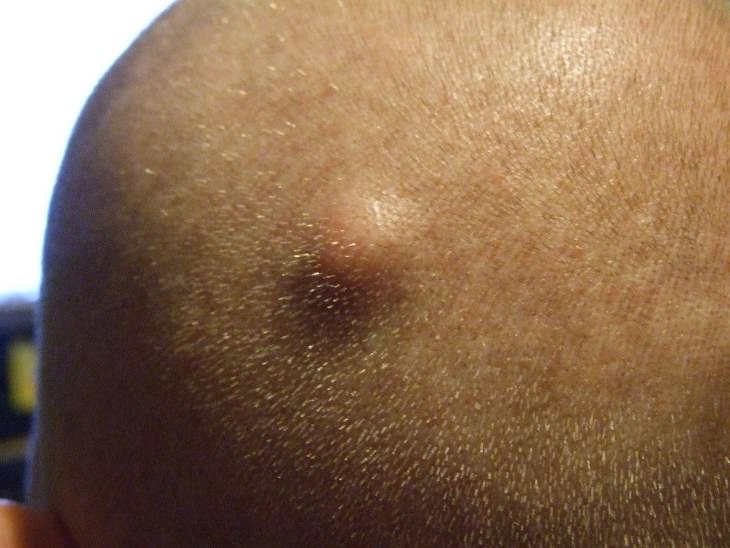

lipoma

The symptoms of lipoma

 There are various kinds of skin lipomas, but they usually have distinct characteristics. They are most commonly found on the back, neck, and shoulders, but may also appear on thighs, arms or your abdomen. If you suspect that you have one it will usually:

*be pale and colorless 
 
• grow slowly 
 
• be soft to the touch 
 
• be located just under your skin 
 
• move easily when prodded

The Risk Factors of a Lipoma While the cause of lipoma development is still unknown, there are a number of risk factors that can increase your susceptibility: 
• a family history of lipomas 
• being aged between 40 and 60 
• Cowden syndrome 
• Gardner's syndrome 
• Madelung's disease 
• adiposis dolorosa 
 
Diagnosing a Lipoma 
Lipomas are usually diagnosed through a physical exam. It should move easily when touched, feel soft and pain-free. Sometimes, a dermatologist may take a biopsy of the skin bump to send to the lab for testing and to rule out the possibility of cancer. This is done because a lipoma looks quite similar to a liposarcoma which actually is cancerous, but is usually painful and quick-growing. Further tests though CT scans and MRI are usually only needed when there is a suspicion of a liposarcoma.

Treating a Lipoma  
A lipoma that’s left untouched will not typically cause any problems. However, you can get it removed if it is bothering you or getting in the way of your day-to-day activities. The 3 most common treatment options are: 
 
Steroid injections - By injecting steroids into the affected area, the lipoma should drastically shrink, however it will not be removed entirely. 
 
Liposuction - This procedure works by sucking the fat out of a lipoma in order to reduce its size. 
 
Surgery - The most common procedure is to simply have the entire lipoma surgically removed. Once this takes place, the chance of it growing back is slim. 
 
The Outlook For Someone With a Lipoma 
Since a lipoma is a benign tumor, there is no real risk of one suddenly turning cancerous. Additionally, it will never spread through any surrounding tissues or muscles, and it certainly is not life-threatening. All in all, the outlook for someone with a lipoma is incredibly positive.


This is only for your information, kindly take the advice of your doctor for medicines, exercises and so on.   


Labels: , , , , , , , , , , , , , , , ,

Sunday, January 17, 2021

Learn All About Alopecia Areata

It’s the stuff nightmares are made of – you step out of the shower, dry your hair, and are shocked to discover a clump of hair on your towel. You finally pluck up the courage to take a look in the mirror and you see that you now have a glaring bald patch on your scalp. For the majority of us this is just a really bad dream, but for millions of people around the world, this nightmare is a cruel reality. The culprit behind this is the disease, alopecia areata.

Despite being quite a common disease, there’s a lot of people who do not know anything about alopecia areata. This article aims to change that by explaining what it is exactly, what happens, how it is diagnosed and treated, and how it affects your life. 
 
What Is Alopecia Areata?  Alopecia Areata - Informative - Helpful
Alopecia Areata is hair loss which occurs as a result of your immune system mistakenly attacking your hair follicles, which is where hair growth begins. Experts still do not know exactly why the immune system decides to attack the follicles, but it is thought that something triggers the immune system to react against the body’s tissues – possible triggers are infections, viruses, medicines and environmental factors. 
 
This disease can occur at any age, but most cases first develop in children and teenagers – at least half of those who suffer from alopecia areata develop their first hair loss before the age of 21. Males and females are equally affected.

What Happens with Alopecia Areata?
Alopecia Areata - Informative - Helpful
Alopecia areata usually begins when clumps of hair start to fall out, resulting in smooth, round (the size of a large coin) hairless patches on the scalp or other parts of the body. However, in some cases the hair may just become thinner with no obvious bald patches, or it may grow and break, leaving short stubs. In extremely rare cases, the complete loss of all body hair occurs. 
 
As the damage to the follicles is often not permanent, hair loss can come and go. In fact, it is quite common for someone to have it as a child, have it go away, and then have it return 20 years later as an adult. 
 
About 10% of people who suffer from this condition may never regrow their hair. You are more likely to suffer permanent hair loss if you: 
 • Have a family history of the condition (around 1 in 5 people with this disease have a close relative affected by it). 
 
• Had the condition before puberty or for longer than one year. 
 
• Are prone to allergies. 
 
• Have other autoimmune diseases. 
 
• Suffer from extensive hair loss. 
 
• Have abnormal color, texture, shape, or thickness of fingernails and/or toenails.

How Is Alopecia Areata Diagnosed?
Alopecia Areata - Informative - Helpful
It’s diagnosed through a physical examination and a look at your medical history. Your doctor will generally ask you questions about your hair loss and look at the pattern of your scalp, which they'll then examine. They may also gently tug on a few strands of hair to see if they fall out too easily. 
 
If the doctor cannot put their finger on the exact reason for your hair loss, they may decide to carry out a few tests to check whether a disease is causing your hair to fall out. 
 
These tests include:
 • Hair analysis. The doctor will pluck some of your hair and examine it under a microscope. A scalp sample may also be taken. 
• Blood tests will be done, including testing for specific conditions, such as an underactive or overactive thyroid gland. 
 
How Is it Treated?
Since hair usually grows back within a year, you may simply decide to not treat it and just wait. If you decide against trying to treat your alopecia areata, you may wish to: 
 
• Wear a hairpiece. Hairpieces are made up of human or synthetic hair that is implanted into a nylon netting. Hairpieces can be attached to the scalp using metal clips, glue or tape. However, sewing or braiding longer pieces of hair into existing hair is not recommended as it may cause permanent hair loss. 
 
• Use specific hair care products and styling techniques. Hair care products or perms can make the hair appear thicker. Dyes can also be used to color the scalp, but continual use can result in additional hair loss. If you wish to treat your alopecia areata, you can try: 
 
• Steroid injections – Injecting steroids into the bald patches suppresses the local immune reaction which occurs in alopecia areata patients. Therefore, this allows the hair follicles to function normally and your hair will eventually re-grow after 1-2 months. This is thought to be the most effective treatment for this condition, but it is not 100% effective. 
 
• Rub-on steroids – Steroid cream may help hair re-growth, but it does not work as well as steroid injections. It is worth trying steroid cream if you have large bald patches which are not suitable for the injections. If re-growth does occur, it usually takes 3-6 months. If no re-growth is present after this period of time, there is no point continuing with this treatment. 
 
• Applying Anthralin – Anthralin, commonly used to treat psoriasis, is an ointment that may help your hair grow again. It looks and feels a bit like tar, and it can irritate and stain your skin. Therefore, you should apply it to your bald patches for only a short period of time before washing it off. It may take up to 2 months for new hair to grow.

If you would like to try a natural home remedy instead, you can: 
 
• Apply lavender – Studies have shown the lavender can slow, or even reverse, hair loss caused by alopecia areata. Since it is a powerful essential oil, it should be diluted with almond or coconut oil before being applied. 
 
• Apply coconut milk – Applying coconut milk with a gram of flour to your scalp will guarantee the relatively quick recovery of your lost hair as the paste stimulates the hair follicle and boosts the health of your scalp. 
 
• Use Chinese Hibiscus – Mix hibiscus petals with some dandelion oil and apply it to your scalp. This flower is known to maintain the health of hair when it has not fallen out, but it also helps to stimulate and rejuvenate hair follicles. 
 
• Apply Aloe Vera – This plant dramatically increases blood circulation to any area of the body it is placed on. Furthermore, it's effective in promoting scalp development and recovery. 
 
How Will Alopecia Areata Affect Your Life?
This disease does not have the same effect as many other diseases: there is no pain, you do not feel sick, and it does not cause any serious health problems. You cannot spread it to others and it should not interfere with your everyday life. 
 
However, if hair loss is making you feel unattractive and down, it's important that you talk to somebody about it.

This is only for your information, kindly take the advice of your doctor for medicines, exercises and so on.     

https://gscrochetdesigns.blogspot.com. one can see my crochet creations  
https://gseasyrecipes.blogspot.com. feel free to view for easy, simple and healthy recipes    
https://kneereplacement-stickclub.blogspot.com. for info on knee replacement

Labels: , , , , , , ,

Friday, January 17, 2020

Bone Spurs-everything one likes to know

What Are Bone Spurs?

Bone spurs commonly occur on the heel.


Facts You Should Know About Bone Spurs

A bone spur is an outgrowth of bone that can occur along the edges of a bone. It is also called an osteophyte.
Seek medical care if you are experiencing persistent pain due to bone spurs.
reatment options depend upon the signs and symptoms that you are experiencing.

Bone spurs can form in any bone but are most commonly found in joints, where two or more bones come together. They also occur where muscles, ligaments, or tendons attach to the bone.

Some of the most common parts of the body affected by bone spurs are the neck (cervical spine), low back (lumbar spine), shoulder, hip, knee, and heel. Other areas may be affected as well, including the temporomandibular joint (TMJ), hands, wrists, and feet (the top of the foot [midfoot], arch of the foot, or toes).


What Causes a Bone Spur?
Bone spurs typically occur because of continued stress or rubbing of a bone for a prolonged period of time. This can be due to osteoarthritis or inflammation such as tendinitis. Normally there is a layer of cartilage along the edges of bones where they come together to form a joint. With osteoarthritis, this cartilage layer becomes worn away, and the bones can rub directly against each other. New bone forms in response to the stress or inflammation. It is the bone's method of trying to stabilize or protect itself.

There are other medical conditions that are commonly associated with bone spurs. These include a condition known as plantar fasciitis. This is an inflammation of the fascia or connective tissue on the bottom of the foot where it attaches to the heel bone or calcaneus. Diffuse idiopathic skeletal hyperostosis (DISH) and ankylosing spondylitis are both inflammatory disorders that affect the body's ligaments and cause bone spurs in the spine.


What Are Risk Factors for Bone Spurs?

Risk factors for bone spurs include trauma to a joint. An accident that injures a joint increases the likelihood of osteoarthritis and bone spurs occurring in that joint later in life. Also, overuse of a joint or tendon can predispose one to bone spurs.

Genetics is also a risk factor for the development of bone spurs. People with many family members with bone spurs are more likely to develop bone spurs themselves.

The conditions ankylosing spondylitis and diffuse idiopathic skeletal hyperostosis (DISH) both place a person at high risk for developing bone spurs in the spine.

Diabetes is a risk factor for the development of bone spurs and osteoarthritis. The exact connection between these is unknown.


What Are Signs and Symptoms of a Bone Spur?
Bone spurs do not always cause symptoms. Many people have bone spurs but do not know it. However, if bone spurs rub against other bones or nearby soft tissues they can cause pain or a loss of normal motion in a joint. This is most common in the hips, knees, shoulders, hands, and feet.

If the bone spurs rub against tendons or ligaments, they can cause pain or a tear. This is a common complication in the shoulder and can lead to a rotator cuff tear.

If bone spurs occur in the spine, they can cause pain and loss of motion, but they can also pinch the nerves or spinal cord. When nerves in the spine are pinched, it is known as radiculopathy. It can cause pain, numbness, tingling, or weakness in the arms or legs. If the spinal cord is compressed, it is called myelopathy. This can cause problems with balance, weakness, and pain.


When Should Someone Seek Medical Care for a Bone Spur?
If you are having problems with increased pain in your joints or loss of motion, you may have bone spurs. Other conditions can also cause these symptoms. If these symptoms cause significant persistent pain, you should seek medical care to have it evaluated.

What Specialists Treat Bone Spurs?

Specialists who treat people with bone spurs include internists, family medicine doctors, generalists, rheumatologists, orthopedists, and physical medicine and rehabilitation specialists. Physical therapists and occupational therapists also treat patients with bone spurs.

How Do Health Care Professionals Diagnose Bone Spurs?
A doctor will likely begin with a medical history and physical examination. The medical history is a series of questions about someone's condition and a review of any other medical problems. The physical examination will include testing the joints that are affected to determine how much motion an individual has, how much pain one experiences with motion, and a check of muscle strength.

Based on the results of the medical history and physical, a physician may recommend obtaining imaging studies to diagnose bone spurs. This often starts with plain radiographs (X-rays). These are typically able to show if bone spurs have formed and if the joint is affected. If there is a question of possible tear of a tendon such as a rotator cuff tear, an MRI may be ordered. An MRI or CT scan may also be ordered in the spine to assess for possible nerve or spinal cord compression.


What Are Treatment Options for a Bone Spur?
Treatment for bone spurs depends on the symptoms one is having. Pain is the most common symptom and is often initially treated with medications. Anti-inflammatory medications are typically used first. These help both to relieve pain and to reduce the inflammation caused by the bone spurs.

A doctor may also recommend physical therapy to help with bone spur symptoms. The physical therapy is not able to remove bone spurs, but it can help with some of the symptoms related to them. If one has a loss of motion in a joint caused by bone spurs, physical therapy can help strengthen the surrounding muscles and increase the motion in the joints. Physical therapy can include ice or cold packs, stretching exercises, ultrasound treatments, or massage.

In some cases, an injection of a steroid such as cortisone into the joint can help reduce pain from bone spurs. These injections can often be performed in a doctor's office, depending on the joint involved. If the hips or spine are involved, the injections usually are performed using an X-ray machine to help guide the placement of the injection.

Over-the-counter anti-inflammatory medications can be used to treat pain. A doctor or physical therapist can provide a patient with simple stretching exercises to perform at home. Other home remedies for bone spurs include applying ice to the affected joint.


What Medical Devices Treat Bone Spurs?

If the bone spurs affect the foot or heel, a doctor may recommend special pads or inserts for shoes called orthotics to help take the pressure off the bone spurs.


When Is Surgery Appropriate for Bone Spurs?

In some cases, if symptoms cannot be controlled with more conservative treatment, surgery could be an option. The goal of surgery is to remove the bone spurs to allow for a more normal joint or to remove the pressure on muscles, tendons, ligaments, or nerves. The surgery may simply remove the bone spurs, but in other cases, the removal could be part of a larger surgery such as a joint-replacement surgery.


Is It Possible to Prevent a Bone Spur?

Bone spurs are usually the result of arthritis, so there is no specific way to prevent them. Maintaining an active lifestyle and being physically fit can often help reduce the symptoms related to bone spurs. Maintaining a healthy weight reduces the load on the joints. This may help prevent the formation of bone spurs, especially in the knees.

What Is the Prognosis of a Bone Spur?

The prognosis for the treatment of bone spurs is good. There have been many recent advancements in medications for the treatment of arthritis and other causes of bone spurs. Additionally, newer and less invasive surgical techniques allow for a faster recovery and return to normal activities.


This is only for your information, kindly take the advice of your doctor for medicines, exercises and so on.     
https://gscrochetdesigns.blogspot.com. one can see my crochet creations  
https://gseasyrecipes.blogspot.com. feel free to view for easy, simple and healthy recipes    
https://kneereplacement-stickclub.blogspot.com. for info on knee replacement
 

Labels: , , , , , , , , , ,

Wednesday, February 27, 2019

Steroid injections linked to lower infant birth weights

Steroid injections given to mothers at risk of giving birth prematurely are likely to deliver babies with lower body weights, says a new study.

The study showed that pre-term babies whose mothers received antenatal corticosteroid therapy (ACT) on average weighed 220 grams less than infants who had not received treatment.

The weight difference was 141 grams for near term babies and 89 grams for full-term babies.

In addition, babies who received ACT but delivered at term were also smaller in size when matched against babies born at term without the treatment.

“We have known from animal studies that steroid treatment could affect foetal growth. It is still unclear whether the reduction in birth weight of the treated infants is directly caused by the drug or due to the complications that led to the treatment,” said  a Professor.

“This study adds weight to calls for a review of the current guidelines for management of threatened pre-term birth and for who should receive steroid treatment,” the Prof. added.


For the study, the team used data from 2,78,508 births to see if the link between reduced birth weight and size was related to the steroid treatment or to other factors.

The findings showed that more than four per cent of children were born pre-term (before 37 weeks).

A total of 4,887 women were given ACT, and 2,173 exposed babies were born at term (37 weeks).

The fact that this treatment may reduce the foetal growth should be considered in future research and recommendations, suggested a Professor.

Worldwide, about 1.5 million babies are born premature annually.

Complications resulting from premature birth, especially those related to breathing problems, are the leading cause of death in infants and morbidity in survivors. Therefore, ACT is used before birth to help mature the lungs rapidly.

THIS IS ONLY FOR INFORMATION, ALWAYS CONSULT YOU PHYSICIAN BEFORE HAVING ANY PARTICULAR FOOD/ MEDICATION/EXERCISE/OTHER REMEDIES.                                    PS- THOSE INTERESTED IN RECIPES ARE FREE TO  VIEW MY BLOG-                                                                                           https://gseasyrecipes.blogspot.com/                                                                                                                                                         FOR INFO ABOUT KNEE REPLACEMENT, YOU CAN VIEW MY BLOG-                                                  https:// kneereplacement-stickclub.blogspot.com/           

                                                                           FOR CROCHET DESIGNS                                                                                                                                                                                                  https://gscrochetdesigns.blogspot.com

Labels: , , , , ,