Monday, June 14, 2021

Boost Your Health With These 7 Seasonal Superfruits

We're now at that time of year when our options for local, seasonal fruits seems to be apples or...apples. Growers of citrus fruit haven't really got a tasty crop yet, and the vast majority of what's in your local grocery store has been shipped in from a different continent, and lacks taste, quality, and nutrition. However, if you take a visit to specialist grocery stores, you can find some unique and nutritious fruits that are available at this time of year. Certain kinds of citrus and tropical fruits, which are grown somewhat locally have more antioxidants than any other fruit, so you can keep yourself healthy without having to rely on fruit flown in from a different hemisphere. Below, you can find, 7 such superfruits!

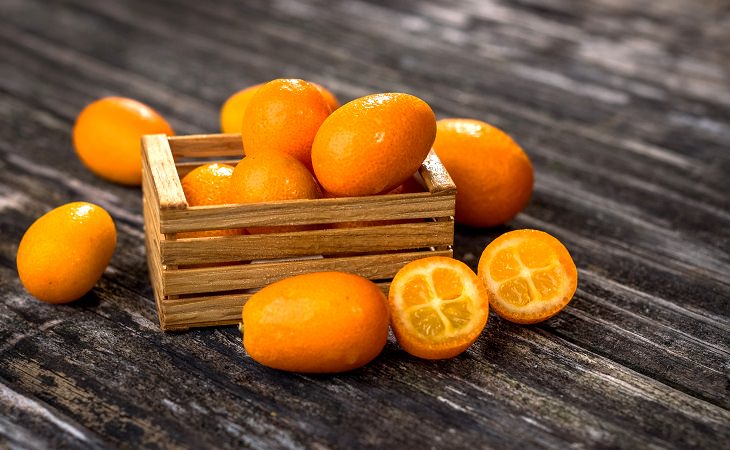
1. Kumquats
7 - Seasonal - Superfruits - To eat
This little olive-sized citrus fruit is full of disease-fighting antioxidants, which are contained in their sweet and edible skin. A serving of five kumquats contains a fifth of your daily fiber, along with a very healthy and generous dose of vitamins A and C, and potassium. Most of America's domestic kumquats are grown in Florida and California, with the most commonly grown variety being the Nagami - which peaks between November and March. 
 
These fruits have lots of uses: slice a few up and add them to a salad, or use them in recipes instead of orange zest, or mix dried kumquats with red onion, cilantro and lime to make a great salsa. 
 
When buying kumquats at a store, look for the ones that are firm and bright orange in color, and store them at room temperature for 2 to 3 days, or in the refrigerator for up to 2 weeks.

2. Carambolas (Star Fruit) 7 - Seasonal - Superfruits - To eat
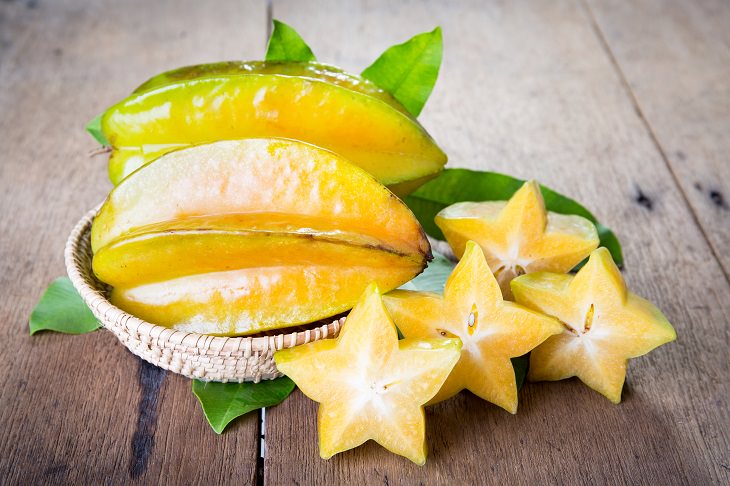
These exotic fruits are high in vitamin C and potassium. Furthermore, they have an abundance of inflammation-lowering polyphenols, which makes them great for your heart. Most of the star fruit that you can find in stores across America come from Florida or Hawaii. 
 
The taste of this fruit has been described as somewhere between that of citrus, apple, and pear. You can eat this tasty fruit as it is, or you can add some to a fruit salad. 
 
When buying this fruit, look for firm, shiny, and evenly colored yellow fruit. Remember to handle the fruit with care as it's easily bruised. Let the fruit ripen at room temperature for a few days until they start to go brown on the edges and develop a fruity aroma (this is when they are at their sweetest), then refrigerate them for up to a week. 
 
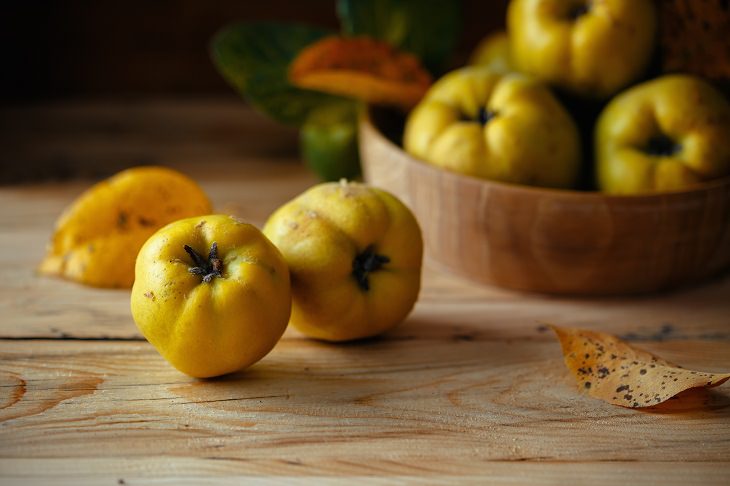
3. Quinces
7 - Seasonal - Superfruits - To eat
They may look like apples or pears, but quinces are a lot healthier. High in vitamin C, quinces also have an abundance of antiviral phenolic compounds that have been found to help keep the flu at bay. The quince season lasts from around September to December. You can find them at Latino, Asian, and Middle-Eastern markets, specialty grocers and farmers' markets. 
 
This fruit tastes better when cooked, so make sure to add them to a savory stew or to use them in desserts instead of apples and pears. 
 
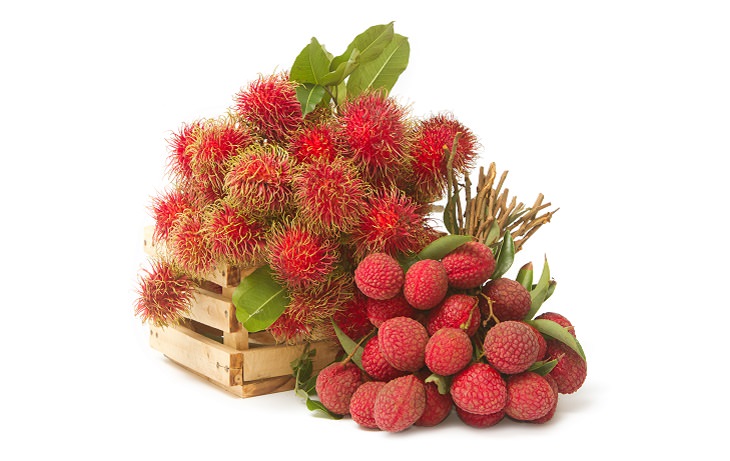
4. Rambutans
7 - Seasonal - Superfruits - To eat
The rambutan, also known as hairy lychee or hula berry, is a great tropical treat when summer's lychees are out of season; their season is from September to March. Rambutans have a seriously high level of the antioxidants anthocyanins and flavanoids, both of which can help reduce the risk of cardiovascular problems and chronic diseases. 
 
This fruit can usually be found in Asian and other specialty markets. This fruit is fragile and lasts for only a day or two at room temperature. If you're not going to be eating them straight away, place in a perforated bag and refrigerate. 
 
To eat this fruit, peel the skin off and pop into your mouth, or add them to a fruit platter. 
 
5. Longans
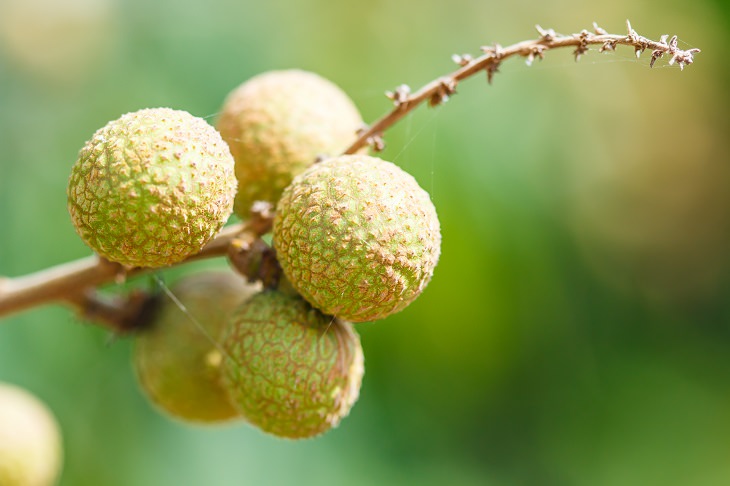
7 - Seasonal - Superfruits - To eat
Longans are native to China, but are grown in Hawaii and across the Caribbean. It's a good idea to stock up on this fruit at this time of year as they have been known to settle upset stomachs and reduce fevers. They are also full of disease-fighting antioxidants. 
 
You can find Hawaiian grown longans in Asian markets all year round. To store, place them in a perforated plastic bag and refrigerate for a week or two. To eat, simply peel, de-seed and pop in your mouth, or add to fruit salads and desserts. 
 
6. Persimmons
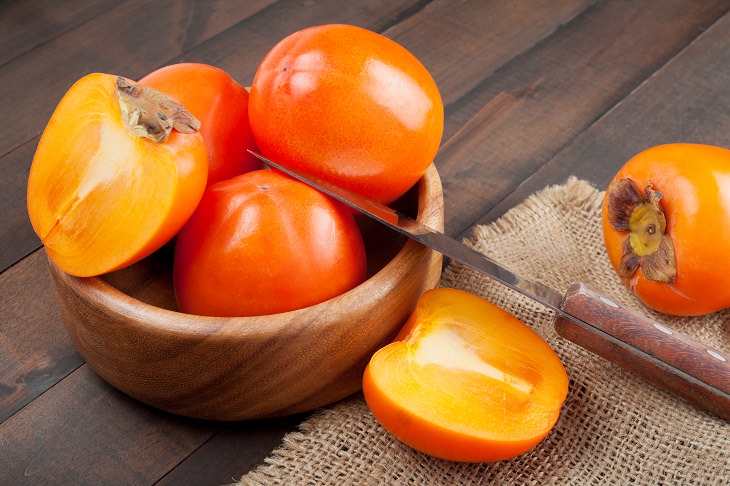
7 - Seasonal - Superfruits - To eat
This fruit is better for your heart than an apple, as it contains much higher concentrations of the dietary fiber, minerals, and phenolic compounds that help prevent atherosclerosis, a leading cause of heart disease, heart attacks, and strokes. An added bonus is that the antioxidants present in this fruit can help control diabetes and the cell damage it causes. 
 
You can use the pulp or the whole fruit in puddings, pureed in ice creams, or added to cakes and breads. They can also be used in savory dishes, such as salsas, stir-fries, and salads.

7. Asian Pears
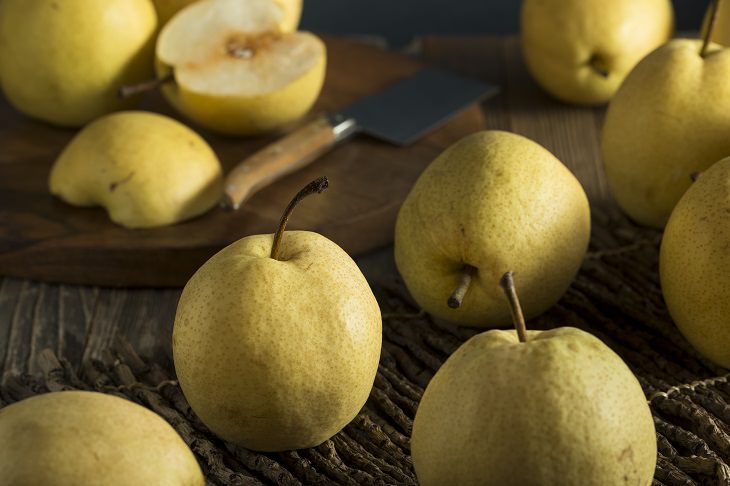
7 - Seasonal - Superfruits - To eat
This fruit is perfect for cold storage and they are easy to find in farmers' markets and grocery stores at this time of year. Asian pears have more fiber than other types of pears, so eating one daily is great for your heart and helps keep diabetes at bay. 
 
This fruit can be kept for a week at room temperature or 3 months in the fridge. Due to their sweet flavor and crunchy texture, Asian pears are a great addition to salads and slaws. Furthermore, they work well in place of apples in many different recipes.

This is only for your information, kindly take the advice of your doctor for medicines, exercises and so on.   

https://gscrochetdesigns.blogspot.com. one can see my crochet creations  
https://gseasyrecipes.blogspot.com. feel free to view for easy, simple and healthy recipes    
https://kneereplacement-stickclub.blogspot.com. for info on knee replacement

Labels: , , , , , , ,

Wednesday, January 02, 2019

15 Rare Indian Fruits That Will Amaze You With Their Uniqueness

If you take a stroll through a supermarket’s perishable produce aisle, you might be forgiven for thinking that you have an impressive variety of fruit at your fingertips. In reality, however, these fruits are only some a small sample of the wide variety of delicious and exotic fruits that exist out there.

Did you know that India holds the distinction of being the world’s second largest producer of fruits?

With a climate that ranges from Himalayan to tropical, India has much to offer in terms of fruit diversity. While major fruits like mango, banana and citrus varieties are grown in abundance in many parts of the country, there are several unique and increasingly rare minor fruits that are collected from the wild and eaten mostly by the locals. It is only during the searing summers and cold winters of the subcontinent that some of these fruits appear on the rickety carts of street hawkers in Indian towns.
A reminder of changing seasons and childhood summers, here are 15 little known fruits from India that can open up an entirely new world to you. So go on, take a look, and be sure to comment below with your experiences, favorite fruits, and any others that we’ve missed!

1.  Jungli Jalebi/Kodukkapuli (Camachile)

kamunsil
The spiralling green-pink pods of jungli jalebi (or kodukkapuli) contain about 6-10 shining black seeds enveloped in a thick sweet edible pulp. While the pulp can be eaten raw or made into a drink similar to lemonade, the tangy seeds are used in curries. It is due to the fruit’s resemblance to the Indian sweet jalebi that the plant has been given the name jungli jalebi.
Grown in:  Tamil Nadu, Kerala, Maharashtra, Karnataka, Andhra Pradesh and West Bengal

2. Carambola (Star Fruit)

averrhoa_carambola_ripe_fruits_at_ciat_1
Carambola is a fruit with a waxy skin and a green to golden yellow color. The ripe fruit has a distinctly yellow colour, with slightly brown ribs, and it makes a great preserve or pickle. Unripe ones are lime green, taste sour and are best eaten when sliced and sprinkled with a mixture of salt and chili powder. Grown in the months of September-October and January-February, India is one of the largest producers of this fruit.
Grown in: Throughout India (especially in South India)

3. Buddha’s Hand (Fingered Citron)

2623563431_5d731cd9cc_b
A stunning fruit, Buddha’s hand looks like a lumpy lemon with elongated, yellow tentacles (that resemble gnarled human fingers) protruding from the base; hence, its name—Buddha’s hand. Buddha’s hand has a mild yet zesty flavour and is wonderfully aromatic—it is known to fill rooms with its fresh floral perfume. Believed to have originated in the lower Himalayas, botanists are unsure if it’s native to the region in India or China – some scholars believe that India’s migrating Buddhist monks carried the fruit with them to China in 400 AD.
Grown in: Northeastern India

4. Langsah/Lotka (Langsat)

duku-langsat
A small, translucent, orb-shaped fruit, langsah is most often found in South India.  They can be quite sour when unripe, but are perfectly sweet when ripe with a taste similar to a bittersweet grapefruit. Even though this fruit’s demand skyrockets when it is in season, its cultivation does not extend beyond a handful of regions in the south.
Grown in: Throughout eastern and southern India (especially in the Nilgiri hills)

5. Mangustaan (Mangosteen)

22689998_ml
A fragrant tropical fruit about the size of a small orange, mangustaan’s leathery purple-maroon shell surrounds a moist, snow-white and sweet fleshy interior. Though it is the national fruit of Thailand, it is believed that the trees of this fruit used to flourish in southern India throughout the 18th century.  Mellow and earthy, mangustaan is similar to mango in taste and is completely ripe only when its woody, leathery purple rind yields to the touch.
Grown in: The Nilgiri hills, the southern districts of Tirunelvely and Kanyakumari in Tamil Nadu, and Kerala.

6. Japani Phal (Persimmon)

6305672984_548090699e_z
A temperate fruit, Japani phal is the local Himachal name of the exotic, deep orange-red-coloured and luscious persimmon. Strikingly similar in appearance to a tomato, a completely ripe japani phal is soft, sweet and tasty. The fruit, which is a native of China, spread to Korea and Japan and was initially introduced in India by European settlers in the early 20th century.
Grown in: Himachal Pradesh, Jammu and Kashmir, Uttarakhand and Nilgiri Hills

7. Ambarella (Indian Hog Plum)

ambarella2
Also called wild mango, a ripe ambarella has the puckering acidity of an unripe mango and the gentle sweetness of pineapple. Ambarellas can be enjoyed in every imaginable form: as a juice, as a pickle, as flavouring in fruity cocktails, and as simple slices, sprinkled with salt and red chilli powder.
Grown in: Tamil Nadu, Kerala, Karnataka, Maharashtra, and Goa

8. Bael (Wood Apple)

woodapple
An extremely versatile fruit, bael can be eaten fresh or dried or even made into a drink. As the name suggests, this fruit has a woody exterior that you need to break open with a knife or pestle. Inside, you will find a sticky pulp, with a taste that ranges from very tart when raw to sweet-and-sour when fully ripe. Commonly eaten with a little jaggery to temper the acidity, the fruit is also used to make jam, chutney or sherbet.
Grown in: Maharashtra, Andhra Pradesh, Tamil Nadu, Kerala, Karnataka, Madhya Pradesh and the western Himalayas.

9. Chalta (Elephant Apple)

2009_0802tenga0004
One of the favorite fruits of wild elephants, chalta thrives in the wet soil and humid atmosphere of swamps and semi-tropical forests. The knobby grapefruit-sized fruits are yellow-green, and ripen to get a leathery brown covering. Mildly sweet and acidic in taste, most locals value elephant apples not for their jelly-like pulp, but rather, their crunchy outer petals. Unripe fruits are often pickled or used for chutney. Since they are a major source of food for elephants, monkeys and deer, it is prohibited to collect them from the core areas of the forest.
Grown in: Assam, Kolkata, Bihar, Odisha and the sub-Himalayan tract from Kumaon to Garhwal.

10. Chakotra/Batabi Lebu (Pomelo)

maxresdefault
An unusual member of the citrus family, chakotras or pomelos have the taste of a slightly sour grapefruit without the bitterness and acidity, coupled with gorgeous floral overtones. Pomelos came to India from Balavia in Indonesia, which is the reason for their other local name, Batabi-Lebu. The fruit even features in cultural celebrations – in the Garo Hills of Meghalaya, locals perform a “pomelo dance”, which entails spinning a cord-tied pomelo around the waist.
Grown in: Northeast India, West Bengal and some areas of Karnataka and Kerala

11. Karonda (Carandas Cherry)

bengal-curran-2
A nutrition rich wild berry, karondas are pink coloured fruits with tiny seeds at its core. The flesh of the raw fruit is firm with a tart flavour that tastes delicious when eaten with a sprinkling of rock salt. Becoming tender, luscious and purple tinted as they ripen, karondas a good substitute in recipes that call for cranberries. A great source of natural pectin, these berries are also commonly used in jams and sweet pickles.
Grown in: The Siwalik Hills of Bihar and West Bengal, the Western Ghats and the Nilgiri Hills

12. Bilimbi (Tree Sorrel)

averrhoa-bilimbi-800x535-1
A relative of the star fruit, bilimbis are bright green and firm when raw and becomes yellowish, glossy and tender as they ripen. The Indian variety of bilimbis have tart, tangy, acidic, and sharp notes that pack quite a punch. Many bilimbi lovers make a lemonade-type drink to capitalize on these refreshing attributes. To reduce its acidity, the fruit is often pricked first and soaked in salt water for a short period, before being used in chutneys, pickles and jams.
Grown in: Kerala, Maharashtra, Karnataka, Tamil Nadu, and Goa.

13. Targola/Taal (Ice Apple or Sugar Palm fruit)

Floyd Cardoz India, Floyd Cardoz Goa, Chef Floyd Cardoz, Jacqueline Raposo, Bombay Duck, Jowar, Tadgola, Ice Apples
A type of palm fruit that grows in clusters, targola or taal has a stiff brown exterior and a jelly-like interior. On cutting open, each fruit has jelly-like segmented seeds with a soft off-white skin that darkens to a light brown when exposed to air. Removing the thin skin can be tiresome, but the effort is well worth it. A cooling treat in the hot summer season, biting into a targola releases the refreshing sweet juice that resides in the center of each segment. The fruit is also used to make toddy, a local alcoholic beverage.
Grown in:  Tamil Nadu, Andhra Pradesh, Maharashtra, Goa, and Kerala.

14. Phalsa (Indian Sherbet Berries)

grewia-asiatica-phalsa-fruit-plant-56d175a7a1fc8_l
A tiny dark purple fruit that beautifully balances sweet and sour flavours, phalsa will remind you of blueberries. Extremely rich in calcium, iron, magnesium, potassium, phosphorus and vitamin C, phalsa is a super fruit with an effective cooling effect that is perfect for summers. It is mostly eaten ripe and fresh, with a sprinkling of salt and black pepper. However a syrup or a squash of the fruit is also prepared, so that one can enjoy this healthy fruits’ benefits for a longer time.
Grown in: Throughout India

15. Khirni/Rayan (Mimusops)

khirni-fruits
Golden yellow berries with a melting fruity sweetness, khirni or rayan is a member of the Sapotaceae family found across the tropics (that also includes sapota or chikoo). Available only for a very short period in May, just when the summer season begins, khirni is often sold alongside the more popular purple-hued jamun, the reason why many people assume it has a similar astringency. It does, but the puckering sourness disappears when you let it ripen almost to the point when rot sets in.
Grown in: Central India and the Deccan Peninsula

THIS IS ONLY FOR INFORMATION, ALWAYS CONSULT YOU PHYSICIAN BEFORE HAVING ANY PARTICULAR FOOD/ MEDICATION/EXERCISE/OTHER REMEDIES.                                                                                
 PS- THOSE INTERESTED IN RECIPES ARE FREE TO  VIEW MY BLOG-                                                                                           https://gseasyrecipes.blogspot.com/                                                                                                                                                                             FOR INFO ABOUT KNEE REPLACEMENT, YOU CAN VIEW MY BLOG-                                               
     https:// kneereplacement-stickclub.blogspot.com/                                                                                     
  FOR CROCHET DESIGNS                                                                                                                                                                                                              https://gscrochetdesigns.blogspot.com


Labels: , , , , , , , , , , , , , ,

Sunday, December 25, 2016

Health benefits of Star Fruit

These exotic fruits are high in vitamin C and potassium. Furthermore, they have an abundance of inflammation-lowering polyphenols, which makes them great for your heart. Most of the star fruit that you can find in stores across America come from Florida or Hawaii.

The taste of this fruit has been described as somewhere between that of citrus, apple, and pear. You can eat this tasty fruit as it is, or you can add some to a fruit salad.

When buying this fruit, look for firm, shiny, and evenly colored yellow fruit. Remember to handle the fruit with care as it's easily bruised. Let the fruit ripen at room temperature for a few days until they start to go brown on the edges and develop a fruity aroma (this is when they are at their sweetest), then refrigerate them for up to a week.

 Health Benefits:
1. The star fruit is a literal one-stop medicine shop. It’s used the world over as a home remedy for hangovers and sunburns. It works well on coughs, fever, ulcers and sore throats. It also effectively combats diabetes. The leaves of star fruit can be used to treat stomach ulcers, pus-filled skin inflammations and boils. It improves digestion. Flowers of the sweet star fruit are good for treating coughs in children.
2. . Star fruit contains an antimicrobial agent  which fights the microbial bacillus cereus, e.coli, salmonella typhus, etc. It also cures eczema.3. With only 30 calories per fruit plus lots of fibre, star fruit, like kokum and passion fruit, is a great choice for anyone trying to lose weight. It contains 9.5g of carbohydrate per serving, including 2.5g of dietary fibre. This provides 3% of the daily requirement for carbohydrates and 10% of the daily requirement for dietary fibre. They’re also full of antioxidants and flavonoids.
4. In addition to vitamins A, B and C, that help keep the metabolism of the body steady and strong, star fruit also has thiamine, riboflavin, and niacin in very small concentrations. It’s a good source of vitamin B9 (folic acid), which helps reduce the risk of heart disease and stroke, and it also contains vitamin C and vitamin B.
5. . It has low amounts of all essential minerals but is especially rich in copper (14% of Recommended Dietary Allowance (RDA) in one medium sized fruit). Star fruit lowers cholesterol levels and adds bulk and moisture to feces .
6. The fruit has also been used to treat sore eyes. If you are looking to up the magnesium content in your diet, then eat food rich in vitamin B6 along with star fruit.
7. This ‘magic’ fruit is given to lactating mothers as it is commonly believed to stimulate the flow of milk. A decoction of its leaves and roots (prepared separately or in combination) can help cure headaches, ringworm, and chicken pox. To cure nausea and indigestion, eat half a piece of the fruit and repeat the dose after three hours .
8. But if you have a renal complaint, then the star fruit is not for you, because it has a very high concentration of oxalic acid. Scientists consider it an anti-nutrient compound as it interferes with absorption and metabolism of several natural minerals such as calcium, magnesium, etc.
9. Like grapefruit, the star fruit may interfere with the medications you take for other illnesses. If on prescription, make sure to consult your doctor first.
10. Star fruit allows other nutrients that are good for the body and hair to circulate more freely. It’s an excellent natural cure for hair loss since it is a good source of antioxidants and vitamin C which can help delay the natural ageing process.
11. B-complex vitamin, which is essential for hair growth and help in keeping hair strong and healthy, is abundantly available in start fruit.
12. Eat a star fruit or use it directly on acne-prone skin or oily skin as a face mask, it benefits the skin both ways.
13. It purifies the blood, making the skin glow .
Star fruit contains zinc which reduces a tendency towards acne breakouts. It’s wholly recommended for people of all ages as it has antimicrobial effects.


this is only for your information, kindly take the advice of your doctor for medicines, exercises and so on.
https://gscrochetdesigns.blogspot.com. one can see my crochet creations
https://gseasyrecipes.blogspot.com. feel free to view for easy, simple and healthy recipes 
https://kneereplacement-stickclub.blogspot.com. for info on knee replacement

Labels: , , , , , , , , , , , , , , ,