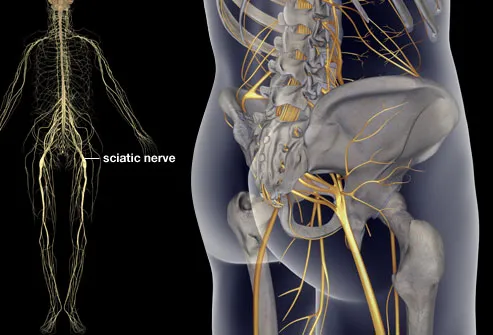
The
most common cause of sciatica is a herniated disk. Disks act like
cushions between the vertebrae of your spine. These disks get weaker as
you age and become more vulnerable to injury. Sometimes the gel-like
center of a disk pushes through its outer lining and presses on the
roots of the sciatic nerve. About 1 in 50 people will get a herniated
disk at some point in life. Up to a quarter of them will have symptoms
that last more than 6 weeks.
Spinal Stenosis
Natural wear and tear of the vertebrae
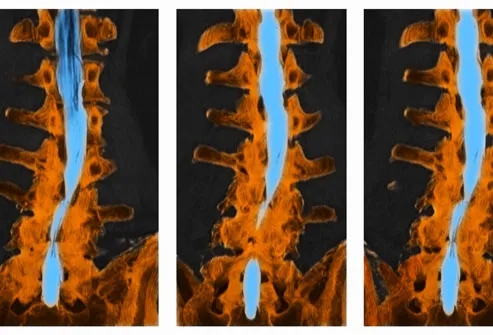
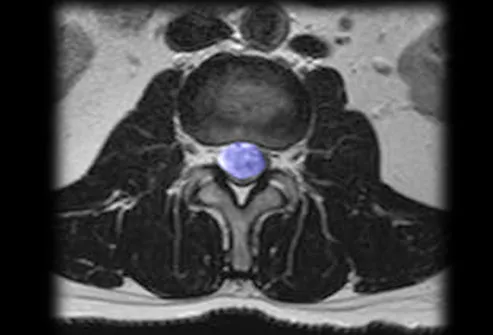
can lead to a narrowing of the spinal canal. This narrowing, called
spinal stenosis, may put pressure on the roots of the sciatic nerve.
Spinal stenosis is more common in adults over age 60.
Spinal Tumors
In rare cases, sciatica may result from tumors
growing inside or along the spinal cord or sciatic nerve. As a tumor
grows, it may put pressure on the nerves that branch off from the spinal
cord.
Piriformis Syndrome
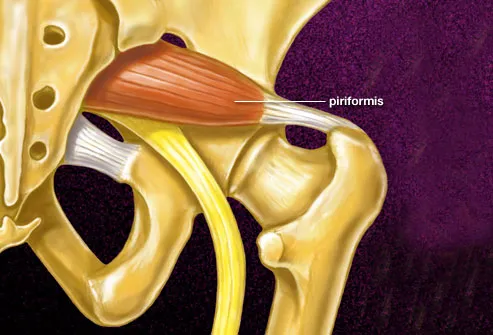
The piriformis is a muscle found deep
inside the buttocks. It connects the lower spine to the upper thighbone
and runs directly over the sciatic nerve. If this muscle goes into
spasm, it can put pressure on the sciatic nerve, triggering symptoms of
sciatica. Piriformis syndrome is more common in women.
A Fat Wallet Can Trigger Piriformis
You might not think of
too much cash as a source of pain, but a fat wallet can trigger
piriformis syndrome. The condition can affect men who wear their wallet
in the back pocket of their pants. This puts chronic pressure on the
piriformis muscle and can aggravate the sciatic nerve over time. You can
avoid this problem by keeping your wallet in a front pocket or jacket
pocket.
Sacroiliitis
Sacroiliitis is an inflammation of one or both
of the sacroiliac joints, the spot where the lower spine connects to the
pelvis. Sacroiliitis can cause pain in the buttocks, lower back, and
may even extend down one or both legs. The pain can worsen with
prolonged standing or climbing stairs. Sacroiliitis can be caused by
arthritis, injury, pregnancy, or infection.
Injury or Infection
Other causes of sciatica include muscle
inflammation, infection, or injury, such as a fracture. In general, any
condition that irritates or compresses the sciatic nerve can trigger
symptoms. In some cases, no specific cause of sciatica can be found.
Diagnosis
1)To determine whether you have sciatica, your doctor will ask you how the
pain started and where exactly it is located. You may be asked to
squat, walk on your heels or toes, or raise your leg without bending the
knee. These muscle tests can help your doctor determine if it is the
sciatic nerve that is irritated.
2) Your doctor may order imaging tests, such as an MRI, to get more
information about the location and cause of the irritated nerve. An MRI
can show the alignment of vertebral disks, ligaments, and muscles. A CT
scan using contrast dye can also provide a useful picture of the spinal
cord and nerves. Determining the cause of sciatica can help guide the
course of treatment. X-rays can help identify bony abnormalities but
can't detect nerve problems.
Complications Related to Sciatica
If you develop a loss of
bladder or bowel control, contact your doctor right away. This can be a
sign of a medical emergency that requires surgery to avoid permanent
damage. Fortunately, this complication is rare. Mostly of sciatica
go away within a few days/ weeks and cause no lasting harm.
Steps to Ease Pain-Ice and Heat
There are steps you can take at home to ease
the pain of sciatica. A heating pad or ice pack may be especially
helpful. Apply the heat or ice for about 20 minutes every two hours.
Experiment to see which provides more relief, or try alternating between
the two.
Medication
Over-the-counter pain relievers can provide
short-term relief from sciatica. Acetaminophen and nonsteroidal
anti-inflammatory drugs (NSAIDs), such as aspirin, ibuprofen, and
naproxen are options. Your doctor may give you a steroid injection to
further reduce the inflammation.
Stretching
While sciatica is healing, try to remain active.
Motion can actually help reduce inflammation and pain. A physical
therapist can show you how to gently stretch the hamstring and lower
back. Depending on your medical condition, certain exercises may not be
recommended. Your doctor may also recommend taking short walks.
Injections
In severe cases, a doctor may recommend injecting
steroids into the spine area to reduce inflammation. It delivers the
medication directly to the area around the sciatic nerve.
Surgery
If your sciatica is due to a herniated disk, and it's
still causing severe pain after four to six weeks, surgery may be an
option. The surgeon will remove a portion of the herniated disk to
relieve the pressure on the sciatic nerve. About 90% of patients get
relief from this type of surgery. Other surgical procedures can relieve
sciatica caused by spinal stenosis.
Rehab After Surgery
After back surgery, you will generally need to avoid driving, lifting,
or bending forward for about a month. Your doctor may recommend physical
therapy to help you strengthen the muscles in the back. Once recovery
is complete, there's an excellent chance you'll be able to get back to
all your usual activities.
Therapies which help
After back surgery, you will generally need to avoid driving, lifting,
or bending forward for about a month. Your doctor may recommend physical
therapy to help you strengthen the muscles in the back. Once recovery
is complete, there's an excellent chance you'll be able to get back to
all your usual activities.
Prevention
If you've had sciatica once, there's a chance it will return. But there are steps you can take to reduce the odds:
- Exercise regularly.
- Maintain good posture.
- Bend at the knees to lift heavy objects.
These steps can help you avoid back injuries that may lead to sciatica.
THIS IS ONLY FOR INFORMATION, ALWAYS CONSULT YOU PHYSICIAN BEFORE
HAVING ANY PARTICULAR FOOD/ MEDICATION/EXERCISE/OTHER REMEDIES.
PS- THOSE INTERESTED IN RECIPES ARE FREE TO VIEW MY BLOG-
HTTP:GSEASYRECIPES.BLOGSPOT.COM/
FOR INFO ABOUT KNEE REPLACEMENT, YOU CAN VIEW MY BLOG-
HTTP://KNEE REPLACEMENT-STICK CLUB.BLOGSPOT.COM/
FOR CROCHET DESIGNS
HTTP://MY CROCHET CREATIONS.BLOGSPOT.COM