Wednesday, June 26, 2024

Prebiotics & Probiotics: Benefits, Differences and Sources

 Just like antioxidants, there is much confusion regarding the topic of probiotics. In recent years, we have seen a rise in awareness about gut health, and many people are now familiar with terms like microbiome or gut flora. We now know that there's a direct link between our mood and gut health, but what exactly are probiotics? Are they a combination of nutrients, like multivitamins? And what is the meaning of an even more confusing term - prebiotics? Does that mean there are postbiotics too? Let's put everything in order.

Probiotics are live organisms that naturally live in your body and help the intestines break down food. They can be consumed as a liquid, a powder supplement, or through a diet rich in fermented foods and dairy products. 
 
On a practical level, the gut bacteria you naturally have in your body have numerous tasks. They produce vitamin K and short-chain fatty acids that function as the main nutrient source for the cells that line the colon. Thanks to these bacteria, a person has a strong gut barrier that keeps harmful agents away and fights inflammation. 
 
This probably goes without saying, but we will mention that a consistent diet high in sugar feeds the wrong bacteria and eventually throws the entire gut flora off balance. Antibiotics also severely disrupt the balance and may even cause permanent changes in the gut flora. 
 
The health benefits of probiotics 
Probiotics have been linked through extensive research to several health benefits. These include the prevention and treatment of diarrhea and improvement in mental health disorders such as depression, anxiety, stress, and memory issues. Probiotics have also been shown to contribute to heart health by lowering LDL cholesterol (the "bad" type) and slightly lowering blood pressure. 
 
In addition, probiotics will benefit those suffering from certain digestive disorders, such as ulcerative colitis, irritable bowel syndrome, and necrotizing enterocolitis by relieving symptoms. Lastly, they enforce the immune system in its protective force against infections and may even help lose weight and belly fat. Probiotics have also been shown to reduce the severity of certain allergies, but further studies are required to come to a solid conclusion.
 
How can I get more probiotics? 
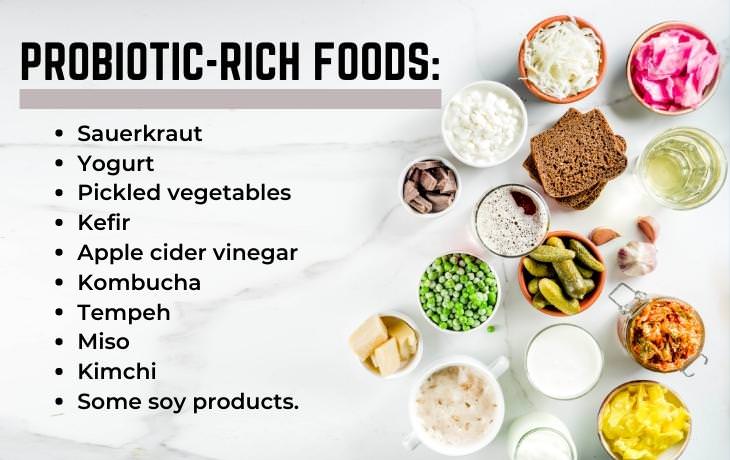
If you're not keen on supplements, a plethora of probiotics awaits you in dairy products like yogurt and fermented foods. These include: 
 
Pickled vegetables 
 
Kombucha tea 
 
Yogurt with live cultures 
 
Tempeh 
 
Miso 
 
Kefir 
 
Kimchi 
 
Sauerkraut 
 
Some soy products. 
 
Make sure that your fermented foods are not pasteurized, as this sanitizing process kills the bacteria. 
However, as probiotics can be neutralized by naturally occurring stomach acids, adequate amounts should be ingested to reap the benefits, leading many people to prefer supplements that are easy to consume and contain concentrated amounts of probiotics. Some are superior to others and are designed to be delivered safely to your large intestine while others will perish in your stomach acids. 
 
Prebiotics are fiber foods for probiotics. They're made of carbohydrates your body can't digest and exist solely to feed gut bacteria. Taking both prebiotics and probiotics together is called microbiome therapy. It may cause mild initial side effects that will go away after your body adjusts. They include gas, constipation, and loss of appetite. You don't need to take prebiotics for your probiotics to work, but they will work more efficiently if you do. 
 
To be crystal clear, prebiotics are not bacteria. They are a type of fiber that helps bacteria grow. Taking them on their own won't benefit you much, as they're meant to complement a probiotic diet or supplement. Foods that contain both prebiotics and probiotics include cheese, kefir, and some yogurts. These are called synbiotic foods. 
 
Some people may be allergic to prebiotics. Rashes or extreme abdominal pain are indicators of an allergy. If you experience these symptoms, discontinue use immediately and contact a doctor. If this is starting to feel like a task, remember that not everyone needs to take prebiotics or probiotics. The people who will benefit from them the most are those who take antibiotics. 
 
How to consume prebiotics? 
According to Healthline, the following foods are high in prebiotic fiber: 
 
Legumes, such as beans and peas 
 
Cocoa 
 
Flaxseed 
 
Seaweed  
 
Grains like oats, barley, and wheat bran 
 
Fruits like bananas, berries, and apples 
 
Vegetables: Jerusalem artichokes, asparagus, leeks, garlic, onions, and chicory root

 
Postbiotics
 
Postbiotics are the waste product of probiotic digestion. Postbiotics are bioactive compounds that bacteria produce when they consume prebiotics. Postbiotics have health benefits similar to those of probiotics: a boost to the immune system and a relief in digestive symptoms and diarrhea. Other benefits that require further research may be: alleviate allergies, aid in weight loss, lower risk of heart disease, manage blood sugar, and anti-tumor properties. One study even suggests they may be better tolerated than probiotics.


How to consume postbiotics?  
Since they're considered a rather new kind of supplement, postbiotics are not as widely available in a powdered form as probiotics or prebiotics. There are numerous supplements available for purchase in specialty stores and online, but as with any other supplement in the world, the best way to get these nutrients is through your diet. Eating more synbiotic foods will result in the natural internal production of postbiotics.
 
 In some cases, the supplements may be labeled sodium butyrate, calcium butyrate, or dried yeast fermentate. There are individual groups of people that should avoid postbiotics. They are: 
 
 - People who have recently had surgery 
 
- People who have structural heart disorders 
 
- People with digestive tract disorders 
 
- Pregnant women 
 
- Children. 
 
Children and pregnant women will benefit from probiotics.


This is only for your information, kindly take the advice of your doctor for medicines, exercises and so on.   

https://gscrochetdesigns.blogspot.com. one can see my crochet creations  
https://gseasyrecipes.blogspot.com. feel free to view for easy, simple and healthy recipes    
https://kneereplacement-stickclub.blogspot.com. for info on knee replacement
https://cancersupportindia.blogspot.com  for infor on cancer and health related topics
https://GSiyers home remedies.blogspot.com   is the latest addition to my blogs. I'm going to add posts there, do give me your valuable feed back on my blogs. Thanks a lot, take care, be healthy and be happy.

Labels: , , , , , , , , , , , , , , , , , ,

Friday, December 31, 2021

Probiotics For Alzheimer’s - Can They Help?

In the overall landscape of long-term health interventions, gut health is still an often ignored or dismissed subject. This is despite the fact that we have scientific evidence suggesting a direct link between the gut microbiome and digestion, cardiovascular health, immune system, and mental well-being. More recently, research had begun to examine the possibility of gut bacteria also having an effect on our cognitive health and the development of neurocognitive conditions like dementia and Alzheimer’s.

The more we learn about the ways our gut influences the brain via the gut-brain axis, the deeper the connection between what we eat and who we are becomes. With all the knowledge we have about the benefits of gut bacteria, one question remains unanswered - how can we effectively translate these findings into actionable health advice? 
 
Among the most promising candidates for improving gut health are probiotics. Some studies are suggesting that taking probiotics or possibly even eating probiotic-rich foods can improve cognition or even slow down the progression of Alzheimer’s disease. A recent meta-analysis reviewed 294 studies from 1984 to 2021 and found that probiotics do, in fact, have a beneficial effect on neurodegenerative diseases. Read on to find out the specifics.

How taking probiotics can improve gut health  
Did you know that more than half of the human body weight consists of microbes? A big percentage of these beneficial microbes - around 5 pounds (2.7 kg) worth of them - live in the intestines, forming the gut microbiome. Every person’s microbiome is different, and researchers are now trying to work out which strains of bacteria are the most beneficial for our overall health and cognition specifically.
Probiotics For Dementia probiotic rich foods


Probiotics are believed to be beneficial bacteria, and they exist not only in the human body but also in many fermented foods. The photo below lists the common food source of probiotics, and our article titled 7 Probiotics that Boost Your Health, Besides Yogurt, goes through most of these foods in detail. The idea is that eating probiotic-rich foods or taking food supplements that contain probiotics introduces beneficial bacteria into the intestines, strengthens the gut microbiome, and pushes out any harmful bacteria that might have taken up residence in the gut.

What about cognition and dementia specifically? 
The intestines are rich in nerves that regulate your digestion through signals to the spine and brain. These nerves are called the enteric nervous system, or the gut-brain. Researchers believe that an irritated and “unhappy” gut can also impact the brain, and they know that this is true because they have observed that things like a diet high in sugar can impair cognitive abilities and cause brain fog. 
 
Some scientists also suppose that a gut microbiome that’s unbalanced or insufficiently diverse, can contribute to neurodegenerative conditions like Alzheimer’s disease. It is also believed to contribute to a condition called mild cognitive impairment (MCI) - a state between dementia and normal cognition in aging adults. Both conditions are characterized by problems with memory, thinking, and language. To test the idea that diversifying the gut can improve these cognitive issues in older adults, researchers have patients take probiotics and examine their cognitive functioning. 
 
The previously-mentioned review article examined a great number of such studies and concluded that “probiotic supplementation considerably improved cognitive function in the participants with MCI, but it only caused a modest cognitive improvement in those with Alzheimer’s disease.” Therefore, taking probiotics can slow down the progression of these neurodegenerative diseases, especially if introduced when cognitive changes only begin to appear.

In addition, the researchers point out that taking probiotics improved the diversity of fecal microbiota in patients with Alzheimer’s disease. It is known that Alzheimer’s patients have a reduced diversity of microbes in fecal matter. Let us remind you that Alzheimer’s disease affects 6 million Americans and is the leading kind of dementia in the US. The causes of this disease are still unknown, so any new information that can get researchers closer to being able to treat or prevent this condition is extremely valuable. 
 
Is there a recommended dose of probiotics? 
Since research in probiotics is still relatively new, health organizations around the world don’t list any specific guidelines on how much or how often one should take probiotics. That said, the review study lists that the minimal dose listed in most of the studies they looked at was 1 x 10⁹ CFU (probiotics are measured in Colony-Forming Units (CFU), which refers to the number of viable cells), or about 1 billion per day. 
 
While this can be helpful if you’re taking probiotic supplements, it’s difficult to say how many probiotics you took if you get them through your diet. In this case, your best estimation is how you feel. If drinking too much yogurt or eating too many pickles makes you feel bloated or upset your digestion in any other way, lower the dose. 
 
Lastly, let us point out that you shouldn’t start taking probiotic supplements on your own. Even though probiotics are generally considered safe, older adults who want to take probiotics for cognitive health are more likely to experience gastrointestinal upsets, infections, or skin rashes than others. Therefore, you shouldn’t start taking probiotics without your physician’s supervision.

This is only for your information, kindly take the advice of your doctor for medicines, exercises and so on.   

https://gscrochetdesigns.blogspot.com. one can see my crochet creations  
https://gseasyrecipes.blogspot.com. feel free to view for easy, simple and healthy recipes    
https://kneereplacement-stickclub.blogspot.com. for info on knee replacement

Labels: , , , , , , , , , , , , ,

Monday, December 11, 2017

Soy, broccoli may cut breast cancer treatment’s side effects

Consuming soy foods such as soy milk and tofu and cruciferous vegetables such as cabbages, kale and broccoli may help reduce common side effects of treatment in breast cancer survivors, researchers say.

Treatments designed to prevent breast cancer recurrence often inhibit the body’s production or use of oestrogen — the hormone that can fuel breast cancer growth.

As a result, such patients often experience hot flushes and night sweats, among other side effects that are commonly post menopause.

The findings,  showed that intake of cruciferous vegetables and soy foods were associated with fewer reports of menopausal symptoms.Higher soy intake was also associated with less reported fatigue.

Phytochemicals, or bioactive food components, such as isoflavones in soy foods and glucosinolates in cruciferous vegetables may be the source of the benefit, the researchers said.

While isoflavones bind to oestrogen receptors and exert weak oestrogenic effects, glucosinolates in cruciferous vegetables influence levels of metabolising enzymes that can modulate inflammation and levels of oestrogen, possibly attenuating treatment-related symptoms.

The study addresses an important gap in research on the possible role of lifestyle factors, such as dietary habits, in relation to side effects of treatments, said the lead author.

“These symptoms can adversely impact survivors’ quality of life and can lead them to stopping ongoing treatments,” the author said.

“Understanding the role of life style factors is important because diet can serve as a modifiable target for possibly reducing symptoms among breast cancer survivors,” she added.

Women who consumed more soy foods also showed suggestive associations with lower reporting of other symptoms, including joint problems, hair thinning/loss and memory, but these associations did not reach statistical significance.

Thus, until more study is conducted, breast cancer patients should not suddenly start eating soy, if they have not consumed it before, the researchers warned.


THIS IS ONLY FOR INFORMATION, ALWAYS CONSULT YOU PHYSICIAN BEFORE HAVING ANY PARTICULAR FOOD/ MEDICATION/EXERCISE/OTHER REMEDIES.   

PS- THOSE INTERESTED IN RECIPES ARE FREE TO VIEW MY BLOG-                      

HTTP:GSEASYRECIPES.BLOGSPOT.COM/
FOR INFO ABOUT KNEE REPLACEMENT, YOU CAN VIEW MY BLOG-                                                                       
HTTP://KNEE REPLACEMENT-STICK CLUB.BLOGSPOT.COM/
FOR CROCHET DESIGNS

HTTP://MY CROCHET CREATIONS.BLOGSPOT.COM

Labels: , , , , , , , , , , , ,